In short
Ben Affleck went viral after recent interviews showed him speaking in detail about AI filmmaking, machine learning and model fine-tuning. He said the technology can help cinema without replacing filmmakers and that his main concerns are practical, not apocalyptic.
- Ben Affleck’s AI knowledge impressed viewers after clips from recent interviews spread online.
- He described hands-on experience with datasets, fine-tuning and film-production workflows.
- Affleck said AI should support filmmakers rather than replace them.
- His biggest concerns center on education, responsible use and overdependence on AI.
Ben Affleck has become an unlikely viral ambassador for artificial intelligence after a series of recent interviews showed the actor-producer speaking fluently about machine learning, neural networks, transformers and the role of AI in modern filmmaking. The attention matters because Affleck is not just discussing the technology as a celebrity observer; he has already built and sold an AI-focused film startup and is now presenting himself as a hands-on participant in how the industry uses the tools.
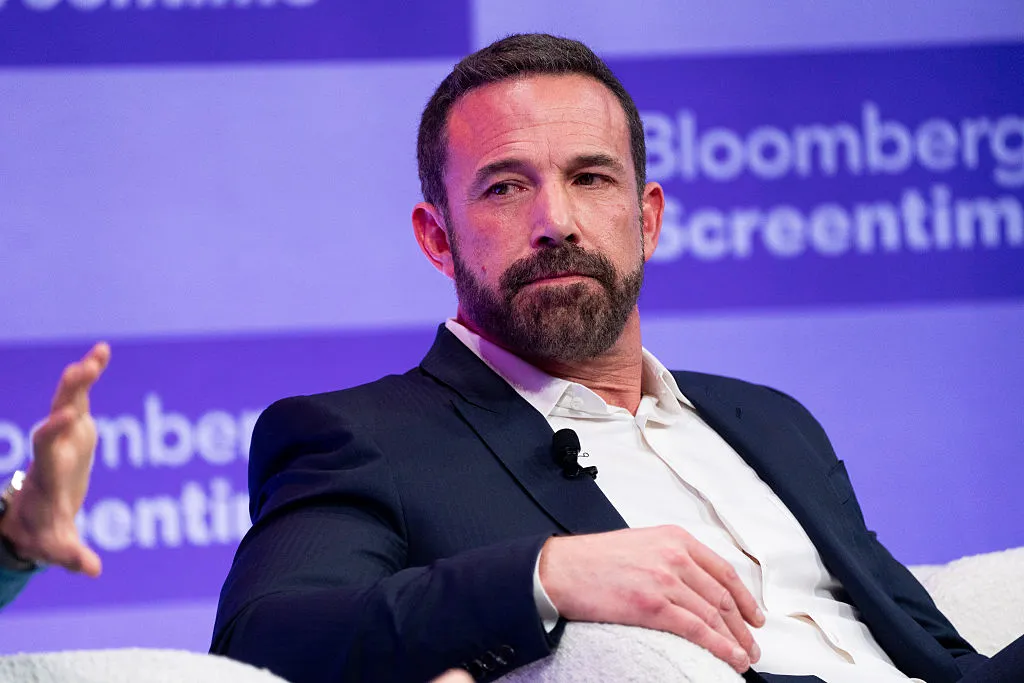
The renewed fascination comes after clips from appearances on GQ’s One More Question series and Bloomberg’s Screentime 2026 conference circulated widely online this week. In them, Affleck explained technical concepts with unusual confidence for a Hollywood star, describing how AI can support post-production and visual-effects workflows without replacing the craft of filmmaking itself.
Why Ben Affleck’s AI comments caught fire
Affleck’s comments resonated because they challenged the familiar stereotype of actors speaking vaguely about technology. Instead, he used terms usually reserved for engineers and researchers, and he did so while trying to make the ideas accessible to the interviewer. That contrast — polished movie star persona on one hand, deeply technical vocabulary on the other — is a major reason the clips spread so quickly.
The viral moment also reflects a broader cultural shift: AI is no longer confined to Silicon Valley conferences or research labs. It is now a topic that touches entertainment, labor, creative control, education and intellectual property. When someone as visible as Affleck speaks in detail about datasets, inference and model fine-tuning, the conversation moves closer to the mainstream.
Affleck said he first became interested in the field while watching film production move from analog methods to digital workflows, and he described visual effects as an area where machine learning had already been part of the process for years.
That background matters. AI in filmmaking is not simply about generating images from prompts. It also includes long-established uses such as rotoscoping, compositing, object removal, face tracking and other forms of pattern recognition that have quietly relied on machine-learning techniques for some time.
How did Affleck describe the technology?
He described it as a set of tools that translate visual information into numbers and then use those numerical representations to recognize patterns. In one of the most discussed clips, he walked through the idea of tensors, pixel values, batching and frame-by-frame processing, all while trying to keep the explanation understandable to a nontechnical interviewer.
He also connected neural networks to practical film tasks such as identifying edges and features in an image — for example, determining where a window ledge ends so green-screen elements can be removed and replaced more easily. In his telling, AI is less about magic and more about accelerating highly specific production work.
That framing is significant because it places AI in the category of workflow improvement rather than creative replacement. For many in entertainment, that distinction is central to the debate over whether these tools threaten jobs or simply reshape how films get made.
What terms did he use?
Affleck referenced several core concepts associated with contemporary AI development, including machine learning, neural networks, convolutional neural networks, transformers, tensors, GPUs and inference. He also said he can write basic Python scripts, a detail that added to the sense that his knowledge goes beyond publicity-friendly buzzwords.
In technical terms, convolutional neural networks were an early breakthrough in computer vision and image analysis, while transformers underpin the current generation of large-scale AI systems. By tying those concepts together, Affleck framed AI as an evolving stack of methods rather than a single breakthrough.
What did Affleck say about his AI startup?
He said his interest in the field eventually led him to build and sell an AI filmmaking startup, though he pushed back on the widely repeated figure of $587 million and said he did not own the entire company. The exact valuation is less important than the larger point: Affleck was not merely an outside commentator. He was involved in creating an actual business around these ideas.
According to his account, the company was built around a deliberately narrow and production-oriented use case. Rather than trying to create a generic model for every creative task, the team focused on creating a dataset and training pipeline that could help with discrete jobs in the filmmaking process.
Affleck said he raised money, spent months gathering footage with extensive camera setups and built a dataset intended to help train models for very specific cinematic tasks.
He framed the effort as an attempt to make AI work “hand in glove” with artists, especially in a field shaped by long-standing agreements around likeness, performance rights and creative ownership. That emphasis on ethics and control has become one of the defining issues in entertainment’s AI debate.
Why did he build a custom dataset?
He said the goal was to avoid relying on generic data and to create a system that respected the needs of filmmakers. In practical terms, that meant producing training material tailored to the kinds of tasks a post-production team would actually face, rather than building a broad consumer product.
This approach matters because AI models are only as useful as the data and objectives behind them. A model trained for cinematic work may be optimized for preserving artistic intent, matching visual standards and handling the specific requirements of a film crew, while a general-purpose system may not.
How did he describe fine-tuning open models?
Affleck told Bloomberg that his team used open-source models and adapted them for film production by adjusting how the models were trained. He described unfreezing weights and training the final layer so the system could meet cinematic standards without forcing filmmakers to give up the proprietary elements of their own work.
That description points to a common AI practice: fine-tuning an existing model so it performs better on a narrow task. In entertainment, the appeal is obvious. Studios and independent filmmakers want speed and cost savings, but they also want control over style, ownership and output quality.
Affleck’s explanation suggested a compromise model for the industry: use shared foundation models as a starting point, then specialize them for the demands of one project or production pipeline. In theory, that could let filmmakers benefit from advanced AI while keeping the creative fingerprint of their work intact.
What happened in the movie Animals?
He said he used the technique in his film Animals, where AI reportedly assisted with post-production. That detail is important because it shows the technology is not hypothetical for Affleck. It is already part of his practical filmmaking toolkit.
The example also provides a glimpse into how AI is likely to spread through Hollywood: not as a sudden replacement for directors, editors or visual-effects artists, but as a behind-the-scenes productivity layer that helps teams work faster, especially on repetitive technical tasks.
Why is Affleck dismissing the “Skynet” fear?
He said his real worries about AI are more grounded in everyday life, especially in education and responsible use. Rather than worrying about a science-fiction scenario in which machines take over the world, he said he is more concerned about how students use AI, how institutions respond and whether people become overly dependent on automated help.
He pointed specifically to classroom behavior and what he described as a sharp rise in the number of top grades awarded in recent years. In his view, a more immediate risk is “learned helplessness,” where people stop building their own skills because technology is too convenient to ignore.
Affleck said he does not worry about a robotic takeover of Hollywood and believes AI will be additive to filmmaking rather than destructive.
That view aligns with the position many in entertainment are trying to defend: the idea that AI should support human creativity, not erase it. Whether the industry can actually draw that boundary cleanly remains one of the biggest unresolved questions.
Why Hollywood is paying attention now
Hollywood is paying attention because Affleck’s comments arrive at a moment when the industry is still negotiating the practical and ethical consequences of generative AI. Studios want efficiencies. Creators want protection. Audiences want high-quality work. Unions and artists want assurances that their labor, likenesses and styles are not being exploited.
AI tools are already being used in editing, dubbing, localization, visual effects and preproduction planning. The next phase is likely to involve more customized systems built for specific studios, franchises or production houses, especially if the technology keeps getting cheaper and easier to deploy.
Affleck’s public remarks help normalize that conversation because they come from someone with both cultural clout and hands-on experience. He is not arguing from the sidelines; he is describing workflows he says he has tested and businesses he has helped build.
What this says about the changing image of AI in entertainment
Affleck’s viral moment is part novelty, part signal. The novelty is that a major movie star can now go viral for sounding like a technical founder. The signal is that AI has become so embedded in film and media that serious participants in the industry are expected to speak about model training, data strategy and workflow design with some precision.
That may be the most revealing aspect of the story. The public is not simply amused that Affleck knows the jargon. It is reacting to the fact that the jargon now matters outside the lab. The entertainment industry is entering a period in which understanding AI is becoming as important as understanding cameras, editing software or visual-effects pipelines.
For now, Affleck appears to be landing on a pragmatic middle ground: use AI where it improves production, keep humans in creative control and avoid exaggerated apocalypse talk. Whether that balance will hold as the technology advances is another question entirely.
Key facts at a glance
| Topic | Details | Why it matters |
|---|---|---|
| Recent appearances | GQ’s One More Question and Bloomberg’s Screentime 2026 | These interviews triggered the viral reaction |
| AI focus | Machine learning, neural networks, transformers, tensors and fine-tuning | Shows unusually deep technical fluency for a celebrity |
| Startup involvement | Affleck said he built and sold an AI filmmaking company | Suggests direct commercial experience, not just commentary |
| Industry use case | Post-production and visual-effects workflows | Highlights where AI is already practical in film |
| Main concern | Education, responsible use and dependence on AI | Reflects a more grounded public debate than dystopian fears |
Timeline: how the story unfolded
- 2022: Affleck says he founded an AI-related company focused on filmmaking workflows.
- Earlier this year: He reportedly sold the startup to Netflix, although he disputes the commonly cited total valuation.
- October 2026: Clips from his GQ interview begin circulating widely online.
- October 2026: Additional footage from Screentime 2026 adds to the viral momentum.
- Now: Online audiences are treating Affleck as a surprisingly serious voice on AI in entertainment.
What the viral reaction reveals about public attitudes toward AI
The reaction to Affleck’s interviews reveals a public that is both amused and genuinely interested in who gets to define the future of AI. People are drawn to the contrast between celebrity image and technical substance, but they are also looking for credible interpreters who can explain what these tools actually do.
In that sense, Affleck’s popularity in this moment is not just about him. It reflects a wider hunger for accessible explanations of a technology that often gets discussed in either hype-heavy or alarmist terms. His comments land somewhere more grounded: excited, specific and moderately cautious.
That may help explain why the clips traveled so far so fast. They offered something rare in the AI conversation — an explanation of the technology from someone with enough cultural visibility to make people pay attention, and enough practical experience to sound convincing.
For Hollywood, that may be the most important takeaway. AI is no longer only a business issue, a labor issue or an ethics issue. It is a literacy issue. The people shaping movies, TV and digital media increasingly need to understand how the tools work, where they fit and what they should not be allowed to do.
And if a movie star who once made a name as one of cinema’s smartest fictional students can now spark a national conversation by discussing model fine-tuning and datasets, that says something profound about where the industry is headed.
Frequently asked questions
Why is Ben Affleck going viral for talking about AI?
Ben Affleck is going viral because he discussed AI with unusual technical fluency in recent interviews, using terms like transformers, tensors and inference while explaining how the technology fits into filmmaking. The contrast between celebrity image and real technical knowledge is what surprised viewers.
Did Ben Affleck really work on an AI filmmaking startup?
Yes, Ben Affleck said he helped build an AI-related filmmaking startup and that it was later sold, though he disputed the commonly repeated $587 million figure and said he did not own the entire company. He described the business as focused on practical production workflows.
How does Ben Affleck think AI should be used in movies?
Ben Affleck said AI should be used as an additive tool that helps with post-production and technical workflows, not as a replacement for filmmakers. He emphasized custom datasets, responsible use and keeping creative control with artists.
What does Ben Affleck worry about most with AI?
Ben Affleck said his biggest concerns are educational and behavioral, not apocalyptic. He pointed to student dependence on AI, responsible use and the risk of learned helplessness, while saying he does not worry about a Skynet-style takeover of the film business.