In short
Anthropic is expanding Claude Cowork from desktop to web and mobile, turning its agent into a cross-device assistant for routine office work. Early usage data suggests the biggest demand is in business operations and content creation, not coding.
- Claude Cowork is now available on web and mobile for Max subscribers.
- Anthropic’s data shows business process tasks are the top use case for the agent.
- The move signals a broader shift from chatbots to persistent AI office agents.
- OpenAI and Anthropic are both pushing AI deeper into everyday workplace workflows.
Anthropic is broadening the reach of Claude Cowork, its office-focused AI agent, by bringing the tool to the web and mobile devices. The update marks a notable step in the company’s effort to position Claude not just as a coding assistant, but as a broader digital coworker that can help manage the routine, cross-platform tasks that increasingly define modern office life.
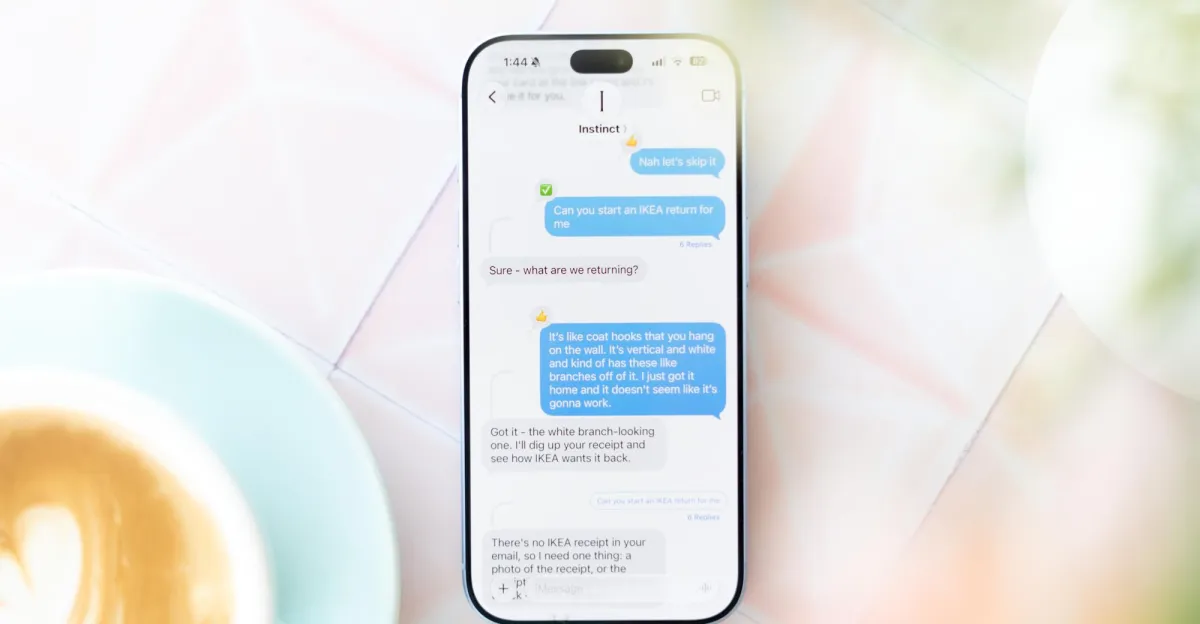
Until now, Claude Cowork lived primarily as a desktop app. Starting Tuesday, that changes for Max subscribers, who will be able to launch tasks on a computer, monitor progress from a phone, and return to finished work later—even if their laptop is no longer open. That mobile continuity is more than a product convenience; it reflects a larger shift in the AI market, where the battle is moving from isolated chatbot sessions to persistent assistants embedded in the everyday flow of work.
Anthropic’s update arrives at a time when major AI labs are racing to make their tools useful in more places than a single browser tab or app window. The new competition is no longer just about producing better answers in a chat interface. It is increasingly about which company can build an AI system that can stay with users across devices, work in the background, and help finish the administrative, analytical, and creative jobs that fill the modern workday.
In that sense, Claude Cowork is not only an expansion of a product. It is a sign of where the AI office market is headed.
Claude Cowork moves from desktop utility to cross-device assistant
Anthropic first introduced Claude Cowork in January as a desktop app built around agentic work rather than simple conversation. The original pitch was that the system could take on tasks that usually require multiple steps, follow-up checks, and a fair amount of context switching. With the new web and mobile launch, Anthropic is making the tool easier to use as a continuous assistant rather than a local utility tied to one machine.
The company says the update lets users start something at their desk and then continue tracking it on their phone while away from their computer. When the task is complete, they can open the output later and review it on whichever device is most convenient. That matters because many office tasks do not require constant human attention, but they do require timely intervention at specific moments.
Anthropic framed the feature set as a way to support real work patterns. A user might assign Claude Cowork a briefing task before the workday begins, then check on the results later over coffee, with the draft email or document ready for review but not automatically sent. The agent can gather information, assemble materials, and prepare a result, while leaving final judgment to the human operator.
The company’s example portrays Claude Cowork as an assistant that can read email threads, transcripts, and recent news, then build a briefing document and draft follow-up communication for later approval.
That workflow reveals the product’s intended role. Anthropic does not want Cowork to feel like a narrow coding aid with a broader label. It wants the tool to resemble an administrative teammate: one that can take instructions, keep working after the user steps away, and pause when a decision requires human input.
Why the mobile launch matters for the AI agent race
The move to web and mobile may sound incremental, but in the AI assistant race, it is strategically important. Persistent agents only become truly useful when they travel with the user. Many workers no longer perform all of their tasks at a desk, and many decisions happen in short windows between meetings, commutes, and home office interruptions. By extending Claude Cowork beyond the desktop, Anthropic is acknowledging that real work is fragmented across devices and environments.
This also helps solve a key limitation of earlier AI tools. A chatbot that only exists in one browser window can help draft a paragraph or summarize a file, but it is less useful when a task spans several hours or depends on information gathered from multiple sources. A cross-platform agent, by contrast, can continue a project while the user is offline, then hand over the results once the work is ready.
Anthropic says that because Cowork can operate across platforms, it can continue running tasks even when the user’s device is not online. That capability turns the product into something closer to asynchronous infrastructure than a real-time assistant. For office workers juggling reports, briefings, and approvals, that could be the difference between an impressive demo and a genuinely useful tool.
What distinguishes an agent from a chatbot
The distinction matters because the AI market is increasingly drawing lines between products that talk and products that do. Chatbots answer. Agents act. In practice, many systems do both, but the business case for agents is built on workflow ownership: if the tool helps with the entire process, not just the first prompt, users are more likely to keep paying for it and rely on it daily.
Anthropic’s positioning suggests that Claude Cowork is meant to manage work that does not sit at the center of most roles, but still consumes time. That includes organizing information, preparing drafts, and assembling administrative materials. These are the sorts of tasks people often must do, even if they are not the reasons they were hired in the first place.
OpenAI has been making a similar argument with Codex, which started as a software tool but is now being used by a broader set of workers for reports, spreadsheets, presentations, research, and analysis. The parallel is telling: AI vendors are looking to move beyond specialist use cases and into the general business operations layer where productivity software and human effort overlap.
Anthropic’s data shows office work dominating usage
Alongside the product expansion, Anthropic published early usage data that helps explain why it is leaning into office workflows. The company says it analyzed 1.2 million anonymized and aggregated Claude Cowork sessions from more than 600,000 organizations over the final two weeks of May. The sample is large enough to offer a useful snapshot of how people are using the tool in practice.
The top category was business process operations, which accounted for 33.4% of usage. That bucket includes work such as collecting scattered updates into one report, assembling onboarding checklists, and reconciling spreadsheets. Anthropic said the tasks are especially common in finance, human resources, and administrative roles.
The second-largest category was content creation and copywriting, which made up 16.4% of usage. That includes drafting slides, writing social copy, producing proposals, and preparing other communications material often handled by marketing and management teams.
By comparison, software development represented 8.7% of Cowork usage, a notable figure given the company’s brand association with coding tools and the broader public fascination with AI-generated code.
Those numbers help support Anthropic’s larger point: the most commercially valuable AI tasks may not be the flashiest ones. The everyday, repetitive work that keeps organizations moving could be a bigger opportunity than code generation alone.
| Category | Share of Cowork usage | Typical tasks | Common roles |
|---|---|---|---|
| Business process operations | 33.4% | Reports, onboarding checklists, spreadsheet reconciliation | Finance, HR, administration |
| Content creation and copywriting | 16.4% | Drafts, slide decks, social posts, proposals | Marketing, management |
| Software development | 8.7% | Coding support and related technical tasks | Engineering and technical teams |
The “work around the work” is becoming the main AI opportunity
Anthropic’s own framing is revealing. The company says it sees the strongest demand in what it describes as “work around the work” — the tasks that are essential to how companies operate but are rarely the core function of the person doing them. That phrasing captures a broad and growing category of labor: organizing, summarizing, preparing, reformatting, and coordinating.
These are not glamorous tasks, but they are expensive. In many organizations, they consume hours across departments, create bottlenecks, and require constant switching between tools. If AI can reduce that overhead, even modestly, it becomes strategically valuable in a way that goes far beyond novelty.
That appears to be the logic behind Claude Cowork’s evolution. Rather than positioning the product only for developers, Anthropic is building it as a general work assistant that can serve finance teams, HR departments, marketing groups, and operations staff. It is a bet that the broadest AI market will be found in the unglamorous middle of the enterprise, not just in technical or creative extremes.
It is also a recognition that many workers do not need AI to make the final decision. They need AI to do the first 80% of the job, then package the result in a form they can approve. That division of labor is central to the current wave of agentic products.
How that changes the economics of AI products
For AI companies, the move toward workflow ownership changes the economics of adoption. A tool that helps write a better email is useful. A tool that drafts the report, compiles the sources, prepares the slides, and queues the follow-up is harder to replace. The more steps an AI product can absorb, the stickier it becomes in the daily routine.
This is why the race now extends well beyond chat interfaces. If a company can embed its assistant into the work process itself, it may secure a more durable relationship with users than competitors that only offer point solutions.
Anthropic’s cross-platform rollout suggests it understands this. Mobile access does not just add convenience; it makes the agent more likely to remain part of a task from start to finish. That continuity increases the chance that users will return to the product, trust it with more context, and build habits around it.
Desktop still matters, but the use case is widening
Anthropic is not abandoning the desktop app. In fact, the company says the desktop environment remains the place for deeper work, especially because it can access local files and the browser. That makes sense: some tasks still benefit from a richer workstation experience, particularly those involving large document sets, file manipulation, or browser-based research.
What is changing is the surrounding ecosystem. By making Claude Cowork available on web and mobile, Anthropic is lowering the barrier to entry for people who never installed the desktop version. It also creates a more flexible workflow for existing users, who can now shift between devices instead of treating AI as something they must return to only when seated at one computer.
Anthropic said chat and Cowork will initially be unified in the web and desktop experiences, while projects and artifacts will be shared across both. That points to a more integrated product strategy, one in which conversation, task management, and output storage all live in the same system.
That integration could matter a great deal if Anthropic wants Cowork to become a genuine work hub rather than just another app. Users are less likely to abandon a product that stores their projects, drafts, and outputs in one place and carries them across devices.
How Anthropic compares with OpenAI in the office AI race
Anthropic’s move also underscores the intensifying competition with OpenAI. While both companies began with highly visible chatbot products, each is now working to expand into practical business workflows. The companies are converging on the same conclusion: the next frontier is not who can answer a question most eloquently, but who can most effectively reduce friction in everyday office work.
OpenAI’s Codex trajectory illustrates the same trend from another angle. What began as a developer-centric tool is now increasingly relevant to non-developers handling spreadsheets, slides, research, and analysis. Anthropic is making a similar pivot with Cowork, but with an emphasis on administrative and coordination-heavy tasks.
The emerging pattern is straightforward:
- Start with a narrow, attention-grabbing use case, such as coding or writing.
- Expand into adjacent office workflows where time savings are easier to measure.
- Make the product persistent across devices so it can follow the work wherever it happens.
- Embed the AI into the tools and routines people already use.
That progression suggests the market is maturing. The early chatbot era rewarded novelty and conversational fluency. The new phase rewards utility, persistence, and workflow integration.
Why this matters for workers and managers
For workers, the rise of office agents could mean less time spent on repetitive preparation and more time spent on judgment, review, and relationship-driven work. For managers, it could mean faster turnaround on reports, cleaner onboarding materials, and more consistent internal documentation.
But the shift also introduces new questions. As AI agents become more capable of moving through tasks independently, companies will need to think carefully about oversight, accuracy, and when human approval is required. Anthropic’s examples emphasize that the user remains in control of the final step, which is likely to be a crucial trust signal as agents become more powerful.
There is also the practical issue of adoption. Even the most capable AI assistant will only matter if it fits neatly into how teams already operate. That is why the web and mobile expansion is so important: it reduces friction, widens accessibility, and makes the product easier to weave into daily habits.
Potential benefits organizations are likely to watch
Companies evaluating office agents will probably focus on a few core questions:
- How much time does the tool save on recurring administrative work?
- Can it reliably pull information from multiple sources and summarize it accurately?
- Does it work across the devices employees actually use?
- Can it support approvals and revisions without causing confusion or errors?
- Does it integrate with existing systems and documents well enough to become part of the workflow?
Those are the metrics that will determine whether products like Claude Cowork become everyday software or remain interesting demonstrations of AI potential.
A broader signal for the AI market
Anthropic’s release is important not because it introduces a single dramatic capability, but because it shows how quickly AI products are being redefined around real work. The company’s own usage data suggests the strongest demand is coming from routine business operations and content preparation, not from the coding tasks that first made AI agents famous.
That shift may prove to be one of the most consequential developments in enterprise AI this year. If the most valuable use cases are the ones that sit across departments, then the winners will be the companies that can build assistants flexible enough to handle them.
Claude Cowork’s web and mobile expansion is a clear attempt to meet that demand. It gives Anthropic a more durable foothold in the office, where work begins on one device, continues on another, and often finishes somewhere else entirely.
As the AI agent race intensifies, that may be the clearest sign yet that the future belongs not to the chatbot that answers the fastest, but to the agent that stays with the task until the job is done.
| Milestone | What happened | Why it matters |
|---|---|---|
| January | Claude Cowork launched as a desktop app | Established Anthropic’s agentic work focus |
| Late May | Anthropic sampled 1.2 million sessions across 600,000+ organizations | Revealed where users were actually spending time |
| Tuesday launch | Cowork became available on web and mobile for Max subscribers | Made the agent cross-device and more persistent |
| Current strategy | Claude and Cowork experiences are being unified across platforms | Signals a move toward one integrated work environment |
Anthropic has made its bet clear: the next phase of AI adoption will not be won by the most impressive chat interface, but by the most useful work companion. Claude Cowork’s latest expansion is designed to prove that point in the real world, where deadlines, approvals, and unfinished tasks follow workers from desk to phone and back again.