Updated July 24, 2026 3:55 pm
In short
Etched has raised a $300 million Series C at a $10.3 billion valuation, and says it has expanded to 400 employees, added a new 10MW Milpitas facility, and is now running tokens in its lab with major AI companies.
- Etched closed a $300 million Series C at a $10.3 billion valuation.
- The round was led by Sequoia, with Andreessen Horowitz, SK Hynix and others participating.
- The startup says it has manufactured chips, early customer tests underway, and $1 billion in orders.
- Etched is focused on AI inference hardware, especially the prefill and decode stages.
- The company’s rise reflects broader investor interest in specialized AI chips.
Update — July 24, 2026 3:55 pm
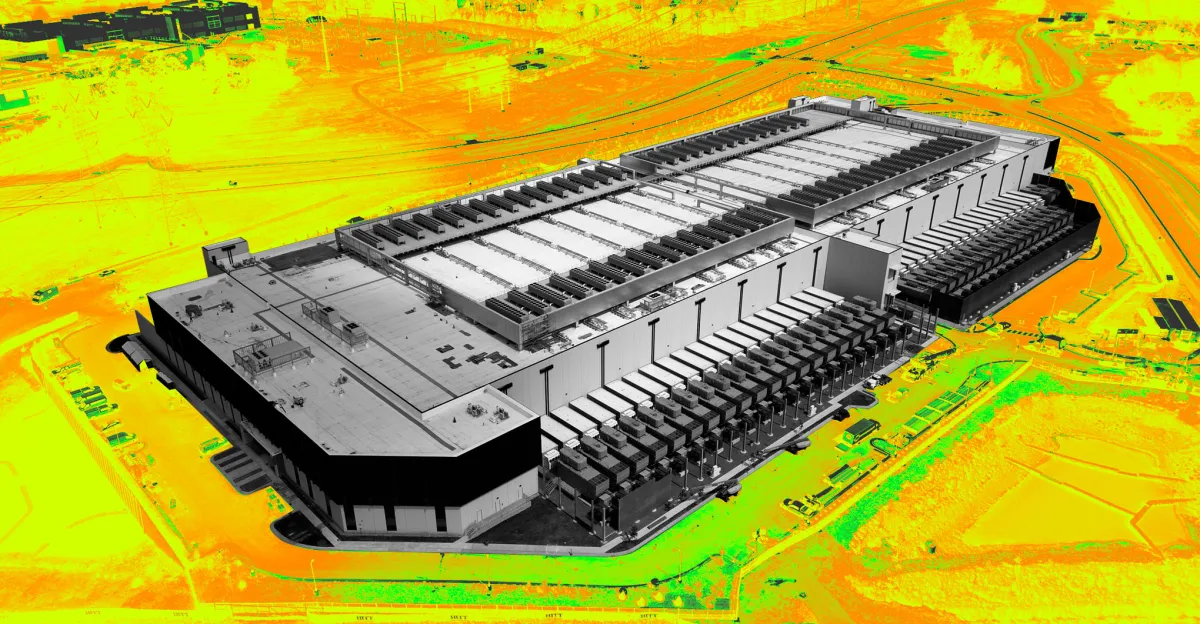
Etched also says its operation is now larger than the earlier update indicated. Wachen says the company has about 400 employees, runs a 2-megawatt data center at its office, and has opened a separate 80,000-square-foot facility in Milpitas with 10 megawatts of capacity.
He also said Etched is already running tokens in its lab and working with some of the world’s largest AI companies, suggesting the startup’s systems are being used more broadly as it moves toward mass production.
Update — July 23, 2026 6:59 pm
Etched also says its footprint has expanded beyond early demos and manufacturing. The company now says it has about 400 employees, operates a 2-megawatt data center at its office, and recently opened a separate 80,000-square-foot facility in Milpitas with 10 megawatts of capacity.
Wachen said the company is already running tokens in its lab and working with some of the world’s largest AI companies, adding a new sign that Etched’s systems are moving closer to broader real-world use.
AI chip startup Etched has raised a $300 million Series C at a $10.3 billion valuation, a dramatic jump that signals investor confidence in a company once dismissed as a long shot. The round, announced on July 23, 2026, was led by Sequoia and comes about seven months after Etched was valued at $5 billion.
The new funding matters because Etched is trying to prove there is a real market for hardware built specifically to accelerate AI inference, the stage of model execution that happens after a user submits a prompt. If the startup can scale production and win customers, it could become one of the most important challengers in a semiconductor market still dominated by Nvidia.
Founded in 2022 by three former Harvard students, Etched has moved from an idea many technologists considered overly narrow to a company claiming manufactured chips, active customer testing, and $1 billion in booked orders. The startup’s rise also reflects a broader shift in the AI industry: specialized chips tailored to particular workloads are no longer viewed as a fringe theory but as a serious path to better performance and lower cost.
What Etched raised and who backed the deal
Etched’s latest financing round brought in not only Sequoia but also Andreessen Horowitz, SK Hynix, Jane Street, Diffusion Capital, and several existing backers. The company says the financing is the largest valuation Sequoia has ever led for a Series C round.
The investor roster extends beyond institutions. Etched also counts well-known names such as Peter Thiel, Andrej Karpathy, Dylan Field, and Amjad Masad among its supporters, underscoring how much attention the startup has drawn inside both the AI and venture capital ecosystems.
Co-founder and COO Robert Wachen told TechCrunch that the company’s hardware has been privately demonstrated to investors and selected customers, a factor he said helped convince prominent figures in AI to back the business after seeing it in action.
Wachen said people including Andrej Karpathy, Noam Brown, Geoffrey Hinton and others tried the hardware themselves and came away enthusiastic about it.
Valuation milestones in quick succession
Etched’s latest valuation is notable not only for its size but also for its speed. The company went from $5 billion in December to $10.3 billion in July, doubling its worth in a little more than half a year. In the current funding environment, that pace suggests investors see a much larger opportunity than the startup’s early reputation implied.
The surge also raises the stakes. A higher valuation can make it easier to raise future capital, but it can also increase pressure to deliver on manufacturing, customer adoption, and revenue growth. For a chip startup, those demands are especially severe because hardware development cycles are slow, expensive, and prone to delays.
Why Etched is betting on inference chips
Etched’s strategy centers on one of the most compute-intensive parts of AI systems: inference. Inference is the process that runs after a model receives a prompt, and it is where products like chatbots and enterprise AI tools generate answers in real time.
Wachen describes inference as having two distinct stages. The first is prefill, which processes the user’s prompt and surrounding context. The second is decode, which generates the output token by token. Each stage creates different technical bottlenecks, and Etched says it has designed specialized components for both.
How does Etched say its hardware works?
Etched says its prefill chip is built to handle the early, compute-heavy part of inference at much higher speed by operating at lower voltage than competing chips. The company calls the approach low-voltage inference and argues that reduced heat allows for denser transistor packing and improved efficiency.
For decode, Etched says it built a new memory system and interconnect architecture it calls cluster scale memory. The goal is to let multiple chips share memory quickly and with low latency, reducing the cost and complexity of serving large AI models at scale.
In simple terms, Etched is trying to make AI systems faster where they are slowest and cheaper where they are most expensive.
| Milestone | Details | Why it matters |
|---|---|---|
| Founded | 2022 by three Harvard dropouts | Shows how early the company entered the AI hardware race |
| December valuation | $5 billion after a $500 million round | Established the startup as a major private hardware bet |
| July 2026 valuation | $10.3 billion after a $300 million Series C | Signals strong investor conviction and rapid appreciation |
| Manufacturing | Chips reportedly produced by TSMC | Moves the company beyond concept stage |
| Commercial traction | $1 billion in booked orders | Suggests customer demand before mass production |
Why skeptics doubted Etched early on
When Etched started, the notion of designing a chip for transformer-based AI looked unconventional, even risky. Transformers underpin most major AI systems, including ChatGPT and Claude, but the market had not yet fully embraced the idea that inference workloads might justify highly specialized silicon.
That skepticism lingered because many people assumed the startup was building hardware that worked only for a narrow class of large language models. Wachen says that is not the case. According to him, the systems can run a broader range of AI architectures, including Mixture of Experts models such as DeepSeek and Qwen, as well as non-transformer systems like Mamba.
That broader compatibility is important for both investors and customers. A chip that serves only one model family would face a far smaller market and a greater risk of obsolescence. A platform that can support multiple architectures has a much better chance of becoming a long-term infrastructure product.
How Etched is trying to widen its market
Etched’s pitch appears to have evolved from a single-model story into a broader infrastructure argument. The company now emphasizes that its systems are sold as complete rack-level products rather than standalone chips, which gives it more control over performance tuning and integration.
That framing also helps Etched compete in a market where buyers increasingly look for turnkey systems that can be deployed quickly and scaled with less engineering overhead. Instead of asking customers to build around a chip, Etched wants them to buy a ready-made AI inference stack.
What the company has shown so far
Etched says it has already crossed several milestones that many hardware startups never reach. Last month it disclosed that its chips had been successfully manufactured, that early systems were being tested by customers, and that the company had already secured $1 billion in orders.
The production partner is Taiwan Semiconductor Manufacturing Co., one of the world’s most important chipmakers. For semiconductor startups, the ability to get first silicon manufactured at a leading foundry is a major validation point, even though it is only one step on the path to commercial deployment.
Still, Etched remains early. The company has not yet reached mass production, and it has not disclosed broad commercial availability. The next challenge is turning prototype interest into repeatable shipments, stable supply, and dependable performance under real-world workloads.
Wachen acknowledged that the company still has a long road ahead and said it remains important to stay humble about what it will take to reach scale.
How did three Harvard dropouts build a $10.3 billion startup?
The short answer is that they started before most people believed the market was ready. The longer answer is a combination of technical conviction, aggressive fundraising, and the willingness to endure a very difficult hardware development cycle.
Wachen, CEO Gavin Uberti, and CTO Chris Zhu left Harvard to build the company in 2022. At the time, they had no office, little money, and limited experience raising capital or hiring for a complex hardware operation. The startup’s founders have publicly described some of those early days as improvised and uncomfortable.
Wachen recalled arriving in the Bay Area without a permanent place to stay and sleeping on the floor of a friend’s empty house. He also described a period when essential development servers were set up in an employee’s garage and had to be rebooted manually, sometimes with help from the employee’s wife.
Those origin stories matter because they contrast sharply with Etched’s current position: a company with hundreds of employees, a major data center footprint, and major investors competing to get in.
Inside Etched’s growing operation
Etched says it now employs about 400 people and operates a 2-megawatt data center. The startup claims it is already running tokens in its lab and working with some of the largest AI companies in the world, though it has not publicly named all of them.
The scale of the operation suggests the company has moved beyond the proof-of-concept phase. For AI hardware startups, lab traffic, power capacity, and early customer engagement are often as important as a demo video or a funding announcement. They signal whether a company is actually building an industrial platform or simply chasing hype.
Why access has been limited
One reason Etched has faced persistent skepticism is that only a small group of outsiders has been allowed to use the hardware. Investors and early customers have had private access, but broader public testing has not yet happened.
That limited visibility can make it difficult for outsiders to independently judge the startup’s claims. In hardware, proof often comes slowly, through production, reliability, and benchmarks that are hard to fake over time. Until then, reputation matters almost as much as results.
How Etched fits into the wider AI chip race
Etched is not alone in believing AI models may need more tailored hardware. The broader industry is increasingly moving toward custom silicon for specific workloads, and even large platform companies are pursuing the same idea.
Google, for example, is reportedly exploring a custom chip approach for its Gemini models. That matters because it suggests Etched’s original premise was not as far-fetched as critics once thought. What once looked like a niche experiment now resembles a broader strategic direction across the AI sector.
At the same time, Etched faces enormous competition from incumbent chip suppliers and from cloud companies building their own accelerators. Nvidia remains the benchmark for AI compute, and any startup trying to displace or complement it must prove not just better performance, but also reliable manufacturing, software compatibility, and customer adoption.
That challenge is especially difficult in inference, where buyers care about throughput, latency, power use, and total cost of ownership. If Etched can truly improve those metrics, it could carve out a valuable niche. If not, its impressive valuation could prove difficult to justify.
What happens next?
The next phase for Etched is execution. The company must move from limited testing to broader production, convert orders into shipments, and show that its architecture can work across enough real-world use cases to justify mass adoption.
That path will likely involve more manufacturing coordination, more software optimization, and more customer validation. It will also require the startup to prove that its hardware is not merely intriguing, but indispensable.
For now, the company’s latest funding round says as much about the market as it does about Etched itself. Investors are increasingly willing to place large bets on AI infrastructure, especially when a startup promises to reduce the cost of serving models at scale.
Whether Etched becomes a category-defining chip company or remains one of the era’s most ambitious hardware experiments will depend on what happens after the headlines. In semiconductors, valuation can rise quickly. Delivering product at scale is the harder part.
| Question | Etched’s answer | Implication |
|---|---|---|
| What does the chip target? | AI inference, especially prefill and decode | Focuses on the most expensive runtime workloads |
| Is it only for one model? | No, it claims support for multiple model families | Broadens the addressable market |
| Is it shipping at scale? | Not yet | Execution risk remains high |
| Does it have demand? | Etched says it has $1 billion in orders | Early commercial interest appears strong |
Etched’s rise from a dorm-room-style startup to a $10.3 billion company has been unusually fast, and its backers now appear convinced the market for specialized AI hardware is large enough to support a serious challenger. The next test is whether that confidence translates into durable production, customer adoption, and a business that can live up to its valuation.
Background: why AI inference hardware matters now
AI’s first wave of excitement centered on model training, where giant clusters of chips are used to teach systems on massive datasets. But the economics of AI are increasingly shaped by inference, because it is what happens every time a user chats with a model, asks for an image, or runs an AI-enabled workflow.
That shift changes the hardware conversation. Training rewards brute-force scale, while inference rewards efficiency, low latency, and careful system design. As AI products move from demos to daily use, the demand profile becomes more like an industrial utility than a research experiment.
That is the environment Etched is trying to exploit. Its argument is that the right chip architecture can unlock faster responses, lower energy use, and lower costs for companies deploying AI at high volume. If that thesis proves out, the startup’s timing may end up looking prescient rather than risky.
For now, however, Etched sits at the intersection of ambition and proof. It has the capital, the attention, and the technical story. What it still needs is the hard evidence that it can become a true production-scale force in AI infrastructure.
Frequently asked questions
What is Etched and what does it make?
Etched is an AI chip startup that designs full hardware systems for inference, the stage where AI models answer prompts. The company says its chips are optimized for prefill and decode tasks, aiming to make model serving faster and cheaper.
How much did Etched raise in its latest funding round?
Etched raised $300 million in a Series C round. The financing was led by Sequoia and came at a $10.3 billion valuation, which is roughly double the company’s valuation from a round in December.
Why are investors interested in Etched?
Investors are interested because Etched is targeting AI inference, a fast-growing and expensive part of the AI stack. The company says its hardware has been manufactured, tested by customers, and linked to $1 billion in orders, which suggests real commercial demand.
Is Etched’s hardware only for transformer models?
No, Etched says its systems can run more than transformer-based models. The company says they also support Mixture of Experts systems like DeepSeek and Qwen, plus non-transformer architectures such as Mamba.
When could Etched ship at scale?
Etched has not announced mass production timing, so a broad shipment timeline is still unclear. The company says it has manufactured chips and begun customer testing, but it still needs to prove it can scale production reliably.