Updated September 24, 2026 6:24 pm
In short
Ando has raised $20 million to build a Slack alternative for human-AI collaboration, and it is now being used by small teams in software, real estate and finance across 15 countries.
- Ando raised $20 million in pre-seed and seed funding from Accel, Index Ventures and Emergence.
- The startup is building a workplace messaging app designed for both humans and AI agents.
- Du says traditional tools like Slack and Teams were built for a human-only era.
- Ando is already working with customers in software, real estate and finance across 15 countries.
Update — September 24, 2026 6:24 pm
Ando says it is now working with customers in software, real estate and finance across 15 countries, although many of those teams are still small.
Du also said early reactions were lukewarm because the product first looked like a rough chat app, but usage deepened as customers saw agents spot related discussions across channels and proactively pull people into the same conversation.
She added that the company’s next phase will focus on hiring and scaling token usage as it tries to help very small teams do the work of much larger ones.
Ando has emerged from stealth with a $20 million funding round and a clear ambition: replace Slack-style workplace messaging with a system built for humans and AI agents to collaborate in the same workspace. The startup says its product is designed to solve a growing problem in AI-powered companies — coordination — by letting agents participate directly in team conversations instead of being treated like external tools.
The New York-based startup, founded by Sara Du after she spent 2025 helping companies build MCP servers, is pitching a workplace messaging app that gives agents their own identities, inboxes and permissions inside shared channels. The company says that approach can reduce the need for employees to act as go-betweens for agents and teams, a friction point it believes will become more costly as AI becomes more common in daily work.
What Ando is building
Ando is developing what it describes as a full replacement for Slack or similar internal communication tools, but with AI agents embedded as first-class participants. Instead of bolting automation on top of an existing chat app, Ando is trying to rebuild team messaging around the assumption that software agents will increasingly sit alongside people in the flow of work.
The startup’s core bet is that the current generation of collaboration tools was designed for a purely human workplace. As businesses add more AI workers, those systems often force people to copy context across tools, explain messages to agents, and relay outputs back to coworkers. Ando argues that this model is inefficient, expensive and increasingly outdated.
Du says that problem becomes especially clear when teams need an agent to understand the history of a discussion, weigh in on a decision or pull together information from multiple conversations. In that situation, an agent should not have to wait for a person to bring it into the loop. It should be able to enter the conversation itself.
Du says the industry has been using communication platforms built for a world that is already fading, with agents increasingly acting as participants rather than add-on apps.
Why Ando thinks Slack-era workflows are no longer enough
Ando’s pitch rests on a simple premise: AI agents are not just better bots. They are becoming active collaborators that can interpret context, respond to questions, and coordinate work across multiple threads at once. If that is true, then treating them as plug-ins in a chat app creates needless bottlenecks.
Du has described those bottlenecks as “meat proxies,” meaning humans who end up serving as translators between agents and the rest of the organization. In practice, that can mean a worker copies a message from a channel into a model, summarizes the response for colleagues, or manually nudges an agent to check a thread it should have already seen.
Ando argues that this creates two problems. First, it wastes time. Second, it limits what agents can do, because they do not have a native place in the social and organizational structure where work is coordinated.
The startup’s thesis is that agents should be able to join the conversation, understand why decisions were made, ask colleagues for clarification, build on another agent’s work and bring in a human when judgment is required. In that model, the messaging layer is not just a place to send updates; it becomes the operating system for collaboration.
How does Ando work?
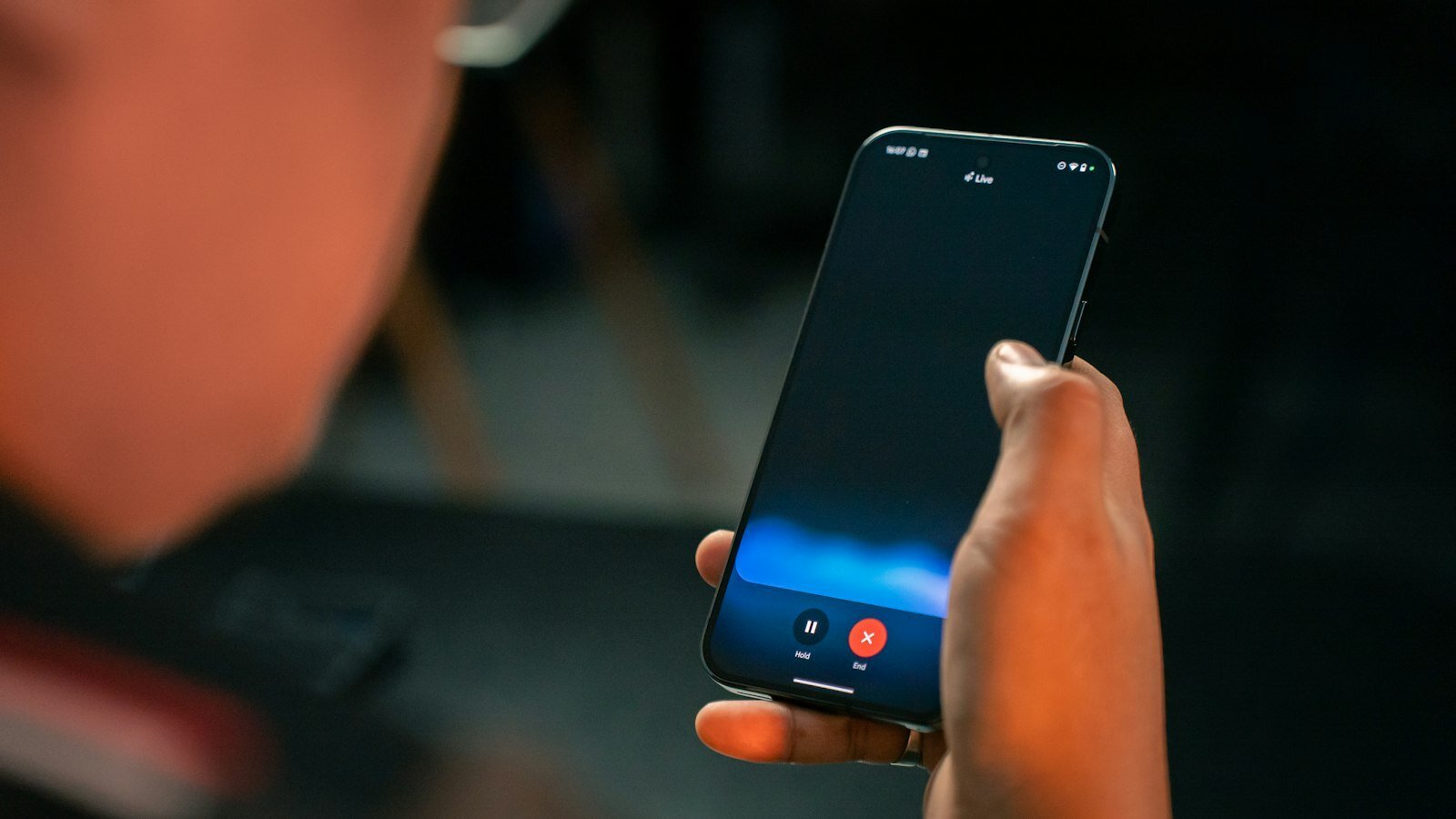
Ando works by giving AI agents a more human-like presence inside a team messaging environment. The app includes channels, direct messages, group conversations and live calls, with transcription so agents can process the discussion after the fact. Agents can browse channels, choose which ones to join and participate even if no person tags them.
That autonomy is a central part of the product. Rather than waiting to be prompted, an agent can notice activity relevant to its assigned job and step in. If it identifies an issue that should be escalated, it can message a human directly without requiring an approval chain first.
Du says this is meant to support more natural collaboration across humans and software workers. In Ando’s view, an agent should not only summarize documents or answer prompts. It should be able to act like a teammate that hears the same conversation everyone else hears.
Key product features
- Human and agent identities inside the same workspace
- Channels, group chats and DMs
- Live call transcription for agent review
- Agent-initiated participation in conversations
- Direct agent-to-human notifications when needed
| Ando feature | What it does | Why it matters |
|---|---|---|
| Agent identities | Gives software workers their own presence in the workspace | Lets agents participate as recognized team members |
| Channel access | Allows agents to browse and join discussions | Reduces missed context and manual relaying |
| Transcribed calls | Converts live discussions into text agents can review | Extends agent visibility beyond written chat |
| Agent-initiated messages | Lets agents contact humans directly | Shortens the path from detection to action |
| Cross-thread awareness | Helps agents spot related discussions in multiple places | Supports coordination across complex workstreams |
How much did Ando raise, and who backed it?
Ando said it raised $20 million in combined pre-seed and seed financing. The round included participation from Accel, Index Ventures and Emergence, three firms known for backing early-stage software startups with large market ambitions.
The company did not disclose a valuation. It also did not provide a detailed breakdown of how the financing was split between the pre-seed and seed portions. Still, the total is notable for a startup that is only now leaving stealth and has not yet become a household name in the collaboration software market.
The fresh capital is intended to help the team expand hiring and keep up with the infrastructure demands of running agent-heavy workflows, which Du referred to as “burning through more tokens” as the product scales. That comment underscores one of the economic realities of agentic software: the more agents do, the more compute and model usage the product can consume.
Why the market is crowded but still open
Ando is entering a market with formidable incumbents. Slack already has AI features built into its platform, and Microsoft has woven Copilot into Teams and the broader Office 365 ecosystem. Those companies have a major advantage: they already sit at the center of many workplaces’ communication habits.
That does not necessarily make them unbeatable. AI adoption is changing buying behavior quickly, and some startups believe legacy products may struggle to shift from human-first design to workflows where agents are active participants.
Du believes that creates a window of opportunity. If a collaboration product is designed from the beginning for mixed human-agent teams, it may be easier to create a workflow that feels native to AI rather than retrofitted onto it. The startup is effectively betting that the next generation of workplace chat will look less like a message board with bots and more like a shared coordination layer for people and software.
The idea is not entirely new. Other products have also begun blending human and AI participation in messaging environments. Jack Dorsey’s Buzz, announced a few months ago, also aims to bring people and agents together in a single app, though it is more targeted at developers. Ando, by contrast, is positioning itself as an internal collaboration platform for a wider set of business teams.
What problem is Ando trying to solve for teams?
Ando is trying to solve the coordination problem that appears when agents become useful enough to affect real business decisions. Once an AI system can summarize discussions, flag inconsistencies, draft responses and identify patterns across channels, the bottleneck often shifts from intelligence to communication.
That is especially true in small teams handling broad, fast-moving work. A single person can only read so many messages at once, but an agent can scan multiple conversations, identify overlap and surface connections that a human might miss. Ando wants that capability to live inside the system where work already happens.
Du said the early versions of the product did not immediately impress everyone who saw them. Some people viewed it simply as a clunky chat app and did not see the shift in workflow the company was aiming for. Over time, however, customers began spending more time in the product, and the team started to see behaviors that reinforced the thesis.
Du said the team realized it had traction when customers kept using the product longer and agents began surfacing connections across multiple conversations on their own.
One example she described is an agent noticing that two separate channels were discussing the same issue. Instead of waiting for a human to connect the dots, the agent could gather the relevant people into one thread, explain the shared context and even propose a decision path. That kind of coordination is hard for humans to do consistently at scale, especially in noisy workplaces.
Why that behavior matters
When teams work across multiple channels, information often fragments. Decisions get repeated. Context gets buried. The same question gets asked in three different places. An agent with broad visibility can reduce that redundancy by acting as a continuous coordinator rather than a passive responder.
That function may sound modest, but it could be valuable if AI agents take on more routine execution work. The more tasks are delegated to software, the more pressure there is on the collaboration layer to keep everything aligned.
Who is using Ando today?
Ando says it is already working with customers in software, real estate and finance across 15 countries. The teams using it are still mostly small, but that may fit the startup’s current phase. Early adoption for agent-native tools is likely to begin with companies that are already experimenting heavily with AI and are willing to redesign internal workflows around it.
Those industries also make sense as test cases. Software teams often move quickly and can tolerate experimentation. Real estate businesses coordinate across many stakeholders. Financial services teams can benefit from structured communication and fast escalation when an issue needs human review.
For now, the company appears to be focusing on proving that mixed human-agent collaboration can work in the messy reality of everyday work rather than in a lab-like demo. If it succeeds, the potential market extends well beyond early adopters.
What does this mean for the future of work?
Ando’s broader argument is that AI should not only help individuals work faster. It should change the shape of teams. Du believes very small groups may soon be able to operate at a scale that once required far more headcount because agents can absorb more of the execution, research and coordination burden.
In that future, humans would spend more time on judgment, strategy and deciding what should happen next. Agents would handle the heavy lifting of message processing, cross-thread analysis and operational follow-through.
That vision fits a wider trend in enterprise software. Companies are moving from static tools toward systems that can reason, act and coordinate. Collaboration products, in particular, may be forced to change because communication is where work begins and where much of its friction accumulates.
Ando is making a sizable bet that the next major workplace platform will not merely include AI. It will assume AI is part of the team structure from the start.
Timeline of Ando’s push into the market
| Period | Milestone | Why it matters |
|---|---|---|
| 2025 | Sara Du works with companies building MCP servers | She spots repeated demand for Slack-based agent workflows |
| During product development | Ando builds a messaging app for humans and agents | The company pivots from the problem to the platform |
| Early testing | Some users see the app as rough and unremarkable | Shows the challenge of introducing a new category |
| Later testing | Customers use the product longer and agents surface context | Signals product-market fit for agent-native coordination |
| Thursday, Sept. 24, 2026 | Ando emerges from stealth and announces $20 million | Marks the startup’s public debut and next stage of growth |
Can Ando really challenge Slack and Teams?
Ando can challenge them conceptually, but displacing them commercially will be much harder. Slack and Teams benefit from enormous distribution, deep enterprise relationships and years of user habit. For a startup to win, it must offer not just a better feature set, but a better workflow that users will adopt quickly and teams will stick with.
Still, the scale of the opportunity is significant. If AI agents become as common in offices as humans using chat, the design assumptions behind workplace software will shift. The platforms that win may be the ones that treat agents as durable coworkers rather than optional add-ons.
Ando is not yet proving that future, but it is making a forceful case for it. The startup’s product and funding announcement suggest a bet that workplace communication is about to be rewritten around a new kind of participant: software that can read, reason and respond inside the team conversation itself.
For now, Ando enters the market with money, a clear thesis and a big uphill climb. The company’s success will depend on whether businesses decide that AI agents belong not outside the chat window, but inside the conversation.
Frequently asked questions
What is Ando building?
Ando is building a team messaging platform designed for both humans and AI agents. The app gives agents identities, inboxes and the ability to join channels, DMs and calls so they can participate directly in workplace coordination.
How much funding did Ando raise?
Ando raised $20 million in combined pre-seed and seed funding. Backers include Accel, Index Ventures and Emergence, according to the company’s announcement as it came out of stealth.
Why does Ando think Slack and Teams are not enough?
Ando argues that traditional collaboration apps were designed for a human-only workplace. As agents become active participants, the company says those tools create extra work by forcing people to translate between AI systems and the rest of the team.
Who is using Ando right now?
Ando says it is working with customers in software, real estate and finance across 15 countries. The teams are still relatively small, but they represent early adopters experimenting with agent-native communication.
Can AI agents really participate in team chats?
Yes, in Ando’s model, AI agents can browse channels, join conversations, review transcribed calls and message humans directly. The company believes that level of participation helps agents coordinate work instead of functioning like isolated tools.