In short
A former Nvidia robotics executive says physical AI is still early and far broader than humanoid robots. Now running Techable VC, she is investing in startups across robotics, materials science and life sciences.
- Physical AI includes more than robots, spanning materials, medicines and industrial systems.
- Amulya Vishwanath says robotics is still in a fragmented early stage, not a mature platform market.
- Her firm, Techable VC, is making early bets across robotics, materials science and life sciences.
- She sees labor shortages, burnout and industrial inefficiency as strong near-term use cases.
- Venture investors can act as strategic moats by helping founders with diligence, customers and talent.
Physical AI is emerging as a much broader investment category than humanoid robots alone, and one former Nvidia robotics executive says that distinction matters now. Amulya Vishwanath, who spent seven years helping lead product marketing for Nvidia’s robotics platforms, is backing startups that build the real-world infrastructure behind intelligent machines, from factory systems and materials to medicines and surgical tools.
Vishwanath, now founder and managing partner of Techable VC, argues that robotics is still in an early phase — more like a building-block scramble than a finished market revolution — even as some investors predict a fast-approaching “ChatGPT moment” for robots. Her thesis, shared on TechCrunch’s Equity podcast, is that the next wave of physical AI will be defined not just by robots that move, but by machines and systems that can sense, decide, and act across industries.
Why this Nvidia veteran thinks robotics is still in its “Lego era”
Vishwanath’s core argument is that the robotics stack is still being assembled piece by piece, with many of the basic components not yet standardized or widely available. In her view, the sector has not reached the kind of platform consolidation that made modern generative AI explode after ChatGPT.
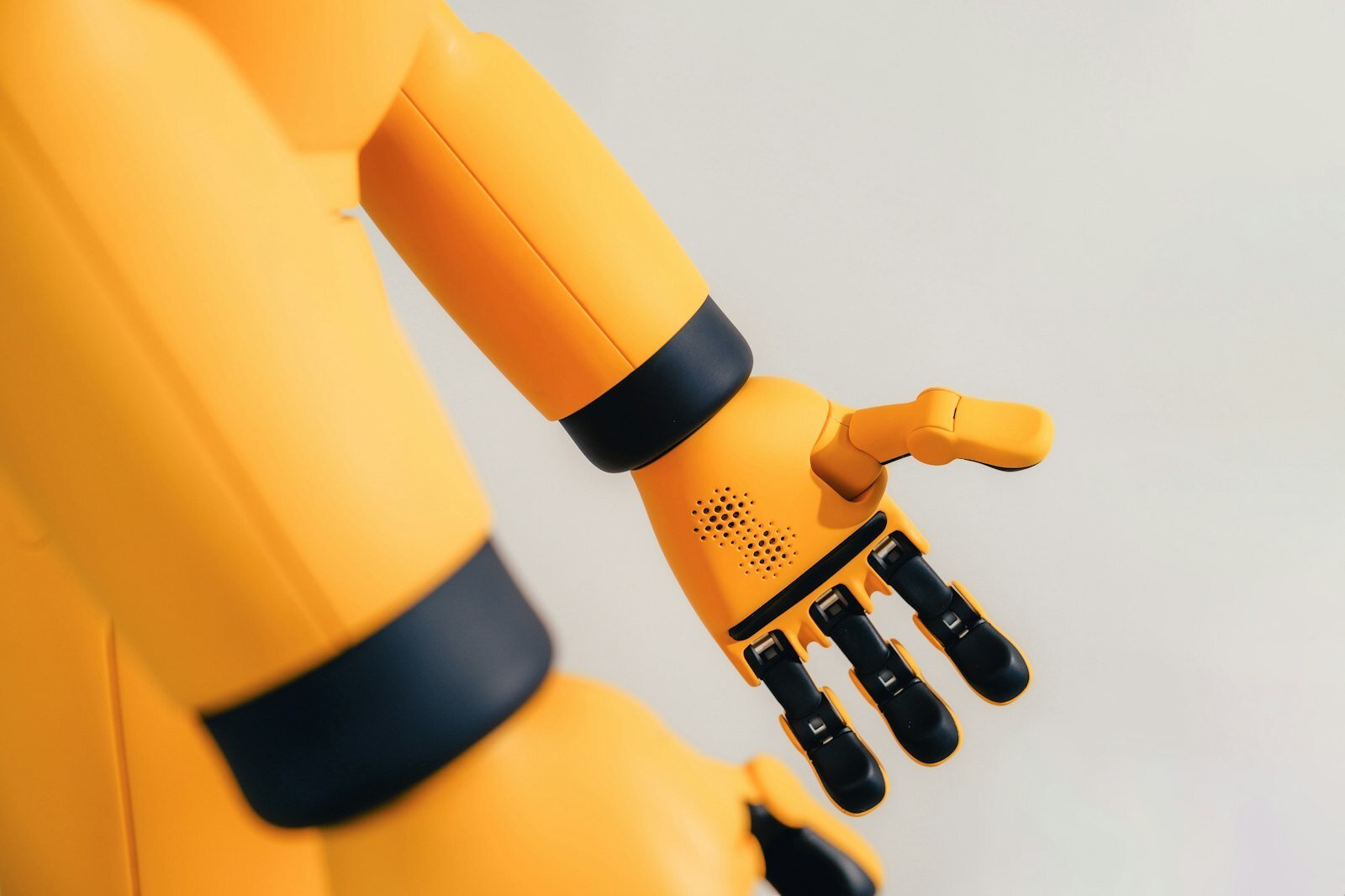
She describes robotics as being in a phase where essential parts — such as actuators, robotic hands, software layers and safety frameworks — are still evolving. That means the market is not yet ready for a single dominant model to wipe out the need for specialized work across every use case.
That view stands in contrast to a growing camp of investors and operators who believe a general-purpose foundation model could soon do for robotics what large language models did for text generation. Some of those advocates argue that one highly capable model will reduce the need for custom engineering in countless robot deployments.
Vishwanath is not dismissing that future outright. Instead, she is saying the market is further away from it than the hype suggests, and that the near-term winners will likely be companies solving the fragmented, messy, practical problems that prevent physical AI from scaling today.
What does physical AI mean beyond robots?
Physical AI, in Vishwanath’s framework, reaches far beyond humanoid machines or warehouse bots. She uses the term to describe intelligent systems that interact with the physical world in multiple forms, including industrial machinery, laboratory innovation and medical breakthroughs.
Her definition spans “a molecule, a material, a medicine,” as well as a machine on a production line. That broader lens positions physical AI as a category that blends robotics, chemistry, manufacturing, healthcare and advanced materials rather than limiting it to machines with arms and legs.
The investment implication is significant. If physical AI is defined narrowly, the opportunity set looks like a robotics startup market. If it is defined broadly, it becomes a much larger industrial and scientific transformation story — one that could affect how products are built, how drugs are discovered and how labor shortages are addressed.
How Techable VC is approaching the market
Techable VC, the early-stage firm Vishwanath founded and manages, is placing first checks into startups working across robotics, materials science and life sciences. That portfolio mix reflects her belief that physical intelligence is a systems problem, not only a hardware problem.
By investing early, Techable VC is looking for founders tackling the hard infrastructure underneath physical AI rather than chasing the most visible headline category. In practice, that can mean startups improving machine dexterity, safety, performance, manufacturing throughput or scientific discovery.
The approach also suggests a bet on long development cycles. Physical AI products often require long periods of testing, certification and integration before they can be deployed at scale, which makes the investor-founder relationship especially important.
Vishwanath’s thesis is that the most valuable opportunities are not necessarily the most obvious robot demos, but the companies building the capabilities that let intelligent machines work reliably in the real world.
Why “conscious automation” matters to the next wave of startups
Vishwanath says part of the opportunity in physical AI lies in what she calls “conscious automation.” While the term can mean different things in different contexts, her use of it points toward systems that are not just autonomous, but also aware of constraints, safety, and the human environments they operate in.
That matters because the physical world is less forgiving than software. A chatbot can answer a question incorrectly and be corrected later; a robot arm in a factory, a surgical assistant, or a machine handling hazardous materials can create real-world damage if it makes the wrong decision.
For investors and founders, “conscious automation” implies a market where trust, resilience and control are just as important as raw capability. In other words, the next winners may be those that can prove their systems are dependable in complex environments, not just impressive in demos.
Who are the customers that could benefit first?
Vishwanath points to businesses and institutions facing acute operational pain, especially those where labor shortages or burnout create urgent demand for automation. Among the examples she highlights are family-owned factories struggling to hire enough workers and surgeons dealing with exhaustion and overwhelming workloads.
Those are not abstract use cases. They are industries where the need for better machines is tied directly to daily operational risk, cost pressure and quality concerns. That gives physical AI startups a clear path to value creation if they can solve specific workflows rather than trying to automate everything at once.
It also helps explain why many of the earliest opportunities may be narrow and vertical. A startup that reduces fatigue in one surgical task or improves throughput in one factory process can generate strong customer pull even before the broader robotics market matures.
Examples of early physical AI demand
- Small and mid-sized manufacturers that cannot find enough skilled labor.
- Healthcare teams looking to reduce repetitive strain and burnout.
- Industrial operators needing safer handling of repetitive or dangerous tasks.
- Research and development teams seeking faster discovery in materials and biology.
How Nvidia shaped Vishwanath’s investment edge
Vishwanath’s seven-year run at Nvidia is central to how she now invests. At the chip giant, she worked closely with robotics platforms, giving her a front-row seat to how the ecosystem has evolved and where the bottlenecks remain.
She says that experience gave her more than technical exposure. It also built a network of engineers, founders, researchers and potential customers that she can now tap for diligence, introductions and market validation. In venture capital, that kind of access can be a powerful differentiator.
Her background may also help her spot which startups understand the realities of deployment. In physical AI, a product’s technical promise is only one part of the equation. The harder question is whether it can be adopted, supported, maintained and safely scaled inside real organizations.
That is why she wants founders to view their venture investor as part of their moat. For her, capital alone is not enough. The right investor can help a company find talent, open doors to customers and pressure-test product assumptions before a startup burns time and money on the wrong path.
| Theme | Vishwanath’s view | Why it matters |
|---|---|---|
| Robotics market stage | Still in a “Lego era” | Core components and standards are still being built |
| Physical AI definition | More than robots | Includes materials, medicines, factories and scientific systems |
| Investment focus | Robotics, materials science, life sciences | Reflects a broad, cross-industry thesis |
| Key startup advantage | Investor network as a moat | Diligence, customer access and hiring support |
| Market opportunity | Labor shortages, burnout and industrial inefficiency | Concrete pain points create early demand |
Why some investors expect a robot ChatGPT moment — and why she disagrees
The debate around robotics has become increasingly familiar to anyone following AI. One camp believes the sector is on the verge of a dramatic breakthrough, similar to the sudden jump in public awareness that ChatGPT triggered for generative AI in late 2022. In that scenario, a general foundation model would unlock a wave of capable robots and compress years of specialized development.
Vishwanath’s view is more cautious. She does not deny that foundational models will matter, but she argues that robotics still lacks the uniformity, standardization and maturity needed for such a rapid leap. The equipment, mechanics, sensors, software, safety rules and deployment environments remain too varied.
That difference is important for founders. If the market is truly on the verge of a single model-driven inflection, then building a general-purpose robotics layer might be the right strategy. If the market is earlier and more fragmented, then narrower, use-case-specific companies may have a better path to traction.
For now, Vishwanath appears to be betting on the latter.
How the U.S. and China fit into the physical AI race
Vishwanath also sees the physical AI market through a geopolitical lens, particularly when it comes to the United States and China. While the source conversation does not spell out every detail of her comparison, she flags the two countries as having different strengths in the next wave of embodied intelligence.
That distinction matters because physical AI is deeply tied to manufacturing capacity, supply chains, industrial policy and deployment scale. The country that can best combine research, hardware production and real-world adoption may shape the pace of commercialization.
China has long been associated with manufacturing scale and rapid hardware iteration, while the U.S. has often led in software, research and frontier model development. In physical AI, the winner may not be the side with the strongest single advantage, but the one that can connect all the pieces fastest.
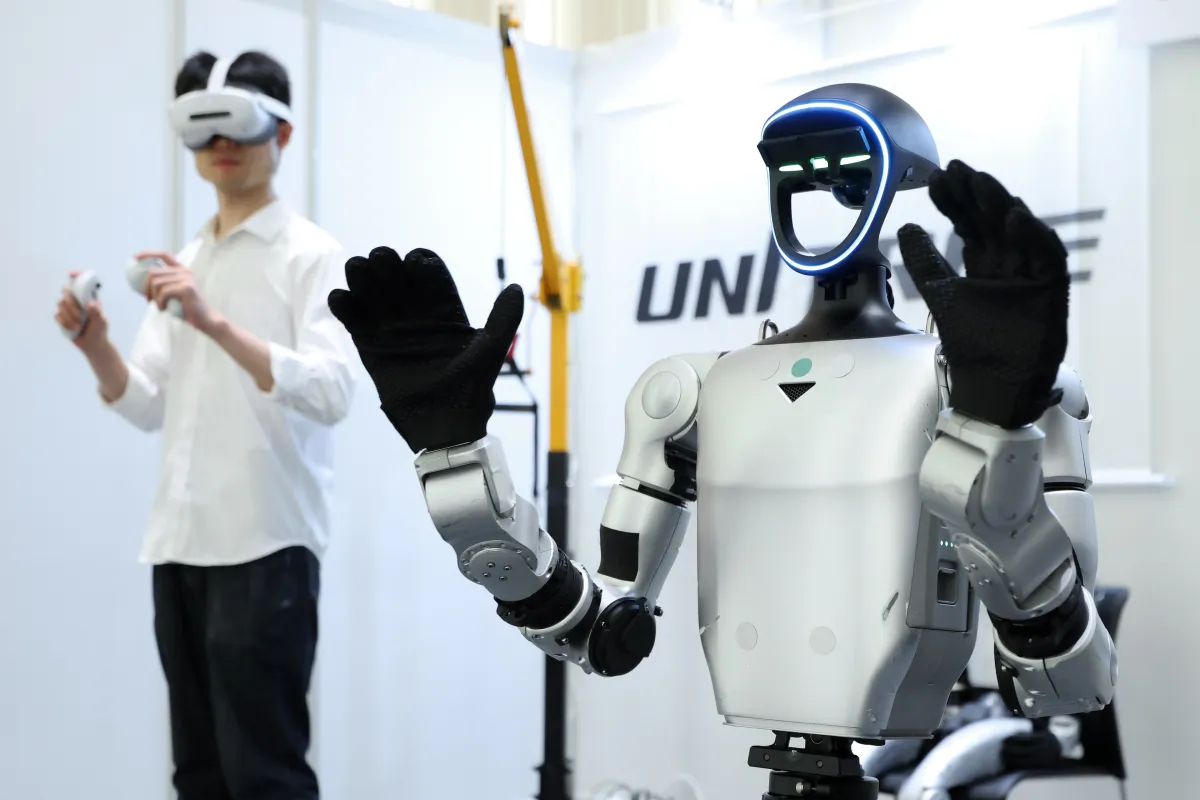
Humanoids are not just for show
Among the more visible parts of the robotics boom is the rise of humanoid machines, which often capture attention through polished videos and flashy movement demos. Vishwanath’s perspective suggests that these systems should be judged by their usefulness, not their entertainment value.
Her comment that humanoids should be good for more than dancing points to a broader skepticism about hype-heavy robotics marketing. A robot that performs well in a demo room is not necessarily a robot that can survive a factory floor, logistics center or medical environment.
That is another reason she emphasizes practical applications. The long-term winners in physical AI may be the companies that make machines useful, safe and economically justified — not simply the ones that go viral.
What Techable VC is looking for in founders
While Techable VC is still an early-stage firm, Vishwanath’s comments make her founder preferences fairly clear. She appears to favor teams attacking high-friction, high-value problems rather than broad, speculative visions that assume the technology will catch up later.
Her ideal founders likely understand both technical constraints and customer pain. In sectors like robotics and life sciences, that combination can be the difference between a compelling prototype and a company that actually ships products.
Founders who can translate research into repeatable workflows may be especially attractive. So may those who can explain how their systems will integrate with existing operations rather than replace them overnight.
Likely traits of a Techable VC target company
- A clear, painful problem in the physical world.
- Evidence that the customer would pay for the solution now.
- Technical depth paired with deployment realism.
- Potential to scale across an entire workflow or industry.
- A product that benefits from relationships, not just capital.
Why this matters now for startups and investors
The broader significance of Vishwanath’s thesis is that it reframes physical AI as an industrial transformation story, not a single robotics breakout. That matters for investors deciding where to place bets, and for founders deciding how to position their companies.
If physical AI is still early, then the best companies may not be the ones with the most dramatic demos. They may be the ones that make components, software, or workflows reliable enough for enterprise adoption. That creates room for startups across multiple layers of the stack.
It also means capital may flow differently than it did in earlier AI booms. Instead of concentrating exclusively in a few foundation-model winners, money could spread across robotics infrastructure, manufacturing tools, lab automation, surgical systems and advanced material discovery.
For Techable VC, that creates a broad runway. For the rest of the market, it is a reminder that the next phase of AI may be less about chat windows and more about what happens when intelligence leaves the screen and enters the physical world.
The bottom line
Vishwanath’s message is simple but important: physical AI is bigger than robots, and robotics itself is still earlier than many people think. The companies most likely to matter may be those building the pieces that make intelligent machines safe, useful and economically valuable across factories, labs and hospitals.
That framing gives Techable VC a distinctly industrial and scientific edge at a time when many investors are still chasing the most visible avatar of AI progress. It also offers a useful reality check. The future of embodied intelligence may be arriving, but according to one former Nvidia insider, it is not arriving as quickly — or as uniformly — as some of the boldest predictions suggest.
Frequently asked questions
What is physical AI?
Physical AI is a broad term for intelligent systems that operate in the real world, not just on a screen. In Amulya Vishwanath’s view, it can include robots, factory machines, materials, medicines and other systems that sense, decide and act in physical environments.
Why does Vishwanath think robotics is still early?
She says robotics is still in a “Lego era,” meaning the core pieces of the stack are still being assembled. Important components such as actuators, robotic hands, software layers and safety standards are still developing, so the market is not yet unified.
What is Techable VC investing in?
Techable VC is backing early-stage startups in robotics, materials science and life sciences. Vishwanath’s strategy reflects a belief that the biggest opportunities in physical AI will come from companies building the infrastructure and applications that make physical systems useful and reliable.
Will robots have a ChatGPT moment soon?
Possibly, but Vishwanath is skeptical that it will happen as fast as some expect. She argues that robotics lacks the standardization and maturity that made ChatGPT-style breakthroughs possible in software, so the sector may advance through more incremental gains.
Which industries could benefit first from physical AI?
Manufacturing and healthcare may benefit first, especially where labor shortages, burnout or repetitive tasks create immediate pain. Vishwanath points to family-run factories that cannot find workers and surgeons facing exhaustion as examples of urgent demand.