In short
AI-generated celebrity posts are spreading rapidly on Instagram, where verification badges and weak image labeling can make fake content look real. The Mia Goth case shows how quickly deepfakes can go viral before platforms remove them.
- AI-generated celebrity content is increasingly going viral on Instagram.
- A fake Mia Goth post spread widely after appearing on a verified fan account.
- Meta removes impersonation accounts, but still-image AI labels are not required.
- YouTube has a more advanced likeness detection and takedown system.
- The problem is fueled by engagement, monetization and weak disclosure rules.
Instagram has become a major distribution channel for celebrity deepfakes, with AI-generated photos and videos of actors, musicians, athletes and other public figures spreading to millions of viewers before platforms intervene. The latest wave, highlighted by fake Mia Goth and Taylor Swift posts, shows how verification badges, recommendation algorithms and weak image-labeling rules can help synthetic content look real long enough to mislead fans.
The problem matters because these posts are no longer niche curiosities. They are being liked, shared, search-indexed and even discussed by entertainment outlets, which can amplify false narratives about real people while making it harder for platforms to contain reputational harm, impersonation and sexualized abuse.
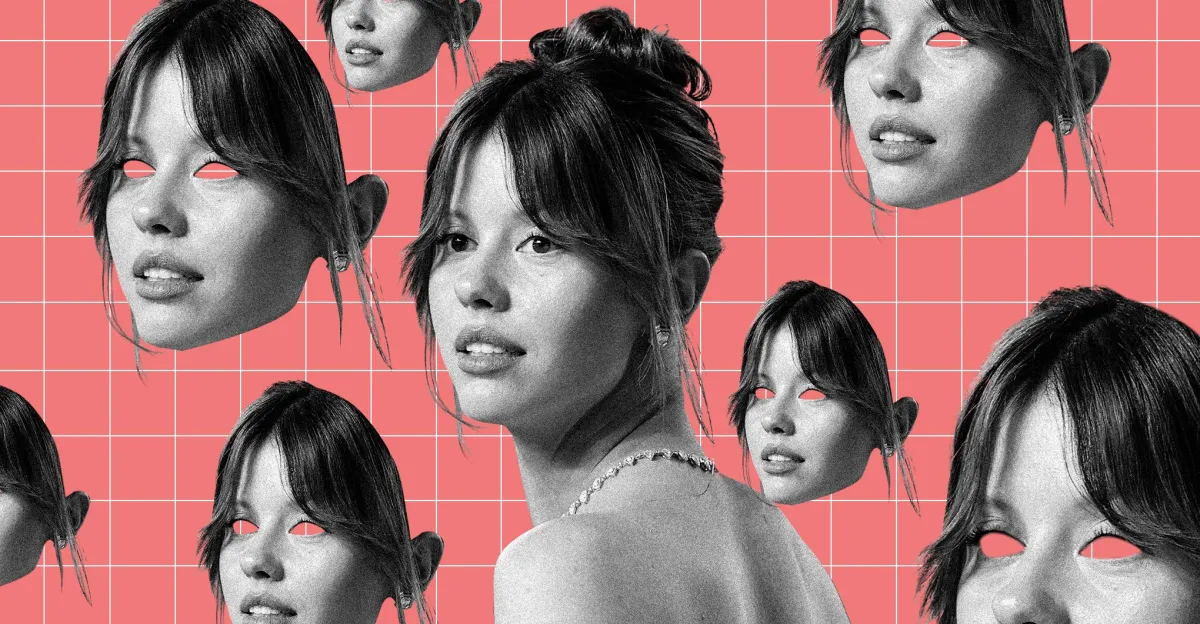
A fabricated Instagram post that appeared to show actress Mia Goth gloating about her divorce from Shia LaBeouf briefly looked like a real celebrity moment to thousands of users. It was not real, though. The account that posted it was a fan page using a verified badge, and the image was created with AI.
The episode is part of a much larger trend: synthetic celebrity content is now so common on social platforms that it can rack up huge audiences before anyone notices the post is fake. In some cases, the content is clearly absurd. In others, it is polished enough to appear plausible, especially when it mirrors real gossip, trending news or a celebrity’s public image.
What makes the situation more alarming is that the fake content often travels faster than corrections. Once a fabricated image gets shared into gossip blogs, search results and recommendation feeds, it can become part of the online record even after the original account is removed.
Why the Mia Goth post mattered
The fake Mia Goth image mattered because it combined three ingredients that routinely drive viral misinformation: celebrity news, relationship drama and a platform system that made the post look more trustworthy than it was.
The image appeared shortly after Goth filed for divorce from actor and filmmaker Shia LaBeouf. It showed her wearing a T-shirt with a pointed message about an ex, while Beyoncé’s “Single Ladies (Put a Ring on It)” played underneath. The joke was obvious enough to draw attention, but realistic enough to be taken seriously by many viewers.
Compounding the deception, the post came from an Instagram account called @miagoth_ that had more than one million followers and a blue checkmark. The page also presented itself as a fan account, creating the kind of ambiguity that can confuse casual users who assume a verified account must be official.
Representatives for Goth told The Verge that the account had previously drawn complaints for posting counterfeit AI-generated images of the actress, and they argued that Instagram should have treated the account’s blue badge as a warning sign rather than a signal of legitimacy.
Within days, the fake post had gathered close to 500,000 likes. Some likes reportedly came from people working in entertainment, which underscores how quickly an image can spread once it appears to fit a real-world story.
How celebrity deepfakes spread so fast on Instagram
Instagram’s design rewards attention first and verification second. A strong visual hook, a familiar face and a provocative caption can push a post into massive circulation before fact-checking or moderation catches up.
That dynamic is especially powerful when the fake content piggybacks on breaking news. In the Goth case, her divorce filing gave gossip accounts a ready-made frame for the image, and search engines did the rest by surfacing related posts and AI-generated summaries that repeated the false implication.
Once content reaches that stage, the platform itself is no longer the only amplifier. Search results, entertainment blogs and social reposts can each extend the life of the false image, making the original fake look more credible because “other outlets are covering it.”
What made the post believable?
The post felt believable because it used recognizable celebrity cues, current news, and the visual style of ordinary social posts. That combination can override skepticism, especially when the audience sees a blue checkmark and a high follower count.
It also helped that Goth is not especially known for a heavily managed social media presence. For many users, a fan page posting a seemingly playful celebrity reaction would not immediately trigger suspicion.
- Timely gossip: The image arrived amid real divorce news.
- Platform signals: The account had a verified badge and a large audience.
- Familiar format: The post resembled standard celebrity fan-content sharing.
- Algorithmic boost: Engagement pushed the post to more users.
What is Instagram doing about AI celebrity impersonation?
Instagram’s parent company, Meta, says it does not allow accounts to use another person’s likeness to impersonate them, whether the content is real or AI-generated. After questions were raised about several accounts that posted celebrity deepfake material, Meta said it had removed some of them, including the accounts tied to Goth and to actress Scarlett Johansson.
Still, the platform’s rules leave important gaps. Meta requires some AI-generated content to carry labels, but still images are exempt from that disclosure rule. That means a fake static image of a celebrity may not need to be marked as synthetic, even when it is designed to look authentic.
The company has also rolled out “AI-generated profile” labels for accounts whose avatars do not correspond to a real-world person. But those labels do not necessarily solve the problem when an account uses a real celebrity’s name, image or identity cues without permission.
The result is a moderation system that can remove some obvious impersonators while leaving room for a flourishing gray market of celebrity mimicry, parody, fetish content and outright fraud.
Why the blue check can be misleading
The blue verification badge was once a rough marker of authenticity. On modern Instagram, it can simply indicate that someone paid for verification or met a platform eligibility standard, not that the account is official, endorsed or even trustworthy.
That distinction matters in celebrity deepfake cases. A fake or fan-managed account with a blue badge may appear more authoritative than an unlabeled account, even when the content is bogus. In practice, that can accelerate virality instead of preventing impersonation.
How bad is the celebrity deepfake problem?
The problem is broad, recurring and increasingly commercialized. A growing number of accounts churn out AI-generated celebrity images and videos because the content attracts clicks, likes and followers at scale. In many cases, the output is sexualized, sensational or bizarre enough to keep people engaged even when they suspect it is fake.
Some accounts post endless images of actresses, musicians and influencers in highly stylized or partially undressed poses. Others specialize in fake wedding photos, awkward red-carpet scenes or videos of celebrities lip-syncing to popular songs.
There is also an ecosystem built around monetization. Some creators use celebrity AI accounts to sell subscriptions, drive traffic to paid channels or advertise AI content courses. In other words, this is not only a moderation problem; it is an attention economy built around synthetic likenesses.
| Platform | Current approach to celebrity likeness | What it means in practice |
|---|---|---|
| Instagram / Meta | Removes impersonation accounts; labels some AI content, but still images are exempt | Fake celebrity photos can circulate without mandatory AI disclosure |
| YouTube | Likeness detection for visual and, more recently, sound-alike matches | Public figures and users can request takedowns of unauthorized content |
| Search engines | Index and summarize web coverage, including social posts | False celebrity narratives can be reinforced by AI-generated search overviews |
| Fan pages / aggregators | No uniform standard for disclosure or consent | Real and fake content often blend together, increasing confusion |
Why are female public figures targeted so often?
Female public figures are targeted so often because the content performs well and can be shaped into sexualized, humiliating or voyeuristic material with relative ease. That makes them especially useful for accounts chasing engagement, even when the images are obviously synthetic to closer observers.
In the examples highlighted by The Verge, celebrity AI accounts repeatedly pushed images of women such as Scarlett Johansson, Millie Bobby Brown, Zendaya and Ariana Grande. The patterns were consistent: exaggerated bodies, suggestive poses and a blurring of entertainment with exploitation.
That trend is not limited to women, but the volume and style of the content suggests a clear gendered pattern. The risk is not only reputational damage; it is the normalization of nonconsensual synthetic imagery as if it were simply another form of fandom.
How does monetization change the abuse?
Monetization turns a fake image into a business model. When an account can sell subscriptions, collect ad inquiries or funnel users to paid groups, the incentive to keep producing celebrity deepfakes increases even after takedowns.
That creates a whack-a-mole effect for platforms. Remove one page and another appears, often using slightly different branding, a different handle or another celebrity whose name can attract clicks.
What rules apply to AI fake images of celebrities?
In the United States, there is no single nationwide right-of-publicity law that cleanly governs every case, so much of the current fight happens on platform terms of service and targeted legislation. The most important federal development is the Take It Down Act, signed in 2025, which criminalizes the distribution of nonconsensual intimate imagery, including AI-generated versions, and requires platforms to remove such material within 48 hours.
That law helps with intimate deepfakes, but it does not solve the broader problem of false celebrity likenesses, parody pages, manipulated public statements or fabricated images that are not explicitly intimate. Those posts can still cause harm, especially when they exploit real personal news.
As a result, the system remains fragmented. Celebrities may rely on platform complaints, copyright claims, publicity rights, defamation theories or takedown programs depending on the content and the jurisdiction.
How YouTube’s system differs from Meta’s
YouTube has built one of the most developed likeness-detection systems in the major social platform space. The company says it can scan for visual matches to a person, and it has expanded the system to detect some sound-alike content as well.
Under the program, people can ask for takedowns of unauthorized content, though not every request is approved. YouTube says it weighs public interest, newsworthiness and consent when deciding whether a video should stay up.
That approach is broader than Meta’s treatment of still images, because it is built around active search and removal rather than passive labeling alone. In the first half of 2026, YouTube said it removed more than 95 percent of videos reported through the likeness program.
YouTube said its detection system was developed with help from the entertainment industry and that the company has kept expanding who can use it, moving beyond celebrities and creators to cover every adult with a YouTube account.
Even so, there are limits. A system built to detect matches can help catch obvious reposts, but it is much less effective when a creator slightly alters a face, changes the context or moves the content to another platform.
What happened after the Mia Goth post spread?
After the fake post circulated, Instagram eventually removed the account for impersonating a public figure. But by then, the image had already moved beyond the platform, picked up likes and comments, and been folded into wider gossip coverage.
The story illustrates a common failure mode in modern social media moderation: removal arrives only after the content has already done the damage. That damage may include public humiliation, confusion, accidental amplification by legitimate users and a longer-term erosion of trust in what appears in a feed.
It is also notable that the fake post drew attention precisely because it was topical and spicy, not because it was especially sophisticated. That should worry platforms. A low-tech fake can still travel far if it is timely, emotionally resonant and algorithmically favored.
Why this is becoming a trust-and-safety crisis
This is becoming a trust-and-safety crisis because the tools that were meant to distinguish real from fake are now part of the problem. Verified badges, search snippets, algorithmic boosts and “AI-generated” labels can all be inconsistent, incomplete or easy to ignore.
At the same time, the volume of synthetic content keeps rising. Even when platforms act, their interventions often target the account rather than the underlying incentive structure. If engagement remains high, more creators will continue to produce fake celebrity media.
There is also a broader cultural effect. When users repeatedly encounter fake celebrity content, they may begin to treat all celebrity imagery as suspect. That erosion of trust can benefit bad actors by making every correction seem optional.
What users should watch for
Users cannot solve the problem alone, but they can slow its spread by checking a few details before sharing celebrity content.
- Look closely at the account handle, not just the profile picture or badge.
- Check whether the celebrity has a real post matching the claim.
- Search for the image or video in reputable reporting before engaging.
- Be cautious with content that appears just as a scandal breaks.
- Treat highly stylized “fan” posts as unverified unless independently confirmed.
What comes next for platforms and public figures?
Platforms will likely face mounting pressure to improve disclosure, verification and likeness protection, especially for high-profile adults who are easy targets for impersonation and sexualized deepfakes. Public figures and their representatives are already pushing for faster removals and clearer policies.
But the technical and policy challenge goes beyond one app or one celebrity. AI-generated likeness content can move between Instagram, Facebook, YouTube, search results, Telegram, Patreon and countless smaller sites. A takedown in one place often becomes a restart somewhere else.
That is why the recent Mia Goth case matters beyond celebrity gossip. It is a case study in how synthetic media now moves through the internet: a fake image, a blue badge, a real-world news event, a wave of engagement, and then a late-stage cleanup effort after the falsehood has already spread.
For celebrities, that means the line between publicity and impersonation is becoming harder to police. For platforms, it means the current moderation playbook is still too slow, too uneven and too easy to route around. And for users, it means the most shareable post in the feed may be the one that deserves the most skepticism.
Frequently asked questions
What happened with the Mia Goth AI image on Instagram?
A fake Instagram post appeared to show Mia Goth mocking her ex after filing for divorce from Shia LaBeouf. The image was AI-generated and posted by a verified fan account, but it spread widely before Instagram eventually removed the account for impersonation.
Why are celebrity deepfakes so hard to stop on Instagram?
Celebrity deepfakes are hard to stop on Instagram because they can spread quickly through likes, shares and search results before moderation catches up. Meta also exempts still images from its AI labeling rule, which lets fake celebrity photos circulate without clear disclosure.
Does Meta remove accounts that impersonate celebrities?
Yes, Meta says it does not allow accounts to use someone’s likeness to pose as that person, whether the content is real or AI-generated. In practice, however, removal often happens after posts have already spread widely and attracted engagement.
How is YouTube handling AI celebrity likenesses differently?
YouTube uses a likeness detection program that scans for visual matches and, more recently, sound-alike content. It lets adults request takedowns and says it removed more than 95 percent of videos reported through the program in the first half of 2026.
Why do AI fake images of celebrities go viral so easily?
AI fake images of celebrities go viral because they combine familiar faces, breaking news, gossip and strong visual hooks. When they appear on popular accounts with verification badges, users may assume they are real and share them before checking the source.