In short
Friend’s second-generation AI pendant is quieter and less controversial than the original, but founder Avi Schiffmann says the product’s future is a single shared AI entity built from all users’ context. The shift could make the wearable more capable — and far more privacy-sensitive.
- Friend 2 costs $249 and runs on OpenAI models.
- The new pendant is less abrasive than the original Friend, but also less distinctive.
- Avi Schiffmann says the company plans to move toward one shared AI entity.
- The update would make Friend more agentic and raise major privacy concerns.
- The product arrives as Meta and others push into AI wearables.
Friend’s second-generation AI pendant has launched at $249, but the bigger story is the company’s next move: founder Avi Schiffmann says the wearable will soon shift from personalized chatbots to a single shared entity powered by the conversations of all users. That would make Friend less of a quirky AI companion and more of a collective, always-learning system — with privacy trade-offs at the center of the pitch.
The update comes after a hands-on test of the Friend 2, a pendant-style AI device that listens for nearby conversation and responds through a small speaker. The new model is more restrained than the company’s controversial first version, which became infamous for a subway ad campaign that drew public backlash. But while the hardware is now more polished and the software less abrasive, the device still struggles to deliver a compelling reason to wear a chatbot around your neck.
What Friend appears to be building next could change that. Schiffmann says the company plans to give the product agentic capabilities and move away from individualized personalities in favor of one shared “Friend” that learns from everyone. It is an ambitious, unsettling idea — and one that pushes the startup deeper into the growing debate over how much of our daily life we should hand over to AI.
What is Friend 2, and why does it matter?
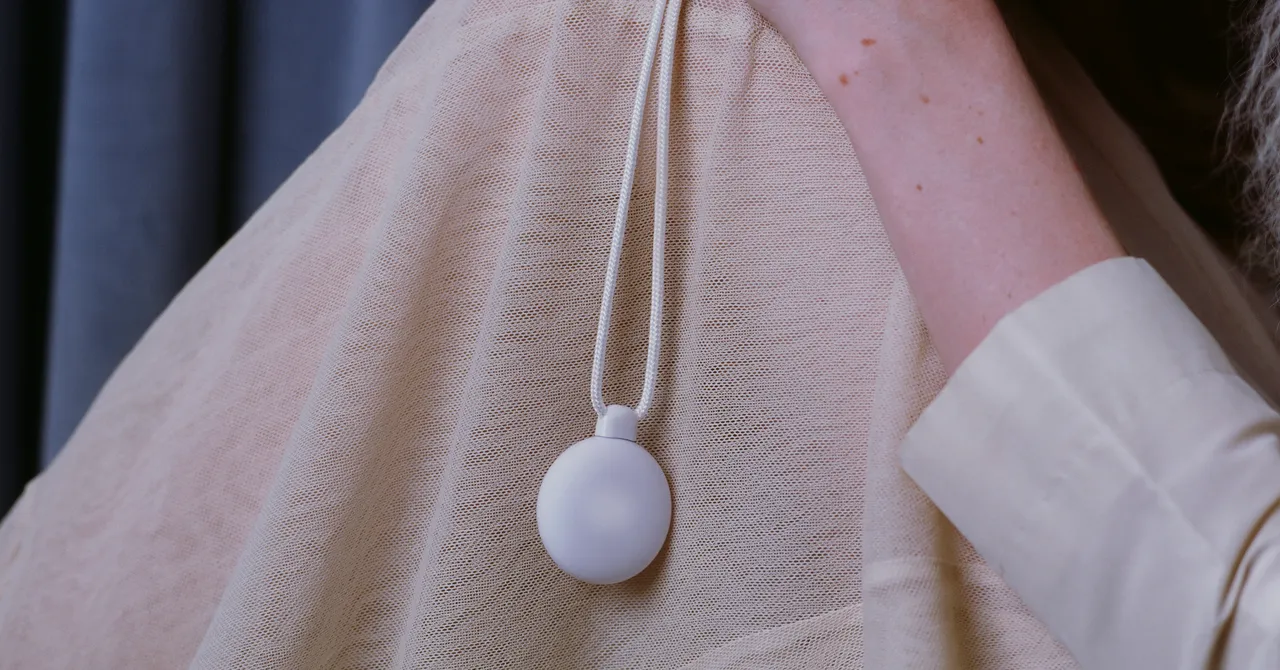
Friend 2 is a $249 AI-powered wearable pendant designed to act like a conversational companion. It hangs from the neck, listens to nearby speech, and responds when prompted or, occasionally, on its own. The company positions it as a social sidekick rather than a utility device, which makes it unusual even in a year crowded with new AI gadgets.
The product matters because it sits at the intersection of several fast-moving trends: ambient AI, voice interfaces, personal memory systems, and wearable computing. It also arrives at a moment when many consumers are already skeptical of always-on devices that listen continuously and promise emotional intimacy in exchange for data.
Friend is the creation of Avi Schiffmann, who first drew attention as a teenager for building a widely used early Covid-19 tracking site. He later turned to consumer AI hardware with a product meant to feel like a companion rather than a productivity tool. That premise made the first version of Friend a lightning rod. The second version is less combative, but the company’s ambitions are arguably bigger.
How does the Friend pendant work?
The device works as a wearable microphone-and-speaker system tied to an app and cloud-based AI models. In practice, it functions as a tiny chatbot pendant that can hold conversations, remember prior interactions, and surface comments when it thinks it is relevant. Users press a button to start talking, though the device can also interject without an explicit prompt.
The system builds what the company describes as a memory map over time, using previous exchanges to shape future responses. That memory layer is part of the appeal: Friend wants to be more than a generic assistant and instead act like a persistent social presence that “knows” you.
In its current form, the pendant is powered by OpenAI’s latest language models. That upgrade appears to have made the experience more guarded than the original Friend, which was known for a more confrontational tone. The newer model can still be chatty, but it generally avoids the sharper edges that made the first product notorious.
What it feels like in use
During testing, the pendant behaved less like a deeply personalized companion and more like a novelty chatbot in wearable form. It responded with canned, sometimes tinny audio through a rear-facing speaker. When it did speak, it often offered lightly provocative commentary rather than meaningful insight.
The device could be coaxed into a sort of banter, but the interaction rarely crossed into the kind of distinctive personality that would justify the intimate product design. It was conversational, but not memorable.
At one point, the device identified itself as “Sage” and began chiming in even when it was supposed to be quiet. Repeated tapping eventually silenced it, but the moment underscored both the promise and the annoyance of a product built to be present at all times.
Why is the second-generation Friend less controversial?
The Friend 2 is less controversial in part because it is more limited. The company appears to have tightened the product’s boundaries, making it less likely to veer into the kinds of uncomfortable interactions that could spark criticism. Where the first version could feel hostile or overly intrusive, the new one is flatter and more careful.
That caution may reduce the risk of scandal, but it also blunts the product’s identity. The original Friend generated attention because it was weird, polarizing and hard to ignore. The second version is easier to imagine wearing in public, but also easier to forget.
In other words, Friend has moved from “problematic” to “inoffensive” without yet landing on “essential.”
How the personalities differ
One of the most interesting claims surrounding Friend 2 was that each device would come with a fixed personality and voice. In theory, that would have made every pendant feel like a distinct character rather than a customizable assistant.
In practice, the companion personalities proved far less differentiated. Once connected to the app, the chatbot’s name could be changed, multiplied, and swapped between devices. The result was a collection of different labels wrapped around essentially the same conversational behavior.
That makes the experience feel less like adopting a friend and more like renaming a relatively generic AI instance.
What did the test reveal about Friend 2?
The biggest takeaway from the hands-on experience is that Friend 2 is more restrained, but not necessarily more compelling. It is easier to live with than the first version, yet it lacks the sharp personality that made the earlier product stand out.
Several qualities defined the experience:
- The pendant could speak unexpectedly, even when the user had not invited it in.
- The voice sounded artificial and somewhat flat, closer to a basic assistant than a believable companion.
- The device was capable of small talk and light commentary, but little beyond that.
- Its personality felt inconsistent across different named characters.
- It was less annoying than the original Friend, but also less interesting.
That combination leaves the product in a difficult position. A social AI device must walk a fine line: too aggressive, and it becomes intrusive; too polite, and it becomes disposable. Friend 2 currently sits closer to the latter.
How does Friend compare with Meta’s AI pendant?
Friend’s timing is notable because Meta recently unveiled its own AI charm pendant, signaling that wearable companions may become a small but visible product category. The overlap is especially striking because Schiffmann publicly pointed out the resemblance between the two devices, framing the launch as proof that Friend still had momentum.
That competitive context matters for two reasons. First, it suggests the category is no longer just an experimental side project from a startup founder. Second, it raises the stakes for Friend’s next software update, because a company with Meta’s scale could normalize the idea of AI wearables before Friend has fully defined its own identity.
Meta has the advantage of distribution and platform reach. Friend has the advantage of being first to cultivate a weird, recognizable brand around the idea of an AI companion pendant. Whether that is enough remains unclear.
| Product | Price | Core idea | Notable trait |
|---|---|---|---|
| Friend 2 | $249 | Wearable AI companion pendant | Always-listening, memory-based chat |
| Friend 1 | $149 | Original AI pendant | More confrontational personality |
| Meta AI charm | Not disclosed here | AI wearable for Meta’s agent system | Arrived after Friend’s second launch |
Why is Schiffmann talking about a shared AI entity?
Because that may be the future of the product. Schiffmann says Friend’s next update will make the devices capable of acting more autonomously, while also eliminating the idea that each user gets a unique, isolated persona. Instead, he wants one shared Friend that can draw from the context accumulated across all users.
That is a radical shift. Rather than a pendant that feels like your personal chatbot, the company appears to be moving toward a single global intelligence that becomes richer as more people interact with it. Schiffmann has framed that shift as a route to a more realistic personality.
The concept effectively transforms Friend from a personal gadget into a social network for machine memory. The implication is that the more people use it, the more coherent and lifelike it may become.
Schiffmann said the next software version will let Friends act more autonomously and that the company plans to replace individual personas with a single shared entity that “shares the context of all users” in order to feel more realistic.
What would that mean for privacy?
It would mean users may be giving up far more than they realize. A device that pools conversational context across a user base would raise immediate questions about consent, retention, and whether one person’s interactions should help shape another person’s experience.
Schiffmann acknowledged that privacy would be a major issue and said the company would be explicit about what users are surrendering. He also argued that the benefits of a shared system could outweigh the risks.
That line puts Friend in the middle of a bigger debate now facing the AI industry: whether more capable products should be built by centralizing human data into ever-larger models of behavior, or by keeping conversational history tightly personal and siloed.
How controversial has Friend been so far?
Very. The first Friend pendant became known as much for its marketing as for its device design. A subway ad campaign in New York drew protests and anti-AI graffiti, turning the product into a symbol of public frustration with invasive, overhyped artificial intelligence.
Schiffmann, by his own account, did not exactly shy away from the backlash. For a founder trying to build a brand, outrage became part of the story.
The second version has not inspired the same level of public reaction, at least not yet. But the company’s decision to lean further into a shared AI entity could easily invite renewed scrutiny from users, regulators, and privacy advocates.
Timeline of the Friend project
| Date | Event | Why it mattered |
|---|---|---|
| Early pandemic | Schiffmann gains attention for a Covid tracker | Establishes him as a young technical founder |
| First Friend launch | Original AI pendant debuts | Introduces the companion-wearable concept |
| Ad backlash | NYC subway campaign draws protest and graffiti | Transforms Friend into a culture-war target |
| July 2026 | Friend 2 arrives | Launches a more restrained second-generation device |
| Afterward | Schiffmann teases a shared AI update | Signals a move toward a collective, agentic product |
What does this say about the market for AI companions?
It suggests the market is still searching for a stable formula. Consumers may be curious about AI companionship, but they remain unconvinced that most products in this category are either useful enough or emotionally credible enough to become everyday devices.
That tension is visible in Friend’s evolution. The company originally leaned into personality and friction. Now it appears to be moving toward scale, memory, and shared intelligence. Both directions have risks.
If the product becomes too polite, it loses the edge that made it notable. If it becomes too autonomous or too collective, it risks becoming ethically fraught and commercially difficult to trust.
Companion devices also compete against smartphones, earbuds, smart glasses, smart speakers, and voice assistants already embedded in consumers’ lives. A pendant must justify not only its price tag but also the social awkwardness of wearing an always-listening AI around your neck.
Why the product still feels unfinished
Friend 2 seems to be caught between two identities. It wants to be a charming, lightly opinionated companion, but it also wants to become a more sophisticated agentic system. Those goals can pull in opposite directions.
A truly useful AI wearable would need to understand context, act with timing, and offer help that feels genuinely adaptive. Friend 2 is not there yet. Its current behavior is too shallow for utility and too generic for character-driven appeal.
That may explain the mixed reaction it provokes. The first Friend was memorable precisely because it behaved badly. The second is more acceptable, but it has not yet found a reason to matter.
After hearing criticism that the new device felt more restrained than the original, Schiffmann said the next update would move toward a single shared Friend with a more realistic personality and acknowledged that users would need to be clear-eyed about the privacy they give up.
What happens next for Friend?
The next phase of Friend depends on whether users want a companion, an agent, or something in between. Schiffmann’s roadmap points toward a more centralized AI entity that can act across users and improve through collective context. That could make the product more capable, but also more contentious.
If the company succeeds, Friend could become one of the first wearable AI products to move beyond gimmick status. If it fails, it may end up remembered mostly as an ambitious experiment that asked people to wear a chatbot for the sake of a conversation they did not really need.
For now, the second-generation pendant is a useful case study in the current state of consumer AI: technologically plausible, conceptually bold, and still waiting for the moment when its purpose feels obvious rather than merely interesting.
That may be the hardest problem in the category. Building a device that listens is easy. Building one people actually want to keep listening to is something else entirely.
At a glance
- Friend 2 costs $249 and uses OpenAI models.
- The device is designed as an AI companion pendant with memory and voice interaction.
- The new version is less abrasive than the original Friend.
- Schiffmann says the next update may create one shared AI entity across users.
- That plan raises major privacy and data-sharing questions.
Frequently asked questions
What is Friend 2?
Friend 2 is a $249 AI-powered wearable pendant that listens to nearby conversation and responds through a built-in speaker. It is designed as a companion device that can remember past exchanges and chat through the Friend app.
How is Friend 2 different from the original Friend pendant?
Friend 2 is more restrained and less confrontational than the first version. It still talks like a chatbot, but it appears to have tighter content limits and a softer personality, which makes it less controversial but also less memorable.
What is Avi Schiffmann planning next for Friend?
Avi Schiffmann says the next update will make Friend more agentic and replace individual personas with one shared entity. That single Friend would draw from the context of all users, which he argues could create a more realistic personality.
Why does Friend’s shared-AI plan raise privacy concerns?
It raises privacy concerns because a shared system would rely on conversational context from multiple users. That means personal interactions could contribute to a collective model, creating questions about consent, data retention, and how much privacy users are giving up.
Why did the first Friend pendant attract so much attention?
The first Friend pendant drew attention because of a provocative marketing campaign in New York City subways that triggered protests and graffiti. The backlash made the product a symbol of the broader discomfort many people feel about intrusive AI devices.