In short
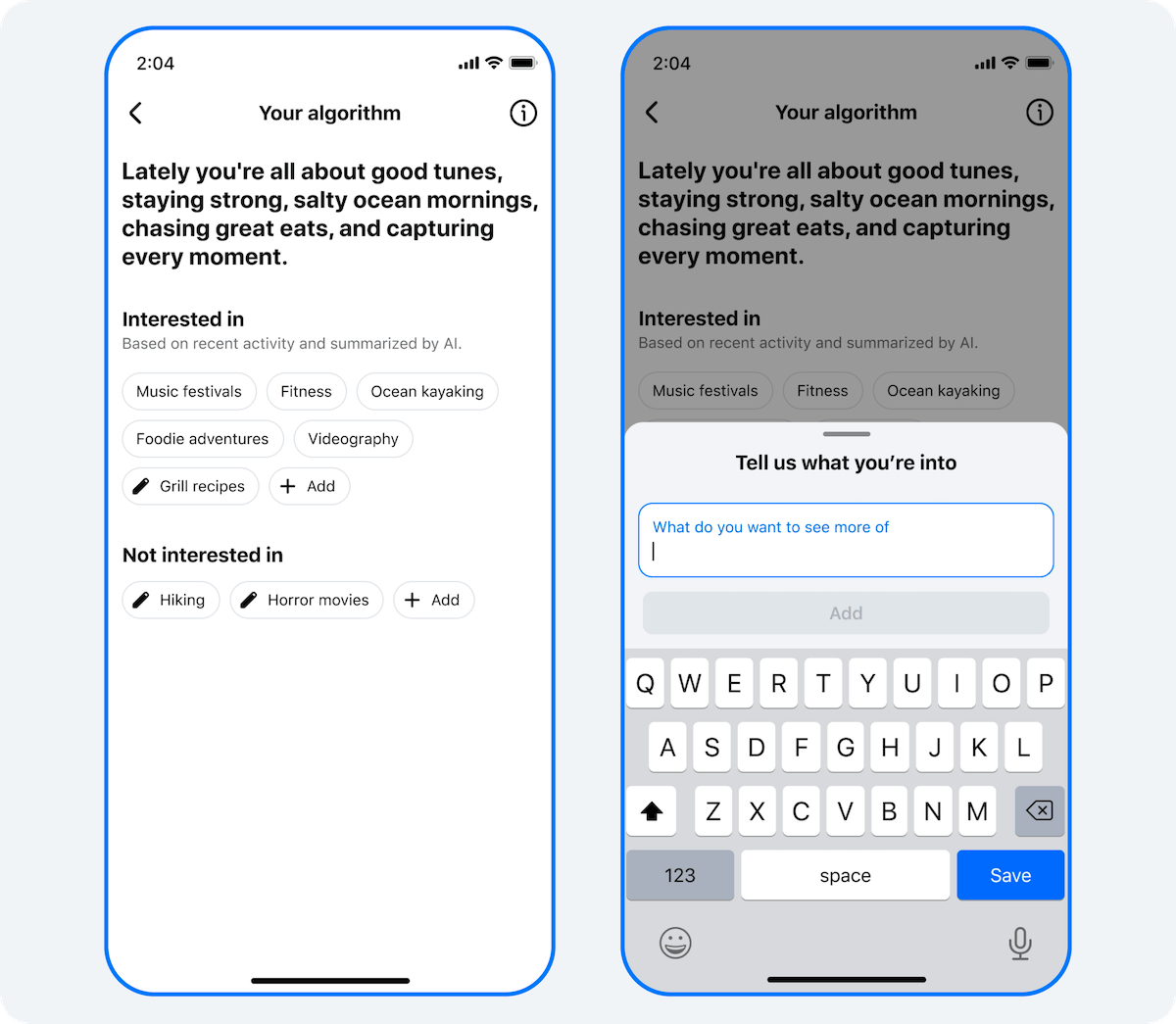
Meta is rolling out a new Facebook feature called Your Algorithm that lets users tell the app what they want to see more or less of in Feed and Reels. The change extends a personalization tool first introduced on Instagram and reflects Meta’s push to make recommendation systems more controllable.
- Meta is bringing its AI-powered Your Algorithm tool to Facebook.
- Users can describe content preferences in natural language and adjust recommendations in real time.
- The feature adds simpler controls through Facebook’s three-dot menu and Interested/Not interested options.
- Instagram and Threads have already received related personalization tools.
- The move reflects a wider industry push for more transparent algorithm controls.
Meta has started rolling out a new AI-powered control for Facebook that lets people tell the platform, in their own words, what they want to see more or less of in Feed and Reels. The feature, called Your Algorithm, matters because it gives users more direct influence over ranking and recommendations at a time when automated feeds largely decide what gets attention online.
The update arrives as social platforms face growing pressure to make algorithms feel less opaque and more responsive. Meta says the tool is designed to make recommendations more relevant, with changes reflected quickly as users adjust their preferences.
What Meta launched on Facebook
Meta has introduced Your Algorithm on Facebook, extending a personalization feature that first appeared on Instagram. The system lets users describe, in natural language, the kinds of posts, topics, and creators they want to encounter more often or less often.
Instead of leaving curation entirely to automated signals, Facebook users can now shape recommendations by explaining their preferences directly to the platform. Meta says that feedback can be applied to both the main Feed and Reels, two of the app’s most important discovery surfaces.
The company is positioning the tool as a way to make the experience feel more relevant and less random. In practical terms, that means a user who is tired of a certain kind of content can say so explicitly, while another user can ask for more of a topic they care about.
How does “Your Algorithm” work?
Your Algorithm works by letting users communicate with Facebook’s ranking system in plain language. The feature is built around prompts and preference signals rather than technical settings, so people can describe what they want without navigating complicated menus.
Meta says the platform may also ask follow-up questions to sharpen its understanding of a user’s likes and dislikes. That means the system can request more detail if someone says they want less of one type of content or more of another.
The company says updates can affect recommendations in real time. In other words, if a user changes preferences today, the content they see should begin shifting soon after.
Where users can find it
Meta has also revised Facebook’s three-dot post menu to make preference controls easier to access. From that menu, users can open the new feature or use standard feedback tools such as Interested and Not interested.
This smaller change matters because it places recommendation controls closer to the content itself. Instead of going deep into settings, people can respond while they are browsing, which may make it more likely they will actually use the tools.
- Your Algorithm: lets users explain content preferences in natural language
- Interested: signals that a post aligns with the user’s tastes
- Not interested: tells Facebook to reduce similar content
- Follow-up prompts: may appear to gather more specific feedback
Why Meta is pushing more user control
Meta is expanding user control because social feeds are increasingly shaped by AI and machine learning systems that many people still find hard to understand. As recommendation engines become more central to how content is discovered, platforms are under pressure to give users clearer ways to steer those systems.
The move reflects a broader shift in social media product design. For years, the dominant model has been algorithm-first: the platform decides what is relevant based on behavior signals, and users adjust only indirectly by liking, following, skipping, or hiding posts. Meta’s latest update gives people a more explicit voice in that process.
There is also a competitive dimension. As user expectations evolve, platforms increasingly want personalization to feel controllable rather than purely automatic. That makes recommendation tools look more like the settings on streaming services, where viewers can influence what is surfaced based on genre, taste, or watch history.
Meta says the point of the new feature is to make recommendations more useful by learning directly from what people tell it they want to see.
How Facebook’s approach compares with Instagram and Threads
Facebook is not Meta’s first app to get this kind of control. Instagram introduced the same concept in June, expanding it beyond Reels after first testing it in Reels in December 2025.
Threads has also experimented with a related control called Dear Algo, which similarly allows people to influence what the platform recommends. Taken together, these launches show that Meta is trying to unify its personalization strategy across multiple apps while still letting each product preserve its own identity.
The sequence is notable because it suggests Meta sees algorithmic transparency as a long-term product theme, not a one-off interface tweak. By bringing similar controls across Facebook, Instagram, and Threads, the company is building a shared language around how users talk to its recommendation systems.
What this means for the future of social feeds
The Facebook update signals a broader rethink of how recommendation systems should behave. Rather than treating the algorithm as a black box, Meta is encouraging users to interact with it in a more direct and conversational way.
That change could improve satisfaction for some users, especially those frustrated by repetitive, irrelevant, or overly narrow recommendations. It may also reduce the sense that feeds are entirely dictated by unseen logic.
At the same time, the feature does not replace algorithmic ranking. Facebook still uses automated systems to decide what appears in Feed and Reels; the new tool simply gives people another input into those systems.
That distinction is important. Users are not taking over the feed, but they are being given a stronger steering wheel.
Potential benefits for users
- More relevant posts and Reels
- Faster adjustments to changing interests
- Clearer feedback tools for unwanted content
- Less dependence on passive engagement signals
Potential limits of the feature
- The algorithm still makes the final ranking decisions
- Users may not always know how much their feedback changes results
- Natural-language prompts can be broad or ambiguous
- Repeated recommendations may still take time to shift
How big is this change in practice?
The rollout may appear modest, but it affects one of Facebook’s core experiences: what people see every time they open the app. Even small improvements to recommendation controls can have outsized effects because feeds shape engagement, discovery, and time spent on platform.
For creators, the change could influence which posts reach the right audiences. For users, it could mean a feed that better reflects their interests without requiring them to constantly hide or unfollow accounts. For Meta, it could mean stronger user trust in systems that have often been criticized as too blunt or too secretive.
Still, the success of the feature will depend on adoption. If most users never open the tool, the change may be more symbolic than transformative. If Meta can make the controls obvious and easy, however, it may help reset expectations for what a social media algorithm should do.
Key facts about Facebook’s new algorithm controls
| Item | Details |
|---|---|
| Feature name | Your Algorithm |
| Platform | |
| What it changes | Feed and Reels recommendations |
| How users interact | Natural-language preference prompts plus Interested/Not interested buttons |
| Availability | Rolling out now, according to Meta |
| Related launches | Instagram version in June; Reels test in December 2025; Threads feature Dear Algo |
Why this matters beyond Facebook
The broader significance is that one of the world’s largest social platforms is acknowledging that users want more say over how AI shapes their online experience. That pressure is likely to continue as recommendation engines expand across entertainment, shopping, news, and communication apps.
Meta’s approach may help set expectations for the next generation of consumer AI interfaces. If users become comfortable explaining their preferences to a feed in plain language, similar controls could appear elsewhere, from video apps to news aggregators to shopping platforms.
For now, though, the immediate story is simpler: Facebook users have a new way to tell the app what they want. In a social network driven by invisible ranking systems, that is a meaningful shift.
Timeline of Meta’s personalization rollout
| Date | Product | What happened |
|---|---|---|
| December 2025 | Instagram Reels | Meta first launched Your Algorithm in a limited form for Reels |
| June 2026 | Instagram Feed and Explore | The feature expanded to more parts of Instagram |
| October 2026 | Facebook Feed and Reels | Meta brought Your Algorithm to Facebook |
| Ongoing | Threads | Threads uses a related feature called Dear Algo |
As Meta continues to refine its apps around AI-driven discovery, the company is betting that giving users a little more control will make algorithmic feeds feel less like a mystery and more like a conversation.
Frequently asked questions
What is Facebook’s Your Algorithm feature?
Facebook’s Your Algorithm is a new Meta tool that lets users tell the app, in plain language, what they want to see more or less of. It is designed to influence recommendations in Feed and Reels without requiring technical settings.
How do users control Facebook’s algorithm now?
Users can control Facebook’s algorithm by opening the new Your Algorithm option or using Interested and Not interested from the three-dot menu on posts. Meta says the platform may also ask follow-up questions to refine recommendations.
Is Your Algorithm new to Meta?
No. Meta first launched the feature on Instagram, where it began with Reels in December 2025 and later expanded to Feed and Explore in June 2026. Threads also has a related feature called Dear Algo.
Does the feature replace Facebook’s algorithm?
No. The feature does not replace Facebook’s recommendation system. It gives users another way to influence ranking, while Meta’s automated systems still decide what appears in Feed and Reels.