In short
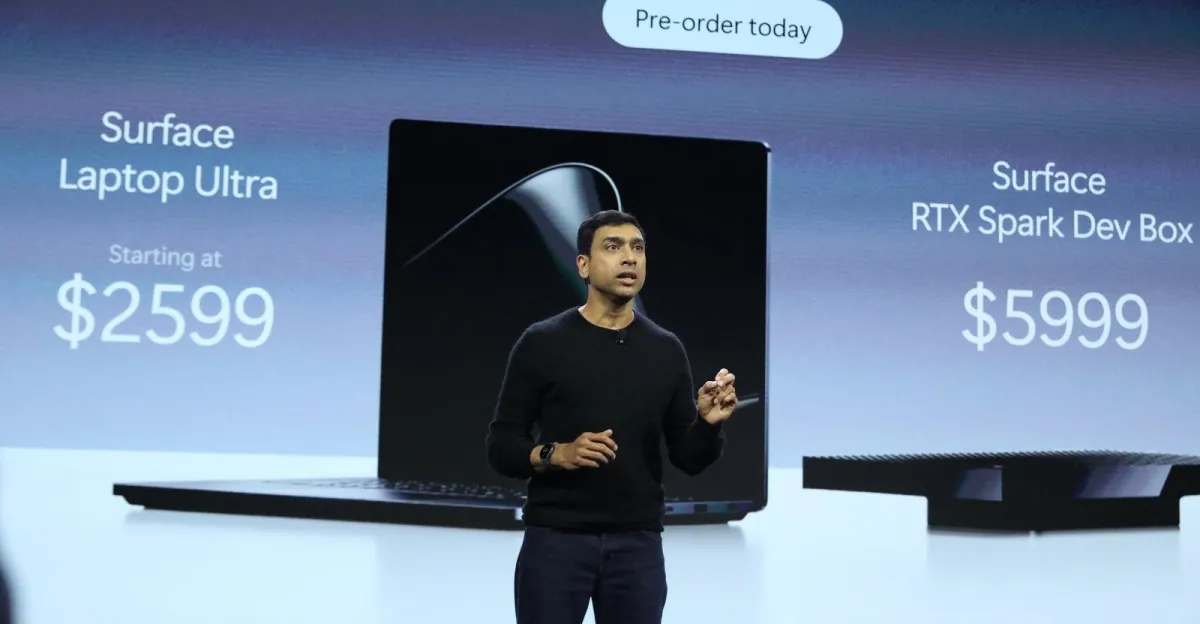
Microsoft has opened preorders for the Surface RTX Spark Dev Box, a $5,999 mini PC built for developers running local AI workloads. The device ships in November and combines Nvidia acceleration, 128GB of unified memory, and a bundled developer software stack.
- Microsoft’s Surface RTX Spark Dev Box is now available to preorder for $5,999.
- The AI mini PC is designed for developers running large models and local AI tools.
- It ships in November and includes Windows 11 Pro plus preinstalled developer software.
- The device uses Nvidia’s Arm-based RTX Spark platform and 128GB of unified memory.
- Rising PC component costs help explain the high price.
Microsoft has opened preorders for its Surface RTX Spark Dev Box, a $5,999 AI mini PC aimed at developers and set to begin shipping in November. The machine is built around Nvidia’s Arm-based RTX Spark platform, packs 128GB of unified memory, and is designed for running large AI models locally rather than serving as a general-purpose consumer desktop.
The new device lands as demand for high-memory systems rises and PC prices climb because of component shortages. Microsoft is positioning the Dev Box as part workstation, part local AI lab, with a developer-focused Windows 11 Pro setup and a bundle of tools intended to get coders prototyping quickly.
What Microsoft is selling — and why it matters
The Surface RTX Spark Dev Box is Microsoft’s latest entry into the small-form-factor AI hardware race, but it is not meant to be a bargain mini PC. At nearly $6,000, it is aimed at professionals who need enough on-device memory and compute to test modern AI workloads without constantly relying on cloud servers.
That matters because local AI development has become more practical, and in some cases preferable, for teams that want lower latency, tighter data control, and faster iteration. Machines like this are built to make it easier to run, debug, and refine models on the desktop before those systems are deployed elsewhere.
How the Surface RTX Spark Dev Box is different from a standard PC
The short answer is that Microsoft designed it as a specialized developer tool, not a mainstream Windows mini desktop. Its 128GB of unified memory and Nvidia’s Tensor-core acceleration are intended to support demanding AI workflows, including local inference and model testing at a scale that most consumer computers cannot handle.
Microsoft says the box is optimized for local AI tasks, including working with models that exceed 120 billion parameters. In practical terms, that means developers can use it to prototype AI agents, test coding assistants, and experiment with large language models directly on their own hardware.
Microsoft’s pitch is that the system gives developers a compact, high-memory machine for building and testing AI locally, while shipping with a software stack tailored for immediate productivity.
Why the price is so high
The list price reflects both the hardware inside the machine and the broader pressure on PC supply chains. Memory and other components have been in short supply, pushing prices up across the market, and the Dev Box arrives at a time when even premium consumer systems are getting more expensive.
Microsoft’s pricing also places the machine above Nvidia’s own DGX Spark mini PC, which launched last year. That comparison may surprise buyers, but Microsoft appears to be betting that the value lies not in raw affordability, but in the convenience of a fully configured developer workstation with Windows integration and a ready-made AI toolchain.
What buyers get for the money
Microsoft is not just shipping hardware. The company is bundling a developer-oriented Windows 11 Pro environment along with a preinstalled set of tools that should reduce setup time for teams and individual engineers.
- Visual Studio Code
- Git
- GitHub CLI
- GitHub Copilot
- WSL
- Python
- Node
That software package makes the device feel closer to a turnkey lab than a conventional mini PC. For developers who regularly switch between AI experiments, coding tasks, and Linux-compatible workflows, the preloaded environment could be as important as the hardware itself.
How Microsoft is positioning the hardware
Microsoft is tying the Dev Box to its broader Project Zenith effort, which appears focused on making Windows-based hardware more appealing to AI builders. The company is pairing the device with a version of Windows 11 Pro configured for development work, suggesting it wants the machine to serve as a reference system for on-device AI development.
The product also arrives alongside the new Surface Laptop Ultra, reinforcing the idea that Microsoft is expanding its premium Surface lineup into more specialized categories. Rather than competing only on productivity and mobility, the company is now carving out a niche for AI-centric local compute.
What is Project Zenith?
Project Zenith is Microsoft’s developer-focused hardware initiative for AI-centric Windows systems. In the case of the Surface RTX Spark Dev Box, it appears to combine a tuned operating system, preinstalled dev tools, and high-memory Nvidia hardware into a single package meant to shorten the distance between concept and prototype.
That strategy matters because developers often spend significant time configuring their own environments before they can begin meaningful work. By reducing that overhead, Microsoft can make its hardware more attractive to engineers who value time-to-first-run as much as raw benchmark numbers.
The hardware design: small box, serious cooling
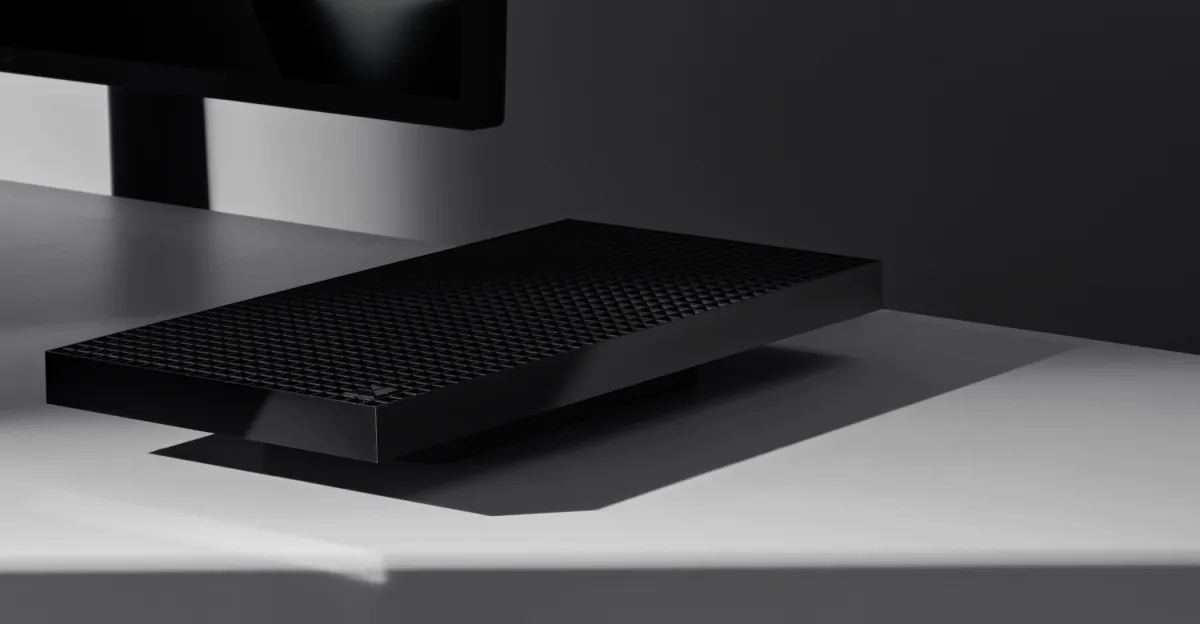
The Dev Box uses a flat, anodized aluminum shell that Microsoft says is 3D-printed and designed to double as a heatsink. Visually, it resembles the vented top section of an Xbox Series X, which gives the machine a distinct consumer-electronics look despite its professional purpose.
That design choice is not just cosmetic. Packing a 100-watt thermal envelope into a compact chassis requires aggressive heat management, especially if the device is expected to sustain AI workloads for extended periods. In that context, the metal body is part of the cooling system as much as the styling.
| Feature | Surface RTX Spark Dev Box | Why it matters |
|---|---|---|
| Price | $5,999 | Positions the device as premium developer hardware |
| Shipping | November 2026 | Buyers can reserve units now for a near-term launch |
| Platform | Nvidia Arm-based RTX Spark | Built for local AI acceleration and compact form factors |
| Memory | 128GB unified memory | Supports large models and heavy multitasking |
| Thermal envelope | 100 watts | Indicates the machine is tuned for sustained performance |
| Software | Windows 11 Pro with dev tools | Offers a ready-to-use environment for coding and AI work |
Why local AI development is driving new hardware demand
The rise of local AI workflows is changing what developers expect from desktop-class machines. Instead of relying only on remote cloud services, teams increasingly want hardware that can handle experimentation on-site, with enough memory to load larger models and enough acceleration to make testing practical.
This is especially relevant for AI agents and coding tools, where rapid feedback is essential. If an engineer can run a model locally, they can fine-tune prompts, compare outputs, and troubleshoot errors without waiting on a remote cluster or incurring recurring cloud costs.
Who is this machine for?
The Surface RTX Spark Dev Box is for software developers, AI engineers, and technical teams building or testing advanced models. It is not aimed at casual consumers, gamers looking for a small PC, or buyers simply wanting a compact Windows machine for everyday tasks.
That said, the device’s specs could make it attractive to power users who want workstation-grade memory and a compact footprint. Its real audience, though, is likely to be organizations and individuals for whom AI development is central to the job.
How it compares with Nvidia’s DGX Spark
Microsoft’s mini PC is more expensive than Nvidia’s DGX Spark, but the gap is not necessarily about raw capability alone. Microsoft is selling a broader experience: Windows integration, Surface branding, and a curated software environment intended to help developers get to work immediately.
For buyers comparing the two, the choice may come down to ecosystem rather than the hardware shell. Nvidia’s machine may appeal more directly to users seeking GPU-centric AI hardware, while Microsoft is pushing a developer workstation that blends familiar Windows tooling with Nvidia acceleration.
Key factors buyers are likely to weigh
- Whether they want a Windows-based AI development machine or a more specialized Nvidia platform.
- How much local memory their models and workflows require.
- Whether they value a preinstalled toolchain over lower upfront cost.
- How much they care about compact design and acoustic or thermal behavior.
What the launch says about Microsoft’s AI strategy
The Dev Box suggests Microsoft sees a market for premium, purpose-built local AI hardware, not just cloud services and software APIs. It also reinforces the company’s broader bet that AI development will increasingly happen in more flexible, hybrid environments, with some tasks moving back onto developer desktops.
That approach could help Microsoft deepen its relationship with developers at a time when AI tooling is becoming more competitive. By bundling hardware, operating system, and coding tools, the company is trying to create a smoother path from prototype to production.
The timing is also notable. As PC pricing rises and component shortages persist, high-end developer boxes may become more appealing to organizations that would rather pay for a reliable, integrated system than assemble one from parts.
Timeline: Surface RTX Spark Dev Box launch at a glance
| Date | Milestone | Details |
|---|---|---|
| Last year | Nvidia launches DGX Spark | Sets the stage for compact, AI-focused mini PCs |
| Now | Microsoft opens preorders | Surface RTX Spark Dev Box becomes available directly |
| November 2026 | Shipments begin | First units are scheduled to reach buyers |
Bottom line for developers
The Surface RTX Spark Dev Box is one of Microsoft’s most ambitious niche hardware releases in years: expensive, specialized, and clearly built for a narrow but growing audience. For developers working on local AI, however, the mix of 128GB of memory, Nvidia acceleration, and preloaded software could make it a compelling all-in-one workstation.
Whether it proves worth the price will depend on how much buyers value convenience, local compute, and a tightly managed software environment. But with preorders open and shipment set for November, Microsoft is now asking the market to decide whether premium AI development hardware is the next serious PC category.
Frequently asked questions
How much does the Surface RTX Spark Dev Box cost?
The Surface RTX Spark Dev Box costs $5,999. Microsoft is positioning it as premium developer hardware rather than a consumer mini PC, with pricing that reflects its memory capacity, Nvidia-based AI acceleration, and bundled software stack.
When will the Surface RTX Spark Dev Box ship?
The Surface RTX Spark Dev Box is scheduled to begin shipping in November. Microsoft has already opened preorders directly, allowing developers and organizations to reserve units ahead of the launch window.
What is the Surface RTX Spark Dev Box designed for?
The Surface RTX Spark Dev Box is designed for local AI development. Microsoft says it is meant for tasks such as testing models, prototyping AI agents, and running AI coding tools on-device, including very large models that exceed 120 billion parameters.
What software comes preinstalled on the Dev Box?
The Dev Box ships with a developer-focused Windows 11 Pro setup and includes Visual Studio Code, Git, GitHub CLI, GitHub Copilot, WSL, Python, and Node. Microsoft is aiming to make the machine ready for work with minimal setup.
Why is Microsoft’s AI mini PC so expensive?
The price is high because the Dev Box is built around specialized hardware and a large memory configuration, and PC component shortages have pushed prices upward across the market. Microsoft is also charging for the convenience of a tuned, ready-to-use development system.