In short
Trump hosted major tech CEOs for an AI safety pledge while rebranding AI as “super intelligence,” but the real business story is that consumer AI remains hard to monetize. The biggest money is still flowing to enterprise AI and startup deals in logistics, shipping, and other industrial sectors.
- Trump hosted tech leaders for an AI safety pledge and signed an order rebranding AI as “super intelligence.”
- Consumer AI is still struggling to turn attention into subscriptions and revenue.
- Enterprise AI remains the strongest commercial opportunity for startups and incumbents.
- Public markets are more selective, making IPOs harder for startups to time.
- Investors are increasingly backing industrial AI in shipping, supply chains, and space.
President Donald Trump this week gathered some of the most powerful names in tech at the White House, where they signed an AI safety pledge and watched him formally recast artificial intelligence as “super intelligence.” But the headline-grabbing politics may matter less than the market reality underneath it: consumer AI is still struggling to turn attention into revenue, while the biggest business in the sector remains enterprise software and infrastructure.
That tension was the central theme of this week’s TechCrunch Equity podcast, where hosts Kirsten Korosec, Anthony Ha, and Sean O’Kane examined the gap between the public hype around AI and the stubbornly small share of consumers willing to pay for it. Their conclusion was blunt: despite the industry’s giant valuations and nonstop product launches, only a tiny fraction of everyday users are actually buying premium AI products.
The episode also touched on a broader shift across startup and public markets, including a more selective IPO environment, a surge of funding for niche industrial AI applications, and a growing willingness among startup founders to build in sectors that have barely been touched by machine learning.
What happened at the White House, and why does it matter?
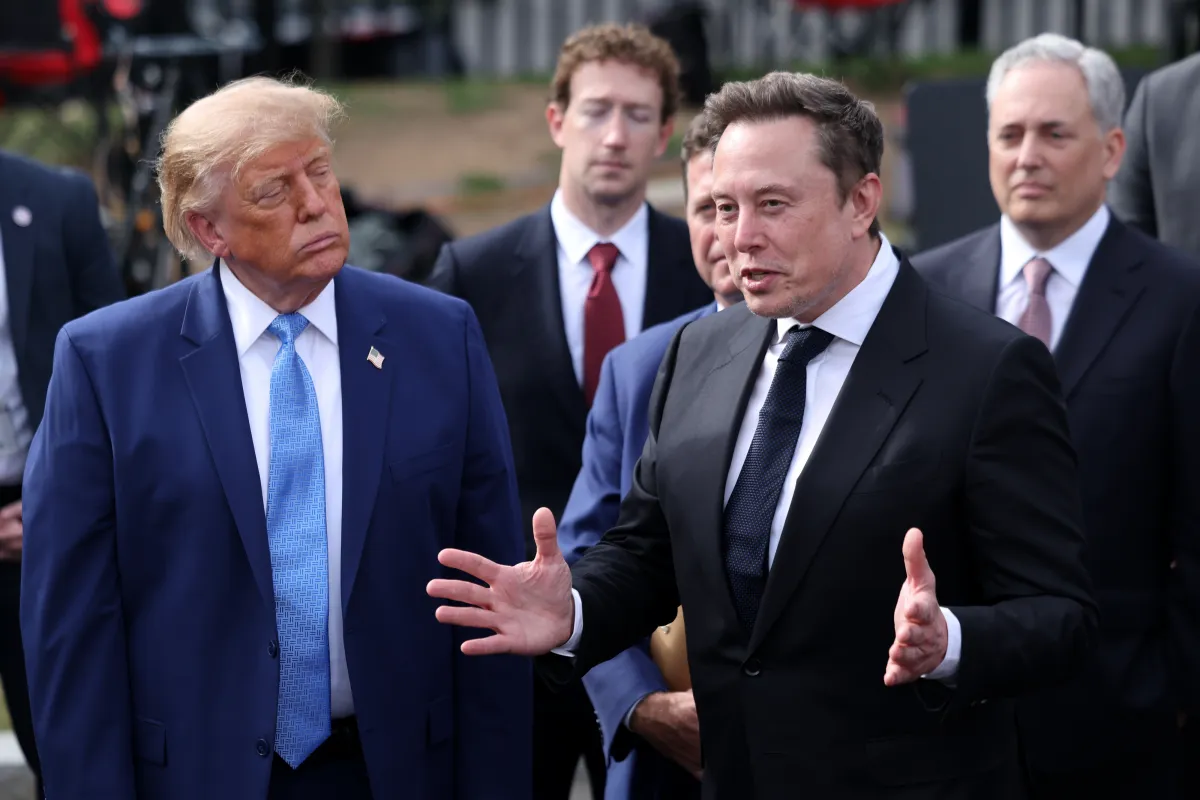
The White House event brought together a roster of tech heavyweights rarely seen in the same room: Meta chief executive Mark Zuckerberg, Amazon founder Jeff Bezos, Elon Musk, and Anthropic co-founder and chief executive Dario Amodei were among the executives present to sign a pledge focused on AI safety. Trump described the agreement as “morally binding,” framing it as a voluntary commitment from the industry’s most visible leaders.
He also took a symbolic step that captured the tone of the moment by signing an executive order that officially rebranded AI as “super intelligence.” Whatever the political theater of that move, it underscored how aggressively the administration is trying to shape the language around advanced AI systems and the social risks they pose.
The real significance of the gathering, however, lies less in the wording of the pledge and more in who was in the room. When leaders from Meta, Amazon, X, Anthropic, and other AI-heavy companies participate in a federal event, it signals that Washington is no longer treating AI as a niche technology policy issue. It has become a national-level economic and security concern, one that now involves both regulation and public positioning.
The podcast discussion framed the White House gathering as a sign that AI has become a matter of political branding as well as industrial strategy, with top executives aligning themselves around safety while racing to own the next generation of products.
Why consumer AI is still a hard business
The short answer is that most people are still not paying for it. While companies like OpenAI and Meta are working hard to make their consumer products feel more approachable, the economics of the consumer AI market remain difficult. The audience may be large, but paid conversion is still weak compared with the enthusiasm surrounding the technology.
That disconnect matters because the AI boom has been fueled by enormous spending on chips, data centers, and model development. If users are not willing to subscribe at scale, the pressure shifts to companies that can sell AI as part of a broader enterprise workflow, where budgets are larger and the return on investment is easier to demonstrate.
In other words, consumers may be fascinated by AI, but businesses are the ones paying the bills.
How are Meta and OpenAI responding?
They are making the products feel friendlier, more familiar, and easier to use. That strategy is designed to reduce friction and encourage casual users to spend more time with AI tools, whether through conversational interfaces, digital companions, or more personalized assistants.
At the same time, the industry still appears to be leaning heavily on business customers. The podcast’s takeaway was not that consumer AI is dead, but that the largest and most reliable money continues to come from enterprise deployments rather than mass-market subscriptions.
This helps explain why so much AI investment is flowing into workflow automation, developer tools, internal assistants, and productivity features that companies can justify on efficiency grounds. Consumer enthusiasm may drive headlines, but enterprise adoption is driving revenue.
How selective have public markets become?
Public investors have grown far more cautious about startup listings, especially for companies that have not yet proven they can sustain growth and profitability. The episode pointed to several examples that suggest the IPO market is no longer handing out easy exits.
Oura, the wearable health company, pulled its planned public offering. Anthropic’s leaked S-1, meanwhile, provided another reminder that even fast-growing AI companies can face intense scrutiny before going public. And OpenAI’s decision to return to private funding further highlights how much capital is still available behind closed doors, even as the public markets become more demanding.
The message for founders is clear: access to capital may be abundant, but access to public money is not guaranteed. Investors are asking harder questions about growth, margins, and defensibility before rewarding companies with public valuations.
| Company / Event | What happened | Why it matters |
|---|---|---|
| White House AI summit | Top tech CEOs signed a safety pledge | Shows AI is now a political and policy priority |
| Trump executive order | AI was officially labeled “super intelligence” | Signals an attempt to frame AI around risk and power |
| Oura | Withdrew its IPO plans | Suggests public markets are more selective |
| Anthropic | Leaked S-1 drew attention | Highlights scrutiny facing high-growth AI companies |
| OpenAI | Returned to private funding | Shows large private capital pools are still available |
What startup deals stood out this week?
Beyond the AI headline cycle, the episode highlighted several financing stories that show where investors still see opportunity. In one case, Quartermaster raised $140 million to apply real-time sensing to maritime shipping, an industry that has seen relatively little AI penetration despite its scale and complexity.
That kind of investment reflects a growing preference for “boring” sectors with measurable operational pain points. Shipping, logistics, and industrial systems may not generate the same consumer buzz as chatbots, but they often offer clearer paths to revenue and defensibility.
The podcast also discussed Atomic, a supply-chain startup founded by former Tesla employees. According to the episode, the company is already handling 90% of DoorDash’s purchasing. That is a striking example of how AI-adjacent automation and software can embed itself deeply inside major operations once it proves reliable.
Another deal involved Charter Space, a Startup Battlefield finalist that raised $5 million to build insurance products for satellites. The company is betting that space operations will need financial infrastructure as much as launch hardware, especially as satellite deployment accelerates.
Why are investors chasing industrial AI now?
Because the returns can be easier to measure. Industrial and supply-chain software often plugs into existing workflows, replaces manual labor, or reduces costly errors. That makes it easier for startups to show value in dollars saved or efficiency gained.
Consumer AI, by contrast, often struggles to prove that users will pay recurring fees for convenience alone. If a tool is entertaining or impressive but not essential, subscription churn becomes a major problem. Industrial software, meanwhile, can become sticky quickly once it is embedded into operations.
Why the enterprise still looks like the safest bet
The clearest throughline in the Equity conversation is that enterprise AI remains the safest place to build a business today. Companies can integrate AI into procurement, logistics, customer support, research, and internal decision-making without needing to persuade millions of individual consumers to open their wallets.
That does not mean the consumer market is unimportant. Consumer apps can still shape cultural expectations, influence model usage, and create brand power. But from a pure business perspective, the enterprise side offers higher willingness to pay, longer contracts, and more immediate proof of value.
This is why the most durable AI companies may not be the ones with the flashiest avatars or the most viral demos. They may be the ones quietly embedded in shipping terminals, procurement systems, insurance workflows, and internal tools that save money at scale.
What this means for the AI industry in 2026
The industry is entering a phase where symbolism and economics are starting to diverge. On one side, there is no shortage of political attention, executive pledges, and branding efforts to make AI sound safer, friendlier, and more trustworthy. On the other side, the market is forcing companies to confront a much less glamorous truth: revenue still has to come from somewhere.
For startups, that means a stronger bias toward enterprise use cases and niche verticals where AI can solve concrete problems. For public companies, it means higher scrutiny and a more difficult path to listing. And for consumers, it means that the most talked-about AI tools may remain more exciting than essential unless companies can prove sustained value.
The podcast’s broader point was not that the AI boom is fading. It is that the boom is maturing. The hype cycle may still be loud, but the business model is becoming more disciplined.
Key takeaways from the week’s AI and startup news
- The White House hosted major tech leaders for an AI safety pledge as Trump recast AI as “super intelligence.”
- Consumer AI remains a tough sell, with only a small share of users paying for premium products.
- Enterprise adoption continues to drive the strongest AI revenues and is likely to remain the sector’s financial anchor.
- Public markets are becoming more selective, as shown by Oura’s IPO pullback and heightened scrutiny of AI listings.
- Startup funding is flowing into industrial, logistics, and space-related businesses with clearer commercial use cases.
How the episode fits the bigger AI picture
For all the spectacle around AI announcements, the industry’s long-term winners may be decided by something far less glamorous than policy pledges or product demos. The key question is whether AI can become indispensable in the everyday systems that businesses rely on.
That is why the examples highlighted in the episode matter. A shipping company using real-time sensors, a supply-chain platform embedded inside DoorDash’s purchasing, or insurance for satellites all point to a market where AI is less about novelty and more about infrastructure.
Meanwhile, consumer AI companies are still trying to crack the code on retention and monetization. Friendlier design, more polished interfaces, and new brand language may help, but they do not solve the central problem: people have to want to pay.
As the week’s events showed, the AI industry now operates on two tracks. One is public, political, and highly visible. The other is commercial, pragmatic, and increasingly enterprise-focused. The second may prove far more lucrative.
What comes next?
The near-term watch list is straightforward. Investors will keep scrutinizing which startups can justify public-market ambitions. AI companies will continue to refine consumer-facing products in hopes of improving paid conversion. And enterprise-focused startups will likely keep attracting capital if they can demonstrate efficiency gains in sectors the AI wave has not yet fully transformed.
For now, the signal from the market is consistent: the biggest ideas may still capture the most attention, but the most dependable revenue is coming from the less glamorous side of the AI economy.
That is the story beneath the White House optics and the executive branding. The AI revolution is real, but its most profitable chapter may still be written in business software, logistics, procurement, and infrastructure rather than in consumer apps.
FAQ
Did the White House AI pledge change any laws?
No, the pledge did not create new law. It was a voluntary safety commitment signed by major tech leaders, while Trump’s executive order was a symbolic and policy-framing move rather than a full regulatory overhaul.
Why is consumer AI struggling to make money?
Consumer AI is struggling because many users are interested in trying it but not enough are willing to pay for subscriptions. That makes it hard for companies to convert attention into recurring revenue at the scale needed to support AI’s high operating costs.
Which part of the AI market looks strongest right now?
Enterprise AI looks strongest right now. Businesses are more willing to pay for tools that save time, reduce costs, improve workflows, or automate internal processes, which makes enterprise adoption much more attractive than mass consumer sales.
What does Oura pulling its IPO signal?
It signals that public markets are becoming more selective. Even well-known, well-funded companies may decide not to go public if investors are demanding clearer profitability, stronger growth, or more predictable business models.
Why are startups focusing on shipping, supply chains, and satellites?
Startups are focusing on those sectors because they offer real operational problems and clearer business value. These are industries where software and AI can reduce friction, automate work, or create new insurance and monitoring products that customers are more likely to buy.
Frequently asked questions
Did Trump announce new AI rules at the White House event?
No, the main action was a safety pledge signed by major tech executives and an executive order that reframed AI as “super intelligence.” It was more about signaling and political positioning than a sweeping new regulatory framework.
Why are consumers not buying more AI products?
Consumers are not buying more AI products because curiosity has not translated into broad willingness to pay. Many users try free tools, but premium subscriptions still face churn, skepticism, and unclear everyday value compared with the high cost of building AI systems.
Is enterprise AI really more profitable than consumer AI?
Yes, enterprise AI is generally more profitable right now because companies can justify spending on tools that cut costs, improve workflows, or automate work. Those customers also tend to sign larger and longer-term contracts than individual consumers.
What does Oura’s IPO withdrawal mean for startups?
Oura’s IPO withdrawal suggests that public markets are tougher and more selective than before. Startups may need stronger profitability, clearer growth paths, and more predictable business models before investors will support a listing.
Which startup sectors are attracting AI investment?
AI investment is flowing toward sectors like maritime shipping, supply chains, and satellite insurance. These are areas where software can solve concrete operational problems, making it easier for startups to prove value and win paying customers.