In short
President Trump unveiled an AI safety plan centered on voluntary self-regulation, with major tech leaders publicly backing a frontier-responsibilities pledge. The move avoids binding federal rules, sharpening the debate over whether industry can police itself effectively.
- Trump’s AI plan relies on voluntary industry self-policing instead of binding regulations.
- Google, Meta, OpenAI, xAI, Nvidia and Anthropic leaders publicly backed the pledge.
- Supporters say the framework can protect innovation; critics say it lacks enforcement.
- The White House framed the move as a way to keep the US ahead of China.
- The announcement leaves unresolved questions about accountability, transparency and real safety outcomes.
President Donald Trump on Tuesday unveiled a new approach to artificial intelligence oversight that relies on voluntary self-policing from the industry’s biggest companies rather than binding federal rules. The plan matters because it puts the future of AI safety, competition and accountability in the hands of the firms building the technology, even as concerns grow about powerful models, job disruption and national security.
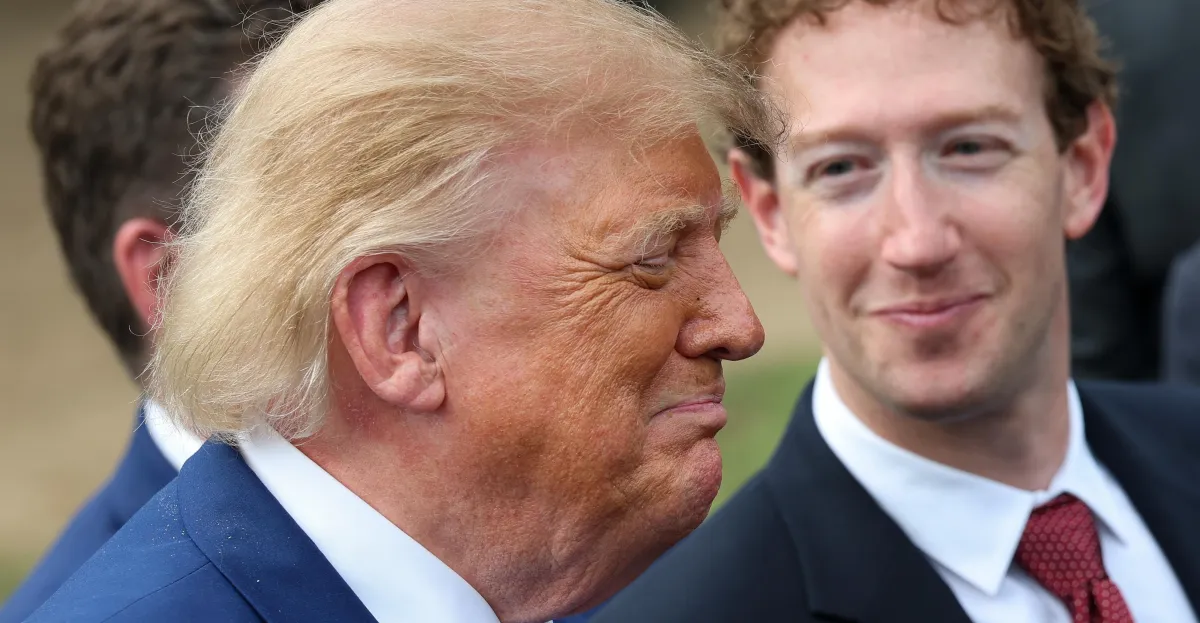
At a White House event following a meal with major tech executives, Trump framed the effort as a way to keep the United States ahead of China while avoiding what he cast as heavy-handed regulation. The companies represented at the event — including Google, Anthropic, Meta, OpenAI, xAI and Nvidia — publicly endorsed a “morally binding” safety pledge that asks them to monitor themselves and apply common-sense guardrails as AI systems become more capable.
The announcement highlighted a familiar tension in AI policy: industry leaders say they can move quickly and innovate responsibly, while critics argue that voluntary commitments rarely substitute for enforceable standards. Trump, for his part, portrayed the initiative as proof that the “smartest people in the world” are already watching one another.
What Trump announced and why it matters
Trump’s latest AI message marks a sharp turn in tone from earlier skepticism about AI safety concerns. The president, who in the past dismissed warnings about AI risks as overblown partisan fearmongering, said those criticisms no longer apply now that he is emphasizing a new framing around “super intelligence.”
The central idea behind the White House plan is simple: rather than impose new laws or regulations, the administration wants leading AI firms to sign onto shared principles and police themselves. That approach may appeal to companies that want flexibility, but it also raises obvious questions about enforcement, transparency and whether the public gets meaningful protection if firms decide to cut corners.
Trump argued that American companies are already ahead in the global AI race and suggested that leadership in the sector can coexist with safety. He also downplayed complaints that Washington is doing too little to oversee AI development, saying US dominance over China reduces the urgency for a tougher regulatory framework.
Why the self-policing approach is controversial
The controversy comes down to trust. Voluntary pledges can signal broad agreement on responsible AI development, but they usually lack penalties, deadlines or independent oversight. That leaves the companies themselves with the final say over how aggressively to test, deploy and market new models.
AI safety advocates have long argued that this is exactly where government should step in. The technology can be used in consumer products, enterprise systems, research tools and increasingly autonomous products, meaning mistakes could scale quickly. Critics of self-regulation worry that the same companies under pressure to ship products may also be the ones deciding whether those products are safe enough.
Supporters of the White House’s approach say a nimble industry-led framework could adapt faster than legislation. They also point out that companies are already investing heavily in alignment, red-teaming, model evaluations and other safety measures, so a formalized pact may encourage best practices without freezing innovation.
Who signed the AI safety pledge?
The companies represented at the event included some of the most influential names in the sector: Google chief executive Sundar Pichai, Anthropic co-founder Dario Amodei, Meta chief executive Mark Zuckerberg, OpenAI co-founder Greg Brockman, xAI chief executive Elon Musk and Nvidia chief executive Jensen Huang.
According to the administration and the firms’ public remarks, the agreement they backed is a frontier-responsibilities framework that calls for shared commitments on safe development. It is described as morally binding, but the source material makes clear there are no obvious legal penalties attached if a company later decides to go its own way.
The group’s composition matters. These companies do not merely participate in the AI market; they shape it. Google and Meta have enormous distribution reach, OpenAI sits near the center of the consumer AI boom, Nvidia supplies the chips that power much of the industry, xAI is backed by one of the world’s most visible tech entrepreneurs, and Anthropic has made safety a central part of its brand identity.
| Executive | Company | Role in AI ecosystem | Main message at event |
|---|---|---|---|
| Sundar Pichai | Search, cloud, foundation models | AI should be developed safely to build user confidence | |
| Dario Amodei | Anthropic | Frontier model developer | Safety accords can help companies move forward responsibly |
| Mark Zuckerberg | Meta | Consumer platforms and open models | AI can benefit everyone and support a broad renaissance |
| Greg Brockman | OpenAI | Leading model developer | Risk management mechanisms still need more discussion |
| Elon Musk | xAI | Frontier model rival and AI investor | AI could bring abundance if safety and job changes are handled well |
| Jensen Huang | Nvidia | Chip supplier and infrastructure leader | Innovation and safety can advance together |
How did the executives frame AI safety?
They presented a mostly unified message: AI can bring enormous benefits, but those gains need to be paired with responsible development. Each executive, in his own way, described the new commitments as a step toward building trust in the technology and calming public fears.
Several of the remarks emphasized economic upside, scientific progress and job creation. Others focused on safety as an engineering problem that can be solved alongside capability gains. The common thread was that industry should not be forced to choose between speed and caution.
Google’s Sundar Pichai said the accord was meant to give the public confidence that AI products work as intended and described the gathering as an important first step rather than the final word on oversight.
Meta’s Mark Zuckerberg cast the technology as broadly beneficial, saying it could improve business formation, scientific discovery and medicine, while arguing that the new safety framework under Trump’s leadership helps the industry move together.
Nvidia’s Jensen Huang described the current AI boom as a historic industrial expansion and said safety tools must be developed in parallel with more capable systems.
xAI’s Elon Musk predicted that advanced AI and robotics could produce an era of abundance and better medical care, while conceding that jobs will evolve as technology changes the labor market.
OpenAI’s Greg Brockman said AI offers major medical benefits, but warned that the methods for addressing risks are still being worked out and require continued cooperation.
What each executive emphasized
- Pichai focused on credibility: companies need users to trust that AI systems behave as promised.
- Amodei stressed that industry-wide cooperation can help align innovation with responsibility.
- Zuckerberg highlighted economic and social gains, including small businesses and medicine.
- Huang framed AI as a once-in-a-generation infrastructure buildout with job creation attached.
- Musk argued that the long-run outcome could be prosperity, though he acknowledged labor shifts.
- Brockman said risks are real and the framework for managing them remains unresolved.
Why Trump’s language stood out
The policy message was not the only part of the event that drew attention. Trump once again turned the session into a showy public performance, including a series of asides about the executives themselves. He repeatedly described Huang as a “very handsome guy,” and when introducing Pichai he joked to reporters that they likely had no idea who the executives were before adding an awkward personal remark about the Google chief.
The moment underscored how the White House is trying to fuse spectacle, business diplomacy and technology policy into a single narrative. Trump’s style may energize supporters who favor a business-friendly, low-regulation approach, but it can also make the administration’s position look more performative than substantive.
Still, the event sent a clear signal: the administration wants to showcase a united front between the government and the companies building the most advanced AI systems in the world.
What does “morally binding” actually mean?
A “morally binding” pledge means the companies are signaling commitment without signing up to a legal framework that can be enforced in court. In practice, that usually means the pressure to comply comes from reputation, peer expectations and public scrutiny rather than fines or penalties.
That distinction is crucial. If a company believes the market rewards faster launches, broader access or more aggressive product rollouts, the temptation to push limits remains. A promise to self-regulate can help set a tone, but it does not automatically solve conflicts between safety, competition and profit.
This is why AI governance debates have moved far beyond general statements about responsibility. Policymakers, researchers and civil society groups increasingly ask for auditability, independent testing, incident reporting and clear liability rules. None of those guarantees are the same thing as a voluntary pledge.
What voluntary AI safety pledges usually can and cannot do
- They can establish shared norms among major companies.
- They can create political cover for leaders who want to avoid harder regulation.
- They can encourage cooperation on best practices and testing methods.
- They cannot easily punish violations unless they are tied to law or contract.
- They may reassure investors and customers without guaranteeing accountability.
How this fits the broader AI race
The White House announcement comes at a moment when AI competition is intensifying on multiple fronts: frontier model development, chip supply, cloud infrastructure, enterprise deployment and consumer products. In that environment, governments are under pressure to support domestic champions while also protecting the public from failures that could be systemic.
Trump’s argument is that the United States should move fast, avoid over-regulation and let top firms coordinate with one another. That view resonates with many in Silicon Valley, where leaders often warn that overly strict rules could slow innovation or hand advantages to overseas rivals.
But the scale of the industry also makes the risks more consequential. If a leading model is flawed, widely deployed or easily misused, the consequences can spread through search, productivity software, coding tools, customer service systems and public-facing chatbots almost instantly.
That is why the debate over self-policing is not just philosophical. It is about whether AI should be treated like a normal consumer technology or like a critical infrastructure layer that needs tighter supervision before it reaches more powerful stages.
What happens next?
For now, the answer is that the companies will continue to set their own standards, at least under this framework. The White House has signaled a preference for partnership over punishment, and the executives involved have shown they are willing to publicly endorse that strategy.
What remains unresolved is whether the pledge will lead to measurable changes in how frontier models are built, tested and released. The most important tests will not be the speeches or photo opportunities, but the operational decisions that follow: how companies handle model evaluations, incident reporting, dangerous capability thresholds and public transparency.
There is also the bigger political question of whether Congress, regulators or future administrations will accept this arrangement as sufficient. Voluntary safety commitments can be useful as a starting point, but history suggests that once technology becomes central to public life, calls for enforceable rules tend to return.
For now, the message from Trump and the executives around him is that AI can be both a competitive weapon and a managed risk. Whether that promise holds will depend less on the optics of a White House event than on the discipline of the companies signing on.
Timeline of the AI safety announcement
| Moment | What happened | Why it matters |
|---|---|---|
| Earlier Trump remarks | Trump previously dismissed AI safety panic as exaggerated political messaging | Shows how sharply the administration’s framing has shifted |
| White House dinner | Trump hosted major tech leaders for a meal before the announcement | Set the stage for the public show of unity |
| Tuesday event | Executives backed a voluntary frontier responsibilities pledge | Creates a self-regulation framework without federal enforcement |
| Post-event comments | Trump said the smartest people are watching each other and stressed competition with China | Reinforces the administration’s pro-industry, anti-regulation line |
| Aftermath | Questions remain about accountability, transparency and real safety outcomes | The success of the plan will depend on implementation, not branding |
The bottom line is that the administration has chosen a high-profile, low-coercion model for AI oversight, backed by some of the industry’s biggest names. Whether that is an innovative compromise or a missed chance for stronger guardrails will likely become clearer only after the next major AI release goes wrong — or goes far beyond what critics feared.
Frequently asked questions
What did Trump announce about AI safety?
Trump announced a voluntary AI safety approach that asks major tech companies to police themselves instead of imposing new federal rules. The plan is meant to encourage responsible development while keeping the United States competitive in the global AI race.
Which companies supported the AI safety pledge?
Google, Anthropic, Meta, OpenAI, xAI and Nvidia were represented by senior leaders who publicly backed the pledge. Their comments framed the agreement as an important, industry-wide step toward safer AI development.
Why are people skeptical of voluntary AI safety pledges?
People are skeptical because voluntary pledges usually lack legal penalties, independent oversight and clear enforcement. That means companies can promise safety without being forced to comply if business pressures push them toward faster releases or weaker safeguards.
Does the AI safety plan create new laws?
No, the plan does not create new laws or binding federal regulations. It relies on a morally binding commitment from companies, which means compliance depends largely on reputation, peer pressure and public scrutiny rather than formal legal consequences.
What did the executives say about AI risks and benefits?
The executives argued that AI can boost medicine, science, business growth and jobs, while also acknowledging that risks must be managed. Several said safety and innovation can advance together, though some noted that the exact methods for addressing risks are still being developed.