Updated September 29, 2026 5:55 pm
In short
Marissa Mayer’s Dazzle is a photo-first AI assistant that uses camera rolls for personalized suggestions, aims to be more privacy-conscious than inbox-based rivals, and is still rough around the edges despite some useful recommendations.
- Dazzle uses users’ camera rolls as its main source of personal context.
- The assistant aims to balance personalization with privacy by avoiding email and message access.
- It can handle immediate visual tasks and longer-term lifestyle recommendations.
- Early testing showed useful suggestions, but also some factual blind spots.
- Mayer is positioning Dazzle as a different kind of consumer AI assistant in a crowded market.
Update — September 29, 2026 5:55 pm
TechCrunch’s update adds that Dazzle can be used either in its app or by text, and that Mayer is positioning the product against newer photo-based AI assistants from Meta and others.
The story also notes that Mayer previously built Shine at her startup Sunshine, a 2024 photo-sharing tool that was criticized for its design and lack of traction before being shut down.
In testing, the reporter says Dazzle surfaced extra suggestions like a local pottery studio and a bioluminescent kayak tour in Tomales Bay, while still missing some obvious details, such as whether a child already knew how to roller-skate.
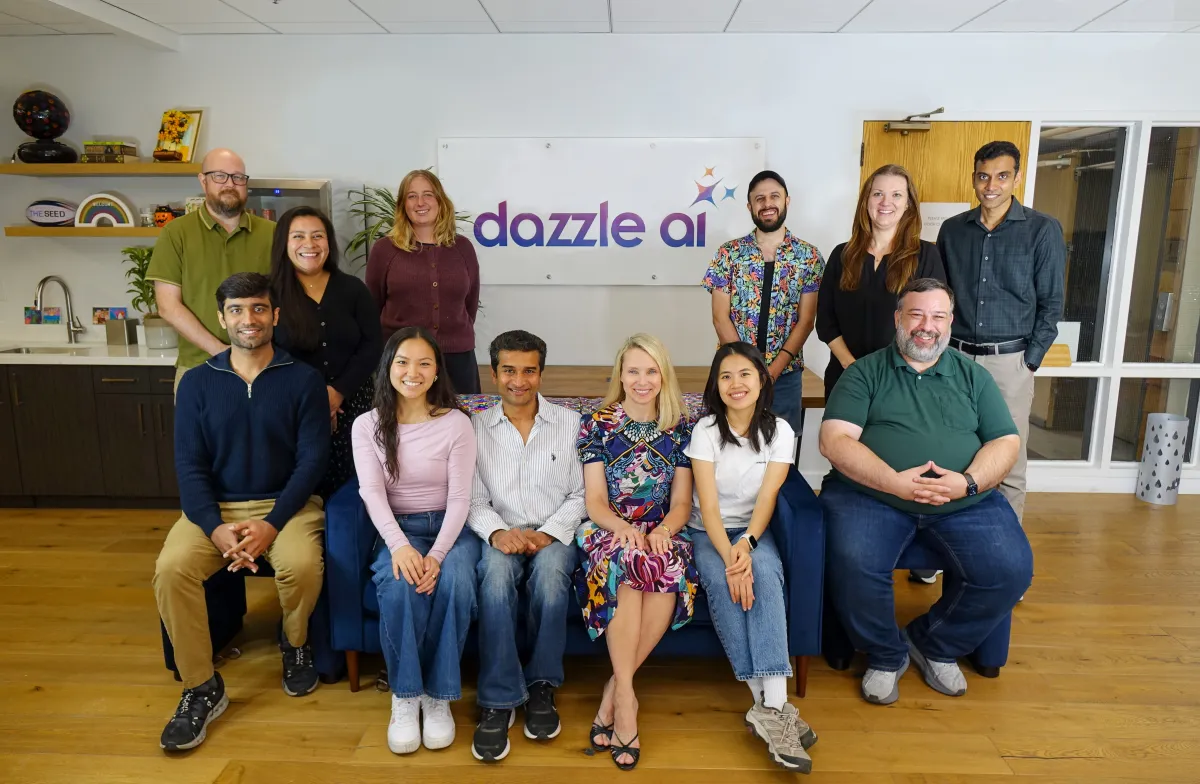
Former Yahoo CEO Marissa Mayer has unveiled Dazzle, a new personal AI assistant that tries to learn about users from a source most rivals overlook: the photos stored on their phones. The startup, which raised an $8 million seed round last December, is positioning itself as a privacy-conscious alternative to the wave of assistants built around email, calendars and messages.
The pitch is simple but provocative. Instead of asking people to connect their inboxes or chat histories, Dazzle mines camera rolls to infer habits, travel patterns, hobbies, family interests, style preferences and day-to-day routines. Mayer says that approach can reveal a more complete picture of a person than text-heavy productivity apps ever could, and may feel safer to users who are uneasy about giving AI broad access to sensitive communications.
That framing places Dazzle in a fast-moving corner of consumer AI where companies are racing to make assistants more personal, more useful and, crucially, more trusted. But unlike many of the products drawing attention in recent weeks, Dazzle is not built to be a universal productivity layer. It is designed to become familiar by looking at what people photograph, store and revisit.
What is Dazzle, and why does it matter?
Dazzle is a personal AI assistant that uses a user’s photo library as its main source of context. The company says the system can answer practical requests in the moment and also generate suggestions that reflect a user’s tastes and life patterns over time.
The product matters because it reflects a broader shift in AI design: the most valuable assistant may not be the one that knows your work calendar, but the one that understands your life outside of work. If Dazzle works as Mayer imagines, it could offer a different route to personalization — one rooted in memory, routine and visual history rather than text archives.
Mayer has argued that photos are an underused source of personal context. In her view, a camera roll contains signals about travel, family, food, hobbies and style that can be richer than what an inbox or to-do list reveals. That idea also gives the company a distinct identity at a moment when many AI assistants look increasingly similar.
How Dazzle works
Dazzle centers its assistant on two main functions. The first is immediate help: the app can scan recent photos to extract useful details and turn them into action. The second is longer-term personalization: it combs through a user’s photo archive to suggest activities, products and experiences that fit individual interests.
Immediate tasks from recent images
For time-sensitive requests, Dazzle can inspect new or recent photos and turn visual information into next steps. Mayer described examples such as pulling calendar details from an event flyer or helping identify a repair professional after noticing damage in a garage-door image.
That makes the assistant resemble a visual search and organization tool as much as a chatbot. Rather than relying only on prompts, it can use what the user has recently photographed as a source of truth.
Personalized ideas from the full library
Dazzle’s more ambitious promise is to learn from a user’s entire photo history and turn that into recommendations. Mayer says the assistant can infer whether a user likes skiing, where they travel, what their children enjoy and what kinds of outings are likely to appeal to the whole family.
The company believes that repeated visual patterns can reveal preferences that people may not explicitly write down anywhere else. A photo stream, Dazzle argues, can expose recurring behaviors in a way that simple search queries cannot.
| Feature | How Dazzle Uses It | Example |
|---|---|---|
| Recent photos | Extracts immediate details for practical help | Turns an event flyer into calendar information |
| Photo library | Builds a profile of interests and habits | Suggests vacation ideas based on prior trips |
| Visual clues | Infers household needs and activities | Finds a repair person after spotting damage |
| Personal patterns | Generates lifestyle recommendations | Recommends family outings and gift ideas |
Why build an assistant around photos?
Dazzle’s photo-first strategy is partly a product decision and partly a statement about privacy. Mayer says that many consumers may be more willing to share image libraries with an AI assistant than allow access to emails, messages and other more sensitive data sources.
That argument is important because much of the anxiety around AI assistants comes from the amount of personal information they can ingest. Email and chat histories often contain financial details, work conversations, personal conflicts and medical or legal references. A camera roll can be deeply revealing too, but Mayer is betting that the average user will see it as a less dangerous trade-off.
The company also says it deletes personal information that its system identifies as sensitive. Dazzle has made privacy a central part of the pitch, suggesting that careful data handling could become a key differentiator in a crowded market.
Mayer said the company believes photos are an overlooked source of personal knowledge and that users may be surprised by how much an assistant can infer from them.
What the demo showed
In testing, Dazzle appeared strongest when it used photo history to generate suggestions that felt tailored to a user’s life. That included ideas for local activities, family outings and vacation destinations that were more specific than the output of a generic assistant trained only on broad prompts.
One example involved Mayer’s own use of the product: she said Dazzle inferred that her family likes escape rooms and then surfaced Bay Area options she had not seen before. That kind of recommendation is the product’s core promise — not just answering questions, but anticipating what might fit the user’s habits.
When asked about vacation ideas during testing, the assistant suggested destinations in the Mediterranean, apparently drawing from previous trips to Spain and Greece. It also surfaced Sicily, a suggestion that showed it could identify a broader travel pattern even when a particular destination had been visited years earlier.
Still, the experience was not flawless. The assistant missed some basic details, including a question about whether a child already knew how to roller skate. That kind of mistake is revealing: the product may be able to notice broad patterns, but it does not yet reliably replace the kind of memory people expect from a truly trusted personal assistant.
Where Dazzle seems strongest
- Finding activity ideas based on repeated family interests
- Suggesting travel destinations tied to past trips
- Turning recent visual clues into practical next steps
- Offering more individualized ideas than generic AI tools
Where it still falls short
- Occasional memory gaps on specific personal facts
- Limited usefulness compared with broader productivity assistants
- Unclear durability of recommendations over time
How does Dazzle compare with other AI assistants?
Dazzle enters a market where companies are increasingly experimenting with highly personal assistants, but its method differs from the dominant pattern. Many newer tools are built to observe meetings, read messages, summarize tasks or live inside a user’s work apps. Dazzle instead starts with images and uses them as a proxy for life context.
That distinction may look small at first, but it changes the type of relationship the AI can build. An email-based assistant tends to understand commitments, transactions and communication. A photo-based assistant may be better at recognizing hobbies, family traditions, travel habits and the aesthetics of a user’s everyday life.
In practical terms, this means Dazzle may not replace a work assistant or personal organizer any time soon. But it could become the layer that helps with gift ideas, weekend plans, destination planning and household-related tasks — the kinds of decisions where taste matters as much as speed.
| Assistant Type | Main Data Source | Best For | Primary Trade-Off |
|---|---|---|---|
| Photo-first assistant | Camera roll | Personalized recommendations | Can miss exact factual details |
| Email/calendar assistant | Messages and schedules | Task management | Requires access to sensitive content |
| Chat-based assistant | Prompts and conversation | General-purpose Q&A | Less personal context |
How is Mayer’s past shaping the product?
Mayer’s earlier startup work clearly influenced the direction of Dazzle. Before launching this assistant, she founded Sunshine, a company that introduced an AI photo-sharing product called Shine in 2024. That effort drew criticism for its dated design and struggled to gain traction before eventually being shut down.
Even so, Mayer says Sunshine produced technology and insight that remain valuable. In her telling, the old product created meaningful intellectual property that could be carried into a more focused attempt at photo-based AI. Dazzle appears to be the result of that second pass.
That history matters for investors and users alike. It suggests Mayer is not treating photos as a novelty but as a long-term thesis about how AI can become more intimate. At the same time, it also raises a familiar question in startup land: can a promising concept survive execution challenges that derailed a previous version?
What privacy concerns surround photo-based AI?
Photo-based AI may feel safer than message-based AI, but it is still highly personal. A camera roll can expose relationships, health issues, travel schedules, children, financial behavior and location patterns. In other words, the privacy risk is different, not absent.
Dazzle’s response is to emphasize that it filters out sensitive information and deletes what it flags as personal. That promise is likely to matter as much as the assistant’s accuracy, because consumer trust will determine whether people are willing to hand over a library of private images.
The broader market is already wrestling with similar concerns. As assistants become more useful, they often become more invasive. Products that offer convenience by reading users’ lives also create larger expectations around security, consent and data retention.
Questions users are likely to ask
- What exactly is stored, and for how long?
- Which photos are used for personalization?
- Can sensitive images be excluded automatically?
- How much of the analysis happens on-device versus in the cloud?
Those questions will likely define whether Dazzle can move beyond curiosity and into regular use. If users do not trust the system with their photo libraries, the entire concept loses much of its appeal.
What does this mean for the AI assistant market?
Dazzle arrives during a period of rapid experimentation in consumer AI. The field has moved beyond simple chatbots and basic productivity helpers toward assistants that promise deeper personalization and more human-like anticipation.
That trend reflects a recognition that raw intelligence is not enough. Users may prefer tools that know them, remember their preferences and tailor recommendations to their actual lives. The challenge is that deeper personalization requires deeper data access, which raises both privacy and product-design risks.
Dazzle is interesting because it tries to solve that problem with an unconventional compromise. It asks for photos rather than messages, then attempts to build a usable personal model from that visual record. If successful, it could show that consumer AI does not need to start with the inbox to feel intimate.
It is also a reminder that there may be more than one path to a useful assistant. Some products will win by being deeply practical at work. Others may succeed by becoming better at family life, planning and taste. Dazzle is betting on the second path.
Who is behind Dazzle?
Marissa Mayer is leading the company. Best known for her role as Yahoo CEO and for earlier senior positions at Google, she has spent years in consumer technology, product design and data-driven services. Her startup experience gives Dazzle an immediate recognition factor in a crowded AI market.
That visibility helps the company, but it also heightens expectations. When a well-known operator enters a hot category, the product is judged not just on the idea but on execution, speed and polish. Dazzle’s early response suggests the concept has novelty, but the road to durable consumer adoption remains uncertain.
Mayer’s central claim is that a phone’s photo library can reveal enough about a person to make an assistant genuinely useful, without relying on the most sensitive parts of digital life.
Where Dazzle goes next
The next phase for Dazzle will likely determine whether it becomes a standout consumer AI product or just another entry in a crowded wave of assistants. The company will need to improve factual recall, sharpen personalization and prove that its privacy story is strong enough to earn trust.
It will also need to answer a bigger strategic question: can a photo-based assistant become indispensable, or will it remain a clever add-on for occasional recommendations? The early evidence suggests promise, but not yet inevitability.
For now, Dazzle offers a useful glimpse of where personal AI may be heading. The next generation of assistants may not simply manage schedules or summarize chats. They may learn from the visual evidence of our lives — the vacations we take, the meals we photograph, the hobbies we repeat and the people we spend time with — and use that knowledge to help us make more personal decisions.
If Mayer is right, that future may feel less like a chatbot and more like a companion that understands the shape of a life. The question is whether enough users will be comfortable letting it look that closely.
Frequently asked questions
What is Dazzle?
Dazzle is a personal AI assistant founded by Marissa Mayer that uses a user’s photo library as its main source of context. It is designed to help with practical tasks and offer personalized suggestions based on patterns it finds in camera roll images.
How does Dazzle differ from other AI assistants?
Dazzle differs by relying on photos instead of email, messages or calendars as its primary data source. That gives it a different kind of personal context, focused more on habits, hobbies, travel and family life than on work or communications.
Is Dazzle more privacy-friendly than other assistants?
Dazzle is marketed as more privacy-friendly because it avoids asking for access to emails and messages, which often contain highly sensitive information. The company also says it discards personal data flagged as sensitive, although any photo-based system still raises privacy concerns.
What can Dazzle do right now?
Dazzle can scan recent photos for useful details, such as pulling information from event flyers or helping find a repair service after spotting damage in an image. It can also use the wider photo library to suggest vacations, outings and gift ideas.
Why did Marissa Mayer build Dazzle?
Mayer appears to be pursuing a long-running thesis that photos contain underused personal information. Her previous startup, Sunshine, also explored AI and photos, and Dazzle seems to build on that experience with a more focused, assistant-style product.