In short
Meta unveiled a camera-free pair of smart glasses, upgraded Ray-Ban Meta Gen 3 models and a lighter mixed-reality device at Connect. The lineup is designed to reduce privacy concerns while expanding Meta’s wearables ecosystem.
- Meta launched Ray-Ban Meta Audio, a camera-free smart-glasses model priced at $349.
- The company introduced lighter Meta VR Glasses with a compute puck and spring 2027 release window.
- Ray-Ban Meta Gen 3 adds 3K video capture, better audio and longer battery life.
- Meta is leaning harder on AI features, including Muse and new visual tools for Display glasses.
Meta used its latest Connect event in Menlo Park to roll out a major reset of its wearables strategy, headlined by camera-free smart glasses, a lighter mixed-reality headset-style device, and refreshed Ray-Ban models aimed at calming privacy concerns while expanding its hardware lineup. The company is positioning the new products as a broader answer to the backlash that has dogged its camera-equipped glasses, while also pushing harder into AI, gaming, entertainment and everyday productivity.
The most notable move is the introduction of Ray-Ban Meta Audio, a new pair of smart glasses with no camera at all. Alongside that, Meta unveiled a new generation of its Ray-Ban smart glasses with upgraded video capture and audio, plus a slimmed-down mixed-reality device Meta is calling VR Glasses that abandons the bulky headset form factor in favor of a goggle-like design.
For Meta, the announcements represent more than a product refresh. They signal an effort to broaden the appeal of smart eyewear beyond early adopters, answer mounting privacy criticism, and create a more complete ecosystem around AI assistants, communication, entertainment and immersive computing.
Why Meta’s new glasses matter
Meta’s new lineup matters because it addresses one of the biggest barriers to mainstream smart-glasses adoption: trust. Camera-enabled eyewear has drawn concern from privacy advocates, bystanders and policymakers, particularly when it can record people without their knowledge. A camera-free version gives Meta a way to keep the audio-first experience while lowering the social friction that has come with its earlier products.
The company is also trying to widen the product ladder. At one end is an inexpensive, camera-free model for people who want music, calls and Meta AI without recording features. At the other are higher-end glasses and a more capable mixed-reality device for users who want immersive apps, gaming, video and workspace tools. That spread gives Meta a clearer path to selling wearables to different types of buyers rather than relying on a single flagship device.
What Meta announced at Connect
Meta’s presentation centered on four products and several upgrades to its existing wearables platform. The company introduced:
- Ray-Ban Meta Audio, a camera-free smart-glasses model
- Meta VR Glasses, a lighter mixed-reality device with no head strap
- Ray-Ban Meta Gen 3, the latest version of its camera-equipped glasses
- Meta Ray-Ban Display updates, including new AI-powered visual features
Meta also said its Muse AI agent will be coming to the smart-glasses platform, extending the company’s push to make eyewear a front end for AI interaction rather than just a wearable audio accessory.
| Product | Key feature | Price | Availability |
|---|---|---|---|
| Ray-Ban Meta Audio | Camera-free audio smart glasses | $349 | Preorder now; ships Oct. 10 |
| Ray-Ban Meta Gen 3 | 3K video capture, improved audio and battery life | Starts at $449 | Available now |
| Special edition Gen 3 aviators | Premium aviator styling | $579 | Available now |
| Meta VR Glasses | Lightweight mixed-reality display device | $1,300 | Spring 2027 |
How do the new Meta VR Glasses differ from Quest?
The new Meta VR Glasses are designed to feel much less like a conventional headset and much more like oversized eyewear. Meta says the device is roughly five times lighter than the Quest 3 and can sit on the nose without a head strap, which puts it closer in spirit to slim display glasses from companies such as Viture and the direction Xreal has publicly explored with its Project Aura concept.
That lighter construction matters because comfort has always been one of the main obstacles in mixed reality. Traditional headsets can deliver strong immersion, but they are cumbersome to wear for long periods. Meta appears to be betting that many users prefer a device they can keep on for entertainment, multitasking and casual use even if it offers a narrower field of view than a full headset.
What powers the device?
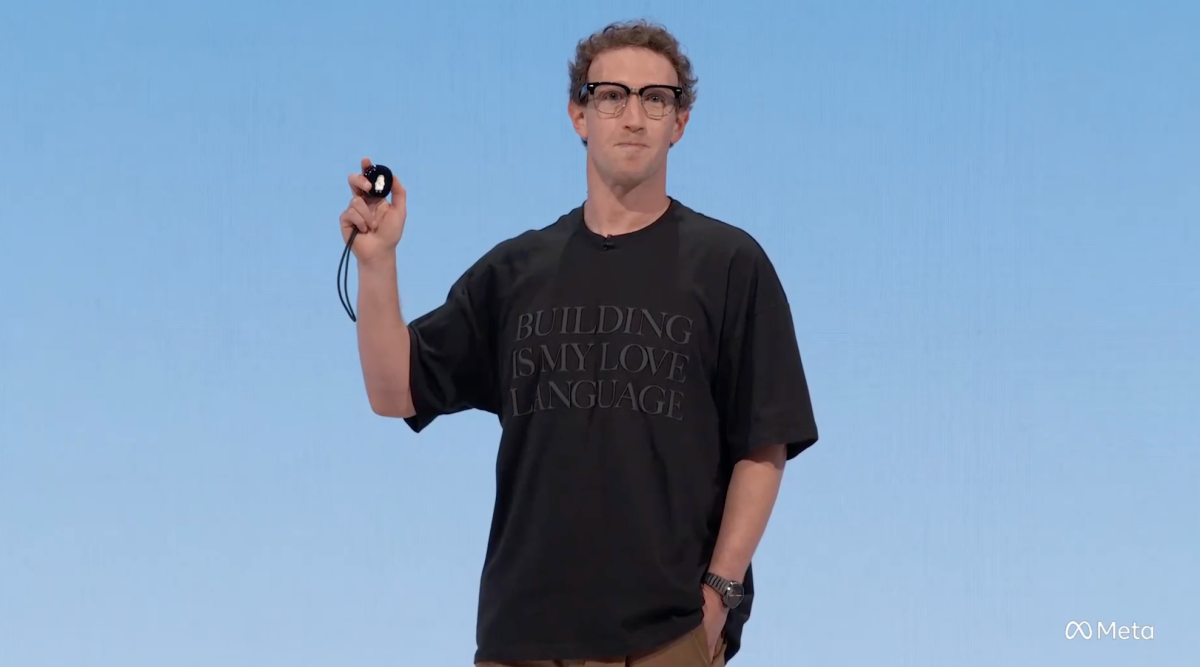
The heavy computing is not inside the glasses themselves. Instead, the system relies on an attached compute puck that also contains the battery. That separation lets Meta keep the eyewear thin while preserving enough processing power for mixed-reality functions.
The device uses a 5K micro-OLED display, with 2412 x 2288 pixels per eye, and supports hand tracking, finger pinches and eye tracking for navigation. Meta says users can open apps with a two-finger pinch and scroll by making a fist and moving the thumb up or down, reducing the need for controllers in ordinary use.
There are still controller options. The glasses can connect to older Quest controllers or standard gamepads such as an Xbox controller, which should make them more appealing for gaming and more precise interaction.
What can people do with them?
Meta says the VR Glasses will support software already familiar to Quest owners, including games like Beat Saber, live sports apps and streaming services such as Disney+. The company is also pitching them as a productivity tool, with workspace modes that can place multiple virtual monitors in front of the user and a virtual keyboard that uses embedded cameras to detect finger placement on a surface.
That mix of entertainment and work features shows Meta’s broader plan: the company wants the hardware to feel useful for ordinary daily tasks, not just as a device for gaming or demos. In that sense, the VR Glasses are less a pure virtual-reality headset and more a portable personal display system.
Why Meta is adding a camera-free pair of smart glasses
The Ray-Ban Meta Audio glasses are the clearest response to the privacy criticism Meta has faced over the past several months. Camera-equipped glasses have become a lightning rod because they can capture what wearers see without a visible recording indicator that bystanders always notice or trust.
By removing the camera entirely, Meta eliminates the most controversial part of the product while preserving the features that made its smart glasses popular in the first place: audio, calls, voice interaction and hands-free access to Meta AI. The result is a simpler device that may feel more socially acceptable in public settings.
Meta’s move toward a camera-free model appears designed to reassure buyers who want the convenience of smart eyewear but are uncomfortable with the surveillance concerns surrounding image capture.
At 43 grams, the Ray-Ban Meta Audio glasses are also lighter than Meta’s other smart-glasses models. Battery life is a major selling point: Meta says they can last up to 12 hours on a charge and up to 48 hours with the charging case.
Design and pricing
Meta says the camera-free model will be offered in 23 color and style combinations, including familiar Ray-Ban looks such as the Clubmaster and the more rectangular Burbank frame. The glasses are priced at $349, are available for preorder now and begin shipping on October 10.
That price places them below the company’s newest camera-equipped Gen 3 model, making them a likely entry point for users who want the convenience of Meta glasses without paying for advanced recording hardware they may not use.
What changed in Ray-Ban Meta Gen 3?
The Ray-Ban Meta Gen 3 line is a meaningful upgrade to Meta’s flagship glasses, particularly for users who want better media capture and cleaner audio. The new version includes 12-megapixel cameras, 3K video recording and support for Dolby Atmos-enabled video capture.
Meta says battery life rises to as much as nine hours, which is two hours more than the previous generation. That improvement matters because battery constraints have been one of the practical limits on wearable devices that try to do multiple jobs at once.
Sound and hearing features
Meta also added a six-microphone array intended to improve voice pickup and reduce background noise. That should help with calls, voice commands and recordings in louder environments.
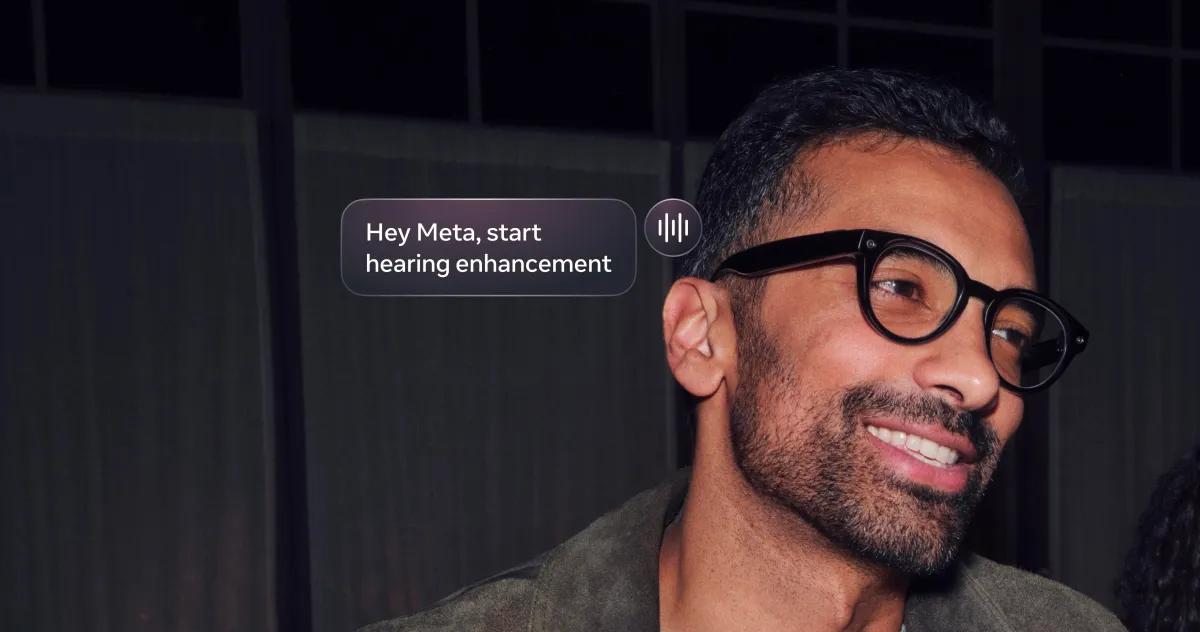
A new Hearing Enhancement feature uses the glasses’ speakers to amplify speech and nearby audio, creating a function that overlaps with some hearing-assist products. Meta says the capability is similar in spirit to Nuance glasses from EssilorLuxottica, pointing to a broader trend in which smart glasses are beginning to blur into assistive audio devices.
The Ray-Ban Meta Gen 3 glasses start at $449. A special-edition aviator version is priced at $579. Meta also introduced versions in collaboration with Kylie Jenner and rapper Lisa, with optional charms attached to some of the styles. The company says those models are available now.
What about the Meta-branded glasses?
Earlier this summer, Meta released smart glasses under its own branding at a lower price point, but they were functionally similar to the Ray-Ban versions. Now the company is pushing forward with Gen 3 updates in both the Ray-Ban and Meta-branded lines, including new shapes such as Capri, a cat-eye design, and Nova, a rounder frame.
Meta has not yet disclosed the pricing for the new Meta-branded Gen 3 models. It says more preorder and sales details will follow.
How is Meta using AI in its glasses strategy?
Meta is making AI a central part of the wearables pitch. The company says Meta AI will be integrated more deeply into the Display glasses, where users will be able to generate photorealistic holograms of their faces for video calls. Meta is also improving cycling-related functions and navigation tools on that device.
The use of AI in smart glasses is significant because it shifts the product from a passive recording device into an interactive assistant. Instead of only capturing photos or video, the glasses can surface information, support communication and potentially respond to context in real time.
That direction is consistent with Meta’s larger hardware ambitions. The company wants glasses to become a natural interface for AI, especially in settings where pulling out a phone is inconvenient or socially disruptive.
How do Meta’s new products compare with the competition?
Meta’s latest lineup sits in a crowded and increasingly competitive field that includes both traditional headset makers and newer companies experimenting with lightweight display glasses. The strategy behind the VR Glasses suggests Meta is trying to split the difference between bulky immersive headsets and ultra-light visual eyewear.
In practical terms, Meta is chasing three overlapping markets:
- socially acceptable audio-first glasses for everyday use
- camera-enabled glasses for capture and AI-assisted media creation
- lightweight mixed-reality display hardware for entertainment and productivity
That approach is notable because it allows Meta to test which form factor resonates most, while keeping users inside the same hardware and software ecosystem. If one category underperforms, another may still gain traction.
It also reflects a broader shift across the industry. Hardware makers are moving away from the idea that a single device must do everything well. Instead, they are building specialized wearables that appeal to different usage patterns and comfort levels.
What privacy issue is Meta trying to solve?
Meta is trying to solve the public discomfort created by cameras built into eyewear. The problem is not only that the glasses can record video and photos, but that they can do so in environments where people nearby may not realize they are being captured.
For Meta, that has become a brand issue as well as a product issue. The company has spent years under scrutiny for how it handles data, and any wearable that normalizes always-on capture risks deepening suspicion. A version without a camera is a straightforward way to reduce that concern while keeping the product line alive.
That does not eliminate privacy questions entirely. Even camera-free glasses still collect audio signals, connect to AI services and potentially gather usage data. But the most visible and controversial feature — image capture — is gone.
Meta’s new camera-free glasses suggest the company understands that consumer wearables may need a less invasive default if they are going to move beyond a niche audience.
What this means for Meta’s hardware business
The announcements show that Meta is no longer treating smart glasses as an experimental side project. They are becoming a core piece of the company’s hardware identity, alongside Quest and other mixed-reality efforts. The expansion into multiple styles, prices and use cases is a sign that Meta sees the category as a long-term business rather than a single product cycle.
There is also a software implication. If Meta can make its glasses useful enough for video calls, navigation, calls, music, entertainment and AI assistance, it gains a persistent point of contact with users throughout the day. That is strategically valuable because it makes the glasses an access point to Meta services, not just a device that competes with them.
Still, the company faces execution risks. Consumers may embrace the convenience of audio-first glasses but ignore higher-end mixed-reality eyewear. Developers may be slower than Meta hopes to build compelling applications. And even with new privacy-sensitive products, public skepticism around wearable cameras and AI remains a real hurdle.
Timeline of Meta’s latest wearable push
Meta’s latest product rollout follows a rapid sequence of launches and refinements over the past year. The company appears to be iterating quickly, using its hardware line to test price points and social acceptance.
| Time period | Development | Why it matters |
|---|---|---|
| Earlier this summer | Meta introduced lower-cost Meta-branded smart glasses | Showed the company was broadening the product family |
| Past few months | Privacy criticism over camera-equipped glasses intensified | Created pressure for a non-recording alternative |
| Meta Connect, Menlo Park | Company unveiled Ray-Ban Meta Audio, Gen 3 and VR Glasses | Marked the biggest expansion yet in Meta’s eyewear line |
| October 10, 2026 | Ray-Ban Meta Audio begins shipping | First consumer proof point for the camera-free strategy |
| Spring 2027 | Meta VR Glasses planned for release | Signals Meta’s longer-term bet on lightweight mixed reality |
What to watch next
The next few months will reveal whether Meta’s new strategy works. The company will need to show that consumers want a camera-free version strongly enough to make it a mainstream product, while also proving that the higher-end glasses and the new VR device offer enough utility to justify their prices.
Key questions include how well the new AI features work in real-world use, whether the battery and comfort improvements are enough to matter over a full day, and whether Meta can convince buyers that smart glasses are useful rather than merely novel.
If the company succeeds, the announcement could be remembered as the moment smart glasses began to feel less like a controversial gadget and more like a practical consumer device. If it fails, the rollout may be seen as another ambitious but fragmented bet on hardware that is still waiting for its breakout moment.
For now, Meta has made its position clear: the future of its wearables business will not depend on a single pair of glasses, but on a family of devices tailored to different levels of comfort, capability and privacy.
Frequently asked questions
What are Meta’s new camera-free smart glasses?
Meta’s new camera-free smart glasses are the Ray-Ban Meta Audio model. They keep the audio features of Meta’s existing glasses but remove the camera, making them lighter, cheaper and less controversial from a privacy standpoint.
How much do Meta’s new smart glasses cost?
The Ray-Ban Meta Audio glasses cost $349, while the Ray-Ban Meta Gen 3 starts at $449 and a special-edition aviator version costs $579. Meta’s new VR Glasses are priced at $1,300 and are scheduled for spring 2027.
When will the Ray-Ban Meta Audio glasses ship?
The Ray-Ban Meta Audio glasses are available for preorder now and are scheduled to start shipping on October 10. Meta is positioning them as the fastest way for buyers to get into its newest glasses lineup.
What is different about Meta VR Glasses compared with Quest?
Meta VR Glasses are much lighter than the Quest 3 and are designed like goggles instead of a bulky headset. They use an external compute puck, support hand and eye tracking, and can connect to controllers if needed.
Why did Meta release a camera-free model?
Meta released a camera-free model to reduce privacy backlash around recording-capable glasses. By removing the camera, the company keeps the audio and AI experience while addressing one of the biggest concerns about smart eyewear in public.