In short
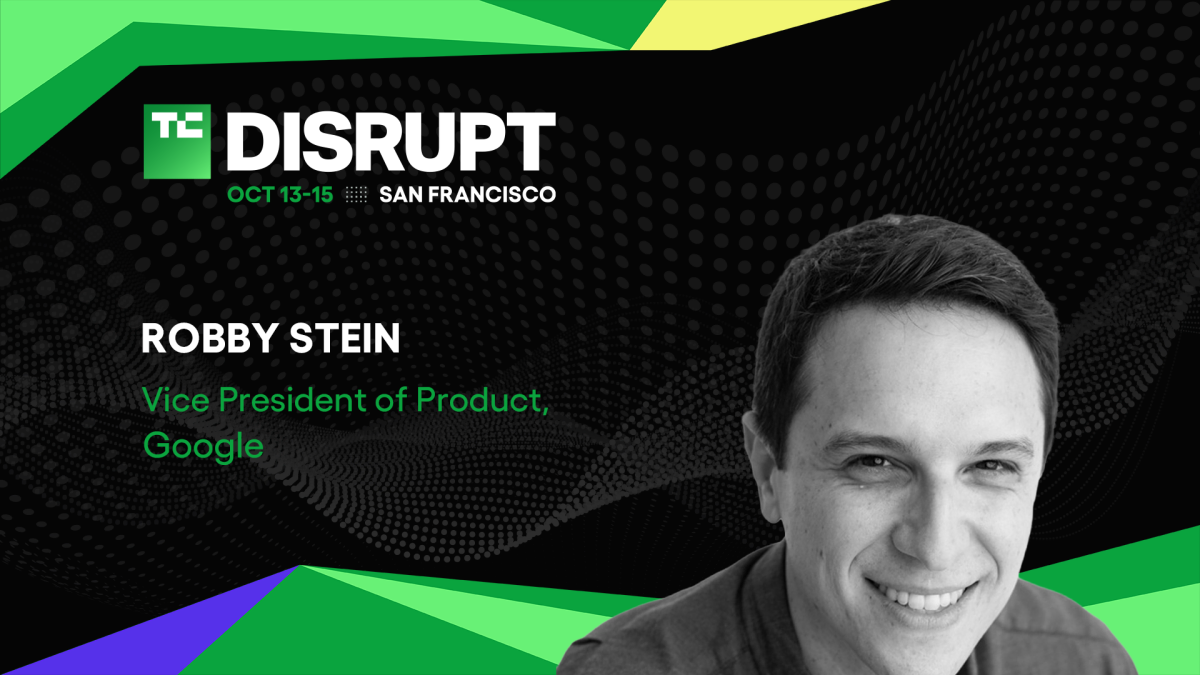
Google Search VP of product Robby Stein will speak at TechCrunch Disrupt 2026 about how product decisions change when a service grows from an MVP to a billion-user platform. The session will focus on balancing speed, trust, innovation, and reliability, especially in the AI era.
- Robby Stein will join TechCrunch Disrupt 2026 for a Builders Stage fireside chat about scaling product decisions.
- The session centers on how product teams shift from startup-style speed to the caution needed for billion-user services.
- Stein brings experience from Stamped, Instagram, Artifact, and Google Search.
- Generative AI and Google’s AI Mode make the discussion especially timely.
- Disrupt 2026 runs October 13-15 at Moscone West in San Francisco.
Google Search vice president of product Robby Stein will appear at TechCrunch Disrupt 2026 to explain how product decisions change when a service grows from an early MVP into a platform used by billions. The session matters because it tackles a central challenge for modern tech companies: how to keep innovating without sacrificing reliability, trust, or user experience at global scale.
Stein’s fireside chat, titled “From MVP to Billions of Users: How Product Decisions Must Change at Scale,” will take place on the Builders Stage at Moscone West in San Francisco from October 13 to 15. The conversation is aimed at founders, product leaders, and investors who want to understand how the instincts that help a startup launch can become liabilities once a product reaches massive reach and scrutiny.
TechCrunch says Disrupt 2026 will bring together more than 10,000 startup founders, investors, operators, and technologists, along with 250-plus speakers and more than 200 sessions across the event. Tickets are on sale now, with early savings available before prices rise on September 25.
Why this session matters now
Product teams are under increasing pressure to move quickly while shipping software that affects huge numbers of people every day. That tension is especially visible in AI-powered products, where design choices can shape how users search, learn, shop, or make decisions in real time.
Stein’s session is built around that problem. It asks what happens when the same experimentation mindset that helps a startup get off the ground collides with the demands of a mature platform that must remain dependable under intense public attention.
For smaller companies, the lesson is not about copying Google’s internal process. Instead, the value lies in understanding when speed creates an edge, when caution becomes necessary, and how leaders decide which early-stage habits should survive growth and which should be replaced.
What will Robby Stein talk about at Disrupt 2026?
Stein will discuss how product decisions evolve as a company moves from a first version of a product to one serving a massive global audience. The focus is on balancing rapid iteration with reliability, and innovation with trust.
That shift is not trivial. At startup stage, teams often optimize for learning quickly and adjusting course. At scale, every change can ripple through a large and diverse user base, making judgment, testing, and rollout discipline far more important than they were in the early days.
The session also aims to help founders think through a more practical question: when a product becomes mission-critical for millions or billions of users, how do you preserve the spirit of experimentation without undermining what people already depend on?
How product thinking changes at scale
How product thinking changes at scale is the core theme of the conversation, and the answer starts with risk. A feature that looks like a simple improvement on a whiteboard may have unexpected consequences once it is exposed to a huge audience with different needs, habits, and expectations.
At an early stage, product teams can often make bold changes with relatively limited downside. But once the product is core infrastructure for users, the cost of a bad decision rises sharply. That forces leaders to think harder about rollout strategy, quality assurance, long-term trust, and support for multiple user journeys at once.
Stein’s role at Google Search places him directly in that environment, where a change to how information is presented can affect how people understand the web, use AI, and make everyday decisions.
| Topic | Early-stage product | Large-scale product |
|---|---|---|
| Primary goal | Find product-market fit | Maintain trust and improve experience |
| Decision speed | Fast, experimental, often reversible | Measured, tested, and carefully staged |
| Risk profile | Limited user impact | Global consequences from small changes |
| Key metric | Learning and adoption | Reliability, satisfaction, and durability |
| Leadership priority | Speed of iteration | Balance between innovation and safety |
Who is Robby Stein?
Robby Stein is the vice president of product for Google Search, but his background spans both startups and large consumer platforms. That range is part of why TechCrunch is featuring him as a speaker on product decision-making at scale.
Stein co-founded Stamped, a startup focused on social recommendations that was later acquired by Yahoo. He then spent five years at Instagram, where he worked on consumer products and helped shape major features including Stories, Feed, Direct Messaging, and Reels.
Before returning to Google in 2024, Stein served as head of product at Artifact, an AI-driven news feed product. That mix of entrepreneurial and big-company experience gives him a rare vantage point on how product leaders think when a company moves from proving an idea to operating at enormous scale.
Why his background matters to founders
Why his background matters to founders is simple: Stein has seen both sides of the growth divide. He has worked in the uncertainty of startup life and inside organizations where product decisions can reach hundreds of millions of people instantly.
That perspective is valuable for founders who are now navigating their own growth curves. It offers a way to think about when to preserve the speed and flexibility of startup culture, and when to introduce more discipline, governance, or caution.
The core insight from Stein’s career is that building for the first few users and building for billions require different instincts, even if the ambition to improve the product never changes.
How AI is changing product leadership at Google Search
How AI is changing product leadership at Google Search is one of the most important layers in this story. Stein now works on generative AI products and experiences within Search, placing him at the center of one of the biggest shifts in consumer technology.
Search has long been one of Google’s most important products, but generative AI adds new complexity. The company is not just improving an existing interface; it is rethinking how people ask questions, receive answers, and move from quick summaries to more in-depth exploration.
That challenge is particularly relevant in a product with global reach, where changes to ranking, presentation, or conversational follow-up features can affect how users navigate information at scale.
What Google has said about AI Mode
What Google has said about AI Mode is that adoption has been rapid. In May, the company said AI Mode had surpassed 1 billion monthly users, about a year after launching.
Earlier in 2026, Stein described product updates that allowed users to move from an AI Overview into a follow-up conversation in AI Mode. The idea was to support both fast answers and deeper, more interactive exploration without forcing users to choose one mode of search over another.
That approach reflects the broader product challenge Stein is expected to discuss at Disrupt: how to introduce new capabilities while preserving the familiarity and dependability that users expect from a mature product.
What founders can learn from Google’s scale problem
What founders can learn from Google’s scale problem is less about specific tactics and more about mindset. A product that reaches millions or billions of users becomes harder to treat as a pure experiment, even if experimentation remains essential.
At early stage, the best teams often prize speed, boldness, and rapid feedback loops. Those traits still matter later, but they must be paired with stronger controls: better testing, more nuanced rollout strategies, clearer quality standards, and a deeper understanding of how changes affect different user groups.
Founders attending Disrupt are likely to see Stein’s talk as a roadmap for that transition. The session is expected to surface practical questions such as:
- When should a team prioritize speed over polish?
- How do you ship new ideas without damaging trust?
- Which product instincts remain useful after scale, and which ones do not?
- How do you manage innovation when every decision can affect millions of people?
Why Disrupt remains a major stage for startup leaders
Why Disrupt remains a major stage for startup leaders is tied to its mix of networking, content, and visibility. The 2026 event returns to Moscone West in San Francisco and is designed to bring together people building products, funding companies, and shaping the next wave of technology.
TechCrunch says attendees will have access to six industry stages, roundtables, breakout sessions, an Expo Hall, Startup Battlefield, and networking opportunities throughout the conference. For product people, the Builders Stage provides a setting where strategic lessons can be discussed alongside operator experience.
Stein’s appearance fits that format well because it addresses one of the most universal challenges in product development: the moment when growth changes the rules.
What the event offers attendees
What the event offers attendees goes beyond the mainstage talk itself. TechCrunch is positioning Disrupt 2026 as a place where founders can compare notes with investors, meet operators, and learn from people building at every stage of company maturity.
According to the event information, more than 250 speakers are scheduled across more than 200 sessions. That breadth makes the conference especially useful for teams that want exposure to different operating models, market categories, and product philosophies.
For companies exhibiting, TechCrunch also noted that the last day to book an exhibit table is September 18, with the Expo Hall offering investor visibility and lead generation opportunities.
How to think about the startup-to-scale transition
How to think about the startup-to-scale transition depends on accepting that growth changes not only the product but also the organization behind it. A team that succeeds by moving quickly may need new processes once the audience becomes much larger and more diverse.
In practice, that often means adding structure rather than abandoning creativity. Teams may need more rigorous experimentation frameworks, clearer ownership, more extensive user testing, and stronger internal debate before launching major changes.
At the same time, leaders have to avoid a common trap: becoming so risk-averse that they stop improving the product. Stein’s session is likely to explore how to stay ambitious without becoming reckless.
| Disrupt 2026 detail | Information |
|---|---|
| Event dates | October 13–15, 2026 |
| Venue | Moscone West, San Francisco |
| Expected attendance | 10,000+ startup leaders, investors, and decision-makers |
| Speakers | 250+ speakers |
| Sessions | 200+ sessions |
| Ticket deadline for savings | September 25, 11:59 p.m. PT |
Why the timing is notable for Google Search
Why the timing is notable for Google Search is that the company is in the middle of one of the biggest platform transitions in its history. Generative AI is changing user expectations quickly, and every product decision is being evaluated not only for usefulness, but also for accuracy, reliability, and user trust.
That makes Stein an especially relevant speaker for a conference focused on building at scale. He is not discussing these ideas in abstraction; he is working through them inside a product used by billions and under intense public scrutiny.
For observers, that means the session may provide one of the clearest practical windows into how a major technology company tries to integrate AI without losing the discipline that made its flagship product indispensable.
Ticketing and registration details
TechCrunch is urging attendees to register early, saying pass prices will increase after September 25 at 11:59 p.m. PT. The company also says group passes for four or more can unlock additional savings, up to 30% in total.
Those details matter because Disrupt is structured as both a conference and a business-development opportunity. For founders and startup operators, the event can be a chance to raise visibility, meet investors, and compare notes with peers facing similar scaling questions.
The editorial pitch for Stein’s session is straightforward: if your product is growing, the way you build it has to grow too.
Bottom line for founders and product teams
The bottom line for founders and product teams is that scale changes everything about product management, from pace to risk tolerance to user trust. Stein’s talk is designed to show how those changes look inside one of the world’s most important consumer products.
For startup leaders, the most useful takeaway may be that growth is not just a matter of adding users. It is also a matter of changing how decisions are made, how features are tested, and how teams protect the value that attracted users in the first place.
That is why this session stands out on the Disrupt 2026 agenda: it is not just about product strategy, but about the discipline required to keep a product meaningful as it becomes essential.
Frequently asked questions
Who is Robby Stein at Google?
Robby Stein is Google Search’s vice president of product. He has also co-founded a startup, led consumer products at Instagram, and served as head of product at Artifact, giving him experience on both startup and scale-up sides of product development.
What will Robby Stein talk about at Disrupt 2026?
He will discuss how product decisions change as a company grows from an MVP to a platform used by billions. The session will focus on balancing speed, trust, innovation, and reliability when every change can affect a massive user base.
When and where is TechCrunch Disrupt 2026?
TechCrunch Disrupt 2026 takes place October 13-15 at Moscone West in San Francisco. TechCrunch says the event will feature 10,000-plus attendees, 250-plus speakers, and more than 200 sessions.
Why is this session relevant to AI products?
It is especially relevant because Stein works on generative AI experiences in Google Search. As AI changes how users find and interact with information, product teams must decide how to ship new capabilities without undermining trust or usability.
How can attendees save on Disrupt 2026 tickets?
Attendees can save up to $200 by registering before September 25 at 11:59 p.m. PT. TechCrunch also says group passes for four or more can offer up to 30% more savings.