In short
Google has opened pre-orders for its $899 Googlebook laptop, a Gemini-centered Android device aimed at premium buyers and the education market. The company is betting AI features can convince people to upgrade their laptops.
- Googlebook costs $899 and is available for pre-order now.
- The laptop is built around Gemini features like Magic Cursor and Rambler.
- Google is targeting both premium consumers and the huge K-12 Chromebook market.
- The device launches in the U.S. on October 4, with other markets following October 5.
- Google includes a year of Google AI Pro and long-term update support to strengthen the value proposition.
Google is now taking pre-orders for its $899 Googlebook laptop, a new Android-based device designed to pull consumers and schools deeper into Gemini-powered computing. The launch matters because Google is betting that built-in AI features, not just apps and cloud services, can justify a fresh laptop purchase and possibly reshape the Chromebook market.
Announced earlier this year and now available ahead of an October release, Googlebook is positioned as a premium alternative to traditional Chromebooks. Google says the device blends familiar ChromeOS-style elements with Android OS, a desktop Chrome browser, and a suite of Gemini tools that are meant to make the laptop feel more like an AI-first work companion than a standard notebook.
What Googlebook is and why Google is launching it
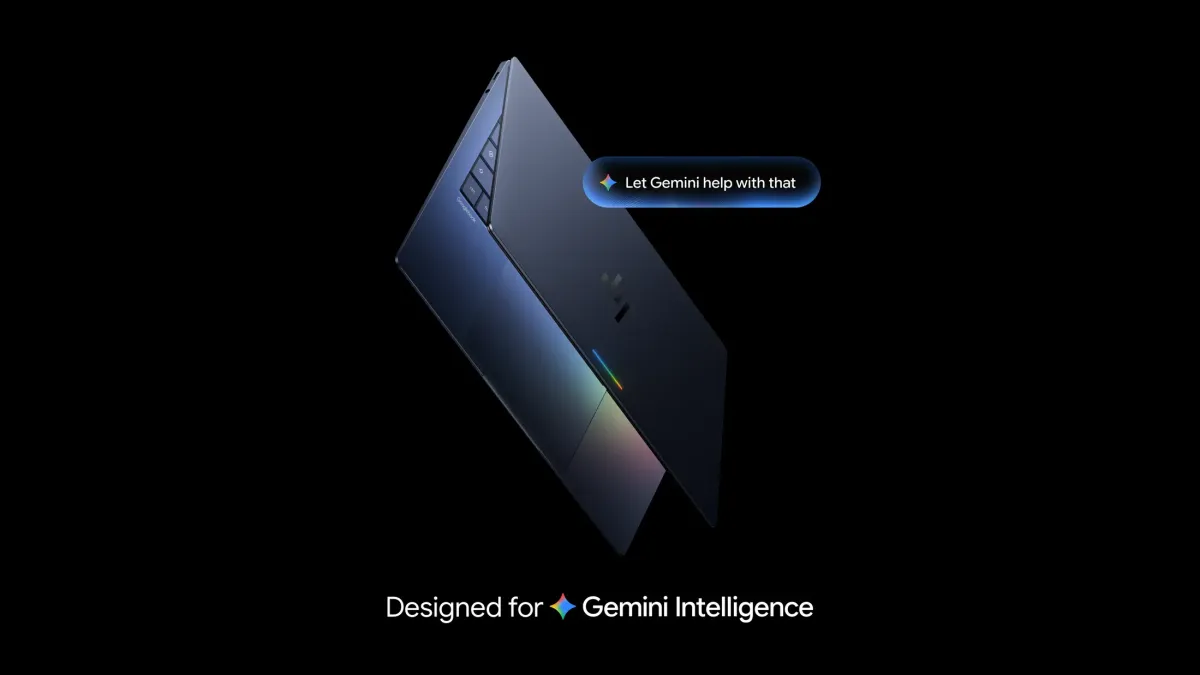
Googlebook is Google’s attempt to turn AI into a hardware selling point. Rather than offering a conventional laptop with AI features layered on after the fact, the company is framing the device itself as a new kind of desktop experience built around Gemini.
The strategy is straightforward: if users want the most seamless access to Gemini’s newest capabilities, Google wants them to buy a device designed for that purpose. That could help Google extend its reach beyond phones and browsers and into the daily computing habits of students, workers and families.
It is also a calculated response to a crowded laptop market. Most buyers already have a perfectly capable machine, and many of Google’s headline features can be accessed on existing devices through the browser or Android apps. Googlebook has to convince shoppers that integrated AI is enough of a reason to upgrade.
How Googlebook differs from a Chromebook
Googlebook is not simply a rebranded Chromebook. Google describes it as a step up from the low-cost laptops that became common in classrooms and basic home computing. The new device runs Android OS, incorporates a desktop version of Chrome, and keeps some of the usability cues that Chromebook users already know.
The difference is that Gemini is meant to sit at the center of the experience. On a standard laptop, AI is usually something you open in a tab, install as an app, or access separately from your operating system. Googlebook pushes the assistant into the interface itself, making AI feel more native to the device.
That approach reflects a broader shift in the tech industry. Companies are no longer just competing on processor speed or display quality; they are also trying to make AI the reason someone buys new hardware at all.
What features are new on Googlebook?
The most notable additions are an AI-powered cursor, customizable “vibe-coded” widgets, and improved dictation tools. Google is also promoting Gemini Spark and Gemini Live, which expand how people interact with the assistant across the device.
The company’s most distinctive feature is called Magic Cursor. Instead of acting like a normal pointer, it is designed to act as a bridge to Gemini. Google says users can highlight text on a page and ask Gemini to work with it, hover over an email and ask whether it looks suspicious, or select multiple images and ask the AI to combine them in a new way.
Another feature, Rambler, focuses on writing. It is meant to take rough, disorganized voice notes or stream-of-consciousness thoughts and turn them into readable text. In practical terms, it is designed for people who think faster than they type and want the laptop to clean up their ideas for them.
Google is pitching Rambler as a way to turn messy notes into polished writing, while Magic Cursor is meant to bring Gemini directly into how people point, select and act on content inside the laptop interface.
Why Google thinks AI can sell laptops
Google’s core bet is that AI can become a hardware upgrade driver in the same way better cameras once pushed smartphone cycles. The company appears to believe that if Gemini is woven tightly enough into the laptop experience, some buyers will choose a new machine specifically to unlock those tools.
That is a significant gamble. Consumer electronics history is full of features that looked compelling in demonstrations but failed to move the market in any lasting way. Googlebook has to overcome a simple objection: if most of the AI features also work on older laptops or in the browser, why replace a device that already works?
Google seems aware of that problem. Many of the headline tools are useful, but not necessarily essential. Rambler may be the most practical of the new features, yet even that is more of a convenience than a must-have. And AI-enhanced widgets or cursor tricks are likely to be seen as interesting rather than transformative by most buyers.
That is why the launch feels like a long-term play, not just a product refresh. Google is trying to normalize the idea that laptops should ship with AI as a default expectation, even if the immediate sales pitch is more modest.
How does Magic Cursor work?
Magic Cursor works by letting users interact with on-screen content and hand it off to Gemini for analysis or action. In Google’s examples, someone might highlight part of a web page, inspect a hovered email for signs of fraud, or choose a set of photos and ask Gemini to interpret them together.
At a conceptual level, the tool is Google’s answer to a growing demand for more natural AI interactions. Instead of opening a chatbot and typing a request, users can point at something and ask for help in context.
But the idea is not entirely new. It resembles the logic behind Circle to Search on Android, where users circle or tap on screen content to trigger a Search result. That feature proved useful, but it did not become a reason for mass device replacement. Googlebook faces the same challenge, only on a more expensive device category where consumers are even less eager to upgrade without a compelling necessity.
| Googlebook feature | What it does | Why it matters |
|---|---|---|
| Magic Cursor | Lets Gemini respond to highlighted or selected content | Brings AI directly into the pointer-and-click workflow |
| Rambler | Turns rough speech or notes into clean text | Makes dictation and brainstorming more usable |
| Gemini Spark | Expands Gemini-related functions on the device | Strengthens the AI-centric software pitch |
| Gemini Live | Supports live interaction with Gemini | Improves real-time assistant use |
| Vibe-coded widgets | Allows more expressive, AI-assisted personalization | Adds a minor customization layer |
What Google is offering at launch
Googlebook arrives with a bundle of software and services that is meant to soften the effective price. Buyers get 12 months of Google AI Pro, which includes 5TB of cloud storage and Gemini Advanced tools. Google is also adding three months of YouTube Premium, Adobe Photoshop and other extras.
That bundle is important because $899 is a serious ask for a laptop, even one with premium components and a multi-service package attached. Google is trying to make the deal feel less like buying a device and more like buying into an ecosystem.
The company also says Googlebook devices will receive regular updates for up to 10 years. That kind of support window is especially relevant for education buyers and budget-conscious consumers, because long software support can extend the life of a device and reduce total cost over time.
Who Googlebook is really for
Googlebook appears to target two overlapping groups: mainstream consumers who might be tempted by AI-forward computing, and the huge education market that has long relied on Chromebooks.
Google has said there are roughly 50 million Chromebooks in schools, used by students and educators. That is a massive installed base, and one that already depends heavily on Google services. If Google can persuade districts or families to move from familiar Chromebooks to Googlebook devices over time, the company could bring millions of users into a more Gemini-centered ecosystem.
That possibility may be the most strategically important part of the launch. The hardware itself is only one layer. The larger goal may be to transform the software habits of the next generation of computer users.
Why education could be the long game
Education is a powerful market for technology companies because early exposure tends to shape future habits. If students learn to work inside Google’s Gemini-powered environment, they may carry those expectations into college, jobs and personal device choices.
Google has already said existing Chromebooks will continue to be supported, but many may eventually qualify to move into the Googlebook experience. That suggests an incremental transition rather than an abrupt replacement, which is likely necessary in schools where budgets, procurement rules and hardware lifecycles move slowly.
For Google, that slow path may be preferable to a hard break. It gives the company a chance to introduce Gemini without alienating the millions of users already invested in Chromebook workflows.
How Googlebook compares with the Chromebook era
Chromebooks succeeded because they were affordable, simple and tightly connected to Google’s cloud services. Googlebook is trying to preserve that familiarity while moving upmarket with premium materials and more ambitious software.
The new laptops are being built by Acer, ASUS, Dell, HP and Lenovo, which signals broad hardware support across the PC ecosystem. Google says the devices will use materials such as aluminum, magnesium alloy and carbon fiber, and will include features like 2.8K OLED displays, haptic glass trackpads and backlit keyboards.
Inside, they are powered by Intel and Qualcomm processors paired with dedicated neural processing units. That is a key detail, because NPUs are increasingly central to on-device AI performance. Google is not just adding software; it is trying to align the machine’s hardware architecture with its AI ambitions.
Battery life is another selling point. Google says Googlebook can last up to 14 hours, which keeps the product competitive with other premium thin-and-light laptops and helps it feel suitable for all-day school or work use.
What the launch timeline looks like
Google first introduced the concept in May, and the company said on Monday that pre-orders are now open. The initial rollout begins in the United States, with international availability following shortly after.
The timeline is important because it gives Google a short runway to market the laptop before the holiday buying season gains momentum. It also lets the company gauge early interest from both consumers and enterprise buyers.
| Date | Milestone | Why it matters |
|---|---|---|
| May 2026 | Google first unveiled Googlebook | Introduced the AI-first laptop concept |
| September 21, 2026 | Pre-orders opened at $899 | Marked the product’s commercial launch phase |
| October 4, 2026 | U.S. retail release | First market availability |
| October 5, 2026 | International rollout begins | Expands access to additional markets |
What buyers get for $899
At $899, Googlebook is not a budget device. It sits in the mid-to-premium range, which means Google is asking buyers to weigh design, materials, software support and AI features against strong competition from Windows laptops and higher-end Chromebooks.
The package includes more than just hardware. Google’s pitch bundles the machine with storage, software and subscriptions, suggesting the company wants shoppers to think in terms of total value rather than sticker price alone.
That said, the pricing still creates a high bar. A buyer must believe that Googlebook’s AI experience is either more convenient, more intelligent or more future-proof than what they can already get elsewhere.
How much of this is really about AI?
Most of it is about AI, but not all of it is equally compelling. Some of the features, especially Rambler, solve real productivity problems. Others feel like experiments designed to make Google’s software stack more tangible and more fun to use.
The bigger question is whether any of this changes laptop behavior enough to shift purchasing decisions. The answer may depend less on individual features and more on whether Google can create a durable sense that Gemini is becoming part of the operating system itself.
That is the heart of the Googlebook experiment. If users come to think of AI as something that should live in the pointer, the browser and the notes app simultaneously, Google may be laying the groundwork for a new category of personal computing.
If not, Googlebook may be remembered as a polished but niche attempt to add AI flair to a product line that already worked well enough without it.
What happens next
The next phase will be less about launch-day excitement and more about adoption. If consumers respond to the AI bundle, Googlebook could establish a premium identity distinct from the low-cost Chromebook brand. If schools embrace it, the company could gain a pathway into classrooms that has enormous downstream value.
But if buyers decide the features are convenient rather than essential, Google will need to keep refining the product until Gemini feels indispensable. The success of Googlebook will likely hinge on whether AI becomes a habit, not just a headline.
For now, Google has made its bet clear: the company believes the next reason to buy a laptop may not be a faster chip, a sharper screen or a thinner chassis. It may be the promise that the machine itself understands what you want to do.
Key facts at a glance
- Price: $899
- Pre-order status: Open now
- U.S. release: October 4, 2026
- Other launch markets: Canada, the U.K., Ireland, France, Germany and Australia on October 5
- Support window: Up to 10 years of updates
- Bundle: 12 months of Google AI Pro, 5TB storage, Gemini Advanced tools, 3 months of YouTube Premium and Adobe Photoshop offers
Frequently asked questions
What is Googlebook?
Googlebook is Google’s new AI-focused laptop line built around Gemini. It runs Android OS with desktop Chrome elements and adds features such as Magic Cursor, Rambler dictation cleanup and Gemini-powered widgets.
How much does Googlebook cost?
Googlebook starts at $899. Google is also bundling 12 months of Google AI Pro, 5TB of cloud storage, Gemini Advanced tools and other limited-time software offers to make the price feel more attractive.
When will Googlebook be available?
Googlebook is available for pre-order now and ships first in the U.S. on October 4, 2026. It arrives in Canada, the U.K., Ireland, France, Germany and Australia on October 5, 2026.
What makes Googlebook different from a Chromebook?
Googlebook is positioned as a more premium, AI-first successor to traditional Chromebooks. It uses Android OS, keeps Chrome browser familiarity and adds Gemini-centered features designed to make AI part of the laptop interface.
Why is Google launching Googlebook now?
Google is trying to make Gemini a hardware selling point and deepen its presence in schools and consumer computing. The company appears to believe that integrated AI could help sell new laptops and move Chromebook users toward a more Gemini-centric ecosystem.