In short
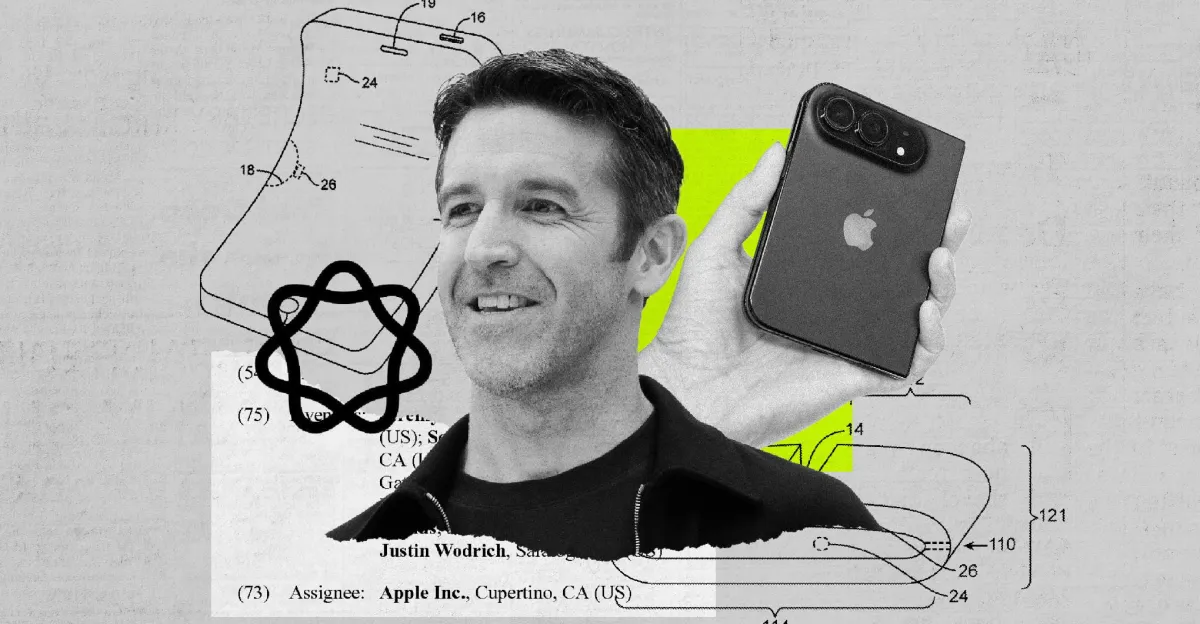
Apple’s first major event under new CEO John Ternus used the iPhone Duo launch to signal a broader Apple AI future. The company framed the iPhone as the center of an upcoming wave of AI-native devices, including a smart home hub, wearables and other new hardware.
- John Ternus used his first major Apple keynote to establish a more explicit view of AI.
- Apple unveiled the iPhone Duo but did not announce a major new AI feature.
- The company is reportedly preparing a smart home hub, robotics-related products and AI wearables.
- Tim Cook’s exit marks a clear leadership transition from scale and privacy to a new hardware era.
- Apple’s near-term challenge is turning its AI narrative into products people can actually buy.
Apple used its September 2026 iPhone launch to do more than introduce new hardware: it marked the first major product event under new CEO John Ternus and signaled how the company wants to present itself in the artificial intelligence era. The headline product was the iPhone Duo, but the deeper story was Apple’s effort to reposition the iPhone as the center of an AI-driven ecosystem while it prepares a wave of new devices for the home, wearables and possibly robotics.
That shift matters because Apple is entering a leadership transition at the same time it is trying to define its next era of growth. Ternus inherits a company that has been highly successful under Tim Cook, but one that has also been criticized for moving cautiously in AI. The launch event suggested Apple is ready to tell a more explicit story about what it believes AI should be — and where it should live.
Bloomberg’s chief Apple correspondent Mark Gurman, who has tracked the company’s hardware roadmap closely, said the presentation felt intentionally familiar, but also revealing. Apple did not unveil a sweeping new AI breakthrough at the event. Instead, it used the stage to recast existing work around Apple Intelligence and to preview a broader device strategy that appears designed to carry the company beyond the smartphone.
Why the first Ternus event mattered so much
Apple’s September launch was not just another product cycle. It was the first major public moment for John Ternus as chief executive, following Tim Cook’s departure less than two weeks earlier. That timing made the event a test of continuity and a preview of change at the same time.
According to Gurman, the production of the keynote was carefully calibrated to make Ternus look like a natural steward of the Apple brand. The company leaned heavily on the polished, controlled structure that has defined its launch events for years, using a familiar cadence that could have fit Cook as easily as it fit the new CEO.
At the same time, the presentation introduced a subtle but important difference: Ternus came out with a firmer point of view about AI than Apple has typically shown in public. That distinction matters inside a company known for intense collaboration and cautious messaging.
Gurman described Ternus as a leader who arrives at decisions faster and with a more explicit opinion than Cook, who often used questions to pressure-test proposals before settling on an answer.
That contrast helps explain why the first Ternus keynote felt like a turning point even though its surface looked almost routine. Apple was not trying to shock the market; it was trying to establish a new voice.
What Apple actually announced at the event?
Apple’s biggest hardware reveal was the iPhone Duo, the company’s first foldable smartphone. But the launch also served a second purpose: it gave Apple a platform to tell a story about AI without having to announce a dramatic new AI feature.
That choice is revealing. The company has spent the last two years building out Apple Intelligence after first introducing it at WWDC 2024, but the rollout has been uneven and its broader narrative still feels unfinished. The September event made that limitation obvious. Apple did not showcase a major new AI product or a radically new software capability. Instead, it focused on reframing what it has already shipped and on placing those features into a more coherent storyline.
The opening section of the keynote leaned into Apple’s favorite rhetorical move: taking an existing product philosophy and updating it for the present. This time, the company cast AI as the new organizing principle around which future devices will orbit.
For Apple, that was a strategic decision as much as a product one. The company has not yet produced the kind of breakthrough AI system that can match the services-led sophistication of OpenAI or Anthropic. So it is doing what it can with the tools in hand, while waiting to unveil the next generation of hardware that may better reflect its vision.
How Apple is trying to tell an AI story without a breakthrough model
Apple’s answer to the AI arms race is not simply software. It is a product ecosystem built around the idea that intelligence should be embedded in devices people already use every day.
That framing surfaced in Ternus’s on-stage language, especially the phrase “intelligent personal hub,” which Apple used to describe the iPhone’s role in the future. The phrase is intentionally broad, but it is also a clear attempt to reposition the smartphone as the central node of a larger AI system.
For longtime Apple watchers, that language echoes earlier eras. Steve Jobs once described the iMac as the “digital hub” of the home, and later Apple framed the Mac, then iCloud, as the center point of the user experience. The new pitch is that intelligence, not a desktop computer or a cloud account, will now occupy that central role.
There is a catch, though. Many of the most impressive AI capabilities available today run in the cloud, not on-device. That gap makes Apple’s framing feel aspirational, even if it is commercially useful. The company is promising a future in which hardware and AI are tightly connected, but it does not yet have the model or infrastructure to make the iPhone the most powerful AI device in the market.
That tension was especially visible as competitors continue pushing more cloud-heavy approaches. Apple’s public posture remains centered on privacy, control and on-device intelligence, but that model may prove less flexible than the approaches being pursued elsewhere.
Why the “intelligent personal hub” message matters
The message matters because Apple is not just selling a phone. It is trying to persuade users that the phone can still be the gateway to the next computing platform, even as AI shifts the conversation toward new categories of devices.
By emphasizing the iPhone as a hub, Apple buys itself time. It keeps the smartphone at the center of the business while the company develops products that may one day take over some of the roles AI is expected to play.
- It reinforces the iPhone’s relevance in a changing market.
- It gives Apple a stable narrative while other AI platforms evolve rapidly.
- It sets up new hardware categories as extensions of an existing user base.
What comes after the iPhone?
Apple’s near-term roadmap, as described by Gurman, points to a much broader hardware strategy than the September event revealed. Over the next year and a half, the company is expected to introduce a series of AI-native products that are built around Siri, sensing, and context-aware computing.
The first of those is likely to be a smart home hub that resembles an Echo Show in concept but is more tightly integrated into Apple’s ecosystem. Unlike a basic smart display, this device is expected to run a new operating system and to act as a Siri-powered control center for the home.
Apple is also reportedly working on a home security system, a hub with a robotic arm that can move around a room or desk, and a family of smart glasses. Another item on the roadmap is a version of AirPods with cameras, plus additional wearables not yet publicly detailed.
What connects all these efforts is the idea that AI will no longer be limited to app features on a phone. Instead, it will become a layer that interacts with people through vision, voice, location and presence.
How the smart home hub could work
The smart home hub is expected to be the first of Apple’s genuinely AI-native consumer products. It would likely use a square display, support video calling and intercom features, and adapt what it shows based on who is in the room.
Apple’s version of identity recognition is likely to rely on Face ID-style capabilities, allowing the device to personalize content for each household member. That would make it more context-aware than a standard smart display, while still staying within Apple’s hardware aesthetic.
In practical terms, the hub could become the interface for music, home control, communication and proactive assistance. In strategic terms, it could be the first sign that Apple wants AI to extend beyond the iPhone without abandoning the phone as the company’s anchor product.
Why robotics is suddenly part of the conversation
Robotics is part of the conversation because Apple appears to be exploring more physically interactive devices, including a version of its home hub attached to a robotic arm. That would allow the display to move, follow a user or reposition itself during calls and media use.
The idea fits into a broader industry trend, especially in parts of Asia, where compact robotic consumer devices have found a niche. For Apple, such a product would represent a major step beyond conventional tablets or smart speakers and would bring the company into a more experimental hardware category.
How John Ternus differs from Tim Cook
John Ternus is not expected to reinvent Apple’s operating model overnight, but his leadership style appears to be different in ways that could shape the company’s product culture.
Cook built a reputation as a master of scale, logistics and operational discipline. Under his leadership, Apple became a larger, more institution-like company: cautious, orderly and deeply committed to privacy, security and repeatable product cycles. The company remained highly successful, but it became less associated with the kind of dramatic product surprises that defined the Steve Jobs years.
Ternus, by contrast, appears more decisive and more willing to state a preference. That may sound like a small thing, but at Apple it can matter a great deal. A CEO who arrives with a clearer opinion can change how the company chooses products, how it frames launches and how it tells the public what it believes.
That does not mean Apple will suddenly become reckless. It means the company may become more explicit about its bets, especially in AI and future device categories.
Gurman argued that Ternus brings a more direct style to leadership, one that differs from Cook’s more collaborative approach and may produce a more clearly articulated strategy.
What Tim Cook’s exit says about Apple’s transition
Cook’s departure does not erase his legacy. If anything, it underscores how much Apple changed during his tenure. The company became bigger, more global and more conservative in its product storytelling. It also made privacy a major selling point and kept the iPhone at the center of its business for longer than many expected.
But the timing of Cook’s exit also reveals a deliberate handoff. Apple did not wait for a convenient financial or calendar milestone. It chose to stage one of the most important product launches in years under the new CEO’s name, even though many of the products shown were years in the making.
That is significant for two reasons:
- It gives Ternus ownership of the next chapter rather than asking him to inherit a finished story.
- It suggests Apple wants a clean break between the iPhone era and whatever comes next.
In effect, Apple appears to be saying that Cook oversaw the era of optimization and scale, while Ternus will be associated with the transition into AI-centric devices.
Why Apple still leans so heavily on the iPhone
The iPhone remains Apple’s most important product because the company does not yet have a new platform strong enough to replace it. That is true commercially, but it is also true narratively.
The iPhone is the product through which Apple can continue to sell privacy, intelligence, personal computing and ecosystem coherence. Even when the company talks about a future of smart glasses, home hubs or robotic displays, it still needs the phone to serve as the primary access point.
That dependence helps explain why Apple is so careful in how it describes its AI ambitions. A bold new platform would require a different sales pitch, a different software model and a willingness to concede that the smartphone’s centrality is fading. Apple is not ready to make that concession publicly.
Instead, it is doing what the company has often done when entering a new era: using the current best-selling product to bridge the gap to the next one.
How Apple compares with the rest of the AI market
Apple’s strategy looks different from companies building AI-first software or cloud platforms. The contrast is especially clear when compared with firms that are shipping model-centric features at a faster pace and often with fewer hardware constraints.
Apple’s strength is not raw model leadership. It is the depth of its installed base, its control over hardware and software, and the trust many users place in its approach to privacy. That combination can be powerful, but it also limits how fast Apple can move when the technology ecosystem is changing quickly.
In the near term, that means Apple may continue to seem a step behind in headline AI capabilities while remaining highly competitive in user experience and device integration. Whether that tradeoff is acceptable will depend on how quickly its new hardware roadmap becomes visible to consumers.
| Milestone | What happened | Why it mattered |
|---|---|---|
| WWDC 2024 | Apple introduced Apple Intelligence | Marked Apple’s official entry into its current AI strategy |
| September 2026 keynote | John Ternus led his first major event as CEO | Signaled a new era in Apple leadership and messaging |
| iPhone Duo launch | Apple unveiled its first foldable phone | Showed Apple still sees the iPhone as the center of its ecosystem |
| Expected next wave | Smart home hub, robotics, glasses and AI wearables | Indicates Apple is preparing AI-native devices beyond the phone |
What the next 18 months could reveal
The next year and a half may be more important to Apple’s identity than the launch event itself. If the company delivers even a portion of the roadmap Gurman described, Apple could move from being a follower in AI software to a leader in AI hardware design.
That outcome is not guaranteed. Each new device category will have to balance Apple’s design standards, privacy expectations and ecosystem requirements against the realities of an AI market that is still evolving rapidly. But the lineup itself suggests Apple believes the future is not just about better phones; it is about more ambient, more personal and more distributed forms of computing.
For now, the iPhone Duo gives Apple a fresh hardware story. Ternus’s first keynote gives the company a new voice. And the broader roadmap gives the market a reason to pay attention to what Apple means by AI over the next several product cycles.
That may be the most important takeaway from the event: Apple is no longer only defending the smartphone. It is preparing to define the devices that come after it.
Bottom line
Apple’s first event under John Ternus did not deliver a dramatic AI breakthrough, but it did something arguably more important: it set the tone for how the company wants to move into the next phase of computing. The message was cautious but clear — the iPhone still matters, AI is the new center of gravity, and a much larger product story is coming soon.
Whether Apple can turn that story into a category-defining success will depend on execution. But for the first time in a while, the company’s future feels like it may be defined less by the next iteration of the iPhone and more by the devices it is now quietly preparing around it.
Frequently asked questions
What was the big news from Apple’s latest event?
Apple’s big news was the debut of the iPhone Duo and the first major product keynote led by new CEO John Ternus. The event mattered because it showed how Apple plans to frame its next era around AI, even though it did not unveil a breakthrough new AI feature.
Why is John Ternus important to Apple’s future?
John Ternus is important because he is now the public face of Apple’s next chapter. His leadership style appears more decisive and opinionated than Tim Cook’s, and Apple used his first keynote to introduce a new narrative about AI, devices and the company’s future roadmap.
Is Apple really ahead in AI?
Apple is not clearly ahead in AI model development, but it is trying to differentiate through hardware, privacy and ecosystem integration. The company’s current strategy focuses on making the iPhone and future devices the center of an AI-powered experience rather than competing only on models.
What new Apple products are expected next?
Apple is expected to launch a smart home hub first, followed by other AI-native devices such as a home security system, a robotic-arm version of the hub, smart glasses and AirPods with cameras. Those products could arrive over the next year and a half.
How does Tim Cook’s legacy compare with John Ternus’s challenge?
Tim Cook’s legacy is scale, operational excellence and a privacy-first brand built around the iPhone. John Ternus’s challenge is different: he must turn Apple’s AI ambitions into compelling new products while keeping the company’s hardware and services ecosystem tightly connected.