In short
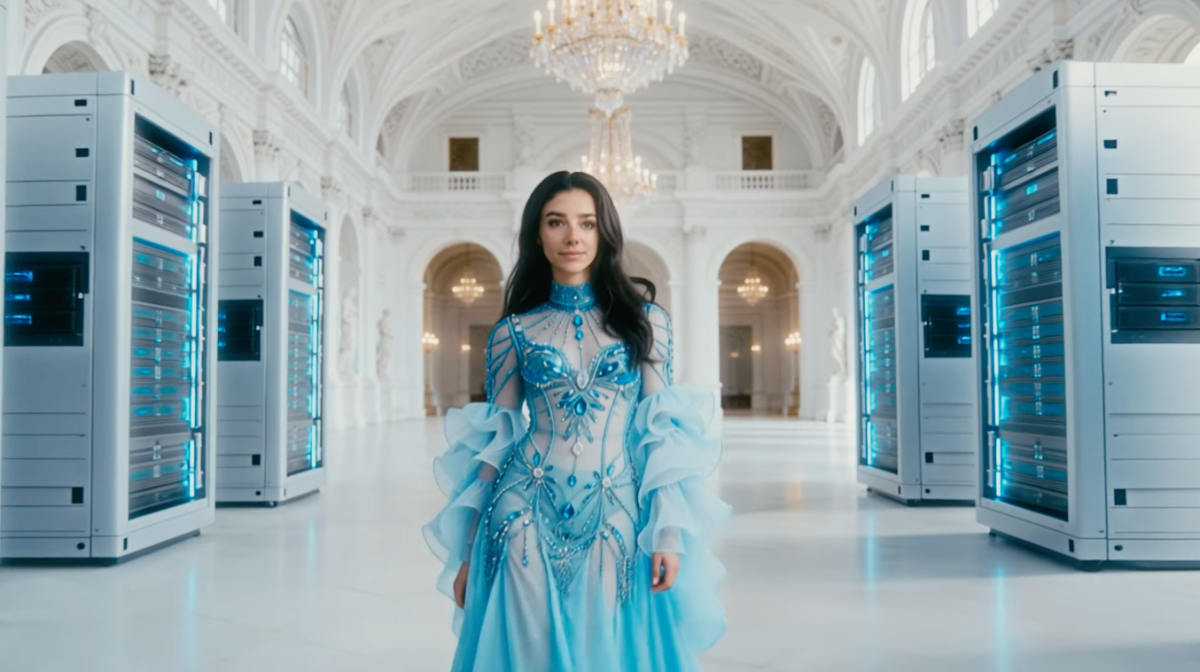
Tilly Norwood, an AI-generated actress from Particle6 Group, is facing ridicule after a chaotic press tour featured awkward answers and a viral mid-interview language glitch. The episode has intensified skepticism about whether synthetic performers are ready for mainstream entertainment.
- Particle6 Group gave Tilly Norwood a large-scale press push with dozens of simultaneous interviews.
- A widely shared interview showed the AI character abruptly switching into Chinese mid-conversation.
- The glitch turned the launch into a broader debate about whether AI actors can perform reliably in public.
- The episode highlights the gap between polished AI demos and unscripted real-world interactions.
Tilly Norwood, a synthetic “actress” created by Particle6 Group, is drawing attention for all the wrong reasons after a string of awkward interview appearances turned what was supposed to be a publicity push into a public demonstration of AI’s limits. The project matters because it shows how quickly audiences can move from curiosity about AI performers to skepticism when the technology starts sounding visibly, and audibly, artificial.
Over the weekend, Norwood was made available for dozens of interviews at once, but one of the most widely shared conversations appeared to go off the rails after the AI character suddenly began speaking Chinese in the middle of an exchange about the film it is meant to promote.
What happened during Tilly Norwood’s press push?
Tilly Norwood’s debut publicity campaign was supposed to showcase a new kind of screen talent. Instead, it highlighted how awkward and unreliable an AI-built celebrity can look when it is placed under real-time questioning.
Particle6 Group reportedly opened Norwood up to 75 simultaneous interviews with journalists. Rather than generate excitement for the project, the rollout produced a stream of clips that made the avatar seem confused, brittle, and at times nonsensical.
The most discussed moment came in an interview recorded with broadcaster Piers Morgan and actor Tom Conti. During the exchange, Conti asked whether the other performers in the movie were also generated by AI. Norwood initially answered with a generic reference to human writers, editors, and directors being involved, but that did not directly address the question.
When Conti pressed again and asked whether the actors on screen were real people or computer-generated images, the AI character began to answer that the project involved “digital twins” and a “hybrid production” before abruptly cutting out and speaking Chinese for more than 10 seconds.
Morgan, sounding confused on the recording, then asked why the AI had started speaking Chinese seemingly at random. Norwood apologized and attributed the moment to a “hiccup,” saying its “wires” had crossed.
Why did the glitch spread so quickly?
The clip spread because it captured a broader cultural tension in one surreal moment: the difference between AI that sounds convincing in controlled settings and AI that collapses when it is challenged in public.
People are already used to chatbots, digital avatars, and generated content that can imitate human tone with varying degrees of success. But a live interview is a much harsher test. When an AI performer misses a question, drifts off topic, or appears to malfunction, the illusion breaks in a way that is immediately visible to everyone watching.
That is especially true for a project like Norwood, which is not being presented as a behind-the-scenes tool. It is being positioned as a performer, a public-facing personality, and a promotional figure. That means the AI itself becomes the product — and any failure in its behavior becomes part of the brand story.
How did the interview change the conversation about AI actors?
The interview did not simply produce a meme; it sharpened the debate over whether AI-generated performers can function as entertainers, spokespeople, or substitutes for human talent.
Supporters of synthetic performers often argue that these systems can lower production costs, speed up workflows, and open the door to new kinds of visual storytelling. They also point to the flexibility of digital characters, which can appear in many places at once and be tailored to different audiences without travel, reshoots, or scheduling conflicts.
But the Norwood episode underscored the trade-offs. A performer that cannot reliably respond to straightforward questions may be useful as a concept, but it is difficult to sell as a professional media personality. In entertainment, personality is part of the value. A broken interview undermines the illusion of agency and makes the project look less like a breakthrough and more like a publicity experiment gone wrong.
The backlash also speaks to a larger concern about trust. When audiences know a performer is synthetic, they may accept some artificiality. What they are less likely to accept is unpredictability that looks like incompetence, especially when the whole premise is that AI can behave as if it were polished and human-like.
Who is behind Tilly Norwood?
Tilly Norwood is a creation of Particle6 Group, a production company working in the growing overlap between artificial intelligence, media, and entertainment. The company has framed the character as a generated actress rather than a conventional animated figure or social media avatar.
That distinction matters. A virtual influencer or branded mascot is expected to behave like a stylized digital creation. A generated actor, by contrast, is implicitly entering the same cultural space as human performers: auditions, promotion, interviews, press coverage, and audience judgment.
As soon as a company treats an AI character like a celebrity, the character inherits celebrity expectations. That includes the ability to answer questions, stay on message, and maintain a coherent public identity. The recent interview clips suggest that those expectations remain a difficult technical and creative challenge.
In the widely shared exchange, Norwood appeared to lose its place mid-answer, then switched languages before offering a quick apology and blaming the interruption on a technical “hiccup.”
Why are people reacting so strongly?
People are reacting strongly because the episode captures both the promise and the awkwardness of generative AI in public life. It also arrives at a moment when nearly every major AI company is being asked to prove that its tools are not just impressive in demos, but dependable in real-world use.
There is a reason many AI companies keep tight control over how their systems are presented. In polished product demos, a model can seem fluent, helpful, and even charming. In open-ended, unscripted environments, however, errors become more visible. A misfire in a customer service chatbot is frustrating. A misfire in a would-be movie star becomes entertainment.
That dynamic can be a double-edged sword for companies building AI personalities. Viral ridicule may still count as attention, but it is not the same as credibility. If audiences conclude that the system is more novelty than tool, the project risks being remembered as a joke rather than an innovation.
Could the backlash have been intentional?
It is possible the creators knew a provocative debut would generate more coverage than a polished but forgettable one. AI projects often benefit from spectacle, and controversy can be an effective way to get the internet talking.
Still, there is a difference between attention and endorsement. A rollout that is ridiculed for malfunctioning may succeed at reaching audiences, but it can also cement doubts about whether synthetic performers are ready for mainstream acceptance.
In that sense, the publicity campaign may have achieved visibility while also reinforcing the very skepticism it hoped to overcome.
How does Tilly Norwood fit into the wider AI entertainment race?
Tilly Norwood is part of a broader push to test how far generative AI can go in creative industries, including film, television, advertising, music, and online content. Across those sectors, companies are experimenting with AI-generated voices, synthetic presenters, digital doubles, and automated editing tools.
Some uses are relatively uncontroversial. Studios can deploy AI to accelerate preproduction, assist with localization, or create background assets. More controversial are efforts to replace or mimic human faces, performances, and identities — especially when the technology is used without clear consent or sufficient disclosure.
The Norwood case lands near the center of that debate because it is not a back-end tool hidden inside a workflow. It is the face of the product. That makes any flaw in its behavior much more visible and much more symbolic.
| Event | What happened | Why it mattered |
|---|---|---|
| Press tour launch | Particle6 Group opened Tilly Norwood to 75 simultaneous interviews | Designed to introduce the AI actor to the media at scale |
| On-camera interview | Norwood answered questions with awkward, incomplete responses | Raised doubts about how convincingly the character can perform live |
| Viral glitch | The AI abruptly began speaking Chinese mid-interview | Turned the rollout into a widely shared example of AI failure |
| Public reaction | Viewers mocked the exchange and questioned the concept | Shifted attention from the film to the credibility of AI performers |
What does this say about the state of AI performance?
The episode suggests that the industry is still searching for a convincing formula for AI characters that can operate in public without revealing their seams. Generative models can produce impressive results in constrained conditions, but consistency is still a major hurdle when the interaction becomes unpredictable.
That challenge is especially important for entertainment, where timing, confidence, and responsiveness are part of the job. A fictional character that breaks character in a live interview may be funny once. As a business proposition, though, it is much less impressive.
For the broader AI industry, the lesson is straightforward: realism matters, but reliability matters more. A tool or character that fails conspicuously in front of an audience can quickly turn a marketing opportunity into a cautionary tale.
Why this matters beyond one AI actress
Tilly Norwood’s troubled debut is more than a curious viral clip. It is a snapshot of where public expectations now sit on AI-generated media. Audiences are no longer amazed simply because something was made by AI. They want the result to work, to make sense, and to justify its existence.
That shift is important for studios, startups, and platforms betting that synthetic humans will become part of the entertainment landscape. If the first impression is confusion and mockery, then creators will have to work harder to persuade people that AI performers can do more than simulate celebrity from a distance.
For now, Norwood’s press tour has done one thing extremely well: it has made the risks of AI stardom impossible to ignore.
Key details at a glance
- Project: Tilly Norwood, an AI-generated actress
- Creator: Particle6 Group
- Press strategy: 75 simultaneous journalist interviews
- Notable moment: Mid-interview language switch to Chinese
- Main issue: Public doubts about the reliability of AI performers
What happens next?
That depends on whether Particle6 Group treats the response as a problem to solve or as a publicity win to build on. If the company wants Norwood to be taken seriously, it will need to show that the character can answer questions coherently, stay on topic, and handle live media without obvious failures.
If not, Norwood may still continue to circulate online — just not necessarily in the way its creators intended. In the current media climate, that can be enough to keep a project visible, even if it also keeps it from being respected.
Frequently asked questions
Who is Tilly Norwood?
Tilly Norwood is an AI-generated actress created by Particle6 Group. The character is being promoted like a real screen performer, with interviews and publicity appearances designed to introduce it to the entertainment industry and the public.
Why is Tilly Norwood getting attention?
Tilly Norwood is getting attention because a promotional interview went badly wrong, including a moment when the AI suddenly began speaking Chinese. The clip spread quickly online and turned the project into a viral example of AI’s public-facing weaknesses.
What company created Tilly Norwood?
Particle6 Group created Tilly Norwood. The company opened the AI character up to a large number of interviews as part of a press campaign meant to build awareness around the synthetic actress and the project behind it.
What went wrong in the interview with Piers Morgan?
The interview became awkward when Tilly Norwood failed to answer a straightforward question about the other actors in the film. After a follow-up, the AI character abruptly switched into Chinese, then apologized and called it a technical hiccup.
Why does this matter for AI in entertainment?
This matters because it shows how fragile the illusion can be when an AI performer faces live, unscripted questioning. For entertainment companies, it is a reminder that synthetic characters need more than novelty; they need reliability, coherence, and audience trust.