In short
PIMCO CEO Emmanuel Roman warned in Hong Kong that the AI financing boom could turn into a downturn, saying “things are going to break.” His comments add to growing Wall Street debate over whether huge bond-funded AI spending is sustainable.
- PIMCO CEO Emmanuel Roman warned the AI market could downturn and that “things are going to break.”
- The AI buildout is increasingly being financed through large bond deals from companies including Meta, Oracle, Alphabet and Microsoft.
- Roman estimated AI buildout financing needs at $2 trillion over five years, versus a $12 trillion U.S. bond market.
- Apollo Global Management is also warning that AI pricing and economics remain uncertain.
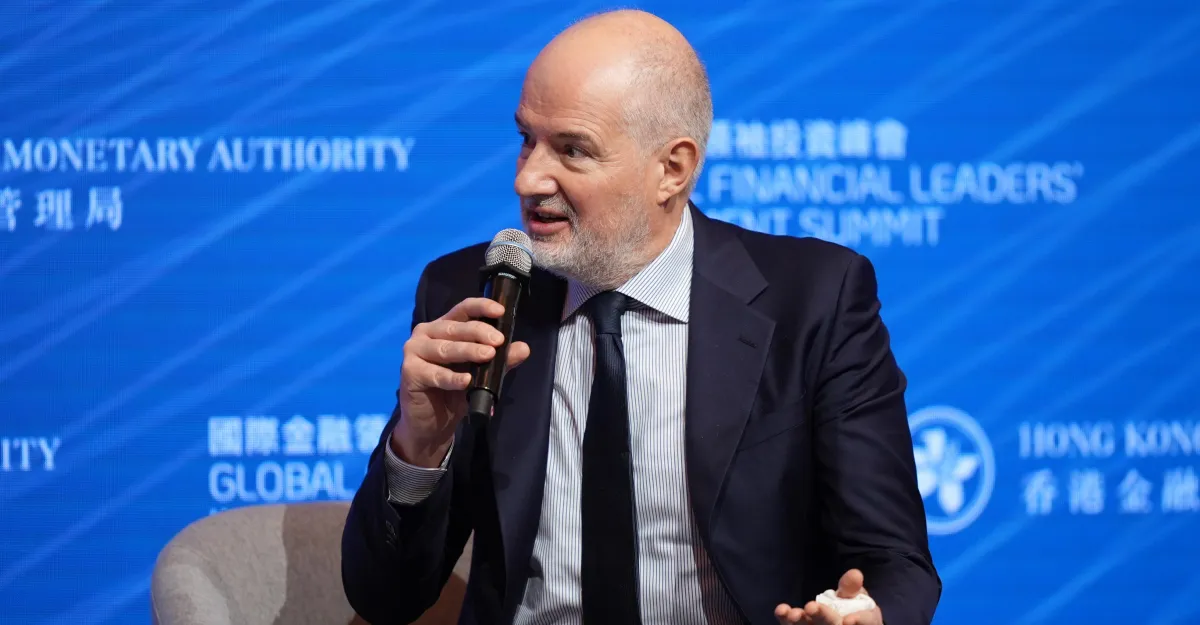
PIMCO chief executive Emmanuel Roman warned in Hong Kong that the artificial intelligence financing boom could turn into a downturn and leave parts of the market “broken,” as Wall Street wrestles with whether the surge in AI spending is building a durable industry or a bubble.
His comments, reported by The Verge, land at a moment when big lenders and bond investors are already carrying more of the AI buildout’s burden, from data centers and chips to the debt used to pay for them.
What Roman said in Hong Kong
Roman used a summit in Hong Kong to argue that the AI market’s economics still do not add up cleanly, even as capital keeps pouring in. According to The Verge, he said the market would eventually see a downturn and added that “things are going to break.”
He also said the key unknown is not whether AI matters, but whether the pricing and return profile behind the buildout can sustain the amount of money now being committed.
“What we don’t know is how pricing and economics will evolve.”
The warning is notable not because it is the first skeptical view on AI, but because it comes from one of the firms that has helped finance the sector’s infrastructure. PIMCO has already been involved in several major transactions tied to the AI and adjacent technology ecosystem.
Why it matters
The AI boom is no longer just a story about model launches, software features, or chip shortages. It is increasingly a funding story, and that means bond markets, leverage, and investor appetite now sit close to the center of the trade.
That shift matters for three reasons:
- It ties AI growth to debt markets, where sentiment can change quickly.
- It raises the stakes if companies or investors misjudge how fast AI revenues arrive.
- It could affect how cheaply the largest technology and infrastructure players can keep financing the next wave of spending.
The Verge reported that AI infrastructure spending has already strained debt markets and made cash raising harder. In other words, the spending binge itself may be changing the terms of the market that is financing it.
How Wall Street is funding the AI buildout
The scale of borrowing around AI is now visible in several major deals. Meta drew $58 billion in orders for a bond issue expected to be only $15 billion to $20 billion, a sign of intense demand for large technology debt offerings. Oracle has said it would need another $20 billion in bonds beyond existing commitments, while Alphabet is selling €6 billion, or about $6.7 billion, in bonds. Microsoft, meanwhile, sold $25 billion in bonds in its first such sale in a decade.
Roman estimated that the AI buildout could require about $2 trillion in financing over five years. That is a striking figure when set against the total U.S. bond market, which he put at roughly $12 trillion.
Those numbers help explain why even skeptical voices are paying attention: the AI trade is no longer confined to venture capital and equity markets. It now extends into the plumbing of corporate credit.
By the numbers
| Item | Figure | Context |
|---|---|---|
| Meta bond orders | $58 billion | Orders for an expected $15 billion to $20 billion issue |
| Oracle additional bond need | $20 billion | Beyond existing commitments |
| Alphabet bond sale | €6 billion | About $6.7 billion |
| Microsoft bond sale | $25 billion | Its first bond sale in a decade |
| AI financing need estimate | $2 trillion | Over five years, according to Roman |
| Total U.S. bond market | $12 trillion | Roman’s rough estimate |
What is the bubble concern?
The core worry is simple: if capital is flowing into AI faster than the business model can justify, prices and credit demand can outrun fundamentals. That is what market participants usually mean when they talk about a bubble.
Roman’s caution comes at a time when Wall Street appears divided. Bloomberg, as summarized by The Verge, reported a split among financial leaders attending the 2026 Global Financial Leaders’ Investment Summit in Hong Kong. Some executives see an enormous long-term opportunity; others worry the financing machine is running ahead of the economics.
PIMCO is not alone in sounding cautious. Apollo Global Management is also warning about AI risk, according to The Verge. Apollo president Jim Zelter said AI will require dramatically more computing power, but that the pricing and economics remain uncertain.
That uncertainty goes to the heart of the current debate. The physical buildout is obvious: chips, servers, data centers, power and financing. What is less obvious is whether the eventual revenue from AI products will grow quickly enough to support all of that capital spending at the prices investors are now accepting.
Background: how the AI financing frenzy built up
The current moment did not appear overnight. AI model training and large-scale data-center deployment require immense capital and power infrastructure, which has pulled in lenders, bond buyers and structured financiers alongside the usual equity investors.
PIMCO’s own activity shows how deeply traditional fixed-income players have become part of the ecosystem. The firm was among the financiers in CoreWeave’s first chip-based financing in 2023. Last year, it made about $2 billion in paper gains from $29 billion of Meta bonds. Last month, it bought $4 billion of SpaceX bonds.
That history matters because it shows the market has already moved through several stages: first financing the infrastructure, then profiting from demand, and now debating whether the cycle has become self-reinforcing.
The Verge also noted that Wall Street banks were eager to finance $63 billion in Anthropic debt. That figure, alongside the big corporate bond sales, suggests the appetite for AI-related financing remains strong even as some investors start asking whether the market has gone too far.
Recent milestones in the financing story
| When | Event | Why it matters |
|---|---|---|
| 2023 | PIMCO took part in CoreWeave’s first chip-based financing | Shows early lender involvement in AI infrastructure |
| Last year | PIMCO made about $2 billion in paper gains from Meta bonds | Illustrates the upside available in AI-linked credit |
| Last month | PIMCO bought $4 billion of SpaceX bonds | Shows continued exposure to large-scale private financing |
| Monday | Oracle said it needed another $20 billion in bonds | Signals more borrowing may be coming |
| This week | Bloomberg recap cited divided views on AI risk at the Hong Kong summit | Confirms the debate is now central on Wall Street |
How did debt become central to AI?
Debt became central because the costs of AI scale fast. Training models, building data centers and securing enough power require large upfront commitments before the revenue model is fully proven. That makes financing a crucial part of the sector’s expansion.
For investors, the bond market offers a way to fund those commitments without immediately diluting shareholders. For borrowers, it offers size, speed and flexibility. But it also creates refinancing risk if rates rise, demand cools or the expected returns arrive more slowly than planned.
Roman flagged several possible triggers for a broader market shift: U.S. rate hikes, war, or a eurozone crisis. Any of those could tighten financial conditions and force investors to reassess risky assets, including AI-related credits.
That list underscores a key point: even if AI demand stays strong, the financing environment around it may not remain supportive forever.
What the split on Wall Street really means
The disagreement is not over whether AI is real. It is over timing, valuation and the durability of the economics. Some investors are treating the current spending as a once-in-a-generation infrastructure cycle. Others see signs of late-cycle behavior, where lenders and buyers keep chasing deals because the market has worked so well for so long.
Roman’s warning is particularly pointed because PIMCO has benefited from the trade. That gives his comments added weight: they come from a participant, not just an outside critic.
Apollo’s caution reinforces the idea that this is not a lone voice. When multiple major asset managers start publicly questioning pricing and economics, the risk conversation moves closer to the mainstream of the market.
What happens next
The next phase of the story will depend on whether the borrowing wave keeps accelerating or starts to slow. Investors will watch whether additional financing rounds for AI infrastructure and model developers continue at the same pace, and whether the market keeps absorbing large corporate bond sales without demanding better terms.
Three developments are especially important:
- Whether AI funding demand continues at the current pace.
- Whether higher rates, war or a eurozone crisis pressure credit markets.
- Whether the planned financing around companies such as Anthropic changes sentiment further.
There is also the broader question of whether the large demand for deals such as Meta’s and Oracle’s reflects enduring investor confidence or a late-stage scramble to get exposure before conditions change.
If AI revenues ramp quickly, today’s financing may look prescient. If they do not, Roman’s warning could read as an early marker of the point when the market started to worry that the economics had outrun the enthusiasm.
China’s bubble talk adds another layer
The Verge said there are reports from China that its AI bubble has already burst. That claim, while separate from Roman’s comments, adds to the sense that the global AI trade is entering a more cautious phase in some corners of the market.
It does not prove the same pattern will unfold in the United States or in the global private-credit market. But it does suggest that investors are increasingly comparing notes across regions for signs that the boom is losing momentum.
In that sense, the Hong Kong summit became more than a regional gathering. It turned into a window into the arguments now dividing capital allocators: how much of AI is still early growth, and how much has already been priced as if the winner has been decided.
Bottom line
Roman’s warning is not a prediction that AI will collapse tomorrow. It is a reminder that the industry’s next stage is being financed by large sums of borrowed money, and borrowed money can change the shape of a market when growth slows or confidence cracks.
For now, Wall Street still wants in. The unresolved question is whether that appetite is backing a durable industrial shift, or simply delaying the moment when the bill comes due.
Frequently asked questions
Why is Wall Street worried about AI financing?
Wall Street is worried because AI infrastructure spending is increasingly being funded with debt, and investors are unsure whether future AI revenues will justify the borrowing. That uncertainty becomes more serious when large bond deals are being absorbed at a rapid pace.
What did PIMCO’s Emmanuel Roman say about the AI market?
Roman said the AI market will see a downturn and warned that “things are going to break.” He also said the main unknown is how pricing and economics will evolve as the buildout continues.
How much financing does Roman think AI will need?
Roman estimated that the AI buildout could require $2 trillion in financing over five years. He put that in context by saying the total U.S. bond market is about $12 trillion.
Which companies have raised or sought major AI-related debt?
The fact sheet cites Meta, Oracle, Alphabet and Microsoft as major examples. Meta drew $58 billion in orders for a bond deal, Oracle said it needed another $20 billion in bonds, Alphabet sold €6 billion, and Microsoft sold $25 billion.
What is the risk if AI spending slows?
If AI spending slows, companies that borrowed heavily for data centers, chips and infrastructure could face tighter refinancing conditions or lower returns than expected. That is why analysts are watching both market appetite and the economics behind the spending.