In short
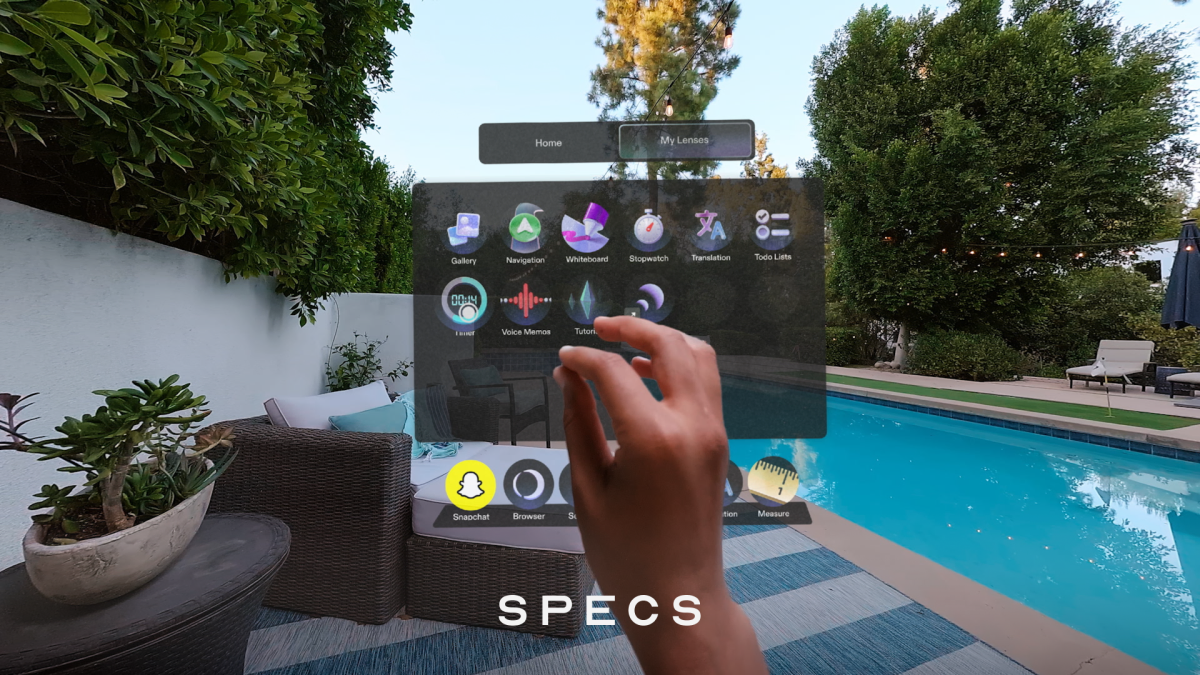
Snap unveiled new AI, entertainment and enterprise features for its $2,200 Specs smart glasses in Los Angeles. The company is trying to prove the device is useful enough to justify its price and awkward form factor.
- Snap added HBO Max, Spotify and other features to Specs.
- The company launched Specs Intelligence, an AI layer for the glasses and connected devices.
- Snap is also targeting businesses with enterprise deployment tools and partnerships.
- A separate cellular connectivity package will cost $10 or $20 per month.
- The company hopes the updates will help justify the glasses’ $2,200 price tag.
Snap is trying to reset the narrative around its $2,200 Specs smart glasses after a rocky debut earlier this year, unveiling new entertainment, AI and enterprise features in Los Angeles on Wednesday. The updates are meant to make the expensive device feel less like a novelty and more like a serious computing platform, even as questions remain about who will actually buy it.
The company’s latest pitch centers on making Specs useful in more everyday contexts: streaming media, coordinating tasks across devices, assisting workers on the job and staying connected outside Wi-Fi range. But the broader challenge has not changed. Snap is still asking consumers and businesses to embrace a heavy, premium headset-like product that has already faced ridicule online and helped pressure the company’s stock.
Snap’s attempt to reframe a troubled product
When Snap introduced Specs earlier this year, the reaction was far from enthusiastic. The glasses, which carry a steep $2,200 price tag and have been compared to diving equipment, were widely mocked, and critics questioned whether the company had lost touch with mainstream consumers.
Since then, Snap has been working to explain why the product should exist at all. The Los Angeles event was less about a flashy hardware reveal than about building a case for a platform: if Specs can become useful enough across work, media and AI-assisted productivity, the company may be able to justify the cost and the form factor.
That mission was clear from the structure of the presentation. Snap executives spent the day showing new software integrations, partnerships and services, rather than introducing a dramatically redesigned pair of glasses. The underlying message was simple: Specs are not just a gadget, but a new kind of wearable computer.
What changed at the latest Specs event?
The biggest updates focused on turning Specs into a more practical device for everyday tasks. Snap announced new entertainment tie-ins, a new AI layer called Specs Intelligence, a business-focused program for enterprise use and a separate connectivity package for people who want to use the glasses away from home or office networks.
Individually, the additions may look incremental. Taken together, they show that Snap is trying to cover several use cases at once: consumer entertainment, personal productivity, workplace deployment and mobile connectivity. Whether that combination is enough to create demand remains an open question.
| Announcement | What it does | Who it targets | Pricing / access |
|---|---|---|---|
| HBO Max and Spotify support | Connects Specs to streaming and audio services | Consumers | Included as new integrations |
| Specs Intelligence | AI system that learns from connected apps and tools | Consumers and productivity users | No separate public price announced |
| Specs for Enterprise | Allows deployment in corporate workflows | Businesses and IT teams | Available through enterprise partnerships |
| Cellular connectivity package | Charging case with built-in cellular access for use on the go | Mobile users | $10/month for Verizon customers, $20/month for others |
How is Snap using AI to sell Specs?
Snap is using AI as the main argument for why its glasses matter. The centerpiece is Specs Intelligence, which the company describes as an “anticipatory” system that learns from the apps and tools a person connects and tries to help them focus on what is most important.
In practical terms, the feature appears to function like a productivity assistant layered across Snap’s ecosystem. It is designed to work not only with Specs but also with other devices, including iPhones and Macs. That means Snap is no longer presenting the glasses as the sole point of access; instead, the eyewear becomes part of a wider software and services network.
Chief executive Evan Spiegel said the product should be understood as a kind of AI-powered operating system built around users’ projects and routines. He argued that the goal is to connect activity across Snap’s Lenses, the company’s augmented reality effects, so people can work through tasks without losing sight of what matters to them.
Spiegel framed the product as an “AI native operating system” meant to help people connect information across apps and Lenses, while insisting that computers should increase human relevance rather than diminish it.
That argument fits a broader industry trend. As many tech companies race to integrate AI into hardware, Snap is leaning on the idea that the real value of Specs may not come from the device alone, but from the way AI can stitch together communications, reminders, media and tasks across a user’s digital life.
Why does this matter for Snap?
It matters because Snap is under pressure to prove that Specs are more than an expensive experiment. If AI can make the hardware feel indispensable, the company may have a path to turning a mocked product into a meaningful business line.
Without that software layer, the glasses risk being seen as a costly accessory with limited appeal. With it, Snap can argue that Specs are part of a larger computing shift, not just a wearable display.
Why is Snap pushing Specs into enterprise?
Snap is pushing Specs into enterprise because the company appears to think business customers will tolerate the hardware better than typical consumers. The new Specs for Enterprise program is designed to let companies integrate the device into workflows, manage security and deploy it at scale.
On stage, Snap announced partnerships with several technology firms, including Amazon, Salesforce and Nvidia, as part of an effort to make the glasses useful in professional settings. The company did not present a single killer business use case so much as a broad framework for workplace adoption.
The clearest example shown during the event involved an IT technician using the glasses to help repair hardware. That demonstration suggested one likely role for Specs: hands-free support for technical staff who need guidance while working on equipment.
Spiegel said Snap is building mobile device management, security controls and deployment tools with trusted providers so that IT departments can feel more comfortable rolling the product out across teams.
The emphasis on enterprise is significant. Consumer adoption of a bulky, high-priced wearable could be slow, but businesses may be more willing to pay if the glasses can speed up repairs, training or on-site troubleshooting. Even so, Snap still has to prove the device is worth the investment and is not just a flashy replacement for tools workers already use.
Who is the target customer for enterprise Specs?
The target customer appears to be IT and field-service teams first, with broader corporate workflows possibly coming later. The company’s examples pointed to technical support, device management and guided repair, suggesting that Snap is initially focusing on jobs where hands-free visual assistance has a clear utility.
That narrow focus may be a practical choice. Rather than trying to sell Specs as a universal enterprise solution, Snap seems to be searching for the few work environments where the glasses’ design can justify their cost.
What entertainment features did Snap add?
Snap added new entertainment integrations with HBO Max and Spotify, aiming to make Specs less austere and more appealing as a media device. Those partnerships provide a basic consumer use case that smart glasses have often struggled to deliver convincingly.
Streaming video and music are not novel features by themselves, but they help Snap answer a basic question: what do people actually do with these glasses day to day? The company is betting that more media options will make the device feel less like a prototype and more like something worth wearing outside of a demo.
Another newly announced experience came from a collaboration with the NBA and WNBA. The app is intended to help users practice basketball and improve shooting through augmented reality. It is one of the more unusual additions in Snap’s new lineup, and it reflects the company’s willingness to lean into playful, visually driven experiences.
Still, the concept raises obvious questions about usability. A glasses-based basketball trainer may be a clever demo, but it is not yet clear whether many users will want to train while wearing a heavy headset-like device.
How will Specs work away from Wi-Fi?
Specs will work away from Wi-Fi through a new connectivity package that Snap is selling separately. The package includes a charging case with built-in cellular connectivity, giving users a way to keep the glasses online while on the move.
Snap said the service is being offered through a partnership with Verizon. The monthly cost is $10 for Verizon customers and $20 for people who use another carrier.
The pricing suggests Snap is trying to build a recurring service layer around the hardware, not just sell one expensive device and move on. That is a familiar playbook in consumer tech: make the hardware the entry point, then generate revenue through subscriptions and connectivity.
But it also adds to the total cost of ownership. For a product already priced at $2,200, another monthly bill may reinforce the idea that Specs are aimed at enthusiasts, developers or business users rather than a broad consumer base.
Why does Snap keep calling Specs a computer?
Snap keeps calling Specs a computer because that framing helps it justify both the price and the design. If the device is understood as a wearable computer rather than a pair of glasses with extra features, the company can argue that the high cost is comparable to premium laptops, tablets or mobile workstations.
Spiegel leaned heavily into that logic at the event. He presented the glasses as part of a more human-centered computing future and said he rejects the idea that AI should make people less important or that virtual spaces should replace physical life.
That message is designed to distance Snap from the more dystopian narratives that often surround AI and immersive technology. Instead of selling escapism, the company is trying to sell augmentation: technology that supports real-world activity without fully pulling users away from it.
Spiegel argued that new computing tools should make people more central, not irrelevant, and said Snap does not accept a future where technology sidelines human agency.
The challenge is that the hardware still has to live up to the rhetoric. If the glasses are too cumbersome, too expensive or too limited, then the “computer on your face” framing may sound more like a defense than a breakthrough.
How did the market react to the first Specs reveal?
The first Specs unveiling was met with widespread skepticism and public mockery, and the reaction spilled beyond social media into investor concerns. The harsh response contributed to pressure on Snap’s stock and complicated the company’s attempt to position the glasses as a serious next-generation product.
That history matters because it explains the tone of this week’s event. Snap did not just need to add features; it needed to answer critics who see Specs as awkward, overpriced and unnecessary. The new announcements were clearly designed to do exactly that, by broadening the device’s relevance across consumer and enterprise use cases.
Whether the strategy works will depend on adoption, not presentation. Snap can stage as many polished demos as it wants, but consumers and businesses will ultimately decide whether the glasses offer enough value to outweigh the cost and inconvenience.
What are the biggest unanswered questions?
The biggest unanswered question is simple: who is this for? Snap has offered several possible answers, but none is fully convincing on its own. Media consumers may like the integrations, enterprise buyers may like the deployment tools and AI users may like the productivity layer, but the overlap among those groups may be small.
Another unresolved issue is comfort. Specs are still a large, expensive and conspicuous product, and the company has not changed the basic physical reality of wearing them. That means Snap has to persuade people that the software is so compelling that the hardware becomes an acceptable trade-off.
There is also the question of timing. Snap is preparing a pop-up in Los Angeles in October and says the device will ship later this fall. The next few months will likely determine whether the latest feature set creates momentum or simply extends the conversation around a product that has yet to win over the market.
What to watch next
Investors, developers and potential customers should watch a few signals closely:
- Whether Snap can show real-world use cases beyond staged demos.
- Whether enterprise partners move from announcements to deployments.
- Whether the AI tools feel genuinely helpful or merely cosmetic.
- Whether consumers can absorb the hardware price and monthly connectivity fees.
- Whether the October pop-up creates demand ahead of the fall launch.
The broader significance for wearable AI
Snap’s latest push is about more than one product. It is part of a wider race to define what AI hardware should look like and how people will use it. Some companies are betting on phones and apps, others on earbuds or standalone assistants, and a few are trying to establish a new category of face-worn computers.
Snap is trying to occupy that last lane, but it has chosen a difficult position. It must convince people not only that smart glasses have a future, but that its own expensive version is the right way into that future. The company’s new software announcements are an effort to build a bridge between novelty and necessity.
For now, Specs remain a high-risk bet. The latest rollout makes the case stronger than it was before, but not yet persuasive enough to resolve the central tension: Snap wants its glasses to be both a consumer product and an enterprise tool, both an AI assistant and a media device, both a computer and a fashion accessory. That is an ambitious vision. It is also a hard one to sell.
| Milestone | Date | Why it matters |
|---|---|---|
| Specs unveiled | Earlier in 2026 | Triggered backlash over price and design |
| Los Angeles feature event | Wednesday, Sept. 16, 2026 | Snap attempted to reposition the product |
| Los Angeles pop-up | October 2026 | Consumer hands-on opportunity before launch |
| Shipping begins | Later in fall 2026 | First major test of market demand |
Snap’s argument is ultimately one of usefulness. If Specs can help people work, learn, entertain themselves and stay connected, the company hopes the price and appearance will become secondary. The next stage will reveal whether that argument can survive contact with actual buyers.
Frequently asked questions
What did Snap announce for its Specs smart glasses?
Snap added new entertainment, AI and enterprise features to Specs, its $2,200 smart glasses. The updates include HBO Max and Spotify support, a new Specs Intelligence system, enterprise deployment tools and a separate cellular connectivity package for use away from Wi-Fi.
What is Specs Intelligence?
Specs Intelligence is Snap’s new AI layer for Specs and connected devices such as iPhones and Macs. Snap says it is designed to learn from the apps and tools a person connects, then help them prioritize tasks, routines and longer-term goals.
Who are Snap’s enterprise smart glasses for?
Snap appears to be targeting IT staff and technical workers first. The company showed a demo of an IT technician using the glasses to repair hardware and said it is building security, management and deployment tools for workplace use.
How much do Snap’s smart glasses cost to use with cellular connectivity?
The separate connectivity package costs $10 a month for Verizon customers and $20 a month for non-Verizon customers. It includes a charging case with built-in cellular connectivity so the glasses can be used on the go.
Will Snap’s smart glasses be available soon?
Yes. Snap said it will host a Specs pop-up in Los Angeles in October, and the glasses are expected to ship later in the fall. That rollout will be the next major test of whether the product can attract buyers.