In short
Meta is reportedly preparing Luna, a new pair of smart glasses without a camera, as the company tries to ease privacy backlash while pushing its AI chatbot and Muse assistant into wearable hardware. The model could debut at Meta Connect next week.
- Meta is reportedly developing Luna, a smart glasses model without a camera.
- The glasses would use six microphones, a side button and Meta AI features for voice-first interaction.
- The move appears aimed at calming privacy concerns that have surrounded camera-equipped wearables.
- Reality Labs continues to lose significant money, raising pressure on Meta to find a stronger hardware business.
- Meta may unveil the product at Meta Connect in Menlo Park next week.
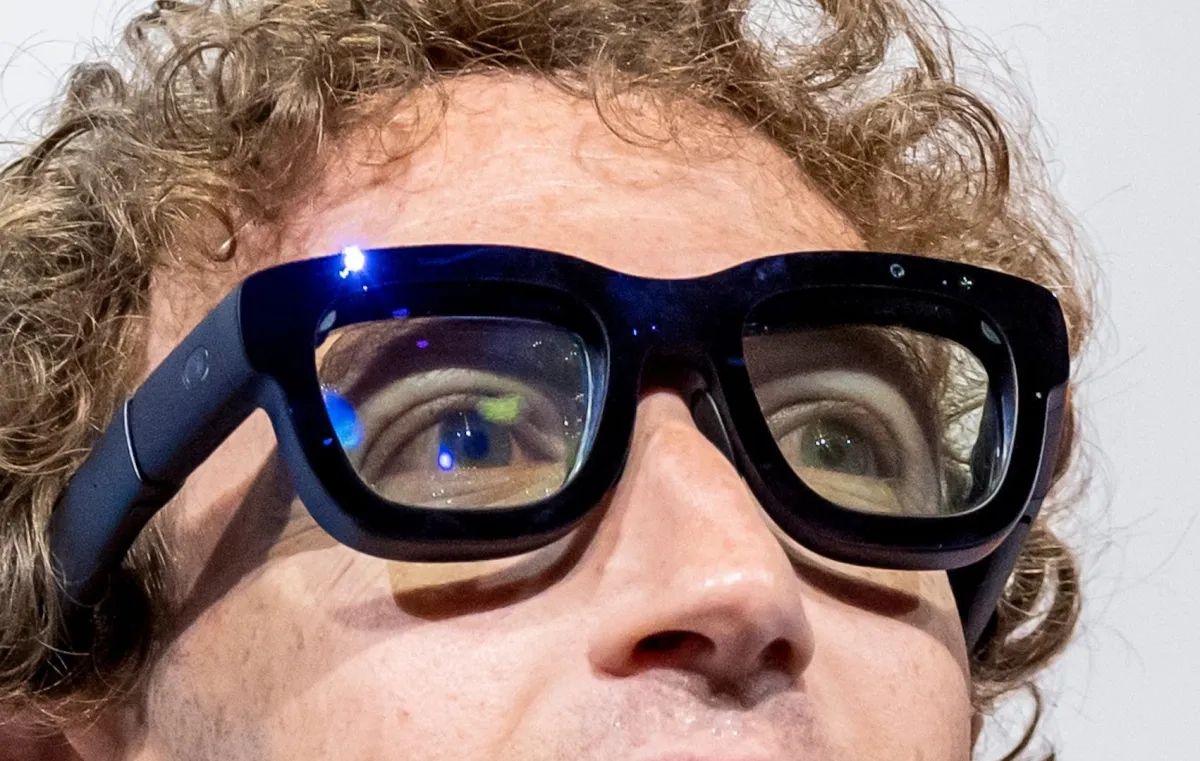
Meta is preparing to sell a new pair of smart glasses that will not include a camera, a move that could help the company address rising privacy concerns around its wearable devices while expanding the role of its AI software. The model, reportedly called Luna, is expected to let users talk to Meta’s chatbot and Muse consumer AI agent through built-in microphones and a side-button activation system.
The reported launch comes as Meta’s camera-equipped glasses have become one of the strongest-performing products in the emerging smart glasses category, even as some consumers and critics have accused them of turning everyday eyewear into surveillance tools. If Meta unveils Luna at next week’s Meta Connect event in Menlo Park, it would mark a notable effort to balance the appeal of AI-enabled wearables with the growing anxiety around always-on cameras.
According to a report from The Information, the new glasses are being designed as a camera-free alternative to Meta’s current models, offering voice-based AI interaction without the visual capture hardware that has sparked so much backlash. TechCrunch said it contacted Meta for comment.
What is Meta’s Luna smart glasses model?
Luna is reportedly a new smart glasses product under development by Meta that would omit the camera found in some of the company’s other wearables. Instead of visual input, the device would center on audio interaction, using an array of six microphones to support conversations with Meta’s AI chatbot and its Muse AI consumer agent.
The reported product direction suggests Meta is trying to make its glasses feel less intrusive while preserving the convenience of hands-free AI access. In practical terms, that means a user could speak to the glasses, trigger the assistant with a button, and receive help without relying on camera capture.
How would the camera-free design work?
The camera-free design would rely on voice and button controls rather than visual sensing. The glasses are said to contain six microphones, enabling them to hear user commands, and a side-mounted button that activates the AI system when pressed.
That approach is likely meant to reduce the privacy concerns that have surrounded camera-enabled smart glasses, especially in public settings where bystanders may not want to be recorded. It also gives Meta a more narrowly focused product that could appeal to consumers interested in AI assistance but uneasy about built-in cameras.
Meta’s planned camera-free model appears aimed at users who want the convenience of AI glasses without the “surveillance” feel that has dogged the category, according to reporting on the project.
Why is Meta launching smart glasses without a camera?
Meta appears to be responding to a mounting cultural and consumer backlash over the perception that camera-equipped glasses can be used for covert recording. The company’s existing smart glasses have been labeled by some critics as “pervert glasses,” a phrase that reflects the unease many people feel about wearable devices that can quietly capture photos and video.
By removing the camera, Meta can lower the emotional and social barrier to wearing the device in public. The company also gains a cleaner message for the market: these glasses are for communication and AI assistance, not image capture.
The strategy is especially important because smart glasses remain an emerging category with unresolved questions about utility. Many consumers are still asking whether the devices are worth the price, whether they solve a real problem, and whether the privacy trade-offs are acceptable.
Privacy concerns have become a defining issue
Privacy has become one of the biggest obstacles to mainstream adoption of smart glasses. Even when a device is technically useful, the possibility that it can record silently changes how other people behave around it.
That tension has helped shape public skepticism toward Meta’s eyewear, despite the company’s stronger market position. The camera-free Luna model looks like an attempt to reset the conversation and broaden the market beyond early adopters willing to tolerate more invasive hardware.
How does Luna fit into Meta’s AI hardware strategy?
Luna fits squarely into Meta’s push to connect its consumer AI software to wearable hardware. The glasses are reported to integrate Meta’s chatbot and Muse AI agent, turning the eyewear into a hands-free interface for conversation, assistance, and potentially other AI-powered tasks.
This is part of a broader industry trend in which companies are racing to put generative AI into devices people can carry or wear all day. For Meta, glasses offer a natural platform because they are always accessible, socially acceptable in many contexts, and capable of supporting voice-first interaction.
The challenge is that hardware adoption is unforgiving. A product can be admired in demos yet fail in the market if it feels awkward, expensive, or socially uncomfortable. That makes Luna an important test of whether AI glasses can move from novelty to necessity.
What role do Meta’s AI chatbot and Muse play?
Meta’s chatbot and Muse consumer agent appear to be the central software features of the reported Luna model. Rather than focusing on camera-based recognition or image analysis, the product seems designed to make speaking with Meta’s AI the primary user experience.
That could position the glasses as an assistant-first device, one that helps answer questions, carry out commands, and maintain a constant conversational link to Meta’s software ecosystem. It also reduces dependence on visual data collection, which may make the product easier to market to privacy-conscious buyers.
Where does Meta Connect fit into the launch plan?
Meta Connect is the company’s annual hardware and developer event, and it has become one of the most likely stages for a major wearable announcement. The Information reported that Luna may be unveiled as soon as next week at the event in Menlo Park.
If that happens, Meta would be using its flagship product showcase to highlight not just new hardware, but a message about how its wearables are evolving. A camera-free model would be a strong signal that the company is listening to public concerns even as it pushes deeper into AI-powered consumer devices.
| Item | Reported details | Why it matters |
|---|---|---|
| Product name | Luna | New brand for a camera-free smart glasses model |
| Camera | None | Addresses privacy backlash around wearable recording |
| Audio hardware | Six built-in microphones | Supports voice interaction with AI features |
| Controls | Side button | Lets users activate the AI system on demand |
| AI features | Meta chatbot and Muse consumer agent | Turns the glasses into an AI assistant platform |
| Possible unveiling | Next week at Meta Connect | Would place the launch in front of developers and media |
How successful are Meta’s existing smart glasses?
Meta’s current camera-equipped smart glasses have been more commercially successful than many competing products in the category. That relative success has helped establish Meta as a front-runner in smart eyewear, even while the market itself remains small and uncertain.
The company’s momentum in this space is notable because other entrants have struggled to persuade consumers that smart glasses are more than a gimmick. Meta has benefited from stronger brand recognition, better integration with consumer software, and the ability to use its scale to keep iterating on the product.
Still, success has not erased the objections. The same features that make the glasses useful for some users—cameras, microphones, voice capture, and always-available software—also make other people uneasy.
Why the category still feels fragile
Smart glasses occupy a tricky middle ground between fashion, consumer electronics, and surveillance hardware. They need to look unobtrusive enough to wear in public, but they also need enough technology inside to justify the purchase.
That balance is hard to strike. Add too much functionality and the device can feel creepy or bulky; remove too much and it no longer seems worth buying. Luna suggests Meta is experimenting with a leaner formula that emphasizes utility while stripping away the most controversial element.
What are the business stakes for Reality Labs?
Reality Labs, Meta’s division responsible for smart glasses and other immersive hardware, is still losing substantial amounts of money. Meta’s April earnings report showed the unit continuing to burn through cash, which underscores how expensive it is to build a consumer hardware ecosystem from scratch.
That financial pressure matters because Meta is not just testing a gadget. It is trying to prove that next-generation hardware can support a long-term business around AI, wearables, and eventually more ambitious computing platforms. Every product launch in this area has to do two things at once: attract buyers and help justify Reality Labs’ enormous spending.
A camera-free variant could be a commercially smart hedge. It may not be as feature-rich as current models, but if it broadens the addressable market and reduces backlash, it could help Meta convert more cautious consumers.
Can a simpler device sell better?
A simpler device can sometimes sell better if it resolves the biggest friction point. In this case, that friction is privacy, not technical capability.
If buyers like the idea of AI glasses but dislike the idea of being around hidden cameras, Luna could become the more approachable option. The key question is whether voice-only interaction will feel powerful enough to justify purchasing a separate wearable at all.
Timeline of Meta’s reported smart glasses shift
The reported product evolution shows how Meta is adapting to both market demand and consumer discomfort.
| Period | Development | Significance |
|---|---|---|
| Past few years | Smart glasses market expands slowly | Meta emerges as a leading provider |
| Recent period | Criticism intensifies over privacy and surveillance | Public concerns become central to the category |
| April 2026 | Reality Labs reports heavy losses | Pressure increases to find a stronger business case |
| September 2026 | Reports surface of camera-free Luna glasses | Signals a strategic pivot toward less intrusive wearables |
| Next week, if accurate | Possible unveiling at Meta Connect | Could set the tone for Meta’s next hardware push |
What this means for the smart glasses market
Meta’s reported move could influence the wider smart glasses market by making privacy a formal product category, not just a compliance issue. If one of the industry’s leaders believes a camera-free design is more marketable, competitors may feel pressure to follow with their own variations.
That could accelerate a split in the category between two broad approaches: glasses built for capture and visual intelligence, and glasses built primarily for voice-based AI assistance. The latter may prove easier to normalize, especially in workplaces, schools, and dense urban settings where recording concerns are high.
At the same time, the shift could also show the limits of today’s AI wearables. If companies have to remove cameras to make the devices acceptable, it suggests the public is not yet fully comfortable with the most ambitious version of the category.
Why this matters beyond one product launch
The reported Luna glasses matter because they highlight a bigger tension in consumer technology: the same AI features that make devices more useful can also make them feel more invasive. Meta is trying to thread that needle by offering intelligence without visual surveillance.
If successful, the move could help normalize AI wearables in everyday life. If it fails, it may reinforce the idea that smart glasses remain a niche product whose best-known feature is also its biggest liability.
Either way, Meta’s next step in this category will be closely watched. The company is not only selling glasses; it is testing how much privacy consumers are willing to trade for convenience, and whether that bargain changes when the camera disappears.
Key points to watch at Meta Connect
- Whether Meta officially confirms Luna at the event.
- How the company positions the product versus camera-equipped glasses.
- Whether the AI chatbot and Muse features are shown in live demos.
- What Meta says about privacy, comfort, and everyday use.
- Whether pricing or release timing is disclosed.
For now, the reporting points to a notable strategic adjustment from Meta: a smart glasses model built around conversation instead of capture. In a market defined by skepticism, that may be the feature that matters most.
Background: why smart glasses keep coming back
Smart glasses have repeatedly attracted attention because they promise something consumers have wanted for years: a lightweight device that can provide information, assistance, and connectivity without the need to pull out a phone. But each generation of the product has run into the same dilemma: how to add enough capability without making the wearer look awkward or the public feel watched.
That tension is especially sharp in the era of generative AI. The technology has made voice assistants more capable and more attractive as interface layers, but it has also raised expectations that devices should do more than simply respond to commands. Meta’s reported Luna model appears to be an attempt to exploit that moment by separating AI utility from visual recording.
If the glasses reach market, they will likely be judged on two measures at once: how useful the AI feels in daily life, and how successfully the product avoids the privacy controversies that have followed earlier designs. Those are difficult standards, but they may be exactly what the category now requires.
In that sense, Luna is less about one gadget than about the direction of consumer AI hardware. Meta is signaling that the future of wearable assistants may depend not on how much they can see, but on how little they need to.
Frequently asked questions
What are Meta’s Luna smart glasses?
Meta’s Luna smart glasses are reportedly a new camera-free wearable model designed to work with Meta’s AI chatbot and Muse consumer agent. Instead of visual capture, the glasses would use microphones and a side button to support voice-based AI interaction.
Why is Meta making smart glasses without a camera?
Meta is likely making a camera-free version to reduce privacy concerns and make the product feel less intrusive. The company’s existing camera-equipped glasses have drawn criticism from people who worry about covert recording in public spaces.
When could Meta announce the Luna glasses?
Meta could announce Luna at Meta Connect next week in Menlo Park, according to The Information’s report. The company has not publicly confirmed the product, and TechCrunch said it reached out for comment.
Will Luna replace Meta’s current smart glasses?
Luna is more likely to be an additional option than a replacement. The reported design suggests Meta is testing a less controversial version of smart glasses while keeping its existing camera-equipped models in the lineup.
How will users interact with the camera-free smart glasses?
Users would likely interact with the glasses by speaking to them and pressing a side button to activate the AI system. The reported design includes six microphones, which should help the device hear commands and support conversation with Meta’s assistant.