In short
TechCrunch has announced five more venture capital judges for Startup Battlefield 200 at Disrupt 2026 in San Francisco. The lineup includes investors from Upfront Ventures, MaC Ventures, Revenge Capital, Amplify Partners and Google Ventures.
- TechCrunch revealed five new VC judges for Startup Battlefield 200 at Disrupt 2026.
- The judges span AI, enterprise software, fintech, developer tools and founder-focused investing.
- Disrupt 2026 runs October 13-15 at Moscone West in San Francisco.
- TechCrunch says Startup Battlefield is meant to test real company strength, not just polished pitches.
TechCrunch has unveiled the next group of venture capital judges for Startup Battlefield 200, giving founders a clearer picture of who will interrogate pitches at Disrupt 2026 in San Francisco this October. The lineup matters because these investors are not there to reward polished slides; they are there to identify businesses with the strength to survive, scale and shape their categories.
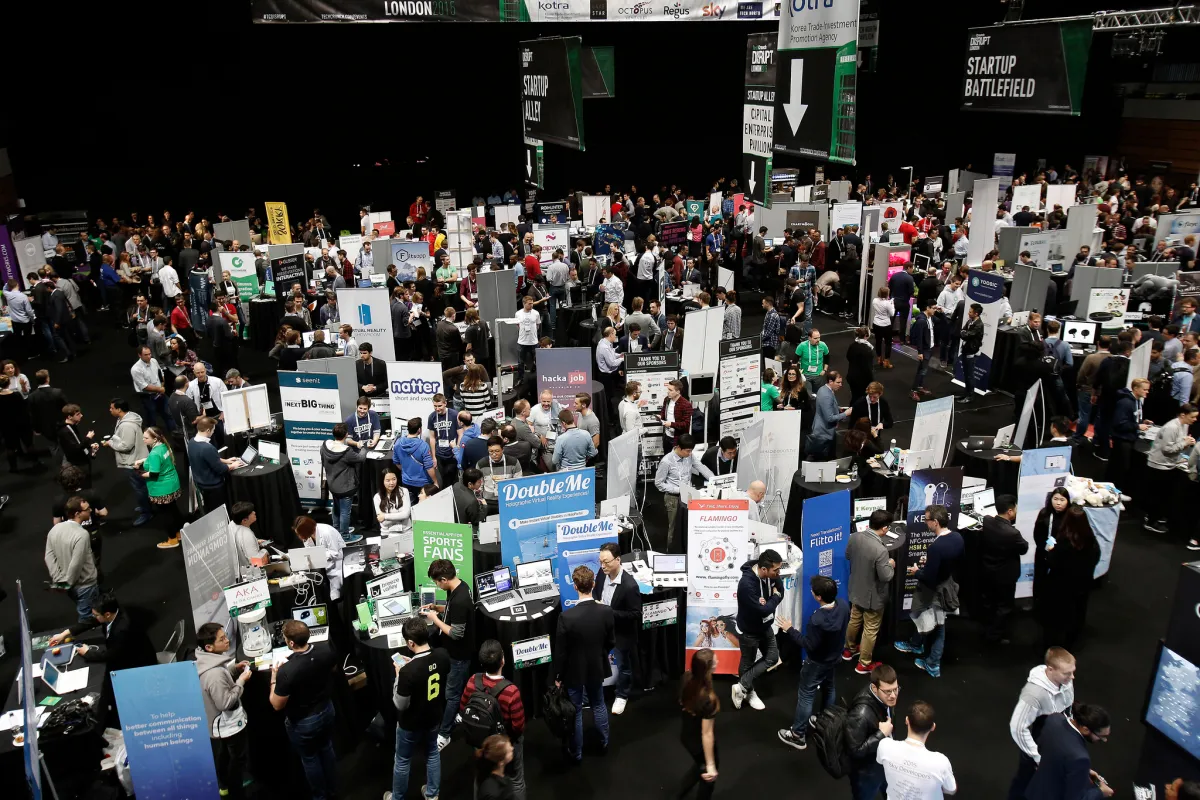
The latest judges announcement adds five investors with backgrounds spanning enterprise software, AI infrastructure, fintech, consumer technology and underrepresented founder investing. They will join the live pitch competition at TechCrunch Disrupt 2026, scheduled for October 13-15 at Moscone West, where more than 10,000 founders, operators and investors are expected to gather.
Startup Battlefield has long been one of the most visible early-stage startup competitions in the tech world. For more than 15 years, it has served as a launchpad for companies that later became influential names in their sectors, and TechCrunch is again using the Disrupt stage to surface founders building products investors believe can become enduring businesses.
For attendees, the judges list offers something beyond event programming: a window into how experienced venture investors assess early-stage companies in real time. For founders, it provides an unusually public test of whether their company can withstand tough questions about market size, product differentiation, customer demand, go-to-market strategy and long-term resilience.
Who are the newest judges for Startup Battlefield 200?
The newest judges are Aditi Maliwal of Upfront Ventures, Michael Palank of MaC Ventures, Nell Daly of Revenge Capital, Grace Ge of Amplify Partners and Crystal Huang of Google Ventures. Each brings a distinct investment lens, which means founders pitching on stage will face a panel shaped by different sectors, operating styles and expectations.
TechCrunch’s selection reflects the variety of startups now competing for investor attention. The judges are not concentrated in a single thesis or market; instead, they cover consumer and enterprise software, technical infrastructure, AI, fintech and founder inclusion. That breadth mirrors the wide range of companies that typically appear in Startup Battlefield.
| Judge | Firm | Main focus areas | Notable background |
|---|---|---|---|
| Aditi Maliwal | Upfront Ventures | Pre-seed, seed, fintech, enterprise SaaS, AI applications, developer tools | Former Google and Deutsche Bank executive; first San Francisco-based partner at Upfront |
| Michael Palank | MaC Ventures | Seed-stage consumer and enterprise, AI, fintech, healthcare, media, entertainment, aerospace and defense | Previously worked in Hollywood talent representation at William Morris and Overbrook Entertainment |
| Nell Daly | Revenge Capital | Sector-agnostic backing of overlooked founders in the U.S. and U.K. | Former psychotherapist who applies a founder-first approach to investing |
| Grace Ge | Amplify Partners | AI, developer tooling, data infrastructure, modern SaaS | Focuses on the layer between foundation models and enterprise applications |
| Crystal Huang | Google Ventures | Enterprise SaaS, AI infrastructure, fintech | Experience at NEA, GGV Capital and Blackstone in technology M&A |
Why these judges matter to founders
These judges matter because Startup Battlefield is designed to test company fundamentals, not theatrical delivery. The investors sitting in the chairs are expected to probe the parts of a business that cannot be hidden behind a demo: whether the problem is urgent, whether customers are willing to pay, whether the product can scale, and whether the team has the discipline to execute.
TechCrunch has positioned the competition as an arena where founders can show more than ambition. The format rewards clarity, evidence and traction, but it also highlights the kind of judgment investors use when deciding whether to back a startup at the earliest stages. That is especially important in a market where startups often raise money on momentum before they have proven durable demand.
The judges are not there to reward a rehearsed pitch. They are there to determine whether a startup is solving a real problem and can build a business that lasts.
In practical terms, that means the panel’s questions may focus on product-market fit, customer acquisition cost, retention, technical defensibility, distribution strategy and founder insight. A startup that performs well on stage is likely showing that it understands the market it is entering and the execution required to win in it.
How does Startup Battlefield work at Disrupt 2026?
Startup Battlefield 200 is the high-profile startup pitch competition at TechCrunch Disrupt 2026, and the judging process will unfold live during the conference in San Francisco. Founders present their companies in front of investors, operators and the broader Disrupt audience, then face pointed questions intended to reveal the strength of the business beneath the presentation.
The event runs October 13-15 at Moscone West, a venue that has become closely associated with some of the biggest technology conferences in the United States. TechCrunch expects more than 10,000 attendees across the three days, including founders looking for funding, venture capitalists scouting deals and technology leaders tracking emerging trends.
Disrupt is also more than a competition. It functions as a networking hub, an investor showcase and a snapshot of where the startup market is heading. For early-stage companies, the stage can provide credibility, visibility and direct access to investors who may later lead rounds or open doors to customers, partners and talent.
What founders gain beyond the pitch
Founders who make it into Startup Battlefield gain access to a public test of their narrative and business model, but they also benefit from the broader visibility that comes with the Disrupt brand. Even for startups that do not win, the competition can create momentum by introducing the company to investors and media in a concentrated setting.
- Investor visibility during a major conference
- Feedback from experienced early-stage backers
- Media attention around the competition
- Potential customer and partner connections
- Brand credibility from appearing on the Disrupt stage
A closer look at the five judges
Each of the newly announced judges comes to the competition with a different background, and those differences matter because they shape the kinds of questions founders are likely to hear. A fintech founder may be challenged differently by an investor focused on product-led growth than by one who spends most of their time evaluating technical infrastructure or founder-market fit.
Aditi Maliwal of Upfront Ventures
Aditi Maliwal invests at the very earliest stages, with a focus on pre-seed and seed companies in fintech, enterprise software, AI applications and developer tools. Her background includes work at Google and Deutsche Bank, and she led the Series A investment in Chime while at a previous firm. At Upfront, she is the company’s first partner based in San Francisco.
Maliwal’s profile suggests she may be especially attuned to how technical ambition turns into real business utility. Investors like her typically look for founders who can explain not only what they are building, but why their solution is materially better than alternatives and how it will find its first customers.
Michael Palank of MaC Ventures
Michael Palank is a general partner at MaC Ventures, a majority Black-owned firm that says it backs seed-stage consumer and enterprise startups through a culturally informed investment thesis. The firm’s areas of interest include AI, fintech, healthcare, media, entertainment and aerospace and defense.
Palank’s path into venture is unusual. Before becoming an investor, he worked in Hollywood talent representation at William Morris and Overbrook Entertainment, the production company founded by Will Smith. That background could influence how he evaluates storytelling, audience connection and category creation, especially for consumer-facing companies.
Nell Daly of Revenge Capital
Nell Daly co-founded Revenge Capital, an evergreen fund that targets founders who are often missed by traditional funding networks. The firm says it is sector agnostic and backs entrepreneurs across the United States and United Kingdom, with a particular emphasis on women, BIPOC, LGBTQIA+, disabled and neurodiverse founders.
Daly’s prior work as a psychotherapist gives her a distinctive perspective in venture capital. In a field where founders are often judged on confidence and polish, her approach suggests an emphasis on listening, trust and understanding how entrepreneurs think under pressure.
Her investment style is shaped by a founder-first mindset that places attention on the person behind the company as much as the product itself.
Grace Ge of Amplify Partners
Grace Ge invests for Amplify Partners in AI, developer tools, data infrastructure and modern SaaS, with a specific interest in the layer between foundation models and enterprise applications. That positioning places her in one of the most strategically important areas of the current AI economy.
Amplify’s portfolio includes technical companies such as Pinecone, Eppo, Vivun, Orb and Avoca, while the broader firm has backed names including Datadog, Fastly, Temporal, dbt and Modal. Ge’s work was recognized on the Forbes 30 Under 30 list for venture capital, underscoring her reputation in the technical investing community.
For founders, a judge like Ge may be most interested in the depth of the technology stack, the developer experience and whether a product is building real leverage above the foundational AI layer rather than simply wrapping existing models.
Crystal Huang of Google Ventures
Crystal Huang is a general partner at GV, where she focuses on enterprise SaaS, AI infrastructure and fintech, with a particular emphasis on product-led and developer-led distribution. Her background includes investing roles at NEA and GGV Capital, as well as work in technology mergers and acquisitions at Blackstone.
Huang’s portfolio includes Typeface, Pecan AI, Sardine, Cacheflow, PostHog, Roboflow and Sift, a mix that reflects interest in practical software and infrastructure businesses rather than hype-driven themes. Her experience suggests a detailed view of what helps companies grow efficiently and what separates scalable products from short-lived excitement.
What kind of startups will likely get the toughest questions?
Startups with bold claims and limited proof are likely to get the most pressure. That includes companies building in crowded AI markets, products with complex technical claims, or businesses that rely on a vague explanation of how they will acquire customers. Judges at Startup Battlefield often look for the gap between aspiration and evidence.
Founders may also be challenged on whether the problem they are addressing is urgent enough, whether they have a defensible distribution advantage and whether their company has made meaningful progress beyond an attractive demo. In many cases, the most important question is not whether the product looks impressive, but whether customers are already using it in a way that proves value.
- Can the company explain its customer problem clearly?
- Is the product meaningfully better than what exists today?
- Does the startup have a credible path to growth?
- Can the team defend its technical or market advantage?
- Is there evidence that real users care enough to pay or keep using it?
How Disrupt 2026 fits into the startup calendar
Disrupt 2026 arrives at a time when founders are under more scrutiny than in the easy-money years of venture capital. Investors are paying closer attention to capital efficiency, tangible traction and business models that can survive a tougher funding environment. That makes events like Startup Battlefield especially relevant, because they place founders in a setting where substance matters more than style.
For venture firms, the event is a chance to see how founders perform under pressure. For startups, it is a chance to compress months of outreach into a few minutes on stage. For the broader tech community, it is an early read on which sectors are generating the most conviction among leading investors.
Because the panel includes investors with interests in AI, enterprise software, fintech and overlooked founders, the competition is also a reflection of how broad the startup market has become. There is no single dominant thesis on the judging roster. Instead, it represents a cross-section of the kinds of companies still attracting capital and attention in 2026.
Why the judge lineup says something about the market
The judge list is revealing because venture capital itself is increasingly specialized. Firms and partners now often build reputations around narrower parts of the market, and the Disrupt panel reflects that evolution. AI infrastructure, developer tools and product-led enterprise software are all represented, as are funds that prioritize diverse founder access and culturally driven investing.
That composition suggests several things about the market. First, AI remains central, but investors are looking beyond generic model plays and toward the tooling, infrastructure and applications that support actual business use. Second, enterprise software continues to command attention, especially when it solves a painful workflow problem. Third, investor diversity is becoming more visible in public forums, as funds like Revenge Capital and MaC Ventures bring different sourcing and evaluation frameworks into mainstream event programming.
For startups hoping to stand out, this means the bar is not simply whether they are fashionable. It is whether they can show a credible business, a real market and a founder team capable of executing with precision.
When do ticket deadlines and event milestones matter?
Ticket deadlines matter because TechCrunch is using them to drive attendance before prices rise. The company says attendees can save up to $200 on Disrupt 2026 tickets before rates increase on September 25 at 11:59 p.m. PT. It is also reminding exhibitors that September 18 is the last day to book an exhibit table.
Those deadlines are important for companies planning to attend with a strategic purpose. Early registration can reduce costs, while exhibit space can provide access to leads, investors and visibility in the Expo Hall. For founders and sponsors, missing those dates can mean losing both money and opportunity.
| Milestone | Date | Why it matters |
|---|---|---|
| Ticket price increase | September 25, 2026 at 11:59 p.m. PT | Last chance to save up to $200 on Disrupt admission |
| Exhibit table booking deadline | September 18, 2026 | Final day to secure Expo Hall presence |
| Disrupt 2026 conference | October 13-15, 2026 | Startup Battlefield 200 judging and broader conference programming |
What comes next for Startup Battlefield watchers?
What comes next is the rest of the Disrupt agenda, including additional judge announcements and the live competition itself. TechCrunch says the newest judge wave is only part of the broader roster, which means founders and attendees can expect more names to be added before the event begins.
For people tracking startups professionally, the months leading up to Disrupt often provide as much insight as the event itself. Judge announcements help signal which investors TechCrunch is spotlighting, while founder selections and competition outcomes can hint at where early-stage enthusiasm is building.
More broadly, the announcement reinforces why Startup Battlefield continues to matter after 15 years. It remains one of the clearest public stages on which early-stage startups can be tested by investors whose job is to decide what deserves capital. That combination of visibility, pressure and market credibility is why founders keep showing up, and why the judges remain as important as the pitches.
For now, the message from TechCrunch is straightforward: the battlefield is set, the judges are being assembled, and founders who want to compete for attention on one of tech’s most watched stages have a limited window to prepare.
Frequently asked questions
Who are the new judges for Startup Battlefield 200 at Disrupt 2026?
The new judges are Aditi Maliwal of Upfront Ventures, Michael Palank of MaC Ventures, Nell Daly of Revenge Capital, Grace Ge of Amplify Partners and Crystal Huang of Google Ventures. TechCrunch says more judges will be announced on the Disrupt agenda.
When is TechCrunch Disrupt 2026 taking place?
TechCrunch Disrupt 2026 is scheduled for October 13-15, 2026, at Moscone West in San Francisco. The event will include Startup Battlefield 200 judging, conference sessions and an Expo Hall aimed at founders, investors and tech leaders.
Why does Startup Battlefield matter to founders?
Startup Battlefield matters because it gives founders a high-visibility platform to prove their company’s strength in front of experienced investors. The competition is designed to test business fundamentals, product-market fit and execution, not just presentation skills.
How much can attendees save on Disrupt 2026 tickets?
Attendees can save up to $200 on Disrupt 2026 tickets before prices rise on September 25 at 11:59 p.m. PT. TechCrunch is also warning exhibitors that September 18 is the last day to book an exhibit table.