In short
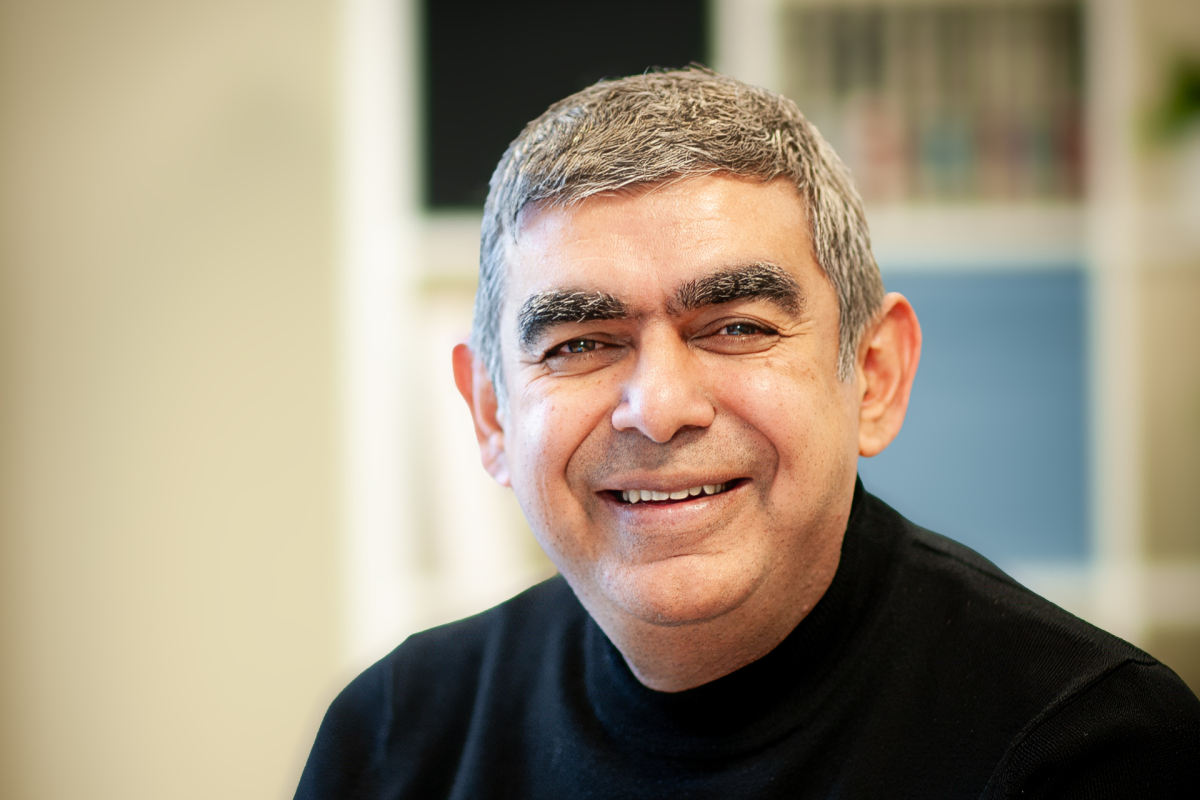
Hang Ten Systems, the enterprise AI startup founded by former Infosys CEO Vishal Sikka, raised an additional $53 million just five weeks after its initial seed round, bringing total funding to $85 million. The company says early customer traction and large enterprise contracts are fueling investor interest as it expands hiring and sales.
- Hang Ten Systems added $53 million to its seed round, lifting total funding to $85 million.
- The startup targets large enterprises and says it helps modernize and build production software with AI.
- Xora led the new round, alongside Mayfield and several high-profile investors and executives.
- Hang Ten says it already works with 21 major enterprises and has signed multiple seven-figure contracts.
- The company plans to expand engineering, consulting and sales teams across more regions.
Hang Ten Systems, the AI startup founded by former Infosys CEO Vishal Sikka, has raised another $53 million just five weeks after closing its first seed round, bringing total funding to $85 million. The fresh capital underscores how aggressively investors are backing enterprise AI firms that promise to speed up software development for the world’s largest companies.
The Palo Alto-based startup, launched only in May, is positioning itself as a high-end partner for large enterprises that want to modernize software, automate parts of development and move faster on projects that have historically taken months or years. Its rapid fundraising, early customer traction and long contract cycles breaking into weeks suggest the company is trying to become more than another AI tooling vendor.
What Hang Ten just raised and why it matters
Hang Ten said the new funding round was led by Xora, Temasek’s early-stage investment platform, and closed only weeks after the company completed an initial $32 million seed round. The new financing lifts total seed capital to $85 million, a figure that is unusual for a startup that is barely four months old.
Mayfield, which led the earlier round, also joined the latest financing. Other participants include Aramco Ventures, Intel chief executive Lip-Bu Tan, Micron chief executive Sanjay Mehrotra and Yahoo co-founder Jerry Yang, who also sits on the company’s board.
The size and speed of the raise matter for two reasons. First, they show that investors are willing to put major capital behind companies targeting enterprise software transformation rather than consumer-facing AI products. Second, they suggest Hang Ten is already convincing backers that it can sell into large, complex organizations at meaningful scale.
| Key item | Details |
|---|---|
| Company | Hang Ten Systems |
| Founder | Vishal Sikka, former Infosys CEO |
| Founded | May 2026 |
| Latest funding | $53 million |
| Previous seed round | $32 million |
| Total funding | $85 million |
| Lead investor | Xora, Temasek’s early-stage platform |
| Reported customer base | 21 major enterprises |
How Hang Ten is trying to stand out in enterprise AI
Hang Ten is not trying to build its own foundation model. Instead, it is betting that the real opportunity lies in helping large companies apply AI to mission-critical software work, where requirements are messy, systems are deeply integrated and compliance matters.
Sikka’s view is that software creation is shifting away from the manual act of coding and toward defining what the system should do, checking that it does it correctly and ensuring the result holds up in production. In his telling, AI has reduced the cost and time associated with the “build” phase so dramatically that the more valuable work now sits in product definition, validation and execution.
Sikka argued that AI has pushed the cost of building software close to zero and made time-to-build nearly negligible, shifting the bottleneck to requirements and verification rather than coding itself.
That thesis appears to be resonating with customers. The company said one enterprise signed a multimillion-dollar contract within 25 days of the first meeting, a sales cycle that would be considered exceptionally fast in large-scale enterprise software buying.
Hang Ten says it is working with existing customers and late-stage prospects across 21 major enterprises, with some opportunities already in proposal or contract-negotiation stages. The startup says it has secured multiple seven-figure contracts and is pursuing deals that could reach eight figures.
Which customers is Hang Ten targeting?
Hang Ten is focusing on companies that usually generate more than $10 billion in annual revenue, according to Sikka. That target group tends to have sprawling software estates, long procurement cycles and a high tolerance for outside consulting if the promised return is large enough.
The company said its customer list includes Fresenius Kabi, Saudi Aramco and Siemens Energy, and that its engagements span the United States, Europe, the Middle East and Asia. The broad geography suggests Hang Ten is aiming for multinational corporations that operate across regulated or technically demanding industries.
For enterprises of that size, software modernization is often less about launching shiny new apps and more about reducing technical debt, updating legacy systems and building reliability into the core operations of finance, manufacturing, energy and healthcare organizations. That is where Hang Ten believes it can compete.
Why large enterprises are being targeted first
Large companies are attractive because their software needs are expensive, complex and often urgent. They also have the budgets to pay for consulting-heavy AI deployments if those projects promise measurable gains in speed, cost or quality.
By concentrating on major enterprises, Hang Ten is signaling that it wants to sell outcomes, not tools. In other words, the startup is not pitching AI as a do-it-yourself product for developers; it is offering a managed path to production systems.
What Xora saw in Hang Ten
Xora’s interest in the company was reportedly driven by early customer traction. Sikka said the investment arm approached Hang Ten after seeing the startup’s initial commercial momentum and the possibility of introducing it to other companies in Temasek’s portfolio.
That kind of investor behavior often indicates more than standard financial support. It can also serve as a distribution channel, especially when the lead investor is connected to a large corporate network that can open doors to potential customers and partnerships.
Sikka declined to reveal Hang Ten’s valuation, though he said the second seed round represented an increase from the earlier terms. That suggests the company’s pricing, at least in the eyes of investors, improved quickly after the first round closed.
How the startup says it delivers software faster
Hang Ten says its edge lies in a framework called Hobie, which packages reusable AI “skills” for regulated industries and complex enterprise projects. CTO Sanjay Rajagopalan said the team uses that internal system to structure work in ways that can be repeated across customers and use cases.
Rajagopalan said the company is shipping production software, not just running demonstrations or proof-of-concept experiments.
That distinction is important in enterprise AI, where many startups can produce promising demos but struggle to integrate with real-world systems, governance rules and quality-assurance processes. Hang Ten is trying to position itself at the more demanding end of the market, where deployment rather than experimentation is the product.
The company also says it can reduce staffing needs significantly on some projects. Rajagopalan said engagements that might once have required around 30 people can sometimes be handled by teams of two to four, although customers or third parties still perform final quality checks and certifications.
Hang Ten says it typically promises up to a tenfold improvement in cost, speed or both. If those claims hold, the value proposition is not merely lower consulting bills; it is the ability to launch or modernize critical systems that might otherwise be delayed indefinitely.
Why this model challenges traditional integrators
That approach puts Hang Ten in direct competition with systems integrators and consulting firms that have long owned enterprise transformation projects. It also overlaps with work being pushed by big technology providers and software consultancies that are embedding generative AI into service offerings.
Sikka said some of Hang Ten’s opportunities involve replacing incumbent providers, while more than half relate to projects that were delayed, shelved or never started because they were too complex or expensive under traditional delivery models. That framing is telling: Hang Ten is not only trying to take business from existing vendors, but also to activate demand that the market had previously left untapped.
How big is the team and where is it growing?
Hang Ten currently employs about 20 to 25 people across the U.S., the Middle East and Australia, according to Sikka. With the new capital, the company plans to expand its engineering, consulting and sales functions.
The next hiring wave is expected to extend into Europe and India, reflecting both the geography of its client base and the need for technical talent and enterprise delivery capacity in multiple regions. For a startup serving global corporations, local presence can matter as much as model quality.
That staffing plan also reflects the labor-intensive reality of enterprise transformation. Even when AI automates some coding or workflow design, high-touch customer engagement remains necessary for solution design, deployment, governance and change management.
What does this mean for the broader enterprise AI market?
Hang Ten is entering a field that is already crowded and getting more competitive by the month. OpenAI and Anthropic are widening their enterprise offerings, while established consulting and technology firms are racing to build AI-native services around generative models.
In that environment, differentiation is difficult. Startups must persuade buyers that they can do more than call an API or stitch together third-party tools. They need a defensible process, strong domain expertise and the trust required to handle sensitive corporate systems.
Sikka argues that enterprises will still need independent partners that are not tied to a single foundation-model vendor. In his view, companies want advisers who work solely in their interest rather than for the platform provider.
Sikka said organizations will continue to need trusted, platform-neutral partners that act in the enterprise’s interest rather than in the interest of an underlying AI model company.
That is a familiar consulting pitch, but in the age of AI it takes on a new twist. The value no longer comes only from human labor or integration expertise. It comes from combining strategic advice, software engineering and model-assisted delivery into a single offering.
Why the company’s speed is notable
The pace of Hang Ten’s commercial progress is striking even by startup standards. The company says it moved from first customer contact to a multimillion-dollar contract in just 25 days, and it reached a second seed financing only five weeks after the first one.
That speed suggests a market eager to test AI-led modernization tools, particularly when they are backed by a founder with deep enterprise credentials. Sikka’s history as former CEO of Infosys gives Hang Ten instant credibility in a segment where trust and execution matter as much as technical ambition.
It also indicates that enterprise AI buyers are becoming more comfortable making large decisions quickly if the pitch is tied to measurable operational outcomes. The question is whether those early wins can be repeated across a broader set of customers and deployed at scale.
How does Hang Ten compare with Sikka’s earlier venture?
Before Hang Ten, Sikka co-founded VianAI in 2019 after leaving Infosys in 2017. That company raised $50 million in seed funding and later secured $140 million in a 2021 round led by SoftBank Vision Fund 2.
Sikka left VianAI in April, according to his LinkedIn profile, and told TechCrunch that the company is undergoing a transaction, though he declined to go into detail. The move marks a new chapter for one of the better-known enterprise software executives to reinvent himself in the AI era.
Compared with VianAI, Hang Ten appears to be moving faster commercially and raising money in a tighter sequence, perhaps reflecting the changed investor appetite for AI infrastructure and application-layer companies in 2026. The startup is also more explicit about replacing or augmenting traditional enterprise delivery models with AI-driven teams.
| Company | Founder | Initial known funding | Later funding | Status |
|---|---|---|---|---|
| VianAI | Vishal Sikka | $50 million seed | $140 million in 2021 | Sikka says it is undergoing a transaction |
| Hang Ten Systems | Vishal Sikka | $32 million seed | +$53 million follow-on seed | Building enterprise AI services |
What acquisition interest has Hang Ten received?
Hang Ten has already received takeover interest from what Sikka described as very large companies, even though the startup is only four months old. He did not identify the suitors, and he said the company is not pursuing a sale for now.
That early interest is another sign that the startup’s positioning may be strategically valuable. In fast-moving AI markets, companies that gain traction with enterprise customers can become acquisition targets quickly, especially if they possess delivery capability, domain expertise or access to marquee accounts.
For the moment, though, Hang Ten appears determined to remain independent. The company is using the latest funding to expand rather than to prepare for an exit.
Why the startup’s name matters
Hang Ten takes its name from the surfing maneuver in which a rider places all ten toes over the nose of the board. The metaphor is deliberate: the company wants to capture the image of staying balanced while riding one of the biggest waves in technology.
Sikka described the current AI boom as perhaps the largest wave of his lifetime, and the company’s branding fits that message. The name suggests movement, control and momentum — all useful qualities for a startup selling speed to the slow-moving world of enterprise software.
It is also a reminder that Sikka is framing the company as more than a consultancy. Hang Ten is being presented as a specialist operator designed to help companies stay upright while navigating the turbulence of AI adoption.
Key milestones in Hang Ten’s rapid rise
Below is a concise look at how quickly the company has moved from launch to a major seed expansion.
| Date | Milestone | Why it matters |
|---|---|---|
| May 2026 | Hang Ten founded | Startup enters enterprise AI market |
| Early August 2026 | Initial $32 million seed round closes | First major institutional backing |
| Mid-September 2026 | Additional $53 million seed round closes | Funding expands to $85 million total |
| Within four months of launch | 21 major enterprises in pipeline or as customers | Signals fast early commercial traction |
What happens next?
Hang Ten will use the new capital to hire more engineers, consultants and sales staff while pushing into additional regions. The company also faces the harder test that comes after fast fundraising: proving that its speed claims can be repeated across a larger customer base without sacrificing reliability or compliance.
If the startup can continue converting enterprise interest into sizable production contracts, it may become one of the more closely watched names in the next generation of AI services companies. If not, it will join a crowded field of firms that promised dramatic transformation but struggled to scale beyond early enthusiasm.
For now, Hang Ten has accomplished something rare: it has combined a well-known founder, serious investor interest and rapid sales momentum into a story that is hard for the enterprise AI market to ignore. Whether that momentum becomes a durable franchise will depend on execution as much as ambition.
And in a sector where buyers want proof, not just promises, that may be the most important test of all.
Frequently asked questions
What is Hang Ten Systems?
Hang Ten Systems is an enterprise AI startup founded by former Infosys CEO Vishal Sikka. It helps large companies use AI to modernize software development, improve delivery speed and build production systems for complex business environments.
How much funding has Hang Ten raised so far?
Hang Ten has raised $85 million in total. The company closed a $32 million seed round first and then added another $53 million only five weeks later, with Xora leading the newer financing.
Who invested in Hang Ten’s latest round?
Xora led the latest round, and Mayfield also participated. Other backers include Aramco Ventures, Intel CEO Lip-Bu Tan, Micron CEO Sanjay Mehrotra and Yahoo co-founder Jerry Yang.
Which companies is Hang Ten working with?
Hang Ten says it is working with 21 major enterprises across the U.S., Europe, the Middle East and Asia. Named customers include Fresenius Kabi, Saudi Aramco and Siemens Energy.
Why is Hang Ten attracting attention in enterprise AI?
Hang Ten is attracting attention because it claims to deliver production software quickly, with smaller teams and lower cost, while targeting complex enterprise projects that are often too slow or expensive under traditional delivery models.