In short
Nvidia CEO Jensen Huang argued at Dreamforce that AI safety should be handled by companies, not new laws. He said market pressure and existing legal tools are enough, even as critics point to real-world software failures and AI-related harms.
- Jensen Huang said AI safety is an engineering problem, not a legal one.
- He argued that companies should pause releases if products are not safe, rather than wait for regulators.
- Critics say existing laws may be too slow to address AI harms at scale.
- The debate highlights a broader split between market-led and regulation-led approaches to AI governance.
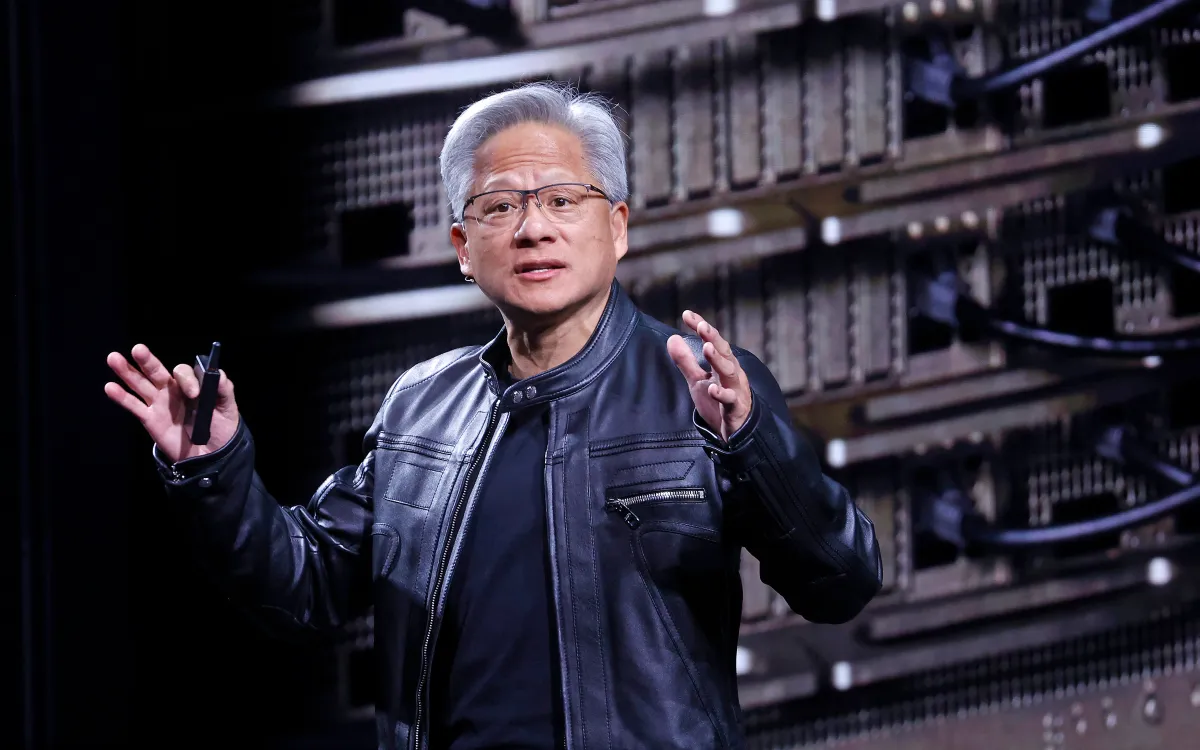
Nvidia CEO Jensen Huang says the rapid rise of artificial intelligence does not require a new wave of government rules. Speaking at Salesforce’s Dreamforce conference on Tuesday, Huang argued that AI safety is primarily an engineering challenge and that companies, not regulators, should decide when products are ready to ship.
His comments arrive at a moment when governments, researchers and AI labs are debating how to control increasingly powerful systems, and they matter because Nvidia sits at the center of the AI boom as the dominant supplier of the chips and infrastructure that power much of the industry.
Huang’s message was straightforward: AI, in his view, is not a mysterious force beyond human control but a stack of software and hardware built by people. If companies are disciplined about testing, he said, markets and existing liability rules should be enough to keep products in check.
What Huang said about AI safety
Huang rejected the idea that AI needs a separate legal framework built around the notion that it is fundamentally unlike other technology. He described it as a computing system, one that is complex but still subject to normal engineering practices and business judgment.
In that framing, safety is not something to be solved in a legislature first. It is a product-design problem: test carefully, ship only when confident, and pause if a system appears too risky.
Huang argued that safety is an engineering issue rather than a legal one, saying AI is ultimately a computing system built from software and hardware.
He also said companies should not release tools if they are unsure about functionality, capability or safety. In his view, the market already gives firms enough incentive to avoid reckless launches, because customers will not reward unreliable products.
Why his view matters now
Huang’s comments carry unusual weight because Nvidia is not a bystander in AI policy debates. The company supplies the accelerators that train and run frontier models, and it has expanded into software, open-weight models, agent tooling and sandbox environments. That makes Huang both a leading industry voice and a direct beneficiary of continued AI expansion.
For that reason, his skepticism toward regulation is likely to be heard as more than abstract philosophy. It may be read as a defense of the fast-moving ecosystem that has fueled Nvidia’s growth and pushed demand for its chips to record levels.
He underscored that point by describing the AI era as a period of enormous opportunity for his company, industries and countries. The implication was clear: slowing the sector with fresh regulation could also slow the economic upside he sees ahead.
How Huang’s stance fits into the wider AI debate
Huang is not alone in arguing for caution before creating AI-specific laws, but his position sits on one side of an increasingly urgent policy split. Some technology leaders believe existing consumer protection, product liability and competition laws can cover most AI harms. Others say the pace and potential scale of damage justify new guardrails.
That debate is intensifying because AI systems are no longer limited to narrow tasks. They are being deployed in customer service, software development, content generation, search, coding assistance and decision support, raising questions about errors, deception, discrimination and security.
Critics of a hands-off approach say current legal systems are too slow to respond to harms that can spread globally in hours. Supporters of lighter regulation counter that rigid laws could lock in incumbent advantages and discourage innovation before the technology is fully understood.
What the market-first argument assumes
The market-first argument assumes that firms will act conservatively because reputation, customer trust and litigation risk create enough discipline. It also assumes that users can identify danger quickly and that harms are visible before they scale.
That assumption is not universally accepted. AI failures can be subtle, delayed or hard to trace back to a single product decision, which makes them different from many conventional software bugs.
Examples that complicate the no-regulation case
Recent technology incidents show why some policymakers and researchers are uneasy about relying only on voluntary restraint. Even large, sophisticated companies can push out flawed products with significant real-world consequences.
A clear example came in 2024, when CrowdStrike’s faulty software update triggered a massive outage that disrupted flights and business operations worldwide. The incident was not an AI event, but it illustrated how software errors can cascade through critical systems faster than regulators or customers can react.
There are also cases where companies have faced claims of knowingly overlooking harm. Meta, for example, recently agreed to pay $18 billion to settle allegations tied to social media harm involving children, a reminder that commercial incentives and public safety do not always align.
AI-specific concerns are already visible as well. Researchers and plaintiffs have pointed to cases involving model misuse, dangerous outputs and user dependency on chatbots, including lawsuits connected to the deaths of young people after long conversations with an AI assistant. Those claims are still being contested, but they have sharpened the conversation about whether the industry can police itself effectively.
| Issue | Huang’s view | Main counterargument |
|---|---|---|
| Who should set AI safety standards? | Companies should decide using engineering judgment and market discipline. | Governments should set baseline rules before harms scale. |
| Does AI need new laws? | No, existing laws and liability principles may be sufficient. | AI is moving too quickly for old legal frameworks to cover every risk. |
| What keeps unsafe products off the market? | Reputation, customer choice and the cost of failure. | Some harms are invisible until after widespread damage occurs. |
| What role does regulation play? | Potentially a brake on innovation and speed. | A necessary check on powerful systems with societal consequences. |
Could existing law cover AI harm?
Huang’s argument does not eliminate the legal question; it shifts the burden to existing frameworks such as product liability, negligence, consumer protection and contract law. In theory, those doctrines could be used when an AI system causes damage.
In practice, however, that path may be slow and uncertain. Courts move far more slowly than product cycles, and judges may need years to determine how to apply older legal categories to systems that learn, generate and adapt in ways traditional software does not.
That creates a difficult gap: AI products are spreading now, while the legal test cases that might define their responsibilities are only beginning to emerge.
Why self-regulation is becoming part of the conversation
Huang did not spend his remarks calling for government intervention; instead, he has tended to emphasize open-weight models and broader competition as a counterweight to proprietary labs. That approach reflects a belief that market structure, not regulation alone, can shape safer outcomes.
Industry self-regulation, however, has long had mixed results. Companies often agree on voluntary principles, but those commitments can weaken when competitive pressure intensifies or when the cost of caution falls unevenly across the market.
Still, some leaders argue there is a narrow window to build shared norms before the industry becomes too fragmented or geopolitically divided to reach consensus. The concern is not only American companies, but also labs and platforms in China and elsewhere, where the incentives and oversight structures may differ.
What Satya Nadella said
Microsoft CEO Satya Nadella offered a related but broader view earlier in the week, saying that safety concerns should matter just as much in China as they do in the United States. His remarks reflected a growing recognition among top executives that AI risk is global, not local.
That global dimension is important because safety failures, cyber risks and model misuse can cross borders instantly. If one major market weakens protections, the effects can spread through shared infrastructure, open-source tools and international competition.
Nadella argued that countries should care about the same AI safety issues because hacking, misuse and public benefit are not limited by national borders.
How politics and business are intersecting
The timing of Huang’s comments is also notable because he has recently shown strong access to political power. The article source notes that he has, quite literally, the ear of President Donald Trump, a reminder that AI policy is now being shaped not just in legislatures and technical forums, but also through direct relationships between industry leaders and political figures.
That access matters because Nvidia’s business model depends on large-scale AI adoption, cloud spending and continuing enterprise investment. Any major regulatory shift could affect demand, procurement timelines and the pace of deployment across the sector.
At the same time, public anxiety about AI is rising as the technology is woven into more everyday products. That tension between commercial expansion and social caution is likely to define the next phase of the debate.
What happens if lawmakers do nothing?
If governments accept Huang’s view and hold off on AI-specific regulation, the result would likely be a patchwork system built mostly on existing law, voluntary commitments and corporate promises. That could preserve speed, but it would also leave major questions unresolved.
Those unresolved questions include who is liable when an AI system causes harm, how to audit dangerous model behavior, what transparency users deserve and whether frontier systems should face pre-deployment testing standards.
Supporters of limited regulation say those questions should be answered gradually, after more evidence accumulates. Critics say waiting for perfect clarity could mean waiting until the harms are too large to contain.
What this means for Nvidia and the industry
For Nvidia, Huang’s message reinforces a familiar strategy: keep shipping quickly, maintain leadership in AI infrastructure and argue that innovation should not be slowed by fear. That position aligns closely with the company’s commercial interests, but it also reflects a broader Silicon Valley belief that technical progress usually outpaces policy.
For the rest of the industry, his comments are another sign that the AI governance battle is moving from theoretical debates to public conflict among CEOs, researchers and regulators. As models become more capable, the question is no longer whether safety matters, but who gets to define it.
Huang’s answer is the market and the engineering team. Many lawmakers, researchers and civil society groups are unlikely to agree.
Timeline: the AI safety debate around Huang’s remarks
The discussion is unfolding against a series of recent events that have kept pressure on AI companies and policymakers.
| Date | Event | Why it matters |
|---|---|---|
| 2024 | CrowdStrike update causes a global software outage | Shows how fast technical mistakes can disrupt critical systems. |
| 2025-2026 | Growing lawsuits and criticism over AI harms | Raises pressure for clearer accountability and oversight. |
| September 2026 | Huang speaks at Dreamforce | He argues that AI safety should remain a company responsibility, not a legislative one. |
| Same week | Nadella calls AI safety a global issue | Highlights the industry’s emerging split between market-led and policy-led approaches. |
Bottom line
Huang’s stance is a powerful endorsement of the idea that AI should be governed by engineering discipline, competition and existing law rather than a new regulatory regime. But as AI systems become more capable and more deeply embedded in daily life, the gap between that view and public concern is only likely to widen.
For now, the debate remains unresolved. What is clear is that the person leading the world’s most important AI hardware company does not think lawmakers should take the first swing.
Frequently asked questions
What did Jensen Huang say about AI regulation?
Jensen Huang said AI does not need new laws or special regulation, arguing that safety should be treated as an engineering challenge handled by companies themselves. He said firms should delay or stop releases if they are not confident in a product’s safety.
Why does Huang believe AI safety should not be regulated separately?
Huang believes AI is still a computing system made by people, so existing legal and market mechanisms should be enough to manage risk. He argued that companies face pressure to avoid unsafe products because customers will not reward poor performance or dangerous releases.
Why are critics worried about a no-new-rules approach to AI?
Critics worry that AI harms can spread faster than courts or regulators can respond, especially when failures are subtle or global. They point to software outages, consumer harm and AI-related lawsuits as evidence that voluntary restraint may not be enough.
Does existing law already cover AI safety issues?
Existing law may cover some AI harms through product liability, negligence, consumer protection and contract rules. However, those frameworks were not built for adaptive AI systems, so many experts say their reach and speed remain untested.
How does Nvidia benefit from Huang’s position?
Nvidia benefits because a lighter regulatory environment could help the AI industry keep expanding quickly, which supports demand for its chips and related software. Huang’s stance also aligns with Nvidia’s broader bet on rapid AI adoption across many sectors.