In short
New York officials have seized 12 websites accused of distributing celebrity deepfake pornography, in one of the largest crackdowns on explicit synthetic sexual content so far. The action targets a network that prosecutors say depicted around 1,200 people and highlights how law enforcement is beginning to use domain seizures to disrupt nonconsensual AI abuse.
- New York seized 12 domains tied to explicit celebrity deepfake pornography.
- Prosecutors say about 1,200 people were depicted, mostly women.
- The action may be the largest takedown of its kind so far.
- Experts say domain seizures help, but the wider deepfake ecosystem remains active.
- The case highlights growing legal pressure on synthetic nonconsensual intimate imagery.
New York authorities have seized 12 websites accused of distributing celebrity deepfake pornography, in what may be the biggest enforcement action yet against explicit synthetic-image platforms. The move matters because it targets one of the most visible corners of the nonconsensual deepfake industry, which has spread abusive sexual imagery at scale for years.
The Manhattan District Attorney’s Office said the domains were used to unlawfully share, publish, and sell manipulated videos depicting about 1,200 people, the vast majority of them women, including actors, musicians, athletes, activists, influencers, and politicians. Officials say the investigation is ongoing and could lead to further action against the operators and uploaders involved.
The takedown arrives at a moment when deepfake abuse has become easier to produce, harder to police, and increasingly normalized across a network of websites, bots, and apps built to sexualize real people without consent. For victims, the harm is not only immediate humiliation but also a long tail of reputational damage, emotional distress, and persistent online exposure.
What New York Seized and Why It Matters
New York prosecutors say they took control of 12 domain names that hosted or promoted explicit synthetic sexual content featuring real people’s faces. The office says the seizures were carried out under state criminal procedure law and implemented after a warrant issued by a New York State Supreme Court judge.
The websites were not niche pages hidden from public view. According to the district attorney’s office and independent observation by WIRED, several homepages began showing seizure notices last week, indicating that officials had already moved to take control of the domains before the public announcement.
This action matters because it goes after the infrastructure that makes deepfake pornography easy to distribute. Instead of focusing only on a single creator or uploader, the seizure interrupts the sites that host, advertise, and monetize abuse at scale.
Why This Is Considered a Landmark Action
Legal and digital-rights researchers say the scale of the seizure stands out because it appears to hit a large cluster of explicit deepfake sites at once, rather than a single service or isolated forum. The sites reportedly drew millions of views over time and presented themselves as destinations for “real” celebrity deepfakes.
By targeting domain control, prosecutors can make abusive sites harder to reach even if the underlying operators try to reopen elsewhere. That is not a complete solution, but it can significantly disrupt traffic, search visibility, and revenue.
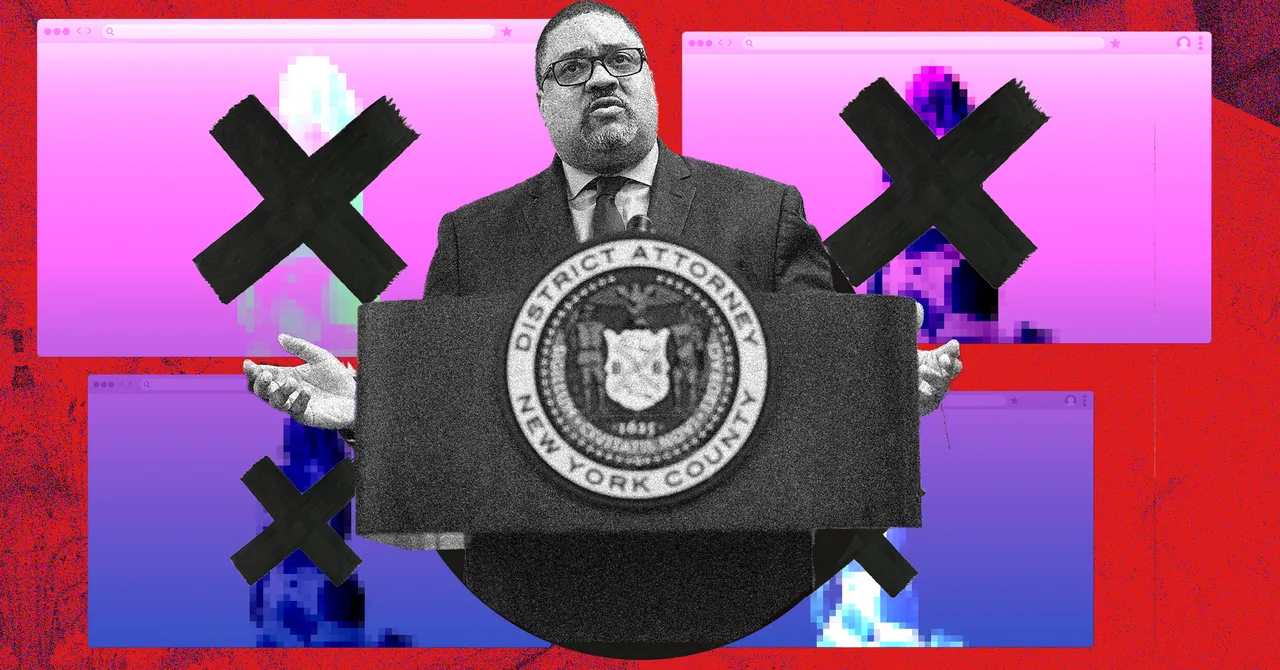
Manhattan District Attorney Alvin Bragg said the images and videos cause severe harm that can follow victims into both their professional and personal lives, and he urged anyone affected to contact the office’s cybercrime bureau.
How the Deepfake Sites Worked
The sites functioned like a modernized porn network built around stolen likenesses. They typically offered libraries of sexually explicit clips in which the faces of celebrities and public figures were inserted into existing adult videos or generated into synthetic sexual scenes.
Some of the domains used search-friendly names that referenced celebrities or promised “deepfake” content. Others featured landing pages with claims that the material was authentic or “real,” an intentional marketing strategy designed to attract clicks from users looking for taboo or novelty content.
Researchers and investigators say the videos were often several minutes long and, in some cases, had been viewed tens of thousands of times. One site claimed it had been active since 2018, suggesting that parts of the network may have operated for years before law enforcement acted.
What Victims Were Exposed to
The content was overwhelmingly aimed at women, including public figures who already face intense online scrutiny. The victim pool reportedly included actors, social media creators, activists, athletes, musicians, and elected officials.
Although some victims were well-known, researchers stress that non-famous women and girls are also heavily targeted by this kind of abuse, often in private chats, closed groups, or smaller websites that are even harder to track.
The scale of the harm is part of what has alarmed advocates. When a victim’s face is inserted into sexually explicit material, the resulting image can be shared globally in minutes and remain available long after it is removed from one platform.
How Big Was the Operation?
The Manhattan District Attorney’s Office says roughly 1,200 people appeared in nonconsensual sexual images and videos linked to the seized domains. While not every individual was a celebrity, the websites appear to have built their audience by exploiting high-profile names and recognizable faces.
Below is a snapshot of the key facts in the case:
| Detail | Reported Information |
|---|---|
| Domains seized | 12 |
| People depicted | About 1,200 |
| Primary victims | Overwhelmingly women |
| Content type | Nonconsensual deepfake sexual images and videos |
| Action taken by | Manhattan District Attorney’s Office |
| Legal basis | New York criminal procedure law and a state court warrant |
Researchers reviewing archived versions of the sites say some videos had been watched many thousands of times. That kind of engagement suggests the operators were not merely hosting isolated files; they were running a traffic-driven business.
Who Was Affected?
The websites reportedly featured a broad mix of public figures and private individuals. The material included images and videos of social media influencers, entertainers, political figures, and other recognizable women whose likenesses were manipulated into sexual content.
Some of the sites gave elected officials their own profile pages, listing names and positions alongside grids of altered clips. According to one researcher, those pages helped demonstrate that the sites were not random collections of explicit edits but structured catalogs organized around real people.
Politicians Became Prominent Targets
Researchers say political figures were not a side category but an important part of the content mix. One review found references to dozens of European politicians, as well as multiple US and UK lawmakers.
The inclusion of officeholders and candidates is notable because it shows how synthetic sexual abuse can be used not only for profit but also for humiliation, intimidation, or political harassment.
Benjamin Shultz, a researcher at the American Sunlight Project, said many of the clips appeared to be republished from earlier deepfake networks and that at least two of the seized sites had dedicated profiles for elected officials.
Why Deepfake Pornography Has Been So Hard to Stop
Deepfake pornography has expanded alongside advances in generative AI and face-swapping tools. What once required specialized technical skills can now be done quickly with consumer-grade software, automated pipelines, or even bots and web apps marketed specifically for sexualized manipulation.
The ease of creation has outpaced the speed of lawmaking. While some jurisdictions have passed laws targeting nonconsensual intimate imagery, enforcement has often lagged because perpetrators can move across borders, change domains, or rehost material on new services within hours.
How the Ecosystem Keeps Reappearing
Experts say the broader ecosystem includes more than the websites themselves. Creation tools, discovery channels, payment systems, affiliate networks, and hosting providers all play a role in keeping the content available and profitable.
That means a domain seizure can be highly effective as a disruption tactic, but it does not end the underlying business model. The same operators can try to return under new branding, use offshore infrastructure, or distribute the material through smaller communities that are harder to monitor.
- Creation tools make realistic sexual deepfakes easier to generate.
- Search and promotion channels drive users toward abusive sites.
- Hosting providers and domain registrars keep the pages online.
- Payment processors and affiliates help monetize traffic.
What Laws Allowed the Takedown?
New York officials used state criminal procedure authority to seize the domains, showing how local legal tools can be applied to an online abuse problem that often crosses borders. The action also reflects the growing role of law enforcement in the response to synthetic nonconsensual intimate imagery, commonly abbreviated as NCII.
The recently enacted federal Take It Down Act is also part of the larger legal landscape. The law is designed to speed the removal of intimate images and give law enforcement more leverage in certain cases, including the ability to seek seizure or takedown measures.
Still, the broader legal framework remains uneven. Different states and countries treat deepfake abuse differently, and the law often struggles to keep pace with the speed and scale of AI-generated content.
| Enforcement Layer | Role in the Response | Limitations |
|---|---|---|
| State seizure warrants | Take domains offline or redirect them to takedown notices | May not stop operators from rebuilding elsewhere |
| Federal removal rules | Help victims get abusive content removed faster | Depends on reporting and platform compliance |
| Platform moderation | Can remove accounts, uploads, and reuploads | Content often reappears on new services |
| Payment disruption | Can cut off monetization | Requires coordination across multiple intermediaries |
What Experts Say the Takedown Achieves
Researchers who study synthetic abuse say the seizures are important not only because they remove specific sites, but because they prove coordinated enforcement is possible. In an ecosystem that often feels too diffuse to police, visible action can shift incentives and deter some operators.
Leonie Oehmig of the Institute for Strategic Dialogue said the takedowns show that authorities can act decisively even when laws are fragmented across different jurisdictions.
Oehmig added that the sites appeared to be inaccessible even when accessed through VPNs from other locations, suggesting the seizure may have effectively blocked more than just ordinary browser visits.
That said, Oehmig and other researchers caution against treating the seizures as a complete solution. The deepest harms come from an entire network of tools, hosts, and payment systems that make synthetic intimate abuse easy to create and profitable to distribute.
Why Celebrity Cases Matter Beyond Celebrity
Celebrity cases often draw the most public attention, but they are not the full story. High-profile targets make the problem easier to see because the victims are publicly recognizable and may have teams, lawyers, or platforms that can respond quickly.
At the same time, the technologies used against celebrities are the same ones used against ordinary people. In that sense, celebrity deepfake cases often function as an early warning system for abuse that is already widespread among non-famous victims.
The pressure created by famous victims can also help move regulators and prosecutors. Public outrage often creates the urgency that turns a long-running online harm into an enforcement priority.
How Victims Can Respond
Anyone who believes they were targeted can document the content, preserve URLs, and contact law enforcement or a trusted legal advocate as quickly as possible. New York prosecutors say potential victims can reach the Manhattan District Attorney’s cybercrime bureau.
Victims may also want to seek help from platforms, image-removal services, or digital-rights groups that specialize in nonconsensual intimate imagery. In many cases, speed matters: the earlier a response begins, the easier it may be to contain distribution.
- Take screenshots and save URLs before the material disappears.
- Report the content to the hosting site and relevant platforms.
- Contact law enforcement, especially if the material is tied to extortion or stalking.
- Monitor reuploads and copies across forums, social channels, and mirrors.
The Bigger Picture
The New York seizures represent one of the clearest signs yet that authorities are beginning to treat explicit deepfakes as a serious public-safety and privacy issue rather than a novelty or inevitable byproduct of AI progress. They also show that the fight is moving beyond awareness toward direct intervention.
But the case also underscores a hard reality: the technology is evolving faster than the systems built to stop it. Every takedown may reduce access, but unless the broader ecosystem is disrupted, new domains and new tools can emerge quickly.
For now, New York’s move is a meaningful enforcement milestone. It sends a message that websites built to exploit people’s faces for sexual content are no longer operating in a legal vacuum, and that domain seizures may become a more common tool in the fight against synthetic abuse.
That may not end the problem. But it does mark one of the most forceful attempts yet to make the operators of deepfake porn sites pay a price for turning real people into products.
Frequently asked questions
What did New York seize in this case?
New York seized 12 domain names linked to websites accused of hosting and selling explicit celebrity deepfake pornography. Prosecutors say the sites were used to share nonconsensual sexual images and videos of about 1,200 people, making this one of the largest actions of its kind.
Why is this takedown important?
This takedown is important because it targets the infrastructure behind deepfake abuse, not just individual uploads. By seizing domains, authorities can cut off access, reduce traffic, and disrupt monetization while also signaling that synthetic sexual abuse is increasingly a law-enforcement priority.
Who was targeted by the deepfake sites?
The sites targeted mostly women, including celebrities, influencers, actors, athletes, activists, musicians, and politicians. Researchers also found that some elected officials had dedicated profiles and grids of manipulated videos, showing that the abuse extended well beyond entertainment figures.
Can victims get the content removed?
Yes, victims can often get abusive deepfake content removed through law enforcement, platform reporting, and specialized takedown support. The process can still be difficult because copies frequently reappear on other sites, so rapid documentation and reporting are critical.
Will seizing these websites stop deepfake porn?
No, seizing these websites will not stop deepfake porn entirely. It can disrupt a major distribution channel, but the broader ecosystem of creation tools, hosting services, payment systems, and mirror sites means operators may try to rebuild elsewhere.