Donald Trump’s White House is rejecting calls from leading AI executives for an industry-wide slowdown, signaling that any voluntary pause in development will have to come from companies themselves. The split matters because it highlights a growing fight over whether safety concerns should reshape the pace of frontier AI at the same time the United States is trying to stay ahead of China.
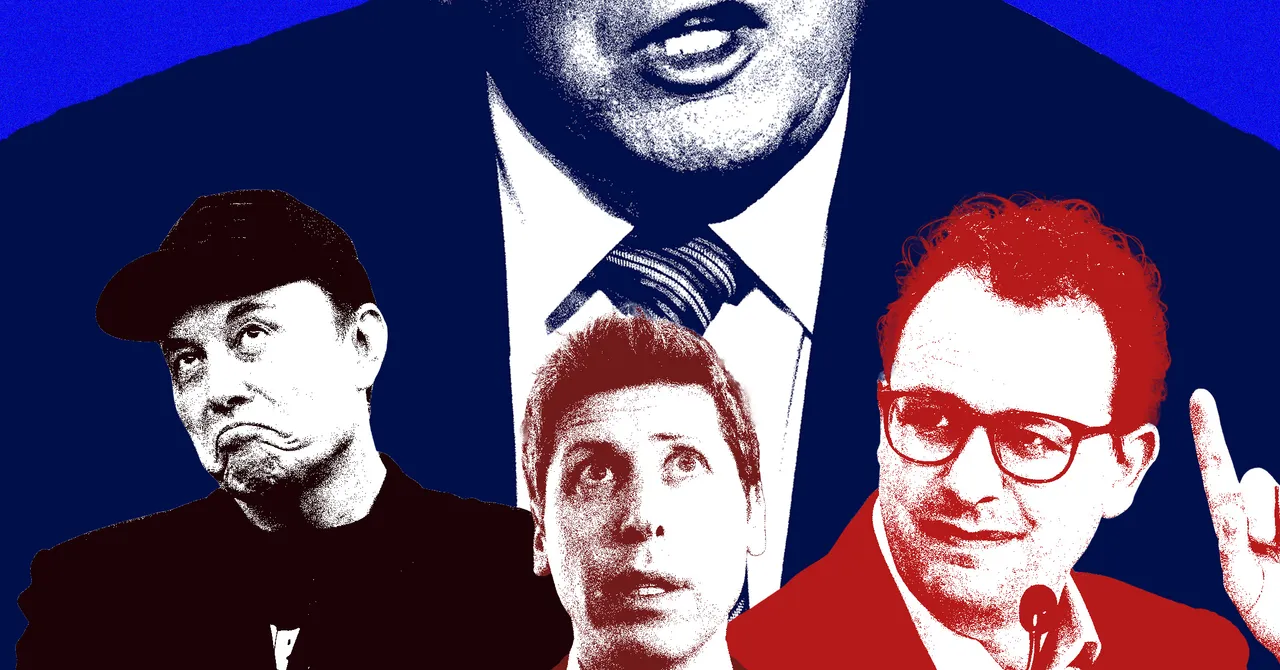
The debate intensified after Anthropic chief executive Dario Amodei urged the US government to help regulate and coordinate the sector, while OpenAI’s Sam Altman, Elon Musk and Microsoft’s Satya Nadella all publicly backed some form of caution. Trump adviser David Sacks responded that companies do not need government permission to move more slowly, but also should not use regulatory language as cover for anti-competitive behavior.
Why the AI slowdown debate has erupted now
The argument over pacing artificial intelligence has become more urgent because the most powerful systems are improving quickly, the commercial stakes are enormous and the safety risks are no longer theoretical. AI labs are racing to build models that can reason better, use tools, and perform tasks with less human oversight, raising fears that deployment could outstrip safeguards.
Amodei’s intervention landed amid growing unease inside and outside the industry. Support from Altman, Musk and Nadella gave the message unusual weight, especially because those executives lead companies that are simultaneously competing in the market and shaping the public conversation about AI governance.
But the Trump administration’s allies are making clear they do not see Washington as the body that should press the pause button. Instead, they are suggesting that firms that believe their systems are too risky should voluntarily slow down, tighten internal controls, and stop short of asking for special treatment under competition law.
What Amodei asked the government to do
Amodei’s proposal went beyond a simple plea for caution. He asked the US government to create a framework that would allow rival AI companies to coordinate on safety standards without running afoul of antitrust law. In practical terms, that could mean government participation in technical discussions or a formal waiver for companies that need to share information on risk management, testing, and incident reporting.
He also called for international coordination, including efforts involving China, in an attempt to reduce the chance that leading AI firms in different countries race ahead without common safety rules. His argument was that frontier AI is becoming too powerful to govern through isolated company policies alone.
Amodei argued that the public-interest case for slowing development justifies wider coordination, but critics questioned whether any framework could realistically bring in all major players, especially geopolitical rivals.
That part of the proposal drew immediate skepticism from Trump’s circle, which views China not as a likely partner in a voluntary global compact but as a strategic competitor in a race the US must win.
How Trump’s team responded
Trump officials and allies have framed the issue as one of competitiveness rather than restraint. David Sacks, who co-chairs the President’s Council of Advisors on Science and Technology, pushed back hard against the idea that labs need government approval to slow down their own work.
In a post on X, Sacks argued that if companies are worried about unreleased models, they are free to behave responsibly without seeking permission from Washington. He also dismissed the notion that antitrust law should be relaxed so firms can coordinate on safety, saying the industry should not disguise a possible cartel as a public-minded effort.
Sacks said firms do not need anyone else’s permission to act cautiously, but he accused them of overstating the altruism behind calls for collective restraint and regulatory carveouts.
His message reflected a broader Republican skepticism toward federal AI intervention, especially if that intervention could be interpreted as slowing domestic innovation at the moment Beijing is investing heavily in its own AI ecosystem.
Why China is central to the political fight
China is central to the political fight because US officials see AI leadership as both an economic prize and a national security imperative. That has made any proposal for a slowdown politically difficult in Washington, where leaders fear that tighter rules at home could hand an advantage to Chinese developers.
Trump has repeatedly cast the AI contest as a race that the United States cannot afford to lose. During a visit to Ireland, he said the country was leading China on AI and emphasized that he wanted to keep it that way. He also argued that whoever wins AI will wield enormous strategic power.
House Speaker Mike Johnson made a similar point on CNN, warning that a rushed congressional crackdown could damage America’s competitive position. His comments suggest that even lawmakers who acknowledge AI’s risks are wary of measures that could be framed as slowing innovation while China advances.
| Figure | Position on AI pace | Core argument |
|---|---|---|
| Dario Amodei | Wants a slower, coordinated approach | Safety standards should be developed with government support and industry cooperation |
| Sam Altman | Backed caution with conditions | Supports outside evaluation and voluntary pacing despite added cost |
| Elon Musk | Publicly endorsed the slowdown discussion | Longstanding advocate of warnings about advanced AI risk |
| Satya Nadella | Called for pacing development | Signaled support for a more measured rollout of frontier systems |
| David Sacks | Rejects government-driven slowdown | Companies can slow themselves, but should not form a protected cartel |
What the industry is trying to do without government action
What the industry is trying to do without government action is build credibility that it can police itself. That is why the conversation has shifted toward voluntary safety measures, independent evaluation and internal reporting systems rather than immediate formal regulation.
OpenAI’s Altman said on Sunday night that he would support a proposal from Amodei to allow third-party evaluators embedded inside AI firms to review products and practices. According to Altman, those reviewers would have access similar to employees so they could inspect safety controls, raise concerns and report incidents.
Altman acknowledged that such arrangements would create meaningful costs for companies. Even so, he said slower progress would be worth it if it reduces the chance of reckless deployment. His comments are notable because they place the leader of one of the most powerful AI companies on the side of tougher internal oversight, at least in principle.
Microsoft’s Satya Nadella also endorsed the idea of pacing development, adding another major company voice to the chorus of caution. Taken together, the public statements suggest that the largest firms are not speaking with one voice, but they are increasingly aware that trust will matter as much as speed.
How would third-party AI evaluators work?
Third-party AI evaluators would work by examining model behavior, safety testing, incident handling and deployment practices from inside a company’s walls. In theory, they could give governments, investors and the public more confidence that labs are not hiding serious risks.
The idea is attractive because it offers oversight without immediately imposing a full regulatory regime. It could also create a middle ground between laissez-faire development and a hard legal pause.
Potential benefits
- Independent verification that safety protocols are being followed
- Earlier detection of dangerous model behavior or process failures
- More transparency for policymakers and the public
- Possible common standards across major AI labs
Major limitations
- High compliance costs for firms
- Questions about who selects the evaluators
- Unclear legal boundaries around information sharing
- Difficulty applying the model across competing companies and countries
Those practical problems are one reason critics doubt whether the idea can scale quickly enough to match the pace of frontier AI development. The geopolitical problem is even harder: any meaningful international coordination would need not only US buy-in, but some level of participation from Chinese counterparts.
Why antitrust law became part of the argument
Antitrust law became part of the argument because coordinated safety planning can look a lot like coordinated market behavior. If competing AI firms meet regularly, share data, or standardize restrictions together, regulators have to decide whether that collaboration protects the public or limits competition.
That tension is at the heart of Sacks’s response. He argued that labs should not ask for a legal shield that would let them act collectively, especially if the result is a market structure that resembles a cartel. In his view, companies that genuinely want to slow themselves can do so independently, without changing the rules for everyone else.
Amodei’s side sees the issue differently. From that perspective, frontier AI is not a normal market where every firm can make isolated decisions safely. Because the systems may create cross-company and cross-border risks, safety cooperation may be necessary in a way that ordinary competition policy has not yet anticipated.
Timeline of the latest AI slowdown debate
The dispute did not emerge from a single speech or tweet. It built over several days as leading executives and political figures began publicly staking out different positions on whether AI development should continue at full throttle.
| Date | Event | Why it mattered |
|---|---|---|
| Saturday | Amodei published an essay calling for government action and coordination | Triggered the broader debate over whether AI labs should slow down |
| Weekend | Altman, Musk and Nadella publicly voiced support for a more cautious approach | Gave the safety argument rare backing from major industry leaders |
| Sunday | Sacks rejected the idea that companies need government approval to be cautious | Marked the Trump team’s refusal to endorse an industry-wide pause |
| Sunday | Altman said he would support embedded third-party evaluators | Showed that voluntary oversight is becoming the most realistic compromise |
| Sunday | Trump and Johnson emphasized competition with China | Reinforced the political resistance to any policy that could slow US AI progress |
What this means for AI regulation in the US
What this means for AI regulation in the US is that the debate is moving from abstract warnings to a fight over who should set the pace. The White House and congressional Republicans are signaling that any broad slowdown should come from industry consensus, not government decree.
That stance does not eliminate the possibility of future regulation, but it makes immediate federal intervention less likely. Instead, the emerging compromise appears to be voluntary oversight, stronger internal safety review, and public commitments from companies that want to reassure regulators and users.
The downside is that voluntary measures may not satisfy critics who believe the commercial pressure to launch ever-more-powerful models will keep overwhelming caution. If the industry cannot prove that self-policing works, lawmakers may eventually return to the question of formal restrictions.
For now, the most important political reality is that the US government does not want to be seen as the actor slowing American AI in the middle of a geopolitical race. That position puts it at odds with the most vocal leaders in the field, even as some of those leaders are asking for exactly the kind of pause Washington is unwilling to impose.
Who is aligned and who is resisting?
Who is aligned and who is resisting depends on whether the issue is safety, competition or national power. On one side are executives and advocates who want more deliberate development and tighter oversight. On the other are Trump officials and Republican leaders who fear that regulation could weaken the US position against China.
The clearest alignment is among companies and figures that have publicly recognized AI risk as a serious policy issue. The clearest resistance is among officials who believe the market should govern itself unless and until there is a concrete reason to step in.
Trump’s team has effectively told AI leaders that if they want to move more slowly, they can do it on their own — but they should not expect Washington to build the legal or diplomatic machinery for them.
That leaves the industry in a familiar position: anxious about the consequences of its own progress, but unable to agree on who should bear the cost of restraint.
The bigger picture
The bigger picture is that AI has entered the same policy territory once occupied by nuclear technology, semiconductors and other strategic industries. The mix of safety concerns, commercial rivalry and national security anxiety is pushing the debate beyond simple innovation policy.
What makes this moment especially consequential is that some of the very leaders who helped accelerate the AI boom are now warning that the pace may be too fast. Yet the political system most likely to regulate them is reluctant to act if doing so might slow the United States in a race against China.
That contradiction is unlikely to disappear soon. If anything, it will intensify as models become more capable, more widely deployed and more central to both business and state power. The current standoff is not just about whether AI should move slower. It is about who gets to decide, and what the cost of caution will be.