In short
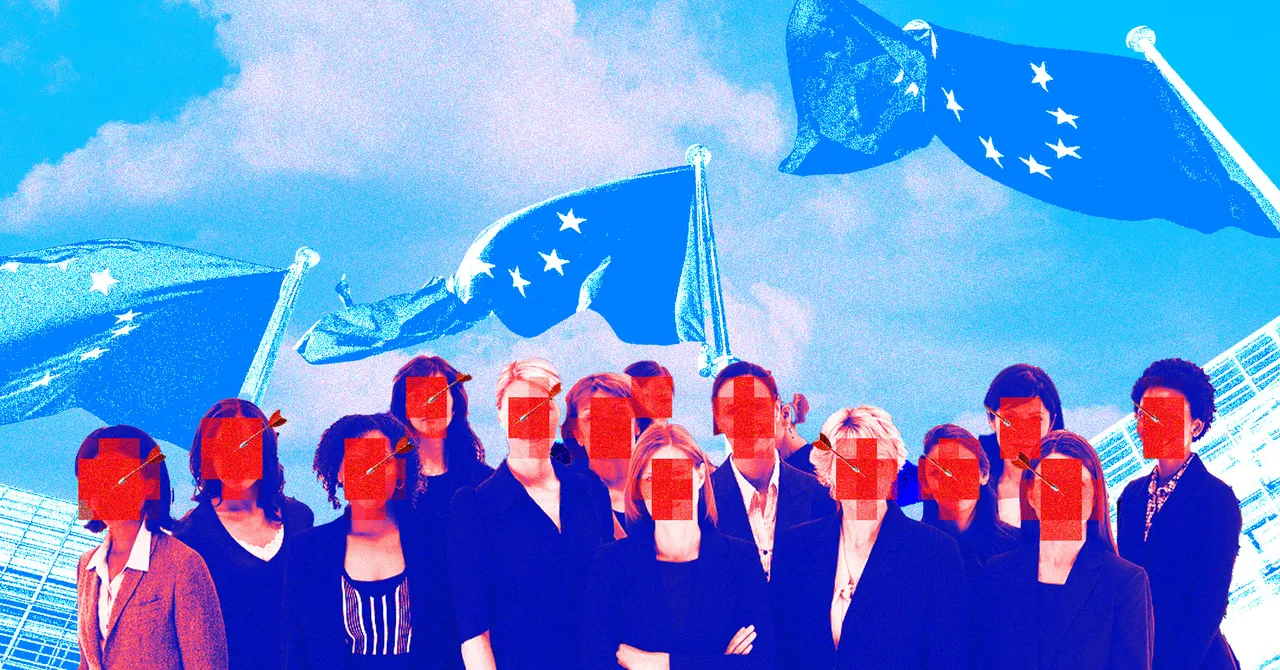
New research found that deepfake porn websites have targeted at least 138 women MPs across the European Union, alongside a much smaller number of men. The findings raise urgent concerns about gendered abuse, democratic participation and the need for faster regulation.
- At least 138 women MPs in the EU were found on deepfake-abuse websites, compared with nine male MPs.
- Researchers say the sites function like an abuse network, mixing explicit content, searchable profiles and links to creation tools.
- The findings point to a broader democratic risk because the abuse can deter women from entering or staying in politics.
- Some domains cited in the research have recently been taken offline, but experts say stronger regulation is still needed.
At least 138 women members of parliament in the European Union have been named, pictured or featured on sexually explicit deepfake websites, according to new research reviewed by WIRED. The findings show that online abuse networks are targeting politicians at scale, with women vastly outnumbering men and the content often linking directly to tools that can create synthetic sexual images in a few clicks.
The research matters because it suggests deepfake abuse is no longer a fringe problem aimed only at celebrities or isolated public figures. Instead, it is being used as a repeatable weapon against democratic institutions, with lawmakers themselves becoming part of a broader ecosystem of harassment, intimidation and image-based sexual abuse.
The analysis, led by researcher Benjamin Shultz and published by the German digital democracy think tank Agora Digitale Transformation, examined roughly 160 domains associated with deepfake abuse and other nonconsensual sexual material. It found references to national lawmakers from 22 EU countries, with only nine male MPs appearing in any form compared with 138 women.
What the research found
The study looked at national members of parliament across all 27 EU countries, building a database of more than 5,800 lawmakers and then checking where those names and images appeared across abusive websites. Shultz, who is affiliated with Agora Digitale Transformation and works as a fellow at the American Sunlight Project, said the findings revealed a pattern far larger than individual cases of online humiliation.
Some politicians were shown in explicit synthetic videos. Others appeared in database-style pages that listed their names, photographs and, in some cases, social media profiles or personal details. In several instances, those pages also provided links to so-called nudifier tools or related services that claim to digitally strip clothing from photos.
Shultz’s count includes multiple forms of exposure: content actively hosted on the sites, indexed pages showing material that had previously existed, and profile pages that acted as gateways for future abuse. In his view, the latter category is just as alarming as the videos themselves because it helps funnel users toward creating new abusive material.
| Metric | Finding |
|---|---|
| European MP profiles reviewed | More than 5,800 |
| Deepfake-abuse domains analyzed | About 160 |
| Women MPs identified | 138 |
| Male MPs identified | 9 |
| EU countries represented | 22 |
Why women politicians are hit so much harder
Women lawmakers were overwhelmingly the targets of this ecosystem, and the imbalance is stark even by the standards of online abuse. According to Shultz’s calculations, women MPs were about 33 times more likely than men to be referenced on these sites.
That pattern fits a longer history of gendered harassment in politics. Women who hold public office are often attacked not only for their policies and ideology, but also for their appearance, sexuality and presumed vulnerability. Deepfake pornography gives abusers a new and more scalable method of inflicting that kind of harm.
Several lawmakers and researchers say the effect goes beyond embarrassment. It can discourage women from entering politics in the first place, pressure those already in office to stay quiet, and damage future job prospects after leaving elected life.
“Deepfake porn is part of a much bigger trend of online hate and intimidation against women and female politicians,” said Suzanne Kröger, a Dutch MP who was affected by the research. “We are politicians, we have a platform and speak out. But meanwhile, there are millions of women victims of these criminal acts.”
Kröger described the findings as deeply disturbing and argued that the scale of the abuse underscores how urgently support and takedowns are needed.
How the deepfake ecosystem works
The websites identified in the research do more than simply host images. They operate like a layered service system for abuse, combining searchable profiles, ranking features, image galleries and direct links to creation tools. That makes the infrastructure easier to use and harder to shut down than a single isolated website.
Some pages included “ratings” of women’s bodies, according to the report. Others bundled official photos with names, personal identifiers and social accounts, creating an assembled dossier that can be used for harassment or impersonation. In several cases, the pages also linked directly to tools advertised as capable of digitally undressing a person from a photo.
Shultz said the problem is not limited to hosting explicit files. “It has all the images, all the information, and a direct link to the tool, and in three clicks you can generate,” he explained, arguing that a gateway page can be “just as bad” as storing the content itself.
That design reflects how many deepfake operations have evolved since the first wave of AI-generated sexual imagery emerged in late 2017. As the tools have become more accessible and realistic, the abuse has become cheaper to produce, easier to distribute and more difficult to police at scale.
What makes these sites different from old-school revenge porn?
These sites are different because they can generate synthetic sexual content without any real intimate image ever existing. Traditional image-based abuse often relies on stolen photos or recordings, while deepfake systems can create convincing sexualized material from a public headshot, a social media image or an official portrait.
That shift lowers the barrier for abuse. It also broadens the pool of potential victims to include politicians, journalists, activists, teachers, students and other public-facing women whose images are already available online.
Which countries and politicians appeared most often?
Germany, the Netherlands, Italy and France had the most lawmakers referenced in the dataset, according to the research. Senior politicians were also more likely to appear than those with lower profiles, suggesting that visibility and office level both increase exposure.
The study did not include members of the European Parliament. Instead, it focused on national legislators in EU member states, giving a snapshot of how deeply embedded these websites have become in the political and media ecosystems around Europe.
Shultz said he contacted every affected MP individually and offered guidance on how the material might be removed or reported. He also said his broader work includes ongoing research into politicians in the United Kingdom and the United States.
Why this matters for democracy
Lawmakers and researchers warn that the consequences of deepfake sexual abuse are political, not just personal. When women in public life are targeted in highly sexualized ways, the result can be fear, self-censorship and a chilling effect that reaches far beyond the individual victim.
That matters because democratic systems depend on broad participation. If public office appears to carry a uniquely intense risk of humiliation and sexual exploitation for women, the pool of future candidates may narrow in ways that weaken representation and distort who feels safe participating in politics.
Shultz said the abuse can cause long-term harm to careers and public life, warning that it may push women out of politics or prevent them from entering it at all. He argued that the reputational damage can linger even if the material is later removed.
Sarah Dobbe, a Dutch Socialist Party MP who was also impacted, said the material is used both to intimidate politicians and to demean women. She stressed the importance of fast removal and direct support for those targeted.
How does the harm spread beyond the original victim?
The harm spreads because deepfake abuse is rarely confined to one upload or one website. Once synthetic material is indexed, mirrored, reposted or linked from other pages, it can persist across platforms and resurface in searches long after a takedown.
That persistence is one reason researchers describe the phenomenon as infrastructure rather than isolated misconduct. The same websites that host abusive content can also lead users toward new creation tools, making the ecosystem self-reinforcing.
What lawmakers and platforms are doing now
Responses have begun to accelerate, but experts say regulation is still lagging behind the speed of the technology. In Europe and the United Kingdom, lawmakers are moving toward bans on nudify services. In the United States, the Take It Down Act has already been linked to the removal of at least two major deepfake sites that published vast libraries of celebrity images and videos.
There has also been another pressure point: journalism. Reporting that identifies the operators behind these services has in some cases prompted sites to go offline. According to the research reviewed by WIRED, at least half a dozen domains cited in the study had recently been taken down before publication, shrinking the total number of European MP depictions.
That pattern suggests enforcement can work when it is coordinated, but also that abuse networks are adaptive. Sites disappear, mirror domains emerge, and users migrate to the next available service.
- Some EU countries are weighing direct restrictions on nudify tools.
- US law has already helped remove some major deepfake platforms.
- Journalistic exposure has led to additional takedowns.
- But the market for abusive AI tools continues to evolve.
What happened to the US lawmakers Shultz studied before?
Shultz previously analyzed the presence of US senators and House members on deepfake sites in 2024, and he says the picture changed after some of those websites were removed. In his assessment, there was a significant decline in references to American politicians after takedowns began to bite.
That precedent offers a glimpse of what sustained intervention can achieve. It does not eliminate the threat, but it can reduce visibility, limit reach and make the abuse harder to monetize.
At the same time, the European findings show that the problem remains widespread enough to require more than isolated enforcement actions. The scale is not measured only by explicit videos, but by the databases, search pages and linking structures that keep the system alive.
How are researchers describing the broader trend?
Experts say the growth of deepfake abuse reflects a business model, not just opportunistic trolling. Henry Ajder, an AI adviser and deepfake expert who has tracked the space since 2018, said these platforms are structured to operate efficiently and to scale abuse with minimal friction.
Ajder said the research is useful because it helps European officials understand the depth of the issue. He described the wider ecosystem as one that is built to enable abuse “at scale with ease.”
That assessment is important because it frames the challenge as an industrial problem. The technology is cheap, the content is easily searchable, and the incentives often reward repetition. As a result, politicians are only one highly visible group caught up in a wider wave of gendered digital violence.
Why the technical design matters
The architecture of these sites affects how quickly the harm spreads. Searchable directories, indexed profiles and built-in creation links reduce the steps needed to produce or retrieve abusive content. Fewer steps mean more users, and more users mean more material.
Even when the content is removed, traces can remain in search indexes, screenshots, reposts or cached references. That persistence is one reason researchers treat gateway pages and metadata as part of the abuse itself.
Timeline of the deepfake crackdown
The response to nonconsensual deepfake abuse has accelerated unevenly over the past several years. The following timeline shows the main turning points referenced in the research and the wider policy debate.
| Year/Period | Development |
|---|---|
| Late 2017 | AI-generated sexual deepfakes begin emerging more visibly online. |
| 2018 onward | Researchers begin tracking the growth of deepfake abuse networks. |
| 2024 | Shultz analyzes US lawmakers on deepfake sites and later sees a drop after takedowns. |
| 2025-2026 | European regulators move toward bans on nudify services. |
| 2026 | New research finds 138 women MPs and nine male MPs referenced across deepfake-abuse domains. |
What comes next
The immediate priority, according to lawmakers who were affected, is removal. But several of the people interviewed for the research say takedowns alone will not solve the problem unless they are matched by stronger rules, better platform enforcement and support for victims.
Kröger said the issue demands both rapid removal and tougher regulation of the technology itself. That view is increasingly common among researchers who argue that the current system places too much burden on victims to discover, report and chase down the content.
For Europe’s political class, the findings are especially uncomfortable because they show that the abuse is not abstract. It is already reaching cabinets, parliaments and committee rooms, with women bearing most of the burden.
The broader warning is clear: unless governments close the gap between the speed of AI abuse and the speed of policy, sexually explicit deepfakes will remain a low-cost weapon for silencing and humiliating women in public life.
Frequently asked questions
How many European politicians were targeted by deepfake porn sites?
At least 147 lawmakers were referenced in some form, including 138 women members of parliament and nine male MPs. The research focused on national legislators across the European Union and found that women were overwhelmingly the main targets.
Why are deepfake porn sites considered a threat to democracy?
They are considered a threat to democracy because they can intimidate elected officials, deter women from entering public life and damage trust in political participation. Researchers say the abuse creates a chilling effect that can silence women in office and weaken representation over time.
What did researchers find on these websites besides explicit videos?
Researchers found database-style pages with names, official photos, social media links and other personal details. Some pages also linked to nudify tools or services that claimed to digitally undress people, making the sites part of a broader abuse ecosystem rather than standalone content hosts.
Are governments doing anything about deepfake porn?
Yes. The UK and EU are moving toward bans on nudify services, and the US Take It Down Act has already helped bring some major deepfake sites offline. However, researchers and lawmakers say enforcement is still behind the pace of the technology.