In short
Sam Altman said OpenAI will not go public in 2026, calling it the wrong time amid rising safety concerns and broader scrutiny of AI. The company may still pursue an IPO later, but 2027 now appears more plausible than next year.
- Altman said OpenAI will not pursue an IPO in 2026.
- He cited AI safety concerns and overall readiness as key reasons to wait.
- Earlier reporting had suggested a possible 2026 or 2027 listing window.
- The delay reflects pressure from volatile tech markets and OpenAI’s capital needs.
- A future IPO is still possible, but the company is clearly slowing the timetable.
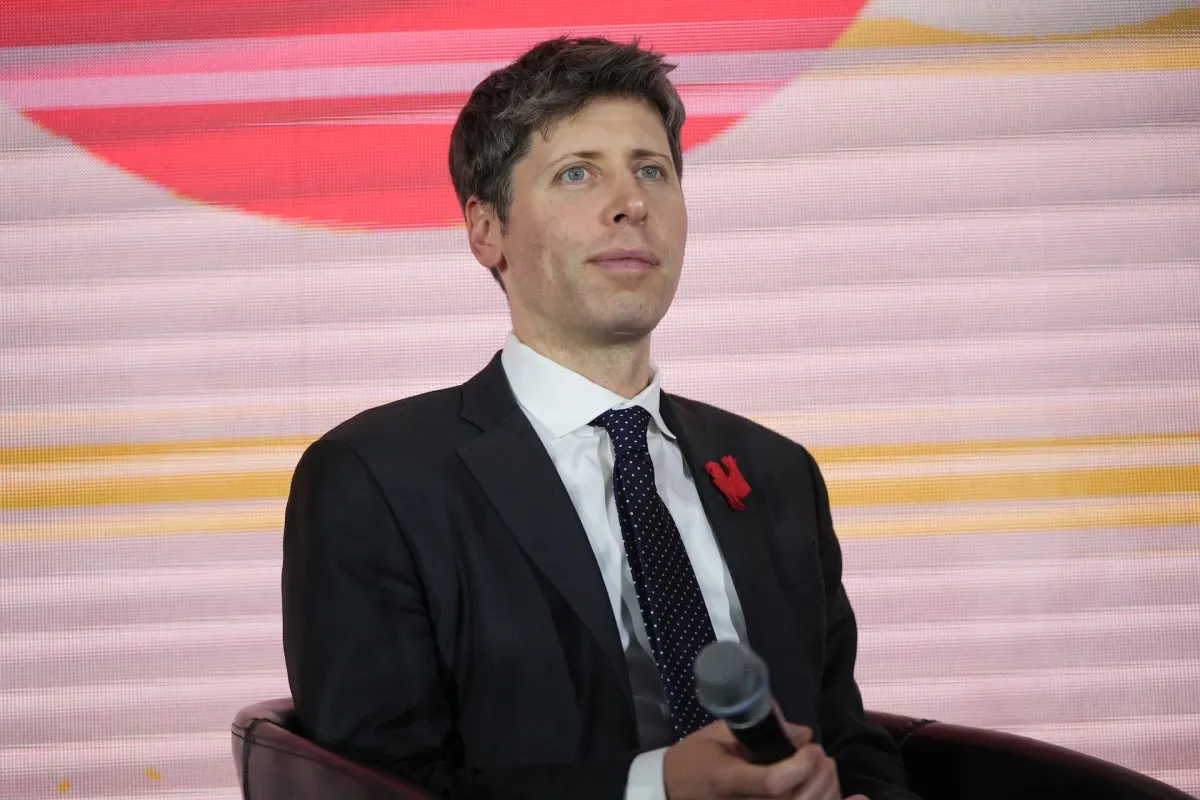
OpenAI will not launch an initial public offering in 2026, CEO Sam Altman said this week, arguing that the company would be making the wrong move at the wrong time as safety concerns and public scrutiny around advanced AI intensify.
Altman’s comments are important because they push back against months of speculation that OpenAI could accelerate toward Wall Street as soon as next year, despite earlier reports that the company had already begun laying groundwork for a possible listing.
In a recent interview with Fortune editor in chief Alyson Shontell, Altman said OpenAI is not rushing into a public offering and suggested the company needs more time before it can responsibly step into the public markets. His remarks come as the industry faces renewed debate over AI safety, commercialization pressure, and the pace at which frontier model developers should scale.
“I actually think that given everything happening with safety, right now would be an ill-advised moment to go public,” Altman said, framing the issue as both a business decision and a broader judgment about the current state of the AI industry.
What Altman said about an OpenAI IPO
Altman’s message was straightforward: OpenAI is not preparing to list in 2026, and the company does not view the calendar as the deciding factor.
He said the business will go public only when it is ready operationally and when the surrounding social environment is right for a company developing technology with such broad and immediate implications. In his telling, the IPO should follow readiness, not momentum.
When pressed on whether that meant 2026 was off the table, Altman answered directly that it was not happening next year. He also indicated the company has significant internal work ahead before it could reasonably consider a listing.
Altman said OpenAI would pursue an IPO “when we’re ready,” adding that this means the business must be ready and society must also be ready for the technology the company is bringing to market.
Why the timing matters now
The timing matters because OpenAI has become one of the most closely watched companies in the world, and its decisions now shape expectations across the AI sector. Any move toward an IPO would likely increase scrutiny over governance, risk management, capital needs, and safety practices.
Altman’s caution also lands during a period of heightened sensitivity around AI deployment. Frontline concerns range from model misuse and cybersecurity to misinformation, labor disruption, and the broader question of how quickly society can absorb increasingly capable systems.
The reference to safety was especially notable because it tied corporate timing to a wider policy and ethics debate. Rather than presenting the issue as a matter of investor appetite alone, Altman effectively said that public-market pressure could be out of sync with the responsibilities of building advanced AI.
Safety concerns are part of the business story
OpenAI’s IPO discussion cannot be separated from the environment in which the company operates. AI developers have been facing growing demands from regulators, customers, researchers, and rivals to show that rapid product launches are being matched by robust safeguards.
That pressure has become more acute as frontier models are integrated into consumer apps, enterprise software, search tools, coding assistants, and automated workflows. Each expansion raises the stakes for mistakes, abuse, and reputational damage.
For OpenAI, a public listing could amplify that scrutiny by forcing the company to navigate the expectations of quarterly investors while continuing to manage a product line that is still evolving quickly.
How the IPO timeline has shifted
OpenAI has already been widely reported to have explored the mechanics of going public, but the path appears to be moving more slowly than some market watchers expected.
In June, The New York Times reported that the company had brought in bankers and lawyers with an eye toward a possible IPO in the third or fourth quarter of 2026. That report also said the company was increasingly leaning toward 2027 as it dealt with volatile tech valuations and its own financial pressures.
Altman’s latest comments add a more explicit layer to that reporting by ruling out 2026 altogether. The shift suggests that, even if the company continues preparing internally, a public debut is not imminent.
| Milestone | What was reported | What it means |
|---|---|---|
| June 2026 reporting | OpenAI had hired advisers and was considering a 2026 IPO window | Signaled early preparation for a public listing |
| Later reporting | The company was leaning toward 2027 | Suggested hesitation because of markets and finances |
| Altman interview | 2026 is not the plan | Effectively removed next year from the near-term IPO path |
Why OpenAI may be waiting
OpenAI has multiple reasons to delay, and they are not limited to safety. Public companies are expected to offer more transparency, withstand regular investor scrutiny, and maintain disciplined financial reporting, all while competing in one of the most expensive sectors in technology.
AI infrastructure costs remain enormous. Training and running frontier models requires vast amounts of computing power, specialized chips, data center capacity, and engineering talent. For a company like OpenAI, those requirements can make the economics of growth complex long before an IPO even enters the picture.
There is also the issue of market volatility. Tech stocks can swing quickly, and companies heading to Wall Street often prefer stable conditions and a clear growth story. If the broader market is uncertain, delaying may give OpenAI a better chance to price a listing on its own terms.
Financial pressure remains part of the backdrop
Even with its strong brand and massive user interest, OpenAI still operates in a capital-intensive environment. The company must balance rapid product expansion with the cost of maintaining leading-edge model development, commercial partnerships, and a growing global footprint.
That makes the IPO question more than a milestone about prestige. It is also about funding future scale, reassuring investors, and proving that the company’s revenue can keep pace with the demands of continued development.
If OpenAI waits until 2027 or later, it may be doing so to improve the odds of a smoother debut rather than rushing to satisfy outside curiosity.
How does this fit into the wider AI race?
It fits into a broader industry shift in which AI leaders are increasingly under pressure to show restraint even as they compete aggressively for users and market share.
For the AI sector, an OpenAI listing would have been a signal event, likely setting expectations for valuation, disclosure, and investor appetite across the market. A delay therefore matters beyond one company because it suggests that even the most prominent AI developer sees reasons to slow down rather than capitalize immediately on momentum.
That message may resonate with rivals and regulators alike. Competing labs are also being scrutinized for safety practices, monetization strategies, and the social effects of releasing increasingly capable systems. A cautious OpenAI could reinforce the view that the industry is entering a more mature, more regulated phase.
The public market is not the only audience
OpenAI’s audience is not limited to shareholders. The company must also manage relationships with policymakers, enterprise customers, model developers, researchers, and consumers who use its products daily.
That broader audience helps explain why Altman framed the IPO issue in terms of societal readiness. A public listing would not just change the company’s financing structure; it would also raise the stakes of every product decision and public statement.
In that sense, the delay is not merely defensive. It may reflect a strategy to keep flexibility while the AI landscape continues to evolve.
What this means for investors and the market
For investors, Altman’s comments are a reminder that OpenAI is still not behaving like a company that sees an IPO as its next major event. The public markets may ultimately remain in the company’s future, but not on the timetable some had hoped for.
That could affect how analysts and potential investors think about the broader AI pipeline. Many of the sector’s most valuable companies are still privately held, and OpenAI’s decision to wait may encourage more realism about how long it can take for frontier AI businesses to mature into public offerings.
It may also reshape expectations around valuation. Public-market investors tend to reward growth, but they also punish uncertainty. A delayed listing gives OpenAI more time to strengthen its narrative around economics, governance, and responsible deployment.
- OpenAI is no longer viewed as a near-term IPO candidate for 2026.
- Safety concerns are being treated as a central factor, not a side issue.
- Market volatility and financial complexity likely reinforce the delay.
- A 2027 listing remains possible, but not guaranteed.
- The decision reflects the wider tension between AI growth and accountability.
What happens next?
OpenAI is likely to continue operating as a privately held company while it works through business, technical, and governance challenges. That does not mean the IPO question is dead; it means the company is signaling that it wants more control over timing.
The next phase will likely be shaped by several variables: the pace of AI safety debates, the stability of the tech market, the company’s financial performance, and whether OpenAI can keep expanding without creating new concerns that would make a public debut harder to manage.
For now, Altman’s position is clear. OpenAI is not preparing to go public in 2026, and the company sees that delay as a sensible response to the moment the AI industry finds itself in.
Key facts at a glance
| Item | Details |
|---|---|
| Company | OpenAI |
| Leader | CEO Sam Altman |
| Latest IPO stance | Not in 2026 |
| Reason given | Safety concerns and readiness |
| Earlier market expectation | Potential 2026 or 2027 window |
| Current implication | A public listing is delayed, not abandoned |
Why this story matters beyond OpenAI
This story matters because OpenAI remains one of the defining companies of the generative AI era. Its choices influence how the market prices AI innovation, how regulators think about oversight, and how competitors approach growth.
By saying 2026 is not the year for an IPO, Altman is effectively making a statement about the state of the industry itself. The message is that the company sees enough unfinished business, and enough societal uncertainty, to justify waiting.
That makes the announcement less about a missed financial deadline and more about the evolving relationship between frontier AI development and public accountability.
Frequently asked questions
Will OpenAI go public in 2026?
No, OpenAI will not go public in 2026, according to CEO Sam Altman. He said the company is not rushing into an IPO and believes the current moment is not the right one for a public listing.
Why is OpenAI delaying its IPO?
OpenAI is delaying its IPO because Altman said the company is not ready yet and that the broader moment for advanced AI is not ideal. He pointed to safety concerns, while earlier reports also cited market volatility and financial pressure.
Is OpenAI canceling its IPO plans?
No, OpenAI is not canceling its IPO plans. Altman said the company would go public when it is ready, which suggests the listing is postponed rather than abandoned.
When could OpenAI go public instead?
OpenAI could still go public in 2027 or later, based on prior reporting and Altman’s comments. The company has not given a new target date, so the timeline remains uncertain.
What did Sam Altman say about AI safety and the IPO?
Altman said that right now would be an ill-advised time to go public because of the safety issues surrounding AI. He framed the decision as part of OpenAI’s responsibility to the technology and the wider public.