In short
Tim O’Reilly says the biggest AI labs are prioritizing control over user needs, and he believes open-source AI will matter more because it encourages portability, customization and wider innovation. He also argues that AI should be treated as a creative medium rather than a replacement for human writing.
- O’Reilly says open-source AI should include the full stack, not just model weights.
- He believes frontier models are increasingly optimized for lab priorities, not everyday users.
- He argues that AI lock-in is a bigger problem than openness-related security fears.
- He sees open memory and model portability as key battlegrounds in AI’s future.
- He thinks AI will become a creative medium, not a substitute for human authorship.
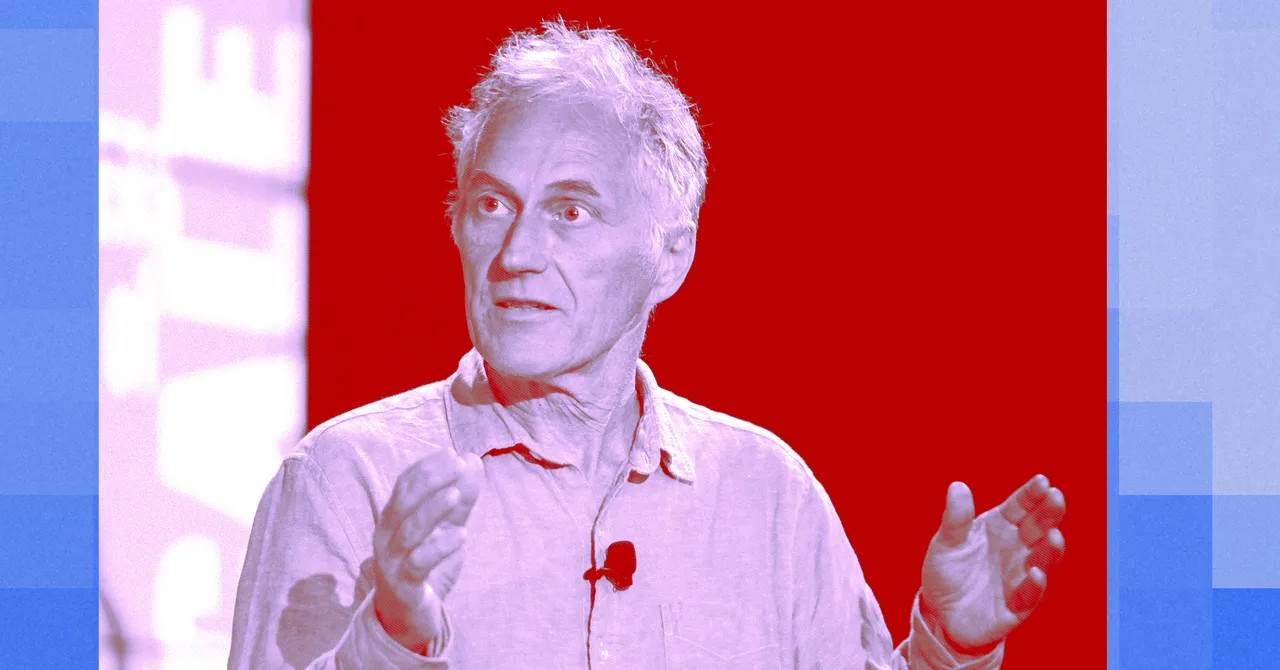
Tim O’Reilly says the biggest AI labs are building systems that serve their own control, not the public’s needs, and he argues that open-source AI will ultimately matter more because it lets users switch models, keep their data, and innovate without being locked into one platform. In a wide-ranging interview, the publisher and internet veteran warned that the AI race is drifting toward a few powerful companies even as the most important breakthroughs may come from open, widely distributed tools.
O’Reilly, who has spent decades chronicling shifts in software and the internet, is now applying his long-running philosophy of “creating more value than you capture” to artificial intelligence. His central claim is blunt: the industry’s obsession with giant frontier models may be missing what most people actually want from AI.
That view puts him at odds with the prevailing strategy at leading AI firms, which have poured enormous resources into making ever-larger models and keeping users inside tightly controlled product ecosystems. O’Reilly’s counterargument is that AI should become a flexible medium—more like the web or a camera than a sealed appliance—so developers and users can shape it for their own purposes.
Why O’Reilly believes open-source AI matters more than bigger models
O’Reilly’s case begins with a distinction that he says is often blurred in public debate. What many people call open-source AI, he argues, is really just open-weight AI: the model weights may be available, but the surrounding software stack, user controls, and application logic remain closed. In his view, that is not enough to create a truly participatory ecosystem.
He wants a broader definition of openness, one that includes the architecture around the model itself. That means separating the model, the harness that operates it, and the application that the user experiences. If those layers can be swapped and customized, then AI becomes a platform for experimentation rather than a product designed to keep people inside one company’s walls.
According to O’Reilly, that distinction matters because the newest frontier models are increasingly optimized for a narrow set of elite use cases. They may outperform smaller systems in some benchmarks or high-stakes tasks, but he believes they are not always the best fit for ordinary users who want adaptability, affordability, and control.
O’Reilly argued that the industry has built “an architecture of control rather than an architecture of freedom and participation,” and he said that approach makes it easier for companies to monitor and retain users.
What does he mean by an “architecture of freedom”?
He means AI systems should be easy to customize, move between providers, and adapt to different needs without forcing people to surrender their context and data to a single vendor. In his view, openness is not just a technical principle; it is a market structure that prevents one company from defining how everyone uses AI.
That emphasis on portability is central to O’Reilly’s argument. He said the open-source vision should allow a person to preserve memory and context even when changing models or platforms. That would weaken the lock-in effect that big technology firms typically seek and would give users more leverage over how their AI tools behave.
How is O’Reilly thinking about AI as a business battle?
He is comparing today’s AI contest to earlier technology transitions in which dominant companies overestimated the staying power of their preferred model. O’Reilly sees echoes of the 1990s, when many assumed the fight was over who controlled the PC era, only for the web to emerge as a new layer of innovation that no single company owned.
In his telling, something similar could happen with AI. The largest models might continue to matter for highly demanding tasks, but the broader market could shift toward smaller, open systems that spread through businesses, schools, communities, and consumer products more broadly.
O’Reilly also questioned the strategic logic of the current capital flow into a handful of leading AI companies. He suggested that money is concentrating on a few winners without guaranteeing long-term dominance, which could leave room for open-source projects to build the most widely used tools.
He made the case that the next phase of AI could look less like a single winner-take-all market and more like an ecosystem of tools, services, and developer-built layers. In that scenario, the most important work would not come from the labs with the biggest budgets, but from the builders who create useful products on top of more open foundations.
What worries him about frontier AI?
He worries that frontier AI is moving in a direction that is useful for model builders but less aligned with the real needs of most people. O’Reilly said the industry is chasing models that win headline benchmarks while drifting away from the kinds of tools ordinary users want to personalize and trust.
He also rejected the idea that open models are the main security threat. In his view, many of the most visible cybersecurity problems have involved frontier systems already. That leads him to conclude that the greater risk may lie in centralizing too much power in a small number of highly capable, tightly controlled models rather than in distributing access more widely.
His broader concern is that the most powerful AI systems could become the equivalent of mainframes or supercomputers: crucial for certain tasks, but not the technology that shapes everyday life. If that happens, the more consequential innovation may come from open systems that diffuse throughout society.
| Topic | O’Reilly’s view | Why it matters |
|---|---|---|
| Open-source AI | Should include the full stack, not just model weights | Gives users and developers more control and portability |
| Frontier models | Useful for some tasks, but not always what people want | May optimize for labs’ priorities rather than everyday use |
| Platform lock-in | Big companies are building control into the system | Makes it harder to switch models or preserve context |
| Security risk | Centralized frontier systems pose serious risks too | Challenges the idea that openness is the main danger |
| Long-term future | Open systems may diffuse more widely than frontier models | Could shape the next phase of AI adoption |
Why does he think Silicon Valley has become anti-capitalist?
O’Reilly is using the phrase in a specific sense. He is not arguing that tech companies oppose markets in theory; he is arguing that some founders and investors now shape outcomes through capital concentration, not competition. In his telling, venture-backed companies often spend aggressively to manufacture market winners rather than letting the market sort out the best ideas.
He pointed to the ride-hailing era as a template. Investors funded massive subsidies to force adoption, and that approach became a pattern: pour in money, lock up users, and use scale to shut out alternatives. O’Reilly believes AI is now following a similar path, with huge capital flows into a few firms even though none has permanently secured the field.
That does not mean he thinks the largest companies will disappear. It means he believes their advantage may be less durable than many assume, especially if open-source tools keep improving and developers continue building on top of them.
How open memory could challenge AI lock-in
One of O’Reilly’s most concrete ideas is an open-memory consortium. The concept is meant to address one of the most sensitive parts of AI product design: the memory of what a user has said, created, preferred, or stored across sessions.
Today, he argues, one of the easiest ways for a company to keep a user is to make the AI “know” that person better than any rival does. O’Reilly sees that as a deliberate lock-in strategy, and he wants open standards to let people carry their memory and context from one model to another.
If successful, that kind of interoperability would make AI less like a private walled garden and more like a common utility layer. Users would be able to change providers without losing continuity, and developers could build products that do not depend on one firm holding all the context.
Who is working on these ideas?
O’Reilly said his nonprofit, the AI Disclosures Project, is among the groups thinking about how to make memory and context more portable. He also pointed to open-source efforts such as Pi, an agentic harness, as signs that the ecosystem is already moving in a more modular direction.
The larger point is that innovation may happen in layers outside the frontier labs. Even if the biggest model makers continue to dominate headlines, O’Reilly believes the most useful breakthroughs could come from open tools that let people assemble their own AI experiences.
What is the role of writing and publishing in an AI world?
For O’Reilly, AI is already changing the economics of knowledge work, including his own publishing business. He noted that the book side of his company has shrunk significantly over time, from a peak of roughly $70 million to about $30 million, as books have generated less revenue over the past quarter-century.
That decline, he said, has forced the business to rethink how it compensates experts for sharing their knowledge. AI now enters that equation by absorbing and repackaging information at enormous scale, which raises a practical question: how can publishers and knowledge businesses help people benefit from that change rather than be overwhelmed by it?
O’Reilly sees expertise as something that should become more accessible, not less. He frames the ability to summon the knowledge of specialists through AI as a kind of superpower, but one that requires new tools and norms to distribute fairly.
He said the publishing world has had to adapt because the traditional book business has weakened, and he believes AI now forces a new answer to how expert knowledge gets valued and reused.
Can AI replace human writing?
O’Reilly does not think the question should be framed as a simple yes or no. He says AI is a medium, not a replacement for creativity, and that people will learn to use it in different ways depending on their goals and style.
He compared the current moment to earlier shifts in artistic tools. Just as photography changed but did not eliminate portraiture or landscape art, he believes language models will change writing without ending it. Some people will use them for brainstorming, drafting, summarizing, and other functional tasks; others will use them as collaborators in more creative work.
He also described his own workflow as practical rather than sentimental. He said he uses AI to help turn interviews into usable material and for idea generation, but he does not view that as surrendering authorship. Instead, he sees it as another tool in the creative process.
That distinction matters because it captures the wider debate now unfolding in journalism, publishing, and other knowledge industries. For some, AI is a threat to originality. For others, it is a powerful interface for organizing thought.
What does this mean for content creation?
It means the future of writing may depend less on whether AI is used and more on how it is used. O’Reilly expects some people will become especially skilled at expressing ideas through models, just as earlier generations developed expertise with cameras, computers, and other creative technologies.
He believes the current cultural discomfort will fade as users become more fluent. What seems unnatural today may become ordinary once the tools are better understood and more tightly integrated into daily work.
That does not remove the tension around authorship, quality, or originality. But it does suggest that the debate is moving toward workflow, not prohibition.
Key claims from O’Reilly’s AI argument
O’Reilly’s position can be summarized in a few core ideas that cut across the interview:
- Open-source AI should mean more than public model weights.
- Users should be able to switch models and keep their context.
- Frontier models are not always the best fit for everyday needs.
- Concentrated capital can distort technological competition.
- Open systems may drive broader innovation than closed platforms.
Why this debate matters now
The argument O’Reilly is making goes beyond model architecture. It is about who gets to shape AI’s future: a handful of companies with enormous capital and proprietary products, or a broader ecosystem of developers, publishers, and users who can remix the technology on their own terms.
That question matters because AI is moving from novelty to infrastructure. As more people rely on it for writing, research, coding, customer support, and planning, the choice between closed and open systems will influence not just innovation, but competition, privacy, and the balance of power in digital life.
O’Reilly’s warning is that the biggest models may look like the future from the inside, even as the real future is being built somewhere else. If he is right, the companies racing to dominate the frontier may end up shaping a niche layer, while open-source tools become the systems people use every day.
For now, that is still an argument rather than a settled outcome. But it is an argument coming from one of Silicon Valley’s most durable observers, and it lands at a moment when the AI market is searching for its long-term structure.
The question O’Reilly keeps returning to is simple: will AI become a system that captures value for a few companies, or a platform that creates value for everyone else? His answer is clear. The industry should choose participation over lock-in, or it may discover too late that the most important innovation happened outside the walls it built.
Frequently asked questions
What is Tim O’Reilly’s main argument about AI?
Tim O’Reilly’s main argument is that open-source AI will be more important than closed frontier models because it gives users and developers more freedom, better portability and less vendor lock-in. He believes the biggest labs are optimizing for control rather than what ordinary users actually need.
Why does O’Reilly think big AI labs are missing the point?
O’Reilly thinks big AI labs are chasing larger models and tighter ecosystems when many users want flexibility, customization and the ability to switch providers without losing context. He says that strategy creates an architecture of control instead of an architecture of participation.
Does O’Reilly think open-source AI is a security risk?
O’Reilly does not see open-source AI as the main security danger. He argues that many visible cybersecurity problems have come from frontier systems and that concentrated power in a few large models may be riskier than distributing access more broadly.
How does O’Reilly think AI will affect writing?
O’Reilly thinks AI will change writing but not replace it. He describes AI as a medium, similar to photography or paint, and says some people will become skilled at expressing ideas through language models while others will use them for brainstorming and drafting.