Updated August 11, 2026 12:53 pm
In short
Public frustration with generative AI is deepening, prompting more product changes from tech companies and widening into protests over the data centers and workplace mandates that support the technology.
- Public anger over generative AI is shifting from online complaints to product changes.
- Meta, Google, Snapchat, LinkedIn and Substack have all faced pushback over AI features.
- Consent, authenticity and environmental costs are central reasons for the backlash.
- Data center protests show opposition is expanding beyond apps and into infrastructure.
- Worker resistance suggests AI mandates may face growing internal pushback too.
Update — August 11, 2026 12:53 pm
Public backlash over generative AI is now showing up in more places than before, with new polling cited in the source suggesting Americans are increasingly negative about the technology as they become more familiar with it. The concern appears especially strong among adults ages 18 to 29, nearly half of whom now say it does more harm than good.
The update also adds fresh examples of companies responding directly to that pressure: LinkedIn has added a button for flagging posts that look like AI slop, Snapchat has made fully AI-made videos ineligible for its discovery feed, and Substack has rolled out AI-detection tools for writers.
Beyond online features, the source says resistance is spreading to the physical infrastructure behind AI, with more people organizing protests against data centers tied to the technology. It also notes that objections are surfacing in workplaces, where some employees are pushing back against mandatory use of AI tools.
Public resistance to generative AI is starting to change product decisions. Over the past few weeks and months, companies including Meta, Google, LinkedIn, Snapchat and Substack have faced backlash over unwanted AI features, and in some cases have quickly rolled them back or added tools to limit them.
The broader significance is that the AI boom is no longer being treated as a one-way rollout: users, creators, workers and activists are increasingly forcing companies to confront consent, privacy, quality and environmental concerns.
For many people, the issue is not whether artificial intelligence exists, but whether it was imposed on them without meaningful choice. That sense of being overrun by AI-generated content, AI summaries, AI tools and AI-enabled surveillance has helped turn irritation into a growing backlash with measurable effects.
Why the backlash is gaining traction
The backlash around so-called AI slop is catching on because many users believe the technology appeared everywhere before society had time to decide whether it should be there at all. In social feeds, search results, workplace software and ad campaigns, generative AI has moved from a niche tool to a default feature.
That shift has prompted a familiar question: who actually asked for this? For a growing number of consumers, the answer is nobody. The frustration is amplified by the perception that major platforms are testing AI features on the public first and asking permission later.
Meredith Broussard, a New York University professor who studies data journalism and wrote Artificial Unintelligence: How Computers Misunderstand the World, argues that the emotional core of the backlash is about control. She says people are reacting not only to the technology itself, but to the feeling that they never consented to its expansion into their online lives.
Broussard says consent is central to understanding the anger surrounding generative AI, especially because marginalized communities have long faced disproportionate harm from online systems that were built without their input.
How did AI become such a fast-moving target?
It became a target because people encountered it everywhere at once. Users say they did not just see AI in one app or one product category; they saw it in social platforms, search engines, creative tools, customer-service bots and even workplace mandates.
That all-at-once experience has made the rollout feel less like innovation and more like imposition. For critics, the issue is not simply that AI can make mistakes. It is that the technology is being embedded into daily life in ways that make opting out difficult or confusing.
Companies are already retreating in response
Several recent decisions suggest that public pressure is forcing some companies to reconsider how aggressively they push generative AI.
Google rolled back a newly introduced feature that allowed users to edit satellite images in Google Earth with generative AI, doing so soon after launch. That reversal came after outside reporting drew attention to the tool and to the risks around synthetic manipulation of imagery.
Meta also shut down an Instagram deepfake feature after only a few days, following a wave of criticism online and viral posts that highlighted how easily it could be used to create synthetic versions of real people without their permission.
Other companies have taken a more defensive approach. LinkedIn introduced a reporting option for content that appears to be “AI slop,” while still offering generative AI products. Snapchat said fully AI-made videos would no longer qualify for its discovery feed. Substack added AI-detection tools aimed at identifying synthetic writing.
| Company | AI-related move | Public response | Status |
|---|---|---|---|
| Meta | Instagram deepfake creation feature | Heavy criticism over consent and misuse | Turned off |
| Generative AI edits in Google Earth satellite images | Backlash after launch and outside reporting | Rolled back | |
| Snapchat | Fully AI-generated videos in discovery feed | Concerns about synthetic content quality | Ineligible for feed |
| Report button for AI-generated content | User frustration with low-quality posts | Added | |
| Substack | AI detection for writers | Pressure around authenticity and disclosure | Added |
These examples matter because they show that backlash is not just rhetorical. In several cases, the public response has been strong enough to produce product changes in real time.
What is “AI slop,” and why are people rejecting it?
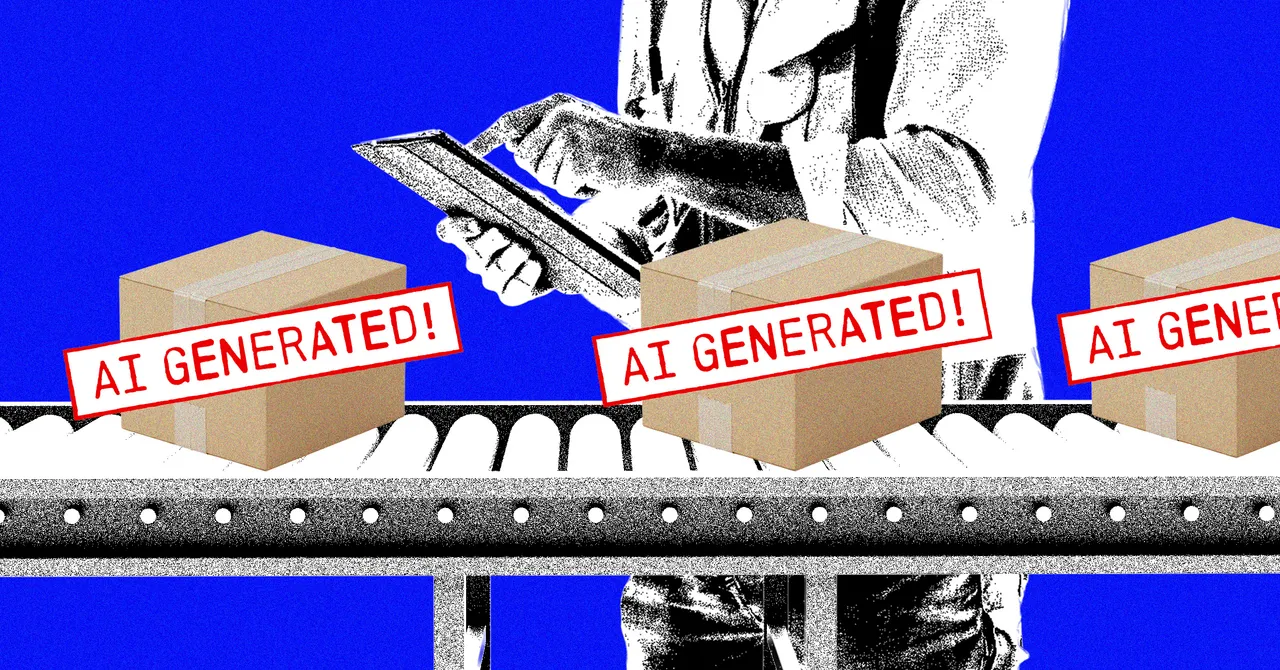
“AI slop” is the shorthand many critics use for low-quality, mass-produced synthetic content that floods platforms and degrades the experience for everyone else. The term has become popular because it captures both the visual sameness and the perceived disposable nature of a lot of generative output.
People are rejecting it for several reasons:
- It can be misleading, especially when synthetic visuals or text are presented as authentic.
- It often lowers the quality of feeds, search results and advertising.
- It can crowd out human-made work, making creative spaces feel less trustworthy.
- It frequently appears without clear consent from the people whose data or likeness was used.
The phrase has also become a cultural marker. Calling something AI slop is not just criticism; it signals that a growing share of users now sees synthetic content as clutter rather than novelty.
Why do users keep bringing up consent?
Because consent is the issue that ties many of these complaints together. Users object to their data being scraped for model training, to their images being used for deepfakes, and to AI responses being layered into tools they already depended on for other purposes.
The concern is not limited to individual annoyance. For many critics, the broader ethical problem is that powerful technology companies are making decisions that affect millions of people without giving them a meaningful say.
Broussard told WIRED that tech companies have historically been poor at respecting consent, and that the same pattern is visible in the AI era.
How are ads and marketing getting caught in the backlash?
They are getting caught because consumers increasingly notice when brands use generative AI in places where authenticity and emotional connection matter. Major companies have faced criticism for AI-made visuals in advertising, and smaller businesses have also heard complaints when they use synthetic posters to promote events.
The reaction suggests that audiences are not simply objecting to AI in abstract terms. They are also responding to aesthetics and trust. Many viewers can tell when an image feels synthetic, and that recognition can undercut the message the ad is trying to send.
For brands, the risk is straightforward: AI can make a campaign cheaper or faster, but it may also make it look cheap, lazy or fake. In a crowded attention economy, that can be worse than not advertising at all.
Data centers are becoming the physical face of AI resistance
While much of the backlash is visible online, another front is emerging around the infrastructure needed to power AI systems. Data centers have become a flash point because they bring the costs of generative AI into the physical world through land use, electricity demand, water consumption and noise.
Emily Bender, coauthor of The AI Con, says data centers matter because they concentrate both environmental and economic damage. That makes them easy to identify, organize around and protest.
Unlike invisible algorithmic systems, a data center is tangible. It can be seen, mapped and opposed by local residents who may not care about model benchmarks but do care about power lines, grid strain and neighborhood disruption.
Who is joining the protests?
Residents and activists from across the political spectrum have begun converging around opposition to new data center projects. That coalition is notable because it cuts across the usual partisan lines that often shape technology debates.
Some opponents focus on environmental harms. Others worry about rising utility costs, industrial sprawl or the way large tech firms can reshape local economies. The diversity of concerns suggests that AI infrastructure may become a durable political issue rather than a temporary nuisance.
Why workplace AI mandates are also fueling resistance
Resistance is not limited to consumers. It is also spreading among workers who say they are being pushed to use large language models whether or not those tools help them.
In the San Francisco tech scene, where AI adoption is often assumed to be part of the job, some employees still describe mandates to use AI as unrealistic or pointless. During layoffs earlier this year at Block, one employee said the company’s top-down push to use large language models felt unreasonable and implied that a useful tool would not need to be forced on people.
The larger workplace concern is that companies may adopt AI because it is fashionable, not because it is actually better. That creates resentment among employees who have to live with the consequences of rushed deployment, poor accuracy or extra oversight work.
For some workers, the fear is not only about job displacement. It is about being required to rely on a system they believe is flawed, ethically complicated or unreliable.
What changed from a few years ago?
The biggest change is that the public conversation has moved from curiosity to fatigue. Early AI discourse often emphasized wonder, productivity and futurism. Now, many people talk about spam, hallucinations, consent violations, copyright disputes and environmental strain.
That shift matters because public opinion can shape product design. Companies are sensitive to user outrage when it affects engagement, brand reputation or regulatory risk. As backlash grows, the AI products most likely to survive may be the ones that are more transparent, more limited and easier to avoid.
| Phase | Public mood | Typical AI use | Likely outcome |
|---|---|---|---|
| Early rollout | Curiosity and hype | Experimental features | Rapid expansion |
| Backlash phase | Fatigue and anger | AI in feeds, ads, search and work tools | Rollbacks and reporting tools |
| Adjustment phase | Cautious acceptance | Selective, opt-in uses | More guardrails and disclosure |
What does this mean for the future of generative AI?
It means the industry may be entering a period of constraint after several years of rapid expansion. The most optimistic AI promises still attract investment, but the public is increasingly forcing a second conversation about harms, limits and control.
That could lead to better disclosure rules, more robust opt-out systems and stricter limits on synthetic media. It could also slow the spread of AI features that companies once assumed people would simply accept.
At the same time, the backlash is unlikely to eliminate generative AI. The technology is already deeply embedded in major platforms, and companies have strong incentives to keep deploying it where possible. The question is not whether AI remains part of the digital landscape, but how aggressively it can be pushed before users push back hard enough to change the plan.
How can public pressure keep working?
Public pressure works best when it is specific, visible and sustained. Experts say people should keep complaining directly, sharing examples of harmful products and organizing through both online and traditional channels.
That approach has already helped force reversals. It may not stop the AI boom, but it can influence which features survive and which ones get quietly removed after public embarrassment.
Broussard encourages people to organize with both digital tools and traditional collective action, arguing that companies do respond when enough people make the cost of ignoring them too high.
The larger lesson is that the AI backlash is no longer just a mood. It is becoming a force that changes behavior. Companies that once assumed users would adapt to whatever they shipped are now discovering that some features are too invasive, too sloppy or too unwanted to survive first contact with the public.
Key developments at a glance
- Public frustration over generative AI is intensifying as users see it embedded in more products.
- Companies have begun rolling back or limiting some AI features after criticism.
- Consent, authenticity and data use are central to the backlash.
- Protests over data centers are adding a physical, local dimension to AI opposition.
- Workers are also resisting top-down mandates to use large language models.
For now, the most important shift may be psychological: the public is no longer treating AI expansion as inevitable. In some cases, that is enough to make companies blink.
Frequently asked questions
What is the AI backlash?
The AI backlash is the growing public resistance to generative AI appearing across apps, search, ads and workplace tools. It is driven by concerns about consent, low-quality synthetic content, data use, deepfakes and the environmental impact of the infrastructure behind AI systems.
Has public criticism of AI actually changed company behavior?
Yes. Public criticism has already prompted some companies to roll back or limit AI features, including Meta’s Instagram deepfake tool and Google’s AI editing feature in Google Earth. Other firms have added reporting or detection tools in response to user complaints.
Why are people calling some AI content ‘slop’?
People call it ‘AI slop’ because it often looks mass-produced, repetitive and low-value. The term is used to criticize synthetic posts, images and ads that clutter feeds, reduce trust and make online spaces feel less authentic or useful.
Why are data centers part of the AI backlash?
Data centers are part of the AI backlash because they are the physical infrastructure powering generative AI, and they can bring local costs such as electricity demand, water use, noise and land pressure. That makes them a visible target for environmental and community protests.