Updated August 5, 2026 3:25 pm
In short
Musk now spends about half his Tesla earnings-call remarks on AI, robotaxis and Optimus, while the company’s other executives are still catching up as Tesla’s car business faces tougher competition.
- Musk now spends about half his earnings-call remarks on AI, autonomy and robotaxis.
- Tesla still earns most of its revenue from car sales, making the narrative shift especially striking.
- Optimus has moved from a minor talking point in 2022 to a major theme in 2025.
- Other Tesla executives are also discussing AI more, but they remain more focused on cars than Musk.
- The change reflects Tesla’s push to be valued as an AI and robotics company, not just an automaker.
Update — August 5, 2026 3:25 pm
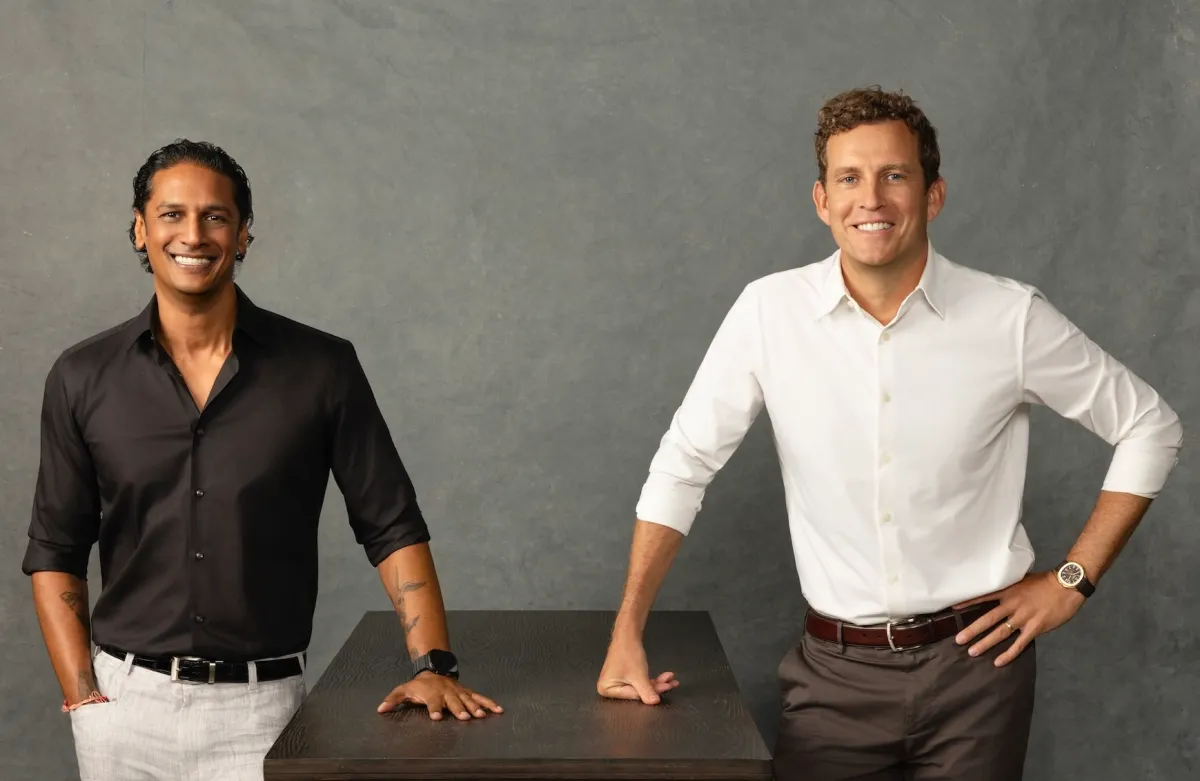
Tesla’s other top executives are still not leaning into AI and robotics as hard as Musk. On recent calls, CFO Vaibhav Taneja and engineering vice president Lars Moravy have spent about 30% of their remarks on the car business, with the rest increasingly split between AI, robotaxis and Full Self-Driving.
The updated source also sharpens the explanation for that imbalance: Tesla’s automotive business has been under more strain since 2024, as competition from legacy automakers and newer Chinese EV rivals intensified.
Even so, when these executives do talk about Tesla’s future, they now use much grander language, with Taneja describing the path ahead as difficult, nonlinear and ultimately expansive.
Update — August 4, 2026 6:28 pm
Tesla’s other top executives are still trailing Musk’s pivot toward AI and robotics. Chief financial officer Vaibhav Taneja and engineering vice president Lars Moravy now spend about 30% of their remarks on the automotive business on recent calls, while their remaining comments are increasingly split between AI, robotaxis and Full Self-Driving.
The story also adds a sharper explanation for why that shift is happening: Tesla’s car business has been under more pressure since 2024, when competition from established automakers and new Chinese EV rivals intensified. In that environment, the company’s leadership has spent less time defending vehicle sales and more time selling a future built around autonomy and humanoid robots.
Even when these executives echo Musk’s optimism, they now frame that future in unusually lofty terms, saying the path ahead will be difficult but ultimately expansive.
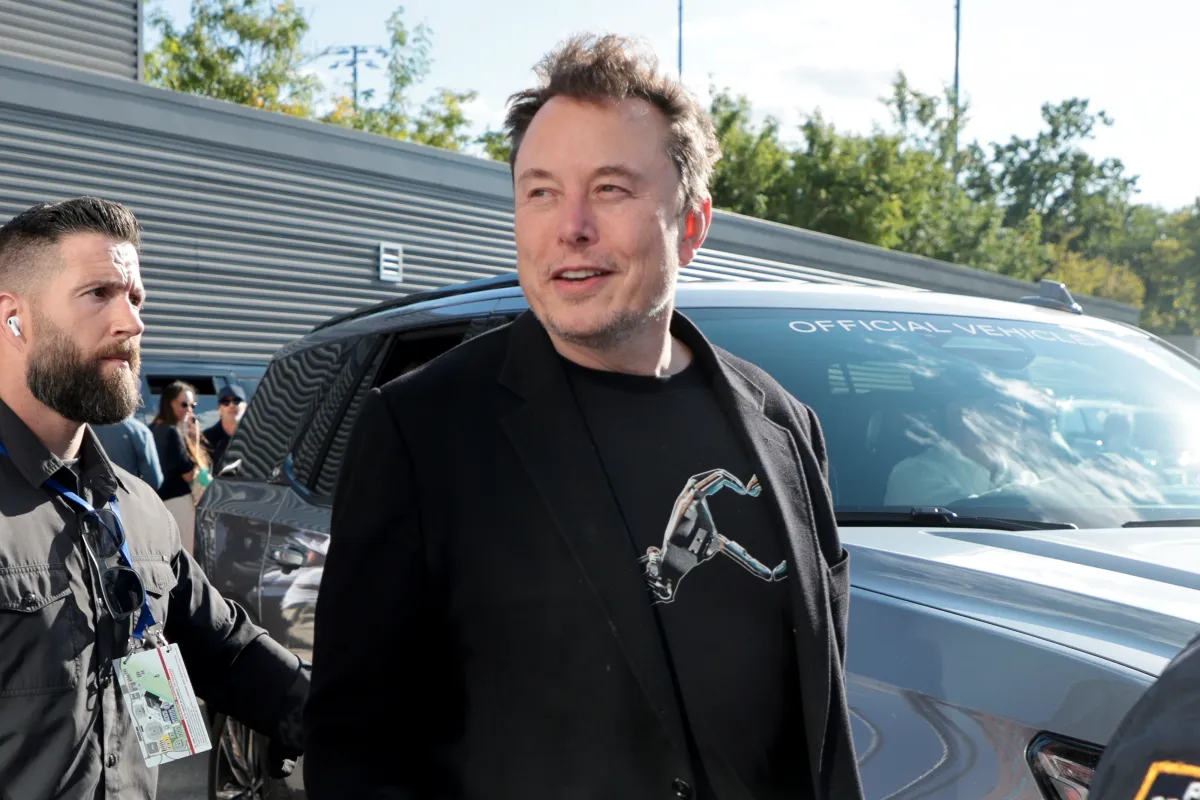
Elon Musk is spending far more of Tesla’s earnings calls talking about artificial intelligence, robotaxis and Optimus than about cars, even though the company still gets most of its revenue from vehicle sales. The shift matters because it shows how aggressively Musk is trying to redefine Tesla’s identity at a moment when its core auto business is under pressure.
New analysis of seven years of Tesla quarterly calls indicates that Musk now devotes about half of his remarks to AI-related topics, up from roughly 15% to 20% in 2022, as attention moves away from manufacturing and toward Tesla’s future bets on autonomy and robotics.
Tesla’s latest financial picture still looks overwhelmingly automotive. The company delivered nearly 500,000 vehicles in the most recent quarter and derived about 70% of its revenue from car sales, a reminder that the business remains grounded in the auto market even as Musk increasingly describes it as something bigger.
What changed in Tesla’s messaging?
Tesla’s public narrative has changed from a company that mainly sold electric vehicles into one Musk presents as an AI and robotics platform. The cars are still central to the balance sheet, but the language on earnings calls has moved toward a future built around software, self-driving systems and humanoid robots.
That evolution is not just anecdotal. TechCrunch worked with Hudson Labs, a New York financial research firm, to examine Tesla earnings calls from 2019 onward and measure which topics dominated the discussion. Using S&P Market Intelligence transcripts and an AI-assisted analysis tool, Hudson Labs assigned topics sentence by sentence and counted how often each theme appeared.
The result is a clear change in what Musk emphasizes when Tesla is under the microscope.
“If you value Tesla as just an auto company – fundamentally, it’s the wrong framework,” Musk said during Tesla’s first-quarter 2024 earnings call. “If somebody doesn’t believe Tesla is going to solve autonomy, I think they should not be an investor in the company.”
That argument has become a recurring one: Tesla’s market value, in Musk’s telling, should be judged not by traditional auto metrics but by the company’s potential to crack autonomy and turn that capability into a much larger business.
How much time does Musk spend on AI now?
He spends nearly half of his speaking time on earnings calls discussing AI, robotaxis and Full Self-Driving, according to the transcript analysis. In 2022, that figure was much lower, generally landing in the 15% to 20% range.
The difference reflects a real shift in priorities. Instead of focusing mainly on production volumes, margins, supply chains and factory execution, Musk now spends a much larger share of each call talking about the technologies he believes will transform Tesla’s future.
| Period | Main Musk focus on earnings calls | Approximate share of remarks | What it suggests |
|---|---|---|---|
| 2022 | AI, autonomy, Full Self-Driving | 15%–20% | Tesla still spoke mostly like a car company |
| 2024 | Autonomy as a valuation driver | Rising sharply | Musk framed Tesla less as a vehicle maker and more as a future tech platform |
| 2025 | AI, robotaxis, Optimus | Near 50% | Future products dominate the storyline |
Why Optimus became a bigger part of the story
Optimus, Tesla’s humanoid robot, has become one of Musk’s favorite talking points because it represents a high-upside vision that goes far beyond the auto market. Tesla first disclosed the project in 2021, but it barely registered in Musk’s remarks the following year.
In 2022, the robot accounted for about 2% or less of his speaking time on earnings calls. Over the past year, however, it has become a much larger theme, taking up at least 10% of his comments and nearly one-third of his remarks on Tesla’s third-quarter 2025 call.
That change is significant for investors because it shows where Musk thinks the long-term storytelling power lies. Optimus is not yet a meaningful revenue driver. Even so, it increasingly occupies the same stage as robotaxis and self-driving software, which Musk treats as the pillars of Tesla’s next act.
What Optimus represents for Tesla
Optimus represents the idea that Tesla can move from producing electric cars to building general-purpose machines that could eventually work in factories, warehouses or homes. It is a much more ambitious business case than selling cars, and it helps explain why Musk spends so much time on it in public.
- It broadens Tesla’s addressable market beyond transportation.
- It supports Musk’s claim that Tesla is an AI company, not just an automaker.
- It gives investors a future-facing narrative when car growth slows.
What happened to Tesla’s car business?
Tesla’s automotive business stopped growing at the same time Musk’s focus on futuristic products intensified. That timing matters: the company’s core car operation is still the main source of cash, but it is no longer the fast-growth story it once was.
As competition has increased from legacy automakers and newer Chinese electric vehicle makers, Tesla’s executives have had to spend more time defending the current business while Musk looks past it. On recent calls, he has spent less than one-third of his remarks on cars and manufacturing, and on one third-quarter call last year that share fell below 20%.
For a company that shipped nearly half a million vehicles in the latest quarter, that is a striking imbalance.
How the tone changed on earnings calls
The tone shifted from operational execution to future possibility. In earlier periods, Tesla’s leadership often focused on factory output, deliveries, margins and the mechanics of scaling production. Now, those issues are still present, but they are no longer the center of gravity.
This matters because earnings calls are not just financial check-ins. They are also an opportunity for management to shape investor expectations, explain strategic priorities and defend the company’s valuation. Musk appears to be using that platform to argue that autonomy and robotics should carry more weight than conventional auto metrics.
How are Tesla’s other executives talking?
They are following Musk’s lead, but more slowly. Tesla’s chief financial officer Vaibhav Taneja and vice president of engineering Lars Moravy still spend a larger share of their remarks on the auto business than Musk does, even as their comments increasingly touch on AI, robotaxis and Full Self-Driving.
On some of the most recent calls, they have spent roughly 30% of their time on automotive issues. That is lower than it used to be, when they devoted nearly half of their remarks — or more — to building and selling vehicles.
The difference between Musk and his lieutenants suggests that Tesla’s internal message is in transition, but not fully synchronized. Musk has moved fastest toward the AI-first narrative, while the rest of the leadership team still has to address the realities of a car company that remains responsible for most of the revenue.
Taneja described the company’s outlook on this year’s second-quarter call as a difficult but promising journey, saying the path to abundance would be challenging and that progress would not happen in a straight line.
Those remarks reflect a familiar Tesla pattern: bold promises paired with the acknowledgement that execution will be uneven. They also show how closely the leadership team now mirrors Musk’s language, even when the business fundamentals remain firmly tied to vehicles.
Why this matters for investors
The imbalance between Tesla’s financial reality and Musk’s preferred narrative is now one of the company’s defining tensions. Investors still have to evaluate Tesla as a business that makes and sells cars today, but they are also asked to value it like a future AI and robotics platform.
That can create a gap between what the company is and what Musk says it is becoming. If autonomy and robotics deliver, the upside could be enormous. If they lag, the car business may not be enough to justify the lofty expectations attached to Tesla’s stock.
The issue is not simply that Musk talks about the future. It is that he now spends so much of Tesla’s flagship financial forum making the future the central argument for the company’s worth.
Three investor questions raised by the shift
- Can Tesla’s AI and robotics efforts become profitable quickly enough to matter? That remains unclear, and the projects are still early compared with the scale of the auto business.
- Will the car business stabilize while Tesla invests in new bets? Competition is intensifying, which makes that harder.
- Does the market still value Tesla like a carmaker or a tech company? Musk clearly wants the latter, but the company’s current revenue mix still looks like the former.
What the transcript analysis reveals about Tesla’s evolution
The most striking thing in the data is not that Musk talks about AI. It is that the share of time devoted to these themes has risen so quickly that it now competes with the company’s historical core. In just a few years, a set of ideas once treated as side projects has become the main event on Tesla’s calls.
This kind of evolution often happens when companies try to reposition themselves for the next phase of growth. At Tesla, though, the pivot is unusually dramatic because it is happening while the original business still dominates the income statement. That makes the message both ambitious and controversial.
There is also a broader business lesson here. Companies often tell investors who they want to be, not just who they are. Tesla’s call transcripts show Musk doing that with unusual force, leaning on AI, autonomy and robotics to reset expectations around a company many people still think of first as a carmaker.
How Tesla compares with a traditional automaker
Tesla is still structured like an auto company in many ways, but its public framing now resembles a technology platform pitch. The contrast becomes clear when you compare the business pillars investors usually expect from a carmaker with the themes Musk is emphasizing.
| Traditional automaker focus | Tesla under Musk’s current pitch |
|---|---|
| Vehicle production and deliveries | Robotaxis and autonomous driving software |
| Factory efficiency and margins | AI systems and data advantages |
| Model refreshes and sales growth | Optimus and robotics |
| Dealer networks and inventory | Long-term platform economics |
What comes next for Tesla’s story?
What comes next depends on whether Tesla can turn its futuristic ambitions into measurable business results. Musk has spent years arguing that autonomy will justify the company’s valuation, but the projects that dominate the conversation still need to prove themselves outside of earnings-call theater.
If robotaxis, Full Self-Driving and Optimus begin to generate meaningful returns, Musk’s messaging will look prescient. If not, the company may face more pressure to explain why so much attention is being pulled away from the business that currently pays the bills.
For now, the data suggests a simple conclusion: Musk is steadily recasting Tesla as an AI and robotics company, even though the company’s financial engine still runs on cars. That mismatch is now one of the most important things to watch in every Tesla earnings call.
Timeline: Tesla’s narrative shift over seven years
| Year | What stood out on calls | Why it mattered |
|---|---|---|
| 2019–2020 | Cars, production, scaling | Tesla was still mainly presented as an automaker |
| 2021 | Optimus is introduced | A robotics narrative enters the mix |
| 2022 | AI and autonomy rise modestly | Future-tech themes start to take up more space |
| 2024 | Autonomy becomes a valuation argument | Musk increasingly rejects the auto-company label |
| 2025 | AI, robotaxis and Optimus dominate | The company’s public story is now led by its moonshots |
For Tesla, the earnings call is no longer just a place to explain quarterly results. It has become the stage on which Musk argues that the company’s future is bigger than its present — and perhaps bigger than the car business that still pays for most of it.
Frequently asked questions
Is Tesla still a car company?
Yes, Tesla is still a car company in financial terms. It shipped nearly half a million vehicles in the latest quarter and generated about 70% of its revenue from car sales, even as Elon Musk increasingly presents it as an AI and robotics business.
How much time does Elon Musk spend talking about AI on Tesla earnings calls?
Musk now spends nearly half of his speaking time on AI-related topics, including autonomy, robotaxis and Full Self-Driving. That is a sharp increase from 2022, when those subjects typically accounted for only about 15% to 20% of his remarks.
Why is Optimus becoming more important to Tesla’s story?
Optimus matters because it gives Tesla a much larger future market than cars alone. The humanoid robot is still early-stage, but Musk uses it to support the argument that Tesla should be valued as a robotics and AI company.
What does the shift in Tesla’s earnings calls mean for investors?
It means investors are being asked to judge Tesla on future autonomy and robotics potential, not only on today’s auto business. That could support a higher valuation if the projects succeed, but it also raises risk if those bets take longer to pay off.
How did researchers measure Tesla’s topic shift?
Researchers reviewed Tesla earnings-call transcripts from 2019 onward, used an AI tool to classify each sentence by topic, and then counted how often Musk and other executives discussed cars, AI, robotaxis and robotics over time.