In short
OpenAI says it will spend $750 billion on infrastructure through 2030, with a $20 billion Georgia data center campus serving as the first major piece of the plan. The project highlights how AI competition is increasingly being decided by access to power, land and utility-scale construction.
- OpenAI’s infrastructure plan has grown to $750 billion through 2030.
- The first major project is Project Camellia, a $20 billion data center campus in Georgia.
- The site is expected to need at least 3.2 gigawatts of power and may reduce demand during peak periods.
- Georgia Power’s capacity expansion and fuel mix suggest natural gas will supply much of the added electricity.
- The project raises environmental, regulatory and local tax questions as AI infrastructure scales up.
OpenAI says it plans to spend $750 billion on infrastructure through 2030, a figure that is roughly 25% higher than the company’s earlier estimate and underscores how aggressively the AI leader is scaling its compute ambitions. The first major piece of that spending is a $20 billion data center campus in Georgia, a project that could become one of the most important new power-and-infrastructure builds in the United States.
The plan matters because it shows how far the AI race has moved beyond software and model releases. OpenAI is now betting on massive physical infrastructure, long-term utility contracts, and local tax incentives to secure the electricity and land needed to keep its systems running at industrial scale.
The new spending projection comes as OpenAI’s much-discussed Stargate data center initiative appears to have slowed, raising questions about whether the company is shifting from one mega-project to a broader, more distributed buildout strategy. The Georgia campus, known as Project Camellia, is the clearest early sign of that pivot.
What OpenAI is building in Georgia
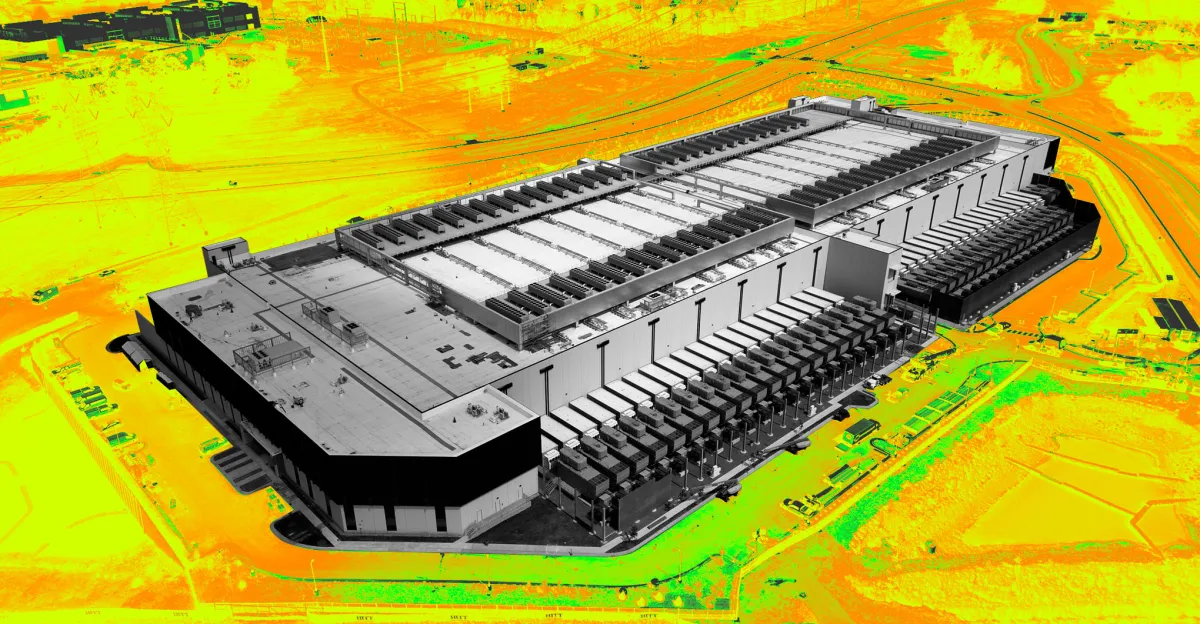
Project Camellia is a proposed $20 billion data center campus planned for 1,400 acres northwest of Savannah. If completed as described, the site would draw at least 3.2 gigawatts of power from Georgia Power, the region’s major utility, making it one of the largest single energy loads tied to an AI project anywhere in the country.
OpenAI says it will cover the full cost of the infrastructure and the electric-service expenses associated with the campus. That commitment is important in Georgia, where regulators recently moved to stop utilities from shifting the costs of large new power users onto ordinary customers.
The Georgia Public Service Commission adopted a rule last year to ensure utility ratepayers are not forced to subsidize the infrastructure needs of customers that require more than 100 megawatts of power. That threshold is far below the scale OpenAI is talking about in Effingham County.
How much power will the site need?
The short answer is a lot: at least 3.2 gigawatts, with the potential to reduce demand by as much as 1 gigawatt during periods of peak grid stress. That is a level of consumption comparable to a large city or multiple industrial facilities combined, and it highlights how energy-intensive frontier AI has become.
Georgia Power has said the OpenAI site would be able to cut back during times of high demand, suggesting the utility is trying to balance the project’s scale with grid reliability concerns. The exact power source for the campus has not yet been disclosed.
| Key detail | Project Camellia / OpenAI plan |
|---|---|
| Announced infrastructure spending | $750 billion through 2030 |
| Early project cost | $20 billion |
| Location | Northwest of Savannah, Georgia |
| Site size | 1,400 acres |
| Initial power demand | At least 3.2 gigawatts |
| Grid flexibility | Up to 1 gigawatt reduction at peak demand |
| Tax incentive | 50% property tax abatement for 15 years |
| Expected utility power availability | Between 2028 and 2032 |
Why the project is drawing so much attention
OpenAI’s spending target is not just large; it is extraordinary even by the standards of the current AI boom. A $750 billion infrastructure commitment suggests a company preparing for a future in which compute capacity, not just model quality, determines competitive advantage.
That scale also places OpenAI in the same league as major utilities, hyperscale cloud operators, and national industrial programs. The company’s needs could influence where power plants are built, how quickly transmission is expanded, and whether states can attract advanced-compute projects without straining local grids.
The Georgia announcement has also become notable because it sits against a backdrop of delays around Stargate, the separate and highly ambitious data center effort that had been expected to symbolize OpenAI’s infrastructure push. If Stargate has stalled, Project Camellia may represent the company’s more practical near-term path: secure land, lock in power, and begin construction in a place willing to compete for investment.
How did Georgia win the deal?
Georgia appears to have offered a combination of grid access, regulatory clarity and tax relief. Effingham County approved a 50% property tax abatement for 15 years, according to local reporting, which would lower the tax burden on the project during its buildout and early operations.
At the same time, state regulators and Georgia Power have been preparing for a wave of new industrial demand. In December, the utility received approval to add 9,885 megawatts of capacity, and it told regulators that much of that supply would likely already be spoken for by the end of 2026.
OpenAI’s project alone would account for roughly one-third of that newly approved capacity, showing how large a single AI campus can be relative to an entire utility expansion plan.
What will power OpenAI’s new campus?
OpenAI and Georgia Power have not publicly said what generation mix will feed Project Camellia. But the filings Georgia Power has submitted to the Public Service Commission offer strong clues about where the utility expects new electricity to come from.
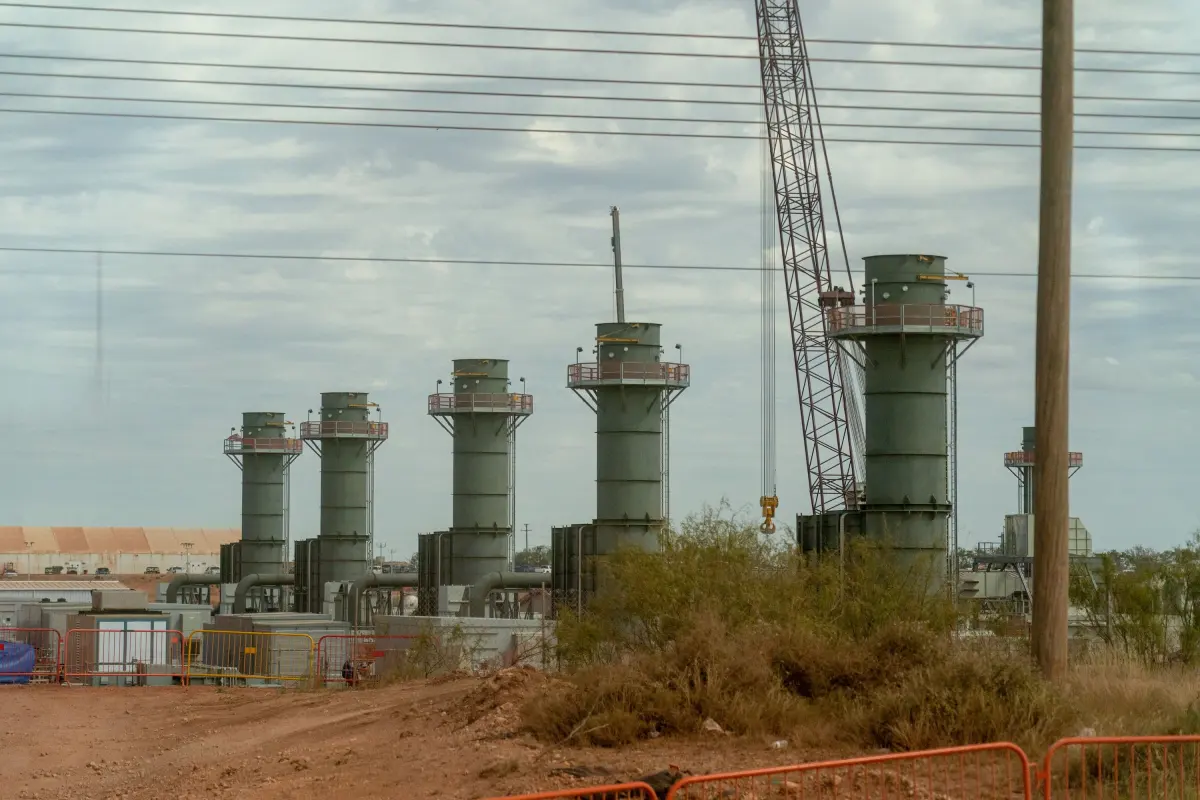
Most of the added supply is expected to come from natural gas. Georgia Power has said it will build or buy about 5.8 gigawatts of natural gas generation from third parties, and roughly a quarter of that total would come from simpler, more polluting turbines that can be brought online relatively quickly.
Taken together, the planned fossil-fuel additions would more than double the utility’s natural gas fleet. The rest of the planned capacity would be supplied by grid-scale batteries and solar, reflecting the state’s effort to pair fast-growing demand with some cleaner resources.
OpenAI has said it will pay the full cost of the infrastructure and electric-service requirements tied to the campus, a promise designed to reassure regulators and local residents that existing customers will not shoulder the expense.
The timing of that power buildout matters. Georgia Power expects electricity from the new capacity to begin flowing in 2028, but the company has not said when the first GPU at the site will turn on. That leaves open the possibility that construction or phased deployment could begin before the utility’s full expansion is complete.
How fast could OpenAI move?
OpenAI has not offered a firm timeline for when the first systems at Project Camellia will be operational. Even so, recent hiring suggests the company may want to move faster than the utility timetable alone would imply.
The company recently hired Brett Mayo to lead data center construction. Mayo previously worked at xAI, where he oversaw the Colossus data center in Memphis, a facility that became known for being assembled at remarkable speed.
That background is significant because the AI industry is increasingly treating data center delivery like a race. The company that can secure land, power, equipment and permits first may gain a meaningful edge in training and deploying the next generation of models.
Why does Brett Mayo’s hire matter?
Mayo’s experience matters because he has already helped build an AI-focused compute campus under intense time pressure. His move to OpenAI suggests the company is leaning on executives with direct experience in massive, high-speed infrastructure projects rather than traditional data center development alone.
It also hints that OpenAI may be preparing to turn the Georgia campus into a repeatable template for future sites, especially if the company plans to spread its infrastructure investments across multiple regions rather than rely on a single flagship project.
What risks come with a project this large?
The biggest risks are power, permitting, local impacts and transparency. A campus requiring gigawatts of electricity can reshape utility planning for years, while also raising concerns about air emissions, water use, land conversion and whether promised economic benefits will match the scale of public incentives.
Those concerns are not theoretical. The wider AI infrastructure boom has already sparked debates over whether the rush to build can outpace environmental review and community oversight. The Georgia project is entering that conversation at a time when regulators are especially attentive to who pays for the grid upgrades needed to support large industrial users.
There is also a reputational issue for OpenAI. The company is widely seen as a symbol of the AI boom, so its infrastructure choices are likely to be scrutinized not just as business decisions but as signals about the broader direction of the industry.
How does xAI’s Colossus fit into the story?
xAI’s Colossus project is a cautionary example because it demonstrates both the speed and the environmental trade-offs of building AI infrastructure quickly. The Memphis facility was erected in record time, but it has also been tied to controversy over air quality and the use of natural gas turbines.
According to a lawsuit filed by the NAACP and the Southern Environmental Law Center, the site has operated dozens of unpermitted gas turbines and relied on an exemption from federal clean air rules. That litigation has turned Colossus into a case study in what can go wrong when AI infrastructure scales faster than regulatory systems.
OpenAI’s hire of a former Colossus executive may therefore raise expectations that it can build quickly, but it may also prompt questions about whether the same speed-first approach could create similar tensions in Georgia.
Timeline of OpenAI’s latest infrastructure push
The company’s latest plans can be easier to understand when viewed as a sequence of financing, utility preparation and project announcements.
| Date | Event | Why it matters |
|---|---|---|
| Last year | Georgia PSC adopts cost-protection rule | Prevents utilities from passing large-user costs to ratepayers |
| December | Georgia Power wins approval for 9,885 MW of new capacity | Creates room for major new industrial loads |
| Earlier in 2026 | OpenAI reportedly revises infrastructure spending estimate upward | Signals a more aggressive capital strategy |
| July 22, 2026 | OpenAI’s $750 billion spending plan becomes public | Confirms a massive expansion in infrastructure ambitions |
| Current phase | Project Camellia advances in Georgia | Becomes the first major visible build in the new spending push |
What this means for the AI industry
OpenAI’s plan reinforces a simple reality: the AI leaders of the next decade may be the companies that can secure the most power, not just the best models. Training frontier systems and serving millions of users requires enormous compute infrastructure, and that infrastructure must be fed by reliable electricity, cooling systems and transmission capacity.
If OpenAI follows through on the $750 billion figure, it would help normalize infrastructure spending at a scale that used to be associated with national transportation systems, energy corridors or heavy industry. That could accelerate competition among utilities, states and AI firms as each tries to secure the limited resources needed for large-scale compute.
For communities, the upside could include construction jobs, long-term investment and tax revenue. The downside could include dependence on one large employer, pressure on local power systems and debate over whether public subsidies are sufficiently balanced by public benefit.
For regulators, the project is another test of whether existing rules can handle the AI era. The core question is no longer whether a company can build a data center, but whether governments can manage the environmental and economic consequences of a data center that consumes power on the scale of a small region.
Bottom line
OpenAI’s $750 billion infrastructure pledge, paired with the $20 billion Project Camellia campus in Georgia, marks one of the clearest signs yet that the AI race has entered a heavy-industry phase. The company is no longer just trying to train better models; it is trying to secure the physical foundation that will make those models possible at scale.
Whether the plan becomes a blueprint for the future of AI infrastructure or a cautionary tale about overreach will depend on how quickly OpenAI can build, how reliably Georgia can supply power, and how well the project navigates environmental and community concerns along the way.
Either way, the size of the commitment ensures that the economics, energy policy and politics of AI will remain tightly linked for years to come.
Frequently asked questions
How much is OpenAI planning to spend on infrastructure?
OpenAI is planning to spend $750 billion on infrastructure through 2030. The figure is about 25% higher than the company’s earlier estimate and reflects a major expansion in its data center and power ambitions.
What is Project Camellia?
Project Camellia is OpenAI’s planned $20 billion data center campus in Georgia. The site would cover 1,400 acres northwest of Savannah and is expected to draw at least 3.2 gigawatts of power from Georgia Power.
When will OpenAI’s Georgia data center get power?
Georgia Power expects electricity from its expanded generation mix to begin flowing in 2028, with full capacity arriving between 2028 and 2032. OpenAI has not said when the first GPU at the campus will go live.
Why is the Georgia project important?
The Georgia project is important because it shows how AI companies are competing for power and infrastructure at utility scale. It also raises questions about who pays for grid upgrades, what fuels will supply the electricity and how quickly such projects can be built.
Will OpenAI’s data center affect local taxpayers?
OpenAI says it will pay the full cost of infrastructure and electric-service expenses, which is intended to protect regular utility customers. The project also received a 50% property tax abatement for 15 years from Effingham County.