In short
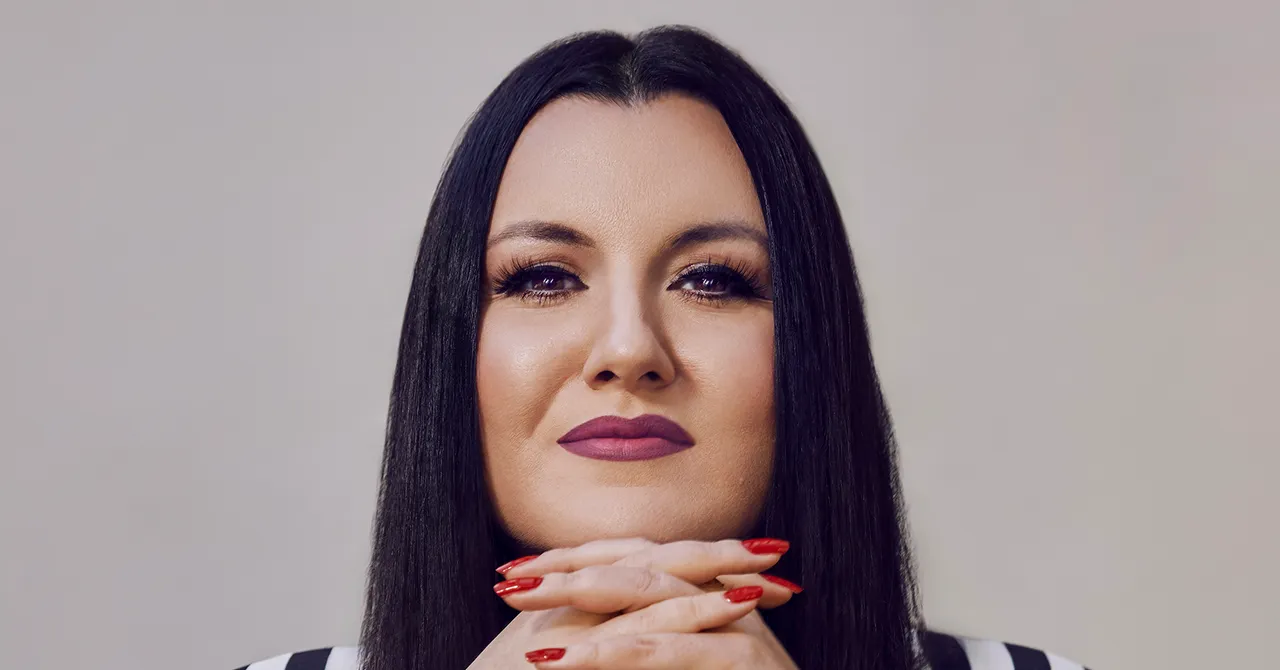
Fidji Simo is stepping away from her full-time OpenAI role and becoming a part-time adviser after medical leave for a chronic illness. The move comes as OpenAI reorganizes its leadership and pushes ChatGPT toward a more powerful agent-based product.
- Fidji Simo is leaving her full-time OpenAI role and shifting to part-time advising.
- Her departure follows medical leave for a worsening chronic neuroimmune condition.
- OpenAI is reorganizing leadership while focusing on a smaller set of core products.
- The company also unveiled a major ChatGPT update with agent capabilities and a redesigned desktop app.
OpenAI’s chief executive of AGI deployment, Fidji Simo, is leaving her full-time role and moving into a part-time advisory position after taking medical leave for a worsening chronic neuroimmune condition. The change matters because Simo has been central to OpenAI’s product and business push at a moment when the company is racing to simplify its leadership structure and prepare for a possible 2027 IPO.
Simo’s departure from day-to-day work adds another significant turn to a year of leadership shifts inside the AI company. OpenAI has been reorganizing around a smaller set of flagship products, tightening oversight of ChatGPT and adjacent tools, and sharpening its focus on monetization as it pursues a much larger valuation and a future public listing.
The company’s newest product move arrived on the same day: a major ChatGPT upgrade that adds an agent able to perform tasks on a user’s behalf, including handling local files and writing code. Together, the leadership change and product launch highlight how aggressively OpenAI is trying to move from research-era experimentation to a more mature, platform-style business.
What happened to Fidji Simo at OpenAI?
Simo is stepping down from her full-time OpenAI responsibilities and will continue in a part-time advisory capacity. The transition follows months away from the company after a medical leave tied to a chronic illness that she said recently became more severe.
In a post on X, Simo explained that she had been forced to pause work after a serious flare-up of a long-running neuroimmune condition. She said the recovery path turned out to be longer and more complicated than expected, and that she needed to concentrate fully on treatment.
Simo said that a severe exacerbation of her chronic illness forced her to take medical leave, and that it became clear recovery would require more time and attention than she had originally hoped.
In a memo to employees earlier in the year, she said she had delayed medical tests and new therapies in order to stay fully engaged at work. That approach, she later acknowledged, had gone too far and made it necessary to try new interventions to stabilize her condition.
Why does Simo’s exit matter for OpenAI?
Her move matters because Simo was hired to help OpenAI turn advanced AI research into products and revenue at scale. She was one of the executives expected to bring consumer-platform discipline to a company still defined in public by its technical ambitions.
Before joining OpenAI’s executive ranks, Simo was already familiar with managing large consumer businesses. She led Instacart as CEO and previously ran the Facebook app at Meta, experience that made her a strong fit for OpenAI’s push beyond lab breakthroughs and into everyday software used by millions.
At OpenAI, she had been overseeing the product and business organizations while chief executive Sam Altman concentrated on research and the company’s capital-intensive data center buildout. That division of labor reflected how much OpenAI had grown: it was no longer only an AI research leader, but also a large-scale platform operator with a fast-expanding commercial footprint.
How did her role fit into OpenAI’s broader strategy?
Her role fit into a strategy designed to make OpenAI look more like a durable consumer technology company. The company has been narrowing its product priorities, connecting more of its AI tools into a unified experience, and reducing attention on side projects that do not align with its core roadmap.
Simo’s background in product execution and monetization made her an important bridge between OpenAI’s model-building core and its business ambitions. Her exit from full-time work does not change the fact that OpenAI is trying to become a mainstream software business, but it does remove one of the leaders most closely associated with that transition.
Who is Fidji Simo?
Simo is a veteran consumer-tech executive whose career spans two of the most influential companies in digital media and software. She was the CEO of Instacart before moving to OpenAI, and earlier in her career she led the Facebook app at Meta, where she helped shape one of the world’s most used consumer products.
She joined OpenAI’s board in March 2024, then was brought into an executive role the following year. The company appeared to value both her operational experience and her understanding of large-scale consumer engagement, two traits increasingly relevant as OpenAI tries to convert its popularity into a broader business platform.
Her appointment also signaled that OpenAI wanted leadership with experience in running products used by enormous audiences, not just in building cutting-edge AI systems. That made Simo especially relevant as the company refined ChatGPT into a central gateway for a wider suite of AI-powered tools.
How OpenAI’s leadership has shifted around Simo’s leave
Simo’s medical leave arrived alongside a wider executive restructuring. OpenAI shifted Brad Lightcap, then its chief operating officer, into oversight of special projects. Greg Brockman, OpenAI’s president and cofounder, assumed responsibility for product strategy.
Since Simo stepped back, the company has continued reorganizing its product teams. Thibault Sottiaux was positioned to lead core products, including ChatGPT, as OpenAI tightened management around its most important revenue and engagement engines.
That consolidation reflects a classic late-stage company move: as a business grows, it often pulls decision-making closer to a smaller leadership group and gives extra weight to the products most likely to drive near-term value.
| Milestone | Timing | Why it mattered |
|---|---|---|
| Simo joins OpenAI board | March 2024 | Marked the start of her formal involvement with the company |
| Simo takes executive role | 2025 | Put her in charge of product and business operations |
| Medical leave begins | April 2026 | Signaled a pause in her day-to-day leadership duties |
| Part-time advisory transition | July 2026 | Ends her full-time operational role while keeping her connected to the company |
| Major ChatGPT update | July 2026 | Shows OpenAI accelerating product integration and agent capabilities |
What is OpenAI trying to become?
OpenAI is trying to become a smaller-number-of-products, higher-value company with a strong path to the public markets. According to reporting around its internal plans, the firm is aiming for an IPO that is now expected in 2027 and is targeting a valuation near $1 trillion.
That ambition helps explain why the company has been pruning experiments and merging overlapping teams. OpenAI has brought together work on ChatGPT, its AI browser, and its AI coding agent in an effort to build what executives see as a broader superapp-like experience.
The strategy also appears to involve dropping projects that do not serve the core platform vision. OpenAI has already shut down some of its more distant bets, including Sora, as it concentrates resources on products with clearer user demand and commercial potential.
Why is the superapp idea important?
The superapp idea is important because it suggests OpenAI wants users to live inside one connected environment rather than move among separate tools. In practical terms, that means chat, search-like assistance, coding, file handling, and browser functions can be stitched together into a single product experience.
For OpenAI, the advantage is obvious: the more tasks ChatGPT can complete, the more often users may rely on it, and the more opportunities the company has to justify subscriptions, enterprise contracts, and future platform revenue.
What changed in ChatGPT on Thursday?
OpenAI introduced what it described as the biggest ChatGPT product update since the chatbot first launched. The new version includes an AI agent designed to take actions for users, such as moving files on a local machine and generating code, and it also introduces a redesigned desktop app interface.
The update brings capabilities into ChatGPT that had previously been more closely associated with Codex, OpenAI’s coding-focused tool. In effect, the company is blending more of its product surface area into one place, which is consistent with its effort to create a more comprehensive AI workspace.
OpenAI appears to be betting that users want not just conversation, but execution. The promise of an agent is that it can do something on a person’s behalf, not merely suggest the next step.
How does the new agent change the product?
The new agent changes the product by shifting ChatGPT from a helpful responder to a more active assistant. Instead of only drafting text or answering questions, it can interact with files and software tasks, moving closer to a digital co-worker than a simple chatbot.
That transition is likely to matter both for consumers and for developers. Consumers may see fewer friction points when using AI for work, while developers may find the platform more attractive for building custom workflows and software projects on top of OpenAI’s tools.
Why is this happening now?
This is happening now because OpenAI is under pressure to turn momentum into structure. The company has become one of the most watched technology firms in the world, but attention alone does not guarantee long-term staying power. To support a possible IPO, it needs clear leadership, disciplined product lines, and a story investors can understand.
Simo’s move to an advisory role fits that larger reality. OpenAI can maintain continuity and benefit from her perspective without asking her to carry the demands of a full-time operating role while she focuses on recovery.
The timing also shows how hard OpenAI is pushing its product roadmap. While leadership is changing, the company is still shipping major features and folding more capabilities into ChatGPT. That suggests the organization is determined not to let internal transitions slow external execution.
How OpenAI’s product focus has narrowed
OpenAI has been moving away from a portfolio of loosely connected experiments and toward a tighter set of core bets. The company now seems intent on making ChatGPT the center of gravity for nearly everything it ships.
- ChatGPT remains the flagship consumer product.
- The AI coding experience is being pulled closer to the main app.
- The browser effort is being integrated into the broader platform vision.
- Less central projects are being wound down.
That pattern is typical of companies preparing for scale. Investors tend to favor clarity over sprawl, especially when a company is hoping to support an unusually large valuation. For OpenAI, every product decision now carries strategic weight beyond the feature itself.
What Simo’s departure says about AI leadership today
Simo’s departure is a reminder that leadership in AI companies is not only about technical vision. It is also about stamina, operational management, and the ability to absorb relentless pressure during a period of extraordinary product and financial expansion.
Top AI firms have become some of the most demanding workplaces in technology because they combine high-stakes research, fast product cycles, huge infrastructure spending, and constant public scrutiny. In that environment, executive health and organizational resilience can become part of the business story.
Simo’s case also shows how quickly AI companies are borrowing from traditional tech playbooks. They are building platform ecosystems, centralizing product decisions, and trying to create consumer habits around a few dominant interfaces. OpenAI’s latest moves fit that pattern closely.
What happens next for OpenAI?
OpenAI now faces two overlapping tests: sustaining product momentum and proving that its leadership structure can support larger ambitions. The company needs ChatGPT to keep growing in usefulness while the broader organization stays focused on the business fundamentals required for a public-market debut.
With Simo shifting to part-time advisory work, OpenAI loses a full-time executive who brought deep consumer-product experience. But the company does not appear to be slowing down. Instead, it is compressing around its most important bets, which could make it more efficient, but also more dependent on a smaller group of leaders.
For users, the immediate story is the new ChatGPT agent and the app redesign. For OpenAI, the bigger story is whether it can continue turning technical breakthroughs into a coherent, profitable consumer platform while managing the personal and organizational strain that comes with scale.
| OpenAI focus area | Current direction | Business significance |
|---|---|---|
| ChatGPT | Expanding into an action-taking agent | Core user product and likely revenue driver |
| Desktop app | Redesigned interface | Improves usability and supports broader adoption |
| AI coding tools | More deeply integrated into ChatGPT | Increases platform stickiness for technical users |
| Side projects | Reduced or shut down | Frees resources for core products and IPO readiness |
In the fast-moving AI market, leadership changes and product launches are often treated as separate headlines. At OpenAI this week, they are part of the same story: a company reorganizing itself around the reality that the next phase of AI will be judged not only by model quality, but by how effectively it can be packaged, delivered, and used at scale.
Frequently asked questions
Why is Fidji Simo leaving OpenAI’s full-time role?
She is leaving full-time work because a chronic neuroimmune illness worsened and required a longer, more serious recovery than she expected. Simo said she needed to focus on treatment and stabilization rather than continue in a demanding operational job.
What role will Fidji Simo have at OpenAI now?
She will become a part-time adviser. That arrangement keeps her connected to the company while removing the burden of day-to-day leadership duties during her recovery.
Who is running OpenAI’s product strategy now?
OpenAI president and cofounder Greg Brockman took over product strategy after Simo stepped back. The company also reorganized product leadership further, including placing Thibault Sottiaux in charge of core products such as ChatGPT.
What is OpenAI’s latest ChatGPT update?
OpenAI released a major ChatGPT update that adds an AI agent capable of taking actions for users, including working with local files and writing code. The company also redesigned the desktop app to support a more integrated experience.
How does this fit OpenAI’s business plans?
It fits a broader strategy to concentrate on a small number of high-value products ahead of a possible 2027 IPO. OpenAI is trying to make ChatGPT the center of a wider platform while trimming side projects that do not support that goal.