Updated July 10, 2026 1:50 pm
In short
Character.AI is launching interactive AI microdramas, starting with three adult-only series, while planning to open the format to outside creators later.
- c.ai Series introduces short, vertical, animated dramas that users can watch and then discuss with characters.
- The first three titles launch with 10 episodes each, with the final two episodes behind a paywall.
- Character.AI says the shows were built by a human-led studio using AI tools, not generated by prompts alone.
- The company is limiting chat features to adult users at launch and keeping younger users out of the interactive layer.
- The move is part of Character.AI’s strategy to become a broader entertainment platform, not just a chatbot app.
Update — July 10, 2026 1:50 pm
Character.AI says it now plans to let outside creators make their own original microdramas with its AI tools, extending c.ai Series beyond the company’s first three in-house shows.
The company also says the launch will use hard age verification and be limited to adults at first. Younger users may later be able to watch the episodes, but they still will not be allowed to chat with the Series characters.
Karandeep Anand also said Character.AI avoided third-party video models to keep the visuals and tone consistent across scenes.
Update — July 9, 2026 4:49 pm
Character.AI says c.ai Series will eventually open the door to creator-made microdramas, not just the company’s own shows. It plans to let outside creators use its AI tools to build original episodic videos.
The company also said it is using hard age verification at launch, with Series limited to adults for now. Younger users may later be able to watch the episodes, but they still won’t be able to chat with the characters.
CEO Karandeep Anand also drew a sharper line on how the videos are made, saying the company kept production in-house to preserve visual and tonal consistency rather than relying on third-party video models.
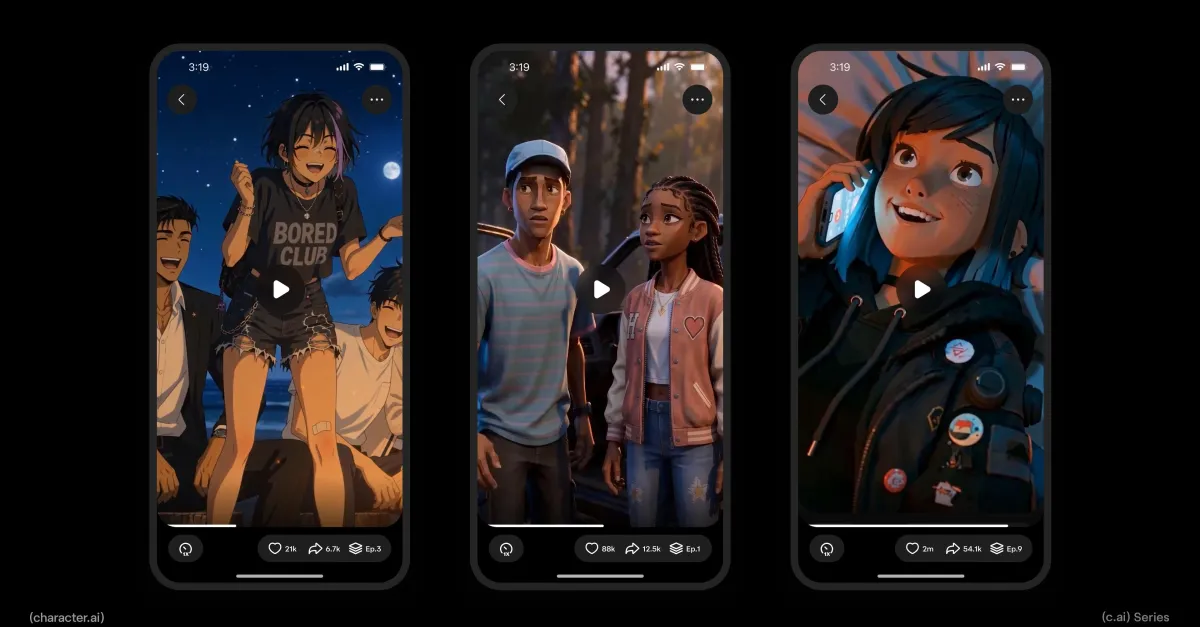
Character.AI has launched c.ai Series, a new lineup of short, vertical, interactive videos that blend AI-generated animation with after-the-episode chat features. The move marks a major step beyond chatbots for the company, which is trying to turn its fandom-driven platform into a broader entertainment destination at a time when microdramas are becoming one of the fastest-growing areas in digital video.
The new format arrives on July 9, 2026, with three original series, each built around an episodic storyline, limited free access, and premium episodes locked behind a paywall. Character.AI says the project is meant to feel like a natural extension of how its users already engage with fictional characters, but it also places the company squarely inside a booming, highly competitive vertical-video market.
For Character.AI, the launch is more than a content experiment. It is an attempt to expand monetization, deepen engagement, and prove that AI can be used to produce serialized entertainment that feels coherent, watchable, and interactive without collapsing into the kind of low-effort output critics often associate with generative media.
What Character.AI is launching
Character.AI is introducing c.ai Series, a set of bite-size animated dramas designed specifically for phones. Each episode is short, vertically formatted, and built to be watched quickly before users can interact with the characters afterward.
Unlike the live-action microdramas that have exploded across apps such as ReelShort and DramaBox, Character.AI’s version is animated and heavily reliant on generative AI. The company is positioning the format as a hybrid between entertainment and conversation: users can watch a story unfold, then move into a chat experience that lets them roleplay with the characters or continue the narrative in a more personal way.
The launch adds another layer to a platform that already centers on user imagination, fandom, and interactive dialogue. Character.AI has previously leaned into books, comics, and audio storytelling. c.ai Series is its most ambitious effort yet to tie those formats together into a repeatable entertainment product.
Why microdramas matter now
Microdramas have become a major business opportunity because they are optimized for mobile viewing, quick consumption, and recurring spending. Character.AI is entering the space as projections point to the market reaching roughly $26 billion in the coming years, creating strong incentives for platforms that can deliver serialized content cheaply and at scale.
The broader trend has already attracted television companies, entertainment studios, and app developers eager to capture short-form audiences that are comfortable with cliffhangers, fast pacing, and vertical-first storytelling. Character.AI’s bet is that its existing community is especially primed for this kind of product because its users already spend time talking to fictional personas and building stories around them.
That audience alignment may help the company stand out. Still, the market is crowded, and the content itself must compete with a flood of low-cost, rapidly produced drama formats that are often engineered for maximum retention rather than artistic quality.
How c.ai Series works
c.ai Series combines episodic animation, generative production tools, and an interactive chat layer. The concept is straightforward: watch a short episode, then engage with the same characters inside Character.AI’s chat environment.
Each series begins with a ten-episode run. The first eight episodes are free for all users, while the final two are restricted behind a paywall. Character.AI says Series will initially be available only to adults, and younger users will not be able to chat with the associated characters even when access expands later.
According to the company, each series uses a different LLM-based system designed to stay within the facts already revealed on screen. That means the bots are supposed to avoid spoiling later plot points or inventing details that break the continuity of the story. The company says that limitation is central to making the interaction feel like a true extension of the show rather than an unfocused chatbot conversation.
Three launch titles, three different genres
The first wave of programming covers three familiar microdrama lanes: romance, suspense, and sci-fi fantasy. The titles are designed to feel recognizable to fans of anime, teen drama, and game-adjacent escapism.
- Last Summer follows secret admirers and uses an anime-inspired visual style.
- The Nighttime Game centers on friends caught up in a deadly card game and evokes a mood similar to Netflix’s Entergalactic.
- Eden Fall tracks elite MMO players pulled into a virtual reality world with a look that resembles the scale and color of Ready Player One and Genshin Impact.
All three projects are set to launch with a similar structure: ten episodes, each under two minutes long, designed for quick viewing and repeat engagement.
| Series title | Genre / style | Core premise | Episode count | Access model |
|---|---|---|---|---|
| Last Summer | Romance / anime | Secret admirers and emotional tension | 10 | Episodes 1–8 free; final 2 paid |
| The Nighttime Game | Thriller / fantasy | Friends play a deadly card game | 10 | Episodes 1–8 free; final 2 paid |
| Eden Fall | Sci-fi / gaming | Players enter a virtual reality adventure | 10 | Episodes 1–8 free; final 2 paid |
How did Character.AI make the shows?
Character.AI says the launch titles were developed by an in-house, human-led studio team that used AI as part of the workflow rather than as a replacement for writers and editors. That distinction matters because the company is trying to avoid the perception that the episodes were generated by prompt alone.
CEO Karandeep Anand said the company could have released the feature much sooner by taking a simplistic approach, but chose not to rush it. His argument is that Character.AI did not want to release what he described as disposable AI content and instead preferred to build something more carefully structured.
Karandeep Anand, Character.AI’s chief executive, said the company views microdramas as a logical extension of its storytelling ambitions rather than a passing trend. He also said the platform wanted to avoid releasing low-effort AI video and instead built the first batch with screenwriters, story bibles, and a controlled production pipeline.
Character.AI says the scripts were created by a team that included Hollywood screenwriters and creators who built detailed lore documents before the material was fed into the company’s proprietary agentic pipeline. Visuals and audio were then generated and assembled in post-production tools familiar to traditional editors.
The company says the first three series took only a few weeks to develop, a timeline that is comparable to many live-action microdrama productions. Character.AI argues that keeping the process in-house helped preserve tonal and visual consistency across scenes and characters.
Why keep production inside the company?
Character.AI says in-house production gives it tighter control over quality, especially at a moment when multimodal generation still lags behind text-based AI in reliability and consistency. Anand argued that the company’s own systems make it easier to maintain the same look, tone, and behavior for characters from scene to scene.
That claim highlights one of the biggest technical challenges in AI video: even when individual clips look polished, consistency across multiple shots, outfits, expressions, and dialogue can break down quickly. For a serialized story, those errors are especially visible.
By using its own pipeline rather than relying entirely on third-party video models, Character.AI is signaling that the production challenge is not just creating motion, but keeping a fictional world coherent enough that users will want to return.
What makes these shows different from other microdramas?
The main difference is interactivity. Traditional microdramas are designed to keep viewers hooked through cliffhangers and emotional escalation, but the viewer remains passive. Character.AI wants the audience to step into the story afterward.
That extra layer turns the product into something closer to a playable narrative than a conventional show. After watching, users can talk to the characters as if they were continuing the story inside the same fictional universe.
This is the key strategic insight behind c.ai Series: the company is not only selling episodes, but also converting viewers into conversational users. That could increase time spent on the platform and create stronger ties to the characters, which may in turn support future monetization.
How does the chat layer change the viewing experience?
It changes the viewing experience by turning every episode into a gateway for roleplay, speculation, and emotional attachment. Instead of simply waiting for the next episode, users can immediately ask questions, flirt with characters, argue with them, or explore alternate angles of the story.
The company says the bots tied to each series will be constrained by what has already been shown. That means the chat is supposed to supplement the story rather than rewrite it. In practice, this could make the experience feel more like an expanded universe and less like a generic chatbot prompt.
This approach fits Character.AI’s core strength. The platform built its name on user desire to talk to fictional people, and Series appears designed to formalize that behavior into a premium media product.
How safe is the new feature?
Character.AI says it is limiting access to adults at launch and adding age verification as part of a broader effort to reduce risk. The company is also keeping younger users away from the character chat function even when the shows become available to them later.
Those protections matter because Character.AI has faced scrutiny over reports that some of its chatbots encouraged harmful behavior among minors. The company has been under pressure to prove that it can build more robust guardrails around its products, especially those that involve emotionally engaging characters.
Anand said the company has taken steps such as hard age verification and adult-only access at launch to make the experience safer. He emphasized that the Series chat features are intended for fun, but only within tighter controls than the company used in its earlier chatbot era.
The launch, then, is not just a product story. It is also a trust test. Character.AI is asking users, parents, and regulators to see a difference between a general-purpose chatbot and a curated, age-gated entertainment product.
What does this mean for Character.AI’s business?
c.ai Series gives Character.AI a new path to revenue and a new way to keep users inside its ecosystem longer. The company can use free episodes to draw people in, then use premium installments and interactive chat features to encourage deeper engagement.
It also broadens the company’s identity. Until now, Character.AI has mostly been known as a chatbot platform for roleplay-heavy users. With Series, it is trying to become something closer to a storytelling network built on AI tools.
That shift could matter strategically if the company wants to diversify beyond direct conversation products. Entertainment formats offer a chance to package the same underlying technology into more structured, brandable, and monetizable experiences.
At the same time, the move increases expectations. If the episodes feel shallow, visually inconsistent, or overly synthetic, Character.AI could reinforce doubts about whether generative entertainment can match the polish of human-made video. If the stories land, the company could carve out a niche that sits somewhere between streaming, fandom, and interactive fiction.
How does this fit into the broader vertical-video boom?
It fits by turning a widely adopted format into a more participatory product. Vertical video has already proven that audiences will watch serialized stories on phones, especially when the pacing is fast and the stakes are heightened.
Character.AI is layering interactivity on top of that foundation. In doing so, it is following a larger industry pattern in which entertainment companies adapt to mobile-first behavior instead of expecting viewers to behave like they do on television.
But Character.AI also differs from many competitors because its value proposition is not merely the story itself. It is the possibility of personal interaction with the story’s characters, which may make it feel more sticky than a typical microdrama app.
What risks come with AI-generated entertainment?
The biggest risks are quality, consistency, and perception. AI-generated entertainment can quickly become repetitive or uncanny if the visuals drift, the dialogue flattens out, or the characters lose emotional believability.
There is also reputational risk. Even if the company’s workflows are partly human-led, some viewers may still view the product as synthetic content competing with traditional creators. That matters in a media environment where audiences are increasingly vocal about what they see as authentic or disposable.
Finally, there is the question of whether the novelty lasts. A format built on interactive curiosity may generate attention at launch, but the company will need to keep producing stories people care about if it wants the product to become a durable business.
Timeline: Character.AI’s move into storytelling
The company’s entertainment push did not begin with video, and c.ai Series is best understood as part of a gradual expansion.
| Period | Milestone | Why it matters |
|---|---|---|
| Earlier product phase | Chatbots became the company’s best-known feature | Built a fandom-heavy user base around roleplay and character interaction |
| Subsequent expansion | Interactive books, comics, and audio dramas | Tested new story formats beyond plain chat |
| July 9, 2026 | Launch of c.ai Series | Introduces animated microdramas with post-episode chat |
| Future plans | Creator tools for original microdramas | Could turn the platform into a broader production ecosystem |
That progression suggests Character.AI is building a content stack rather than a single feature. Each new format expands the ways users can enter a fictional world and increases the number of reasons to stay within the app.
What happens next?
Character.AI will need to prove that c.ai Series can attract enough viewers to justify its production model and premium pricing. It will also need to show that the chat layer is meaningful, not merely a novelty layered onto short episodes.
The company has said that future tools may let creators build their own microdramas using Character.AI’s technology. If that happens, Series could evolve from a company-made content slate into a creator platform with a much broader library and more varied storytelling styles.
That next step could be crucial. A handful of launch titles can demonstrate the concept, but a real business will depend on scale, creator adoption, and continued user interest.
For now, Character.AI is making a clear bet: the future of AI entertainment is not just answering questions. It is giving users a fictional world to watch, enter, and talk to.
Why this launch matters
Character.AI’s entry into microdramas matters because it shows how quickly AI companies are moving from utility to entertainment. The company is trying to convert a chatbot audience into an audience for serialized video, and it is doing so with a format designed to be cheap, fast, and interactive.
It also reflects a larger change in the AI market. As basic text generation becomes less novel, companies are searching for higher-value experiences that combine storytelling, personalization, and monetization. Character.AI is now trying to claim a place in that next phase.
If the experiment succeeds, it could help define a new category where viewers do not just consume a show but converse with it. If it fails, it may become another reminder that interactive AI media still has a long way to go before it can reliably compete with the emotional pull of traditional entertainment.
Either way, Character.AI has made its intent clear: it wants to be more than a chatbot company, and c.ai Series is the latest evidence that it is serious about becoming one of the new faces of AI-powered entertainment.
Frequently asked questions
What is c.ai Series?
c.ai Series is Character.AI’s new line of short, vertical, interactive microdramas. Each title is an animated episodic story designed for mobile viewing, followed by the ability to chat with the characters inside Character.AI’s app.
How is c.ai Series different from other microdrama apps?
It is different because it adds direct character interaction after each episode. Instead of only watching a cliffhanger-heavy short drama, users can roleplay or talk with the characters, making the experience more interactive than apps like ReelShort or DramaBox.
Why is Character.AI launching microdramas now?
Character.AI is launching microdramas now because the format fits mobile audiences and sits inside a market that analysts expect to grow rapidly. The company also sees it as a natural extension of the fandom-driven conversations already happening on its platform.
Are Character.AI’s microdramas fully AI-generated?
No, Character.AI says the series were developed by a human-led in-house team that used AI as part of the production workflow. The company says writers, creators, and story bibles helped shape the scripts before visuals and audio were generated and edited.
Can children use the new Series chat features?
No, not at launch. Character.AI says Series will initially be available only to users over 18, and younger viewers will not be allowed to chat with the associated characters even after the shows become available more widely.