Updated July 10, 2026 2:21 pm
In short
Ollama has raised $65 million at a $88 million total funding tally as its developer base nears 9 million, while expanding a cloud offering that complements its free local model runner.
- Ollama raised $65 million in new funding led by Theory Ventures.
- The company says it now has more than 8.9 million monthly developers.
- Its desktop tool helps developers run open-weight AI models locally in minutes.
- Ollama is expanding into cloud-hosted access for larger models and higher-compute workloads.
- The deal reflects rising investor interest in open-source AI infrastructure and model access.
Update — July 10, 2026 2:21 pm
Ollama now says developers can use its hosted cloud service in several paid tiers, starting free and going up to $100 a month. The company says it bills by GPU time rather than by token usage.
Morgan also said the business case got clearer around January, when larger open models became capable of more agentic work, including coding. That shift helped convince the company that enterprises and AI startups would increasingly mix open and closed models based on cost and workload.
Peter Fenton added that Ollama’s free desktop product remains unchanged, pushing back on criticism that the cloud offering has pulled the company away from its original local-first mission.
Update — July 9, 2026 4:49 pm
Ollama now says developers can also use its hosted cloud service through several subscription tiers, ranging from free to $100 a month. The company says usage is metered by GPU time rather than by token counts.
Jeff Morgan also pointed to a turning point earlier this year, when larger open models became capable of handling more agent-style work, including coding. He said that helped confirm Ollama’s business case as enterprises and AI startups began looking at open models for more of their daily workloads.
Some users have complained that Ollama’s push into cloud services is drifting away from the free desktop project, but the company and its board member Peter Fenton say the core local product has not changed.
Ollama has raised $65 million in new funding as the open-source AI developer tool says its user base has climbed to nearly 9 million monthly developers. The Series B, led by Theory Ventures, underscores growing investor belief that open-weight models are becoming a mainstream choice for coding, enterprise workflows and AI app development.
The new round brings Ollama’s total funding to $88 million and arrives as the company expands beyond its original desktop product into cloud-based model access and hosted infrastructure. For developers, that means a tool that began as a simple way to run open models locally is increasingly becoming a broader platform for discovery, deployment and inference.
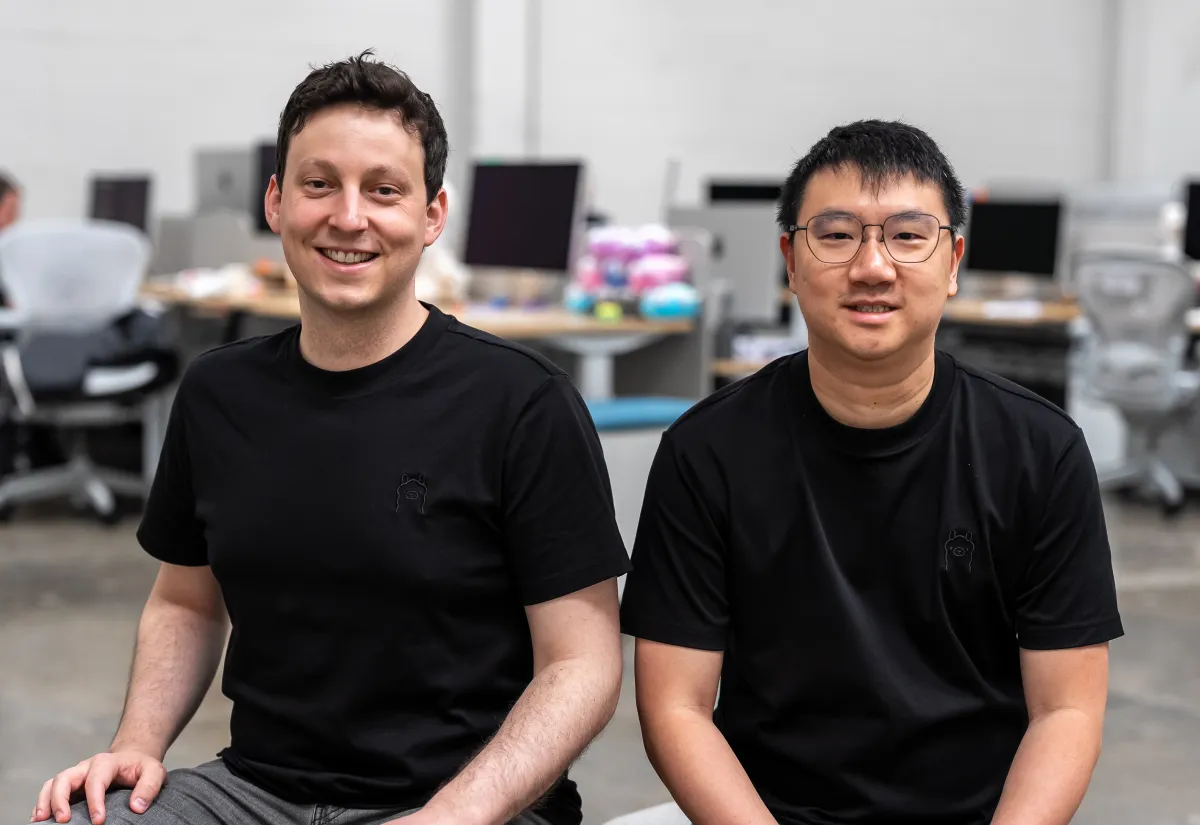
Founded in 2023 by Jeff Morgan and Michael Chiang, Ollama has become one of the best-known names in the open-model ecosystem. Its rise reflects a broader shift in AI development: teams that once depended almost entirely on closed systems are now weighing lower-cost open alternatives for everyday tasks, especially where inference bills are rising quickly.
What Ollama does and why developers use it
Ollama’s core product makes it easier to run open-weight AI models on a personal computer. In practical terms, that allows a developer to download a model and start experimenting with it in minutes rather than wrestling with drivers, dependencies and hardware setup.
The company built its reputation by lowering the technical barrier to local AI work. That idea has proved especially attractive to programmers who want to prototype privately, test models offline or avoid sending data to third-party cloud services during early development.
Over time, the product became one of the most widely discussed tools in developer communities. The company says it now has more than 8.9 million monthly users and is present at 85% of the Fortune 500, a level of penetration that is striking for a startup with only 14 employees.
From desktop utility to AI platform
Ollama originally positioned itself as a local-first tool for discovering and running open models. But as the ecosystem matured, the startup added cloud services that help users access larger models that are too demanding to run on a standard laptop or desktop machine.
That evolution matters because many of today’s strongest open models require substantial compute resources. Rather than replacing the desktop product, the cloud layer extends the same promise: make models easier to find, launch and use, whether they run locally or on Ollama-managed infrastructure.
Why investors are betting on open-weight models
Investors backing Ollama are making a broader wager on the economics of AI. The appeal of open-weight models is not only philosophical. For many companies, it is a cost decision driven by high inference spending, growing usage and the need for more control over how models are deployed.
Jeff Morgan said the breakthrough moment came when larger open models became capable of handling agent-like tasks, including coding. That change helped shift open models from research objects into practical tools for paid software products and enterprise automation.
Benchmark partner Peter Fenton, who led Ollama’s previous $15 million Series A and joined its board, has argued that the market is not headed toward a simple open-versus-closed split. Instead, he sees room for both, while noting that businesses with high AI usage have a strong incentive to move some workloads to open-weight systems.
Fenton said companies facing heavy inference costs have a real pressure to migrate parts of their AI stack toward open-weight models, while still leaving room for closed systems when needed.
That view aligns with a growing trend across enterprise software: many teams are mixing model types, using closed models for premium tasks and open ones for scale, experimentation or cost control.
How Ollama compares with Docker’s earlier rise
Ollama’s founding team brings a familiar product philosophy to AI. Morgan and Chiang previously worked on Docker Desktop, and Morgan also helped build Kitematic before Docker acquired it. That history is important because Docker succeeded by making complex infrastructure easier for developers to use on their own machines.
Ollama applies a similar concept to AI models. Docker abstracted away much of the complexity of running cloud applications across environments. Ollama is doing something analogous for local AI development: it hides much of the friction involved in finding, launching and managing models.
Fenton compared the company’s role in AI to the way Docker and Docker Desktop simplified cloud software for developers, calling that kind of ubiquity unusually hard to build.
That product DNA helps explain why Ollama has attracted unusually strong developer loyalty. The company’s audience is not just trying to evaluate models; it wants a reliable everyday tool for running them.
How big is the opportunity for Ollama?
The opportunity appears to be growing as more AI applications move from novelty to necessity. Once tools start delivering coding assistance, workflow automation and agentic actions, the volume of inference can increase rapidly, and costs can follow. Open-weight models offer a path to reduce those expenses.
Ollama benefits from that shift in two ways. First, the desktop product remains the easiest entry point for developers who want local experimentation. Second, the cloud business gives the company a way to monetize users who need larger models without giving up the open-model workflow they already know.
That combination is especially relevant at a time when enterprises are asking sharper questions about data locality, latency and total cost of ownership. Open models can often be deployed in ways that better fit internal constraints than hosted proprietary systems.
Key facts at a glance
| Item | Details |
|---|---|
| Founded | 2023 |
| Latest funding | $65 million Series B |
| Total funding | $88 million |
| Lead investor | Theory Ventures |
| Previous round | $15 million Series A led by Benchmark |
| Users | More than 8.9 million monthly developers |
| Company size | 14 employees |
| GitHub traction | 176,000 stars and nearly 17,000 forks |
Why Ollama’s growth reflects a broader open-source AI wave
Ollama is not the only company trying to turn open-source momentum into a business. The startup sits within a broader generation of venture-backed projects built around open-model infrastructure, inference engines and developer tooling.
That list includes companies such as Inferact, which works on vLLM, and RadixArk, which builds SGLang. Other firms are building services around open-model access, while some newer startups are even training their own models from scratch.
The pattern is important for the AI market because it suggests that open-source software is no longer just a distribution channel or community strategy. In AI, it is becoming a commercial foundation in its own right, with venture capital increasingly willing to support businesses built on top of free code and open model ecosystems.
The business model behind the free product
Like many successful developer tools, Ollama’s strategy is to keep the core product free while monetizing advanced usage. Its subscription tiers range from free access to plans that can reach $100 a month, depending on the features and compute required.
The company also charges based on GPU time rather than token counts, which is a notable distinction. That model reflects the underlying economics of running models, especially larger ones that consume meaningful compute resources.
For users, the arrangement preserves the convenience of the desktop tool while offering a straightforward upgrade path for teams that need larger-scale access. For Ollama, it creates a more durable revenue stream than relying only on downloads, stars or community goodwill.
What changed in January?
January appears to have been the moment when Ollama’s business case became easier to see. Morgan said that was when larger open models started to become useful for agentic work such as coding, which in turn made the market take open models more seriously as commercial tools.
That development mattered because it moved the conversation from “Can open models match closed models?” to “Which workloads are better suited to open models?” Once a model can complete work rather than just answer prompts, the value proposition expands dramatically.
It also helps explain the renewed attention from investors. A tool that makes experimentation easier is useful; a tool that sits on top of a rapidly expanding category of production workloads is much more valuable.
How does Ollama respond to criticism about commercialization?
Ollama has not escaped criticism from some users who worry that a commercial cloud offering could distract from the original open project. That concern is common in open-source communities, especially when a product starts out free and then adds paid layers around it.
Some commentators have framed the change as an example of “enshittification,” the idea that products become less user-friendly once monetization takes precedence. In Ollama’s case, that critique centered on whether the cloud business might overshadow the open desktop experience.
Morgan and Fenton push back on that interpretation. They argue that the paid service is a practical extension of the original mission, not a retreat from it.
Morgan says many of the most capable open models are too large to run on a normal machine, so the company built cloud access to help users find the compute they need.
Fenton adds that the free desktop product remains unchanged and still serves as the place to discover and run local models.
That defense is likely to resonate with users who want the convenience of a local-first workflow but occasionally need more horsepower than their own hardware can provide.
What the deal says about the AI market in 2026
Ollama’s latest financing round is another signal that AI infrastructure is fragmenting into multiple layers. At the top are the large model vendors. Beneath them are the tooling companies that help developers run, compare and deploy models in specific environments. Ollama sits in that second camp, where the product is less about building a model from scratch and more about making models usable at scale.
This is one reason the company’s growth stands out. By focusing on workflow, not just model quality, Ollama has inserted itself into a part of the stack that is both technically necessary and commercially sticky.
The numbers also speak for themselves: 8.9 million monthly developers, 176,000 GitHub stars, nearly 17,000 forks, a raised total of $88 million and only 14 employees. That combination suggests strong product-market fit and an unusually lean operating model.
It also highlights a broader truth about the current AI cycle: some of the most promising companies are not the ones building the most famous models, but the ones making those models easy enough for developers to actually use.
Timeline of Ollama’s rise
Below is a simplified timeline of the company’s major milestones and why each one mattered.
| Date | Milestone | Why it mattered |
|---|---|---|
| 2023 | Ollama launches | Makes open-weight model use easier on local machines |
| 2024 | Community traction accelerates | Developer praise and GitHub growth expand visibility |
| Earlier funding round | $15 million Series A | Signals investor confidence in the category |
| January 2026 | Larger open models begin handling agentic tasks | Strengthens the commercial case for open models |
| July 2026 | $65 million Series B announced | Provides capital to scale cloud access and platform growth |
What comes next for Ollama?
The next phase will likely center on scaling without losing the simplicity that made the product popular in the first place. That is a delicate balance for any developer tool, especially one with a loyal open-source audience and a growing commercial footprint.
If Ollama can continue to keep its desktop product lightweight while improving access to hosted compute, it could become a key on-ramp for developers moving between local experimentation and production-grade open-model use.
More broadly, the company’s growth suggests that open-weight AI is moving from a niche preference to an operational choice. For developers, enterprises and investors alike, the question is no longer whether open models matter. It is how quickly they will become a default part of everyday AI infrastructure.
For now, Ollama’s latest funding round is a clear sign that the market sees a large business behind that shift.
- Ollama raised $65 million in a Series B led by Theory Ventures.
- The company says it now serves more than 8.9 million monthly developers.
- Its total funding has reached $88 million since launching in 2023.
- Ollama is expanding from local model running into hosted cloud access and inference services.
- The deal reflects growing investor confidence in open-weight AI as a commercial category.
Frequently asked questions
How much money did Ollama raise?
Ollama raised $65 million in a Series B financing round led by Theory Ventures. The new capital brings the company’s total funding to $88 million and gives it more room to expand both its desktop product and its cloud-based model access.
Why is Ollama important in AI development?
Ollama is important because it makes open-weight AI models easier to run on a personal computer. That simplicity has made it a popular developer tool for testing, prototyping and using models without the friction of complex setup or always-on cloud dependence.
Who uses Ollama?
Ollama is used by developers, engineers and enterprises that want easier access to open models. The company says it has more than 8.9 million monthly users and that its software is used inside 85% of the Fortune 500.
What makes Ollama different from closed-model platforms?
Ollama is different because it centers on open-weight models and local-first use. Users can run models on their own machines, and when they need more compute, they can access hosted infrastructure through Ollama’s cloud services rather than relying only on closed model providers.
Why are investors interested in open-weight AI now?
Investors are interested because open-weight models are becoming capable enough for real work, including coding and agentic tasks, while often offering lower costs and more flexibility. That makes them attractive for companies with heavy inference bills and a need to control deployment.
Frequently asked questions
How much money did Ollama raise in its latest round?
Ollama raised $65 million in a Series B round led by Theory Ventures. The financing brings the company’s total funding to $88 million and supports its expansion beyond the core desktop app into cloud model access and infrastructure.
What does Ollama do?
Ollama helps developers run open-weight AI models on their own computers with minimal setup. It also offers hosted access to larger models for users who need more compute than a local machine can provide.
How many users does Ollama have?
Ollama says it serves more than 8.9 million developers every month. The company also reports strong community adoption on GitHub, with 176,000 stars and nearly 17,000 forks.
Why are open-weight models becoming more popular?
Open-weight models are becoming more popular because they can lower inference costs, give teams more deployment control and support practical tasks like coding and automation. For many businesses, they are becoming a cost-effective complement to closed AI systems.
Is Ollama replacing its free desktop product with a paid service?
No. Ollama says the free desktop product remains central to its mission, and the cloud service is meant to extend access to larger models that are too resource-intensive to run locally.