Updated July 9, 2026 4:19 pm
In short
Character.AI is launching interactive AI microdramas, starting with three titles, while testing audio and fiction tools that could eventually let users create their own serialized stories.
- Character.AI is debuting three microdramas: romance, horror and survival.
- Adult users can chat with characters, ask questions and role-play alternate storylines.
- The company is also testing c.ai FM for audio series and c.ai Reads for fiction.
- The launch builds on Character.AI’s shift toward entertainment features over the past year.
- Sensor Tower data suggests users already spend more than 950 minutes a month on the app.
Update — July 9, 2026 4:19 pm
Character.AI says its new c.ai Series effort is starting with a studio-led model, but the company now says the longer-term aim is to give users tools to build their own characters and serialized shows.
The startup is also testing two adjacent features: c.ai FM for creating audio series, which is currently limited to select users in its experimental Labs program, and c.ai Reads for fiction creation.
Character.AI says professional writers are already using the audio tool to make serialized dramas, and it reiterated that users spent more than 950 minutes a month on the app in the first half of 2026.
Character.AI is entering the fast-growing microdrama market with a studio-led slate of short AI-generated series, and the company is adding a twist: viewers aged 18 and older will be able to chat with the characters, ask questions and role-play alternate storylines. The move gives the chatbot startup a new entertainment product at a time when short-form serialized video is drawing heavy investment across the internet.
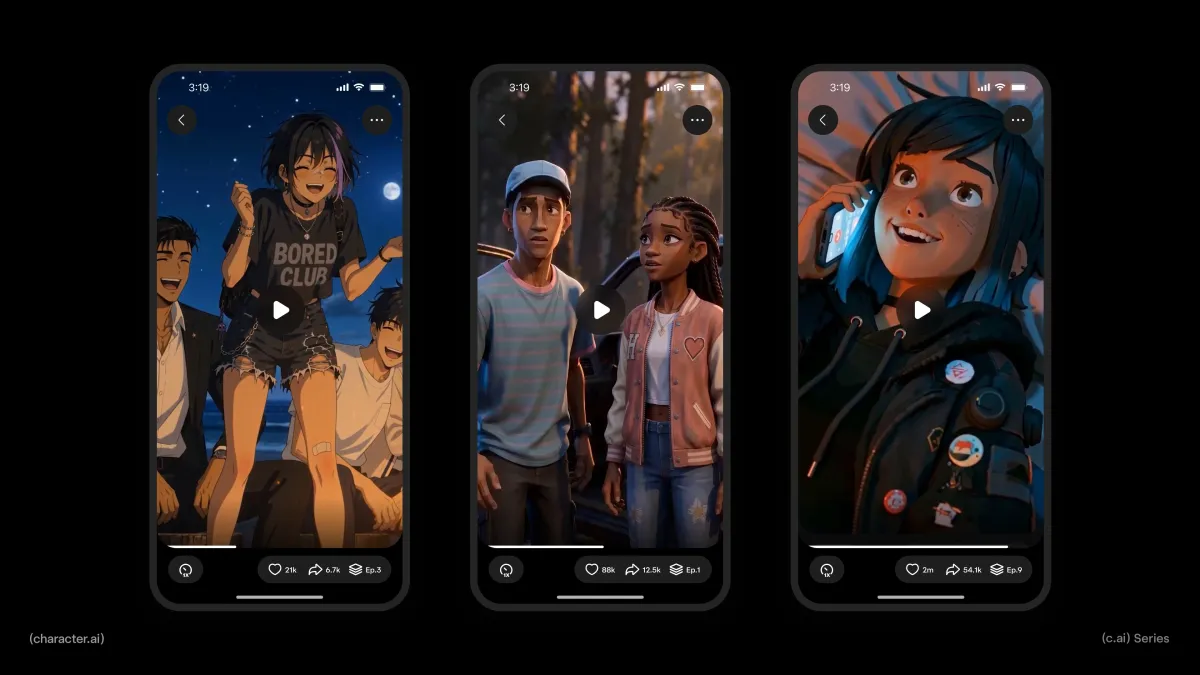
The company said on Thursday that it is launching three titles first — a romance called Last Summer, a horror series titled The Nighttime Game and a survival story named Eden Fall — while also testing new formats for audio fiction and written storytelling. The strategy signals that Character.AI is no longer positioning itself only as a place to talk with AI personas, but as a broader entertainment platform built around interactive characters and stories.
For Character.AI, the appeal is obvious. Microdramas are among the hottest formats in digital media, with major platforms and streamers racing to capture audiences who want quick, addictive episodes on mobile devices. But Character.AI is trying to make its version more participatory than the typical snackable video series by turning characters into conversational companions that extend the story beyond the screen.
What Character.AI is launching
Character.AI’s first wave of microdramas consists of three different genres designed to test audience tastes and product mechanics at the same time. The company is starting with a romance, a horror story and a survival thriller, giving it a diversified lineup that can appeal to different kinds of viewers.
The titles are:
- Last Summer — a romance microdrama
- The Nighttime Game — a horror series
- Eden Fall — a survival story inspired by high-stakes competition narratives
According to the company, these productions were built with AI production tools. Character.AI has not described the full production pipeline in detail, but the language suggests the company is experimenting with AI-assisted scripting, design and perhaps character development rather than simply repackaging existing chatbot personalities into videos.
The bigger distinction, though, is that the shows are meant to be interactive. Adult users will be able to converse with the fictional characters, ask them questions after watching and potentially explore alternate story arcs through role-play. That adds a layer of personalization that traditional microdrama services do not offer.
Why is Character.AI betting on microdramas?
The company is betting on microdramas because the format matches how people already use mobile entertainment: quickly, repeatedly and in highly personalized bursts. Short serialized content has proven attractive to app makers, social platforms and streaming companies alike, all of which are competing for attention in a fragmented media market.
Character.AI appears to believe its core product gives it an advantage. Instead of just streaming short episodes, it can offer a post-episode conversation that makes the story feel alive. If that works, the company could transform passive viewers into active participants, deepening engagement and potentially increasing the time people spend inside its app.
That matters because Character.AI already has unusually high usage. Sensor Tower data cited by the company indicates that users spent more than 950 minutes per month on Character.AI in the first half of 2026. In an attention economy where many apps struggle to keep users coming back, that level of engagement is a valuable foundation for new entertainment products.
How does this differ from other microdrama products?
It differs because Character.AI is not simply producing short shows; it is building interactive characters around them. Most microdrama platforms focus on rapid, episodic plot turns, often optimized for mobile cliffhangers. Character.AI is layering conversation, role-play and AI-generated character continuity on top of that format.
In practical terms, that means a viewer might watch an episode and then talk to the character as if the character were an ongoing presence rather than a static part of the show. That is a notable shift from conventional entertainment apps, where interaction is usually limited to likes, comments or algorithmic recommendations.
How Character.AI is building the product
Character.AI says the launch begins with a studio-led model, meaning its internal production team is developing the initial series. That choice lets the company establish quality standards, test workflows and learn what kinds of stories and formats resonate with users before handing more creative power to its community.
A company spokesperson said the goal is to use the first productions to understand how “Character-native” microdrama entertainment works in practice and then convert those lessons into tools for creators. In other words, the startup wants to move from making shows itself to enabling users to make their own series using original characters.
The long-term plan is ambitious: users would be able to build characters, assemble series and publish them to a global audience. That would effectively turn Character.AI into a hybrid platform that combines AI chat, social creation tools and serial entertainment distribution.
“Starting with a studio-led model, c.ai Series lets our production team develop the format, refine the workflow, and understand what audiences want from Character-native Microdrama entertainment,” a company spokesperson said. “Over time, the goal is to turn those learnings and workflows into creator tools, enabling users to make their own series from original Characters and share them with a global audience.”
What other entertainment tools is Character.AI testing?
Character.AI is also expanding beyond video into audio and text fiction. The company said it is testing a feature called c.ai FM for audio series and another called c.ai Reads for fiction creation, extending the same storytelling approach across multiple formats.
c.ai FM is currently available to selected users through the company’s experimental c.ai Labs program. Character.AI says professional writers are using the feature to build serialized audio dramas, suggesting the company is testing whether AI tools can support more structured narrative production rather than only casual chatbot use.
c.ai Reads is designed for fiction, giving users another way to build stories inside the platform. Together, these features point to a broader content ecosystem in which characters can exist as chatbots, audio drama leads, written fiction figures and video series protagonists all at once.
Why the new features matter
The importance of these tools is not just that they are new; it is that they show Character.AI experimenting with multiple points of entry into storytelling. Some users may prefer chat. Others may want audio. Others may want to write or co-create fiction. By building across formats, the company is testing how far its character-driven model can stretch.
That approach also gives Character.AI more ways to keep users inside the app. The more formats it offers, the more likely it is that a user will move from watching a short series to chatting with a character to creating a new one of their own.
How big is the audience for AI-powered stories?
The audience appears to be substantial, especially for services that combine entertainment with personalization. Character.AI has already demonstrated that users are willing to spend significant time with its products, and the company’s new microdrama push is designed to build on that habit.
Sensor Tower’s estimate that users spent more than 950 minutes per month on the app in the first half of 2026 offers a useful signal. That level of engagement suggests Character.AI is not starting from zero; it already has a deeply involved user base that may be open to more immersive narrative products.
There is also a broader market reason to be optimistic. Microdramas have become one of the internet’s fastest-growing content categories, drawing interest from short-video platforms, streaming services and mobile-first entertainment companies. The format is designed for phone screens, repeat viewing and serialized hooks — all features that align well with Character.AI’s existing product habits.
| Product | Format | Current status | Notable feature |
|---|---|---|---|
| Last Summer | Microdrama | Launching | Romance story with interactive characters |
| The Nighttime Game | Microdrama | Launching | Horror series with AI-generated production tools |
| Eden Fall | Microdrama | Launching | Survival-themed serialized narrative |
| c.ai FM | Audio series | Testing in c.ai Labs | Professional writers are using it for serialized audio dramas |
| c.ai Reads | Fiction tool | Testing | Lets users create fiction inside the app |
Where does this fit in Character.AI’s recent strategy?
The microdrama launch fits into a clear strategic shift. Last year, Character.AI began leaning more heavily into entertainment-oriented features, moving beyond simple character chat toward richer worlds and story-based experiences.
In April, the company previewed Lorebook, a feature designed to help users create world-building notes and references that characters can draw on during conversations. It also introduced Books, which lets users place themselves into select classic literary works or role-play as figures from those stories.
These features all share the same underlying idea: characters should not be limited to one conversation. They should have memory, context, story arcs and settings that make them feel more like ongoing fictional entities. The new microdramas extend that logic into a more polished entertainment product.
What is the company trying to become?
Character.AI seems to be trying to become a storytelling platform rather than a single-purpose chatbot app. That means blending consumer AI, creator tools and entertainment publishing into one ecosystem.
If that plan works, the company could occupy a distinctive position in the market. It would not be quite a streaming service, not quite a chatbot company and not quite a creator platform, but something in between — a place where stories can be watched, spoken to and reshaped in real time.
What makes the twist important?
The twist is that these microdramas are not meant to end when the credits roll. Character.AI wants the characters to remain available for further interaction, which could change how audiences think about serialized storytelling.
That matters because it shifts the value of a series from the episode itself to the relationship with the characters. In a conventional drama, the audience watches and moves on. In Character.AI’s model, the audience can stay with the story by talking to the cast, asking follow-up questions or imagining alternate outcomes.
This could make the content feel more personal and sticky, but it also raises product and creative challenges. The company will have to ensure that the characters remain coherent, the interactions feel meaningful and the AI does not break the narrative logic of the show.
What risks and questions remain?
Character.AI’s new direction is exciting, but it is still early. The company has not provided many technical details about how the shows are made, how much AI is involved in each stage or how much human oversight remains in the process.
There is also the larger question of whether users want to engage with entertainment this way at scale. Microdramas already rely on a highly tuned formula for retention. Adding AI conversation could increase immersion, but it could also feel gimmicky if the characters are not compelling or the interactions are shallow.
Another open question is moderation. Once users can speak to fictional characters and role-play alternative storylines, the company will need systems that keep the experience safe, especially for younger users, even though the microdrama chat features are restricted to adults 18 and over.
Finally, there is the issue of competition. Social media platforms, streamers and dedicated microdrama apps are all chasing the same audience. Character.AI will need to prove that its interactive layer is not just novel, but meaningfully better than what other companies are offering.
Timeline of Character.AI’s entertainment push
The company’s move into microdramas is the latest step in a broader rollout of entertainment features over the past year. The following timeline highlights the main milestones.
| When | Feature | What it does | Why it matters |
|---|---|---|---|
| Last year | Entertainment shift | Character.AI began focusing more on story-driven experiences | Marked a pivot beyond basic chatbot interactions |
| April 2026 | Lorebook | Lets users build world-building context for characters | Improves narrative consistency and depth |
| April 2026 | Books | Allows role-play inside selected classic literature titles | Connects chat with established stories |
| July 2026 | c.ai Series | Launches AI-powered microdramas | Moves Character.AI into serialized video entertainment |
| July 2026 | c.ai FM and c.ai Reads | Tests audio series and fiction creation | Broadens the platform into multiple storytelling formats |
What happens next?
Character.AI now has a live experiment in one of the most competitive corners of digital entertainment. If its microdramas gain traction, the company could use the findings to build creator tools and open the door to a much larger user-generated storytelling ecosystem.
If the experiment falls flat, it will still have gained something valuable: data on how users respond to AI-native serialized content, which characters attract engagement and which formats encourage repeat visits. Either way, the company is betting that the future of entertainment will not stop at watching.
For now, the launch positions Character.AI at the intersection of AI chat, social storytelling and short-form video. That is a crowded space, but also one where new formats can still break through if they feel genuinely different. By letting adults talk to the characters after the episode ends, Character.AI is trying to make sure its stories do not end at all.
That may prove to be the company’s strongest pitch: not just a show to watch, but a world to return to.
Frequently asked questions
What is Character.AI launching in microdramas?
Character.AI is launching three AI-made microdramas: Last Summer, The Nighttime Game and Eden Fall. The company says the series were created with AI production tools and are designed to be interactive for adult users who want to chat with the characters.
How are Character.AI microdramas different from regular short videos?
Character.AI microdramas are different because viewers can interact with the characters after watching. Adults over 18 can ask questions, continue conversations and role-play alternate storylines, turning a short series into a more participatory entertainment experience.
Why is Character.AI moving into entertainment?
Character.AI is moving into entertainment because short-form serialized content is booming and its app already has very high engagement. The company appears to believe that combining stories, chat and creator tools can deepen usage and expand its platform beyond basic AI conversations.
What are c.ai FM and c.ai Reads?
c.ai FM is an experimental feature for creating audio series, and c.ai Reads is a tool for making fiction. Character.AI says c.ai FM is available to selected users through c.ai Labs, where professional writers are already using it for serialized audio drama production.