In short
Stoke Space has appointed former OpenAI executive Kevin Weil to its board as the Seattle startup continues developing Nova, its fully reusable rocket. The move highlights the company’s push to scale commercially, strengthen investor ties and move closer to operational launch.
- Kevin Weil has joined Stoke Space’s board after earlier investing in the company.
- Stoke has raised $1.34 billion and is developing Nova, a fully reusable rocket.
- CEO Andy Lapsa says the company has reduced some technical risk but still has major hurdles ahead.
- Weil’s experience spans OpenAI, Planet Labs, Meta and Twitter, plus defense-adjacent work.
- The appointment underscores growing investor interest in reusable launch and space infrastructure.
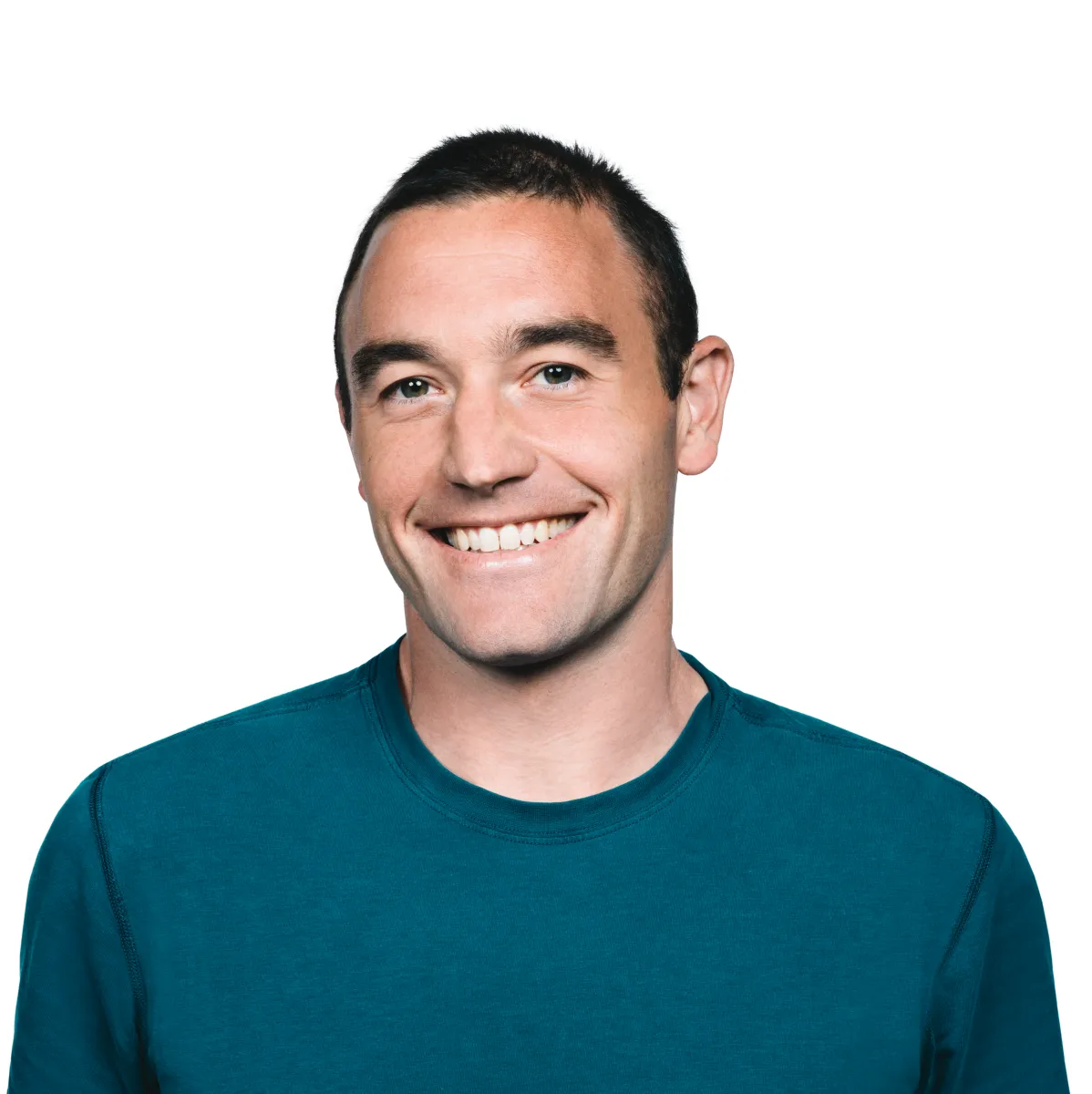
Stoke Space has added another high-profile name to its leadership circle: Kevin Weil, a longtime product executive whose résumé spans Twitter, Meta, Planet Labs and OpenAI, has joined the Seattle rocket company’s board of directors. The move gives one of the best-capitalized startups in the reusable-launch race another operator with deep experience scaling ambitious technology businesses, navigating Silicon Valley, and working at the intersection of commercial tech and government.
For Stoke, the appointment comes at a pivotal moment. The company has raised more than $1.34 billion to develop a rocket called Nova, designed to be fully and rapidly reusable. That goal has long been one of the hardest problems in the launch industry, and it remains central to Stoke’s pitch: if the company can make rockets that can return, refurbish quickly, and fly again at scale, it could help reshape the economics of access to space.
Weil’s addition does not change the physics of launch. But it does signal that Stoke is moving from an early, high-concept phase into a more execution-focused era, where fundraising, market positioning, government relationships and go-to-market strategy matter as much as engineering milestones.
A board addition with broad Silicon Valley credentials
Weil is not known primarily as a rocket-industry figure. He built his reputation in consumer internet and frontier tech roles, most recently at OpenAI, where he led efforts focused on accelerating scientific research before that program was folded more broadly into the organization earlier this year. Before that, he served as OpenAI’s chief product officer from mid-2024 until late 2025.
His career also includes senior roles at Meta and Twitter, plus a presidency at Planet Labs, the satellite imaging company that went public in 2021. That combination makes him unusually familiar with both fast-moving software businesses and the space sector’s commercial realities.
Stoke CEO Andy Lapsa said the relationship began years ago, when Weil and his wife Elizabeth invested in the company through their fund, Scribble Ventures. Lapsa described Weil as an early backer who offered more than capital. According to Lapsa, Weil helped him think through fundraising and the challenges of turning a technically ambitious startup into a company that could actually secure the resources needed to survive and scale.
“I came out of engineering, started a company, had no idea how to fundraise,” Lapsa said, explaining that Weil’s background and network helped him understand how Silicon Valley operates and how to get the business on its feet.
Stoke declined to make Weil available for an interview, and he did not respond to questions seeking comment.
Why Stoke thinks reusable rockets still matter
Stoke is betting that the launch market is still underbuilt, even after years of attention and billions of dollars in investment. The company’s core thesis is that rockets should not be disposable. Instead, they should be designed so that the most expensive parts can survive launch, reentry and turnaround with minimal refurbishment.
That concept has been easiest to talk about and hardest to demonstrate. SpaceX has come closest to making routine rocket reuse a reality, especially with its Falcon 9 boosters. But Stoke is aiming for something even more ambitious: a fully reusable system, including a second stage that can fly again and again.
Its Nova rocket is intended to embody that vision. The idea is straightforward in theory and punishing in practice. A rocket that returns from space must withstand extreme heat, structural stress and the engineering trade-offs that come with building for repeated use rather than one-time performance.
Lapsa argued that the industry’s skepticism has softened as launch demand continues to outstrip supply. In his view, the market has been moving toward the conclusion that reusable launch is no longer a speculative idea, but the direction the industry has to take if it wants to lower costs and increase cadence.
Lapsa said the industry is finally recognizing that launch remains an unsolved problem, adding that the once-radical idea of rapid, full reuse now looks increasingly inevitable.
Stoke’s funding and the long road to operational launch
Stoke’s rise has been backed by a significant amount of capital. The company has raised $1.34 billion so far, including a $510 million Series D round in 2025. That level of funding places it among the most heavily financed startups in the new-space sector, underscoring investor appetite for companies that can break the cost curve in orbital launch.
Still, money alone does not guarantee success. Rocket development is notorious for technical delays, certification challenges and cost overruns. For Stoke, the transition from development to operational launch is the critical test. It must prove that its systems can not only fly, but do so repeatedly and economically enough to matter commercially.
Lapsa acknowledged that the company has already worked through a meaningful portion of its risk, but not all of it.
“We’ve got a good chunk of the risk behind us, we’ve got more to go,” he said, adding that the company intends to keep pushing until the vehicle is ready.
That caution reflects a reality familiar to anyone in aerospace: hardware timelines are governed by testing, iteration and failure analysis, not just investor expectations.
A timeline of Stoke Space and Kevin Weil’s path
Both Stoke and Weil have evolved through several major milestones over the past few years. The following table summarizes the key developments that put this board appointment into context.
| Year | Stoke Space | Kevin Weil |
|---|---|---|
| 2020 | Company founded by Andy Lapsa and team | Active as a senior technology executive and investor |
| 2021 | Gains momentum in the new-space market | Serves as president of Planet Labs as it goes public |
| 2024 | Raises additional capital as reusable launch plans advance | Joins OpenAI as chief product officer |
| 2025 | Closes a $510 million Series D, bringing total funding to $1.34 billion | Continues at OpenAI as product leadership evolves |
| 2026 | Moves closer to operational launch with Nova | Joins Stoke Space board of directors |
The OpenAI connection and the obvious speculation
Weil’s move invites one unavoidable question: does his presence on Stoke’s board suggest a broader relationship between the rocket startup and OpenAI, or even a future partnership? The timing is notable because OpenAI CEO Sam Altman was reported to have explored investing in Stoke last year, part of a wave of interest from technology leaders looking beyond software into industrial and physical infrastructure.
But Lapsa was careful not to feed that narrative. He declined to discuss speculation about OpenAI or any possible partnership, saying Weil’s role is to help Stoke advance its own business rather than serve as a conduit for outside rumor.
For now, the relationship appears more pragmatic than conspiratorial. Weil brings experience from a frontier AI company, but he also brings a track record in space through Planet Labs and a broader understanding of how to operate in high-growth, high-expectation environments. That may be useful even if there is no formal collaboration between Stoke and OpenAI.
Why an AI executive can matter to a rocket company
At first glance, the overlap between an AI product executive and a launch provider seems thin. Yet board members are rarely chosen only for narrow technical alignment. Stoke is not just trying to build a vehicle; it is trying to build an enduring company around a complicated technical platform.
That requires judgment on fundraising, corporate strategy, hiring, partnerships and positioning with customers and government agencies. Weil’s background in scaling companies and translating complex technology to investors and stakeholders could be valuable in exactly those areas.
His OpenAI role may also be useful in a broader way. Frontier AI companies and next-generation aerospace firms both operate in environments where compute, infrastructure, regulation and capital intensity are central. The industries are different, but the management problems can rhyme.
Space launch demand keeps climbing
The broader market context is important. Stoke is not entering a stagnant sector. Demand for launch services has risen alongside satellite constellations, defense needs and commercial space ambitions. Yet the industry still struggles with constraints that keep launch expensive and capacity limited.
That tension is why reusable rockets continue to attract attention. If a company can shorten turnaround time and reuse major components with high reliability, it can lower costs and increase flight rates. In a market where schedule certainty and launch access are increasingly strategic, that advantage could be enormous.
Lapsa framed the opportunity in simple terms: there are still not enough rockets to satisfy demand. That gap creates room for a company that can supply frequent, reasonably priced launches.
- More satellites need access to orbit.
- Defense customers want dependable launch capacity.
- Commercial operators need lower costs and faster turnaround.
- Reusable systems could improve launch economics across the board.
How SpaceX changed the industry benchmark
SpaceX remains the reference point for everyone trying to disrupt launch economics. Its recovery and reuse of Falcon 9 boosters transformed what investors and customers expected from a launch company. Even so, the next level of reuse, especially for a vehicle that is effectively refreshed and relaunched with minimal hardware replacement, has not yet become routine.
Stoke’s wager is that the next breakthrough in launch will come from full reuse, not partial reuse. That is a high bar, but it is also what distinguishes the company from many competitors that are still focused on traditional expendable rockets or only partially recoverable systems.
The comparison matters because it shapes how investors assess risk. If SpaceX has already proven that reuse can work at scale for part of a rocket, then the market may be more willing to believe that the remainder of the problem is solvable. But the distance between booster recovery and complete vehicle reuse is still substantial.
Military and government ties could become important
One of the less discussed but potentially significant aspects of Weil’s appointment is his familiarity with the defense ecosystem. Lapsa pointed to Weil’s experience connecting Silicon Valley with the Department of Defense, including his participation in a program that brought several prominent tech figures into the U.S. Army Reserve to improve recruitment and strengthen ties between the military and industry.
That background matters because launch is not purely a commercial game. Military and intelligence customers are critical buyers in space, and their requirements can shape product design, launch cadence and certification pathways. For startups like Stoke, relationships with defense agencies can be as important as relationships with commercial satellite operators.
Weil’s prior work at Planet Labs adds another layer. Planet’s business depended in part on consistent access to orbit and on serving customers whose needs ranged from agriculture to defense. That experience may help him understand how space companies translate technical capability into contracts and recurring revenue.
The challenge is no longer just technical
Stoke’s story is increasingly about execution. The company has already won attention for its engineering ambition and fundraising success. The next test is whether it can turn that promise into regular, reliable launches.
Rocket startups often spend years proving that they can survive repeated rounds of testing. A board appointment like Weil’s may not influence engine design or heat-shield performance directly, but it can help management think more strategically about timing, capital allocation and business development.
That is especially important because the commercial value of reusable launch will only become clear if the company can deliver on schedule and at an acceptable cost. In other words, the market will not reward the vision alone.
Lapsa said the company will continue moving forward at the pace dictated by the hardware, not by outside pressure, emphasizing that Stoke will launch when the vehicle is ready.
Why investors are paying attention to full reuse
There is a broader investment thesis embedded in Stoke’s work. Full reuse could unlock more than cheaper launches. It could support future markets that depend on much higher flight volume, including defense logistics, satellite servicing and speculative ideas such as orbital infrastructure.
One example is the concept of space-based data centers, which some venture investors have explored as a way to take advantage of solar power and avoid certain terrestrial constraints. Those ideas remain early and highly experimental, but they illustrate the kind of demand that would become more feasible if launch costs dropped substantially.
Lapsa suggested that such applications only become practical when rockets can fly repeatedly and affordably. In that sense, Stoke’s technology is not just about competing with existing launch providers. It is about enabling business models that remain too expensive to consider seriously today.
What has to happen next
Before any of that future becomes real, Stoke must clear a series of very practical hurdles:
- Demonstrate reliable flight performance for Nova.
- Prove that reused hardware can survive repeated missions.
- Show that turnaround time is commercially viable.
- Secure customers that value the company’s launch cadence and pricing.
- Continue building relationships across commercial and defense markets.
Those milestones are not small, and they are not guaranteed. But they explain why a director with strategic range, investor credibility and platform experience can be useful at this stage.
A sign of maturity for Stoke, not a finished chapter
For Stoke, Weil’s arrival reads less like a splashy announcement than a signal of maturity. The company has moved far enough along that it needs more than visionaries and engineers. It needs people who can help navigate scale, partnerships and institutional credibility as the technical work intensifies.
For Weil, the board seat broadens an already unusual career that has moved across social media, digital platforms, satellite imagery and artificial intelligence. Joining a reusable-rocket startup adds another frontier to that portfolio.
The appointment also highlights a broader trend in technology: the same network of investors, operators and executives is increasingly crossing between AI, space, defense and advanced manufacturing. Capital and talent are becoming more fluid across sectors that once seemed separate.
What remains unchanged is the hard reality of rockets. Stoke may have a respected new board member, a formidable funding war chest and strong investor interest, but it still has to make the machine work. In aerospace, that is always the real test.
Key facts at a glance
| Item | Details |
|---|---|
| New board member | Kevin Weil |
| Company | Stoke Space |
| Location | Seattle |
| Main product | Nova reusable rocket |
| Total funding raised | $1.34 billion |
| Latest funding round | $510 million Series D in 2025 |
| Primary strategic goal | Fully and rapidly reusable launch |
| Relevant prior roles for Weil | OpenAI, Planet Labs, Meta, Twitter |
As Stoke pushes toward its first operational flights, Weil’s board appointment adds another layer of experience to a company trying to solve one of spaceflight’s oldest and most expensive problems. The ultimate measure of success, however, will be whether Nova can fly, land, and fly again.