In short
Solos has launched new smart glasses that include a camera-equipped model with a detachable privacy shield, alongside an audio-only pair. The company is betting that privacy-focused design can help it compete with Meta.
- Solos introduced the AirGo A6 audio-only glasses and AirGo V2 camera glasses.
- The AirGo V2 can be paired with a $79 Privacy Kit that blocks the camera.
- The camera-enabled glasses cost $299, matching Meta’s smart glasses price.
- Privacy concerns are becoming a major battleground in the smart-glasses market.
- Solos is positioning itself as a more privacy-conscious alternative to Meta.
Solos is taking a different route in the smart-glasses race. Instead of leaning entirely into always-on cameras and flashy AI demos, the company is pairing its latest camera-equipped eyewear with a detachable privacy shield designed to physically block the lenses when users do not want them recording.
The move arrives as smart glasses become one of the most closely watched consumer AI categories. Meta has helped define the market with its camera-forward Ray-Ban glasses, while smaller rivals are trying to distinguish themselves through design, price, or, increasingly, privacy. Solos’ newest lineup reflects that shift: one model is built around audio-only wearability, while the other adds a camera and AI features but gives users a modular way to cover that camera when they want it disabled.
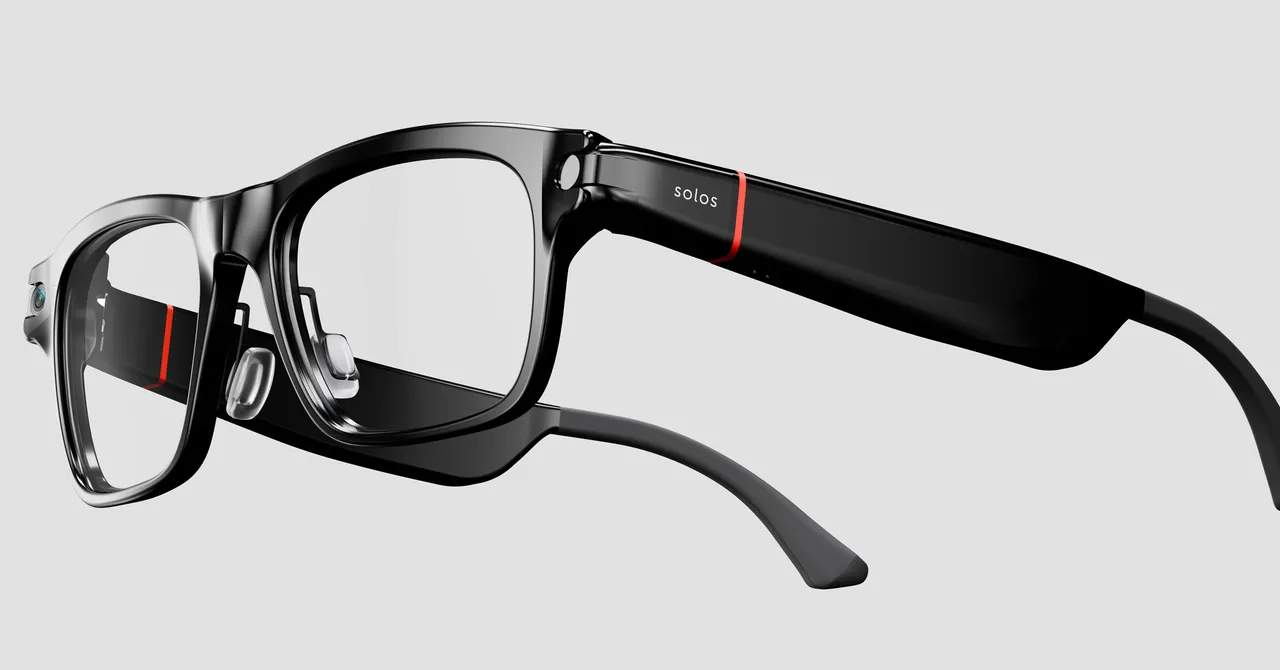
On Tuesday, the company unveiled two new pairs of glasses: the AirGo A6, which keeps things audio-only, and the AirGo V2, a revised camera-equipped model that follows up on the first version Solos introduced in 2024. Alongside the V2, Solos is selling a separate Privacy Kit that includes clip-on accessories for blocking the camera and adding polarized lenses. The kit costs $79, while the glasses themselves are priced at $299.
Solos’ latest smart-glasses strategy
Solos has spent years leaning into audio-first wearable tech, and that remains central to the company’s product identity. The new AirGo A6 continues that approach with no camera at all, making it a simpler option for people who want smart-glasses functionality without the baggage that comes with visual recording hardware.
The company’s other new product, the AirGo V2, is aimed at consumers who want the broader set of features now becoming standard in premium smart glasses. That includes still photos and video recording, music playback, and an AI assistant that can interpret what the wearer is seeing. Solos also says the glasses can support prescription lenses and are designed to deliver between 10 and 12 hours of battery life.
That battery figure matters. In wearables, battery life can shape whether a device feels like a practical everyday product or a gadget that needs constant attention. Solos is clearly trying to position the V2 as an all-day accessory rather than a short-lived demo device.
Two products, two different audiences
The split between the AirGo A6 and AirGo V2 suggests Solos sees the smart-glasses market fragmenting into at least two groups: users who want the convenience of voice and audio features, and users who are comfortable with cameras and AI support on their faces.
That distinction is important because the camera debate has become one of the defining issues around smart glasses. For some buyers, the presence of a camera is a feature. For others, it is the reason to avoid the category altogether.
Solos is essentially arguing that not everyone wants the same level of sensing on their face, and that the safest way to expand the market is to give people a non-camera path as well as a camera-equipped one.
What the Privacy Kit actually does
The most unusual part of Solos’ announcement is the Privacy Kit, a set of clip-on add-ons for the AirGo V2. The accessories are designed to let users physically cover the camera or change the way the glasses function depending on the situation.
According to the company, the privacy shield blocks the camera from seeing or recording. In practice, that turns the glasses into an audio-only device without requiring the wearer to buy a separate model. The kit also includes a polarized lens clip-on, giving the glasses a more conventional eyewear feel when needed.
Solos is selling the full modular set for $79. The goal appears to be flexibility: one frame, multiple modes, and a way to make camera-enabled glasses feel less intrusive in public settings.
Why the privacy pitch matters now
Privacy has become a central selling point in the smart-glasses conversation for a simple reason: the category is no longer theoretical. Devices that look like ordinary eyewear can now capture video, identify people, and feed live visual information into AI systems. That creates obvious discomfort for bystanders and wearers alike.
Solos’ accessory-based approach is an attempt to address that discomfort without giving up on the camera hardware altogether. The company seems to be saying that smart glasses do not need to be permanently “always on.” Instead, they can become more socially acceptable if the user has a visible way to disable recording.
Still, that solution has limits. A clip-on privacy cover may reassure some buyers, but it also adds friction. Users have to keep track of an extra accessory, attach it when they want to turn off the camera, and remove it when they want to use it again. In other words, privacy becomes a manual choice rather than a default setting.
The limits of an accessory-based solution
That manual approach is likely to raise questions among privacy advocates and everyday users who are already wary of face-mounted cameras. The obvious concern is that a removable blocker can be taken off just as easily as it can be put on. A wearer could enter a venue with the camera physically covered, then remove the shield later if they wanted to record.
That possibility is not unique to Solos, of course. It reflects a broader challenge facing the smart-glasses industry: hardware safeguards can reduce misuse, but they cannot fully prevent it unless they are tied to software locks, policy controls, or venue enforcement.
From a consumer standpoint, the privacy kit is both a practical compromise and a reminder that the industry still has not solved the trust problem. A product that relies on a human remembering to add or remove a cover will only go so far in calming concerns about recording in public spaces.
- Privacy is handled through a removable clip-on shield.
- The glasses can operate in audio-only mode when the camera is blocked.
- A polarized lens accessory is also included in the modular set.
- The full Privacy Kit costs $79.
How the AirGo V2 compares with Meta’s smart glasses
Solos has made it clear that it sees Meta as the benchmark in the category. The company’s earlier camera glasses were described as an attempt to outshine Meta, and the new model lands in the same price range as Meta’s own smart glasses.
Both Solos’ AirGo V2 and Meta’s latest glasses are priced at $299. Both can capture photos and video, play music, and interact with AI features. Both can be fitted with prescription lenses. And both are trying to make a case that smart glasses can move beyond novelty into everyday utility.
But the market reality remains uneven. Meta has the advantage of scale, name recognition, and an established hardware ecosystem. Solos, by contrast, is trying to win users through product choices that emphasize modularity, privacy, and audio-first flexibility.
That is a different argument, and it may be a necessary one. When one company already dominates a category, competitors often need to appeal to the customers the leader has not fully convinced.
| Product | Type | Price | Camera | Notable features |
|---|---|---|---|---|
| Solos AirGo A6 | Audio-only smart glasses | TBA in announcement | No | Audio-focused wearable experience |
| Solos AirGo V2 | Camera-enabled smart glasses | $299 | Yes | Photo/video, music, AI assistant, prescription lens support, 10–12 hour battery life |
| Solos Privacy Kit | Clip-on accessory set | $79 | Blocks camera use | Privacy shield and polarized lens accessory |
| Meta Smart Glasses | Camera-enabled smart glasses | $299 | Yes | Music, media capture, AI features |
Why Solos is leaning into privacy
The timing of Solos’ announcement is not accidental. The company is entering a period in which smart glasses are attracting more attention, more scrutiny, and more debate about where the line should be drawn between convenience and surveillance.
Meta has already faced public criticism for the social implications of camera-enabled eyewear. The device category has been mocked with labels such as “pervert glasses,” reflecting how strongly some people react to the idea of discreet recording hardware embedded in a wearable frame.
Meta also drew backlash after a WIRED report revealed that the company had quietly added face-recognition code to its glasses before removing it following criticism. More recently, the company said it would begin charging for some smart-glasses features that had previously been free, adding another layer of consumer frustration around the platform.
Against that backdrop, Solos is trying to present itself as the more cautious alternative. Rather than pushing consumers to accept camera glasses with minimal controls, it is signaling that the user should be able to decide when visual capture is appropriate.
A response to a growing social problem
The privacy debate goes beyond product marketing. As smart glasses become more capable, they raise ordinary social questions that smartphones largely solved through convention: when is it acceptable to film, who can tell you are filming, and what happens when the camera is built into something that looks harmless?
That is why privacy features may become a competitive differentiator. The companies that can make bystanders feel less exposed may have an easier time convincing skeptical consumers to try the technology.
The bigger market shift beyond Meta
Solos is not the only company trying to carve out a niche. The broader smart-glasses market is becoming more crowded as larger tech firms and smaller wearable brands all look for a way in.
Google and Samsung are working together on Android XR, the software platform that could underpin a new generation of glasses. New eyewear products from Warby Parker and Gentle Monster are expected later this year as part of that effort. Apple, meanwhile, has also been widely reported to be developing its own smart-glasses hardware.
Those moves matter because they suggest smart glasses are moving from a one-company story to a broader platform race. The next phase of the category may be less about who can build the flashiest prototype and more about who can create the most usable, socially acceptable, and repeatable product line.
Smaller companies are responding in their own ways. Even Realities, for example, has gone in the opposite direction from camera-first wearables with glasses that do not include a camera at all. Solos now appears to be making a similar calculation: if some users are uneasy with visual capture, give them a product experience that makes that unease easier to manage.
Solos’ earlier camera glasses and the lessons learned
The AirGo V2 is not Solos’ first attempt at camera glasses. The company introduced the AirGo Vision in 2024, and the reception was mixed enough that the product ended up in WIRED’s “Don’t Bother” category in its smart-glasses guide.
The criticism was not that the glasses lacked ambition. Rather, they were seen as promising in design but undermined by weak media quality, awkward touch controls, and an app that placed a heavy demand on user permissions and device power.
That history is relevant because it shows Solos is not just launching a new product; it is trying to recover momentum. The company knows that a second-generation model must do more than add features. It must feel more refined, more reliable, and more trustworthy.
In plain terms, Solos’ new pitch is that it has listened to the first-round criticism and is now trying to answer both the functional complaints and the privacy objections at once.
Could audio-only smart glasses become the safer bet?
Meta has not moved away from camera-heavy glasses, but it has signaled that audio-only wearables still have a market. In a private session with media, Meta CTO Andrew Bosworth reportedly said there is clear demand for that kind of product.
That admission is important because it suggests even the market leader knows the category may not be fully defined by cameras. There are users who want notifications, music, voice assistance, and hands-free interaction without feeling as though they are carrying around a recording device.
Solos is building directly for that audience. The AirGo A6 may not generate the same headlines as a camera-equipped pair, but in a market where public skepticism is high, an audio-only device could prove easier to sell, easier to wear, and easier to normalize.
What consumers may value most
For many buyers, the decision will come down to a few practical questions:
- Do I want a camera on my face at all?
- Will the glasses feel comfortable enough to wear all day?
- Is the battery life strong enough to justify the purchase?
- Do I trust the software and privacy controls?
- Am I paying for useful features or just paying for novelty?
Solos’ answer is to give shoppers a menu of options rather than a single fixed experience. That approach may not solve every concern, but it could help the company attract buyers who want smart glasses without a full-blown surveillance aesthetic.
What happens next for the smart-glasses race
The real test for Solos is whether privacy-conscious design can become a genuine market advantage rather than a niche talking point. A detachable camera blocker may resonate with some early adopters, especially those who value flexibility. But to win broader adoption, the company will need to prove that its hardware and software are good enough to compete on everyday usefulness, not just on positioning.
That means stronger imaging quality, smoother controls, better app design, and a clearer story around trust. It also means acknowledging that privacy features cannot be an afterthought if the category is going to move into the mainstream.
For now, Solos is placing its bet that some buyers want smart glasses without the cultural baggage of an always-on camera. That may not be enough to dislodge Meta, but it could be enough to keep the company in the conversation as the market widens.
And in a sector where the biggest companies are still deciding what people actually want to wear on their faces, that is not a small opportunity.
Key facts at a glance
| Detail | Information |
|---|---|
| Company | Solos |
| New products | AirGo A6 and AirGo V2 |
| Camera-free option | AirGo A6 |
| Camera-enabled option | AirGo V2 |
| Price | $299 for AirGo V2 |
| Privacy accessory price | $79 |
| Battery life | 10 to 12 hours |
| Comparable rival | Meta smart glasses, also $299 |
| First Solos camera glasses | AirGo Vision, launched in 2024 |
As smart glasses evolve, the category is beginning to split into competing philosophies. One side is betting that people will embrace cameras on their faces as long as the hardware is useful enough. The other is arguing that the industry must earn trust first. Solos is now firmly in the second camp.