The internet’s latest music mystery has little to do with a chart position and everything to do with a rapidly shifting question: when a song sounds strange, stylized or unexpectedly polished, should listeners assume artificial intelligence had a hand in it?
That question has followed “Rubberz,” a solo track from Fenix Flexin, the Shoreline Mafia rapper whose new release has set off a wave of speculation online. The song’s detached delivery, unusual phrasing and abrupt stylistic turn from his better-known tough-guy rap persona have prompted debate over whether the track was shaped by AI tools, even though the artist has denied using them.
The controversy is part culture war, part tech anxiety and part generational litmus test. It also reveals how quickly AI accusations have become a default reaction in music, especially when a song falls outside what listeners think they know about an artist.
What makes the discussion more interesting is that the song is not merely being judged on whether it “sounds good.” It is being examined as evidence, with listeners listening for clues, scanning production choices and trying to infer how much human craft, software assistance or machine-generated interpolation may be present. In other words, the debate around “Rubberz” is no longer about one song alone. It is about where audiences believe the line between performance and automation should be drawn.
The song that triggered the question
Fenix Flexin is best known as a member of Shoreline Mafia, a Los Angeles rap group associated with blunt, rowdy, nightlife-driven records. His solo release arrives with a markedly different texture. Instead of sounding like a straightforward extension of that style, the track borrows from older pop and post-punk moods, giving it a strange and unexpected emotional tone.
That contrast has driven much of the online reaction. Listeners who are used to Flexin’s harder-edged rap persona have struggled to reconcile that identity with a song that feels, to some ears, more like a retro-curated pop experiment than a conventional rap single.
From there, the internet did what it always does: it turned surprise into suspicion.
The AI question emerged not because of a confirmed technical explanation, but because the song sounded unusual enough to provoke doubt. That is a crucial distinction. In the current media environment, AI allegations often spread faster than evidence. A song that feels too clean, too odd or too unlike previous work can become the subject of instant forensic analysis by casual listeners and fans alike.
What Flexin has said
Flexin has publicly rejected the claim that he used AI on the song. He has suggested that any polish listeners hear comes from conventional studio tools rather than machine-generated vocals or composition.
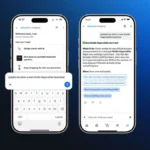
Fenix Flexin has said online that he did not use AI on the track, adding that he may have relied on a bit of Auto-Tune and noting his affection for The Smiths.
That response matters because it reframes the debate. Instead of asking whether the song is synthetic in some absolute sense, the more useful question may be how much production intervention audiences are willing to accept before they start labeling a track “AI.”
Modern music production has long involved pitch correction, vocal layering, sample manipulation, beat construction and digital editing. The current wave of AI suspicion is happening on top of that already heavily engineered landscape. The result is a kind of uncertainty spiral: the more processed music becomes, the easier it is for listeners to attribute unfamiliar effects to AI, even when no such tool was used.
Why listeners heard something different
Part of the reaction to “Rubberz” comes from the song’s cultural references. The track seems to evoke more than one era at once, drawing on the gloss and melancholy of 1980s British pop while also hinting at Los Angeles electro from the same period.
That combination can sound playful or uncanny depending on the listener. Some hear a deliberate pastiche; others hear a performance that feels slightly off, as if a machine stitched together influences that do not naturally belong in the same space.
Those reactions are intensified by the fact that the song is not what many people expect from Flexin. When an artist is known for a specific lane, any sharp deviation invites questions about authenticity. In practice, though, artistic reinvention is common. Artists regularly borrow from genres, eras and aesthetics that do not match the work that made them famous.
The challenge is that the present moment rewards instant suspicion. Once a track is tagged as possibly AI-assisted, every odd syllable, rhythmic hiccup or tonal shift becomes “evidence.” That does not necessarily mean the suspicion is right. It means the listening experience itself has changed.
The internet’s ear for imperfection
One of the more revealing parts of the reaction is how quickly people point to the vocal phrasing. AI-generated singing and synthetic vocal transformations often produce an unnatural emphasis, especially when syllables appear to be squeezed into a melody in ways that do not sound fully conversational.
That kind of pattern is not exclusive to AI, of course. Human singers also use stylized phrasing, compression and accent shifts to create character. But in a climate where audiences have become newly alert to machine-made audio, minor irregularities can trigger major assumptions.
In that sense, the speculation around “Rubberz” says as much about listeners as it does about the artist. The audience is no longer passive. It is interrogating music as if it were a forensic artifact.
The broader AI music problem
The attention around one song reflects a much bigger issue facing the music industry: how to distinguish between creativity aided by digital tools and creativity replaced by them.
AI in music is no longer theoretical. It has already affected songwriting, vocal cloning, beat generation, mastering and promotional content. Platforms and labels are racing to determine disclosure standards, licensing frameworks and acceptable uses, but the public conversation is moving faster than the rules.
That creates a strange environment for artists. If they experiment with new sounds, they may be accused of using AI. If they stay consistent, they may be accused of repeating themselves. If they use legitimate studio enhancement, some fans may treat it as deception. If they disclose AI assistance, others may reject the result outright.
This is why the “Rubberz” debate matters. It is not just a one-off internet pile-on. It is a snapshot of the trust crisis around modern music production.
The blurred line between tools and authorship
Autotune, vocal comping, elastic audio, sample libraries and digital effects have been part of popular music for years. These tools already complicate the idea of a purely “natural” performance. AI pushes that complication further by introducing systems that can generate or reshape musical content at scale.
For listeners, the difference between enhancement and substitution may be hard to hear. For artists, it may be the difference between a legitimately evolved sound and an accusation of outsourcing creativity. The industry has not yet settled on a universal language for discussing that divide.
That uncertainty is especially pronounced in genres where voice, identity and authenticity matter deeply. Rap, more than many genres, is tied to persona, local style and verbal confidence. When an artist known for one mode suddenly releases something that sounds like a different cultural reference point, the reaction can be immediate and intense.
How the song fits into a bigger cultural moment
The AI conversation around “Rubberz” comes at a time when audiences are increasingly asking whether their favorite media has been filtered through software. It is not only music. People are asking the same questions about image editing, video generation, writing and even voice recordings in podcasts and advertising.
As generative tools become more accessible, the burden of proof shifts. A creator no longer has to demonstrate that something was made with AI. Instead, they often have to prove that it was not.
This inversion changes how people interpret art. What might once have been described as experimental or referential can now be read as suspiciously synthetic. That does not mean the suspicion is always misplaced. But it does mean the threshold for raising the alarm has fallen dramatically.
In the case of “Rubberz,” the reaction also reflects an older cultural habit: listeners often judge artistic credibility based on whether a new release fits the image they already have of the performer. When it doesn’t, they may reach for the most modern explanation available.
Why genre-crossing sounds trigger skepticism
When artists move across genre boundaries, some fans celebrate the range while others assume a hidden mechanism is at work. In the AI era, that mechanism is often imagined to be a machine generating the change.
But genre experimentation has always involved imitation, recombination and strategic borrowing. The difference now is that AI offers a convenient shorthand for explaining any result that feels too polished, too referential or too unexpected to be purely human.
That shorthand may be reductive, but it is powerful. It lets listeners collapse a complex production process into a single accusation. It also puts artists in the awkward position of having to defend creativity that might simply be unconventional.
What the debate tells us about the future of hits
Even if “Rubberz” turns out to be entirely human-made, the conversation around it points to a future in which audiences will demand more transparency from hit records. The question is no longer whether AI will influence mainstream music. It already does. The question is how visible that influence will be, and how much of it listeners will tolerate.
As technology becomes more embedded in music production, the biggest commercial songs are likely to sit somewhere on a spectrum between hand-made performance and machine-assisted refinement. That spectrum is broad, and the public discussion has not yet caught up with it.
For some listeners, the issue will be authenticity. For others, the issue will be quality. There will also be listeners who simply do not care, as long as the track moves them. The challenge for the industry is that all three reactions will coexist.
That may be why this episode is more instructive than it first appears. It is not only about whether a song was made with AI. It is about how willing audiences are to surrender old assumptions about what a musician should sound like, and how much technological mediation they will accept in the songs that dominate culture.
What to watch next
The immediate question is whether “Rubberz” will continue to spread because of the music itself or because of the debate around it. Often, these controversies become self-sustaining. The accusation drives attention, attention drives streams and streams turn the controversy into part of the song’s identity.
That cycle is likely to repeat across music, particularly when artists deliberately blur references or radically change direction. The public will continue to test records for signs of AI, and artists will continue to insist that surprising work does not automatically mean machine authorship.
In the end, the deeper story is less about one rapper’s solo release than about the widening gap between how music is made and how it is understood. The tools are changing quickly. The ear of the public is changing too. And the arguments are only just beginning.
| Issue | What happened | Why it matters |
|---|---|---|
| Viral song | “Rubberz” by Fenix Flexin drew widespread attention online | Its sound diverged sharply from the artist’s usual style |
| AI speculation | Listeners questioned whether the track used artificial intelligence | The reaction reflects rising suspicion toward unfamiliar production choices |
| Artist response | Flexin denied using AI and pointed to minor vocal processing | Highlights the blurry line between studio enhancement and machine assistance |
| Broader significance | The debate expanded into a wider discussion of music authenticity | Shows how AI is reshaping public expectations of popular music |
Key takeaways
- A newly discussed solo release by Fenix Flexin sparked speculation that AI may have been involved.
- The artist has denied using AI and suggested only light conventional vocal processing.
- Listeners noticed unusual phrasing and a style that felt far from his Shoreline Mafia work.
- The track has become a proxy debate about authenticity, technology and the future of popular music.
- The controversy illustrates how quickly AI suspicion now attaches to music that sounds unfamiliar or highly produced.
The larger question is not whether one song was machine-made. It is how long listeners, artists and labels can continue pretending there is a clean divide between human creativity and the tools that now shape it.
If “Rubberz” is any indication, that divide is already gone.