In short
Sierra raised $1.75 billion in a Series F and doubled its valuation to $30 billion, according to TechCrunch. The deal highlights investor appetite for enterprise AI tools that automate customer service and other frontline workflows.
- Sierra raised $1.75 billion in a Series F on Nov. 23, 2026.
- The company’s valuation doubled to $30 billion from $15 billion in May.
- TechCrunch says Sierra serves nearly half of Fortune 50 firms.
- Sierra says its run-rate revenue doubled to $400 million in five months.
Sierra raised $1.75 billion in a Series F on Nov. 23, 2026, doubling its valuation to $30 billion just six months after its last funding round. The new financing underscores how quickly investors are still bidding up enterprise AI companies that can prove they can win and retain large corporate customers.
What happened
According to TechCrunch, the customer-experience and enterprise automation company closed a $1.75 billion Series F led by Greenoaks and Lightspeed Venture Partners. Existing backers including Benchmark, Sequoia, Greenoaks, GV and Tiger Global also participated.
The deal values Sierra at $30 billion post-money, up from $15 billion in its prior round in May. That means the company’s valuation doubled in roughly six months, a pace that stands out even in a market still willing to pay steep prices for AI infrastructure, agents and software that can be sold into large enterprises.
Sierra says it now serves nearly half of Fortune 50 firms. Named customers include BNY, HSBC, Singtel, Wells Fargo, JPMorganChase, Pearson, Next and Cox Automotive, giving the company a roster that spans banking, telecom, education and retail-adjacent services.
Why it matters
This deal says a great deal about where AI money is flowing now: not just toward model builders, but toward companies that can package AI into tools corporate buyers will actually deploy. Sierra sits in a particularly attractive part of the market because customer service and contact-center automation are easy to explain, high-volume and expensive to run manually.
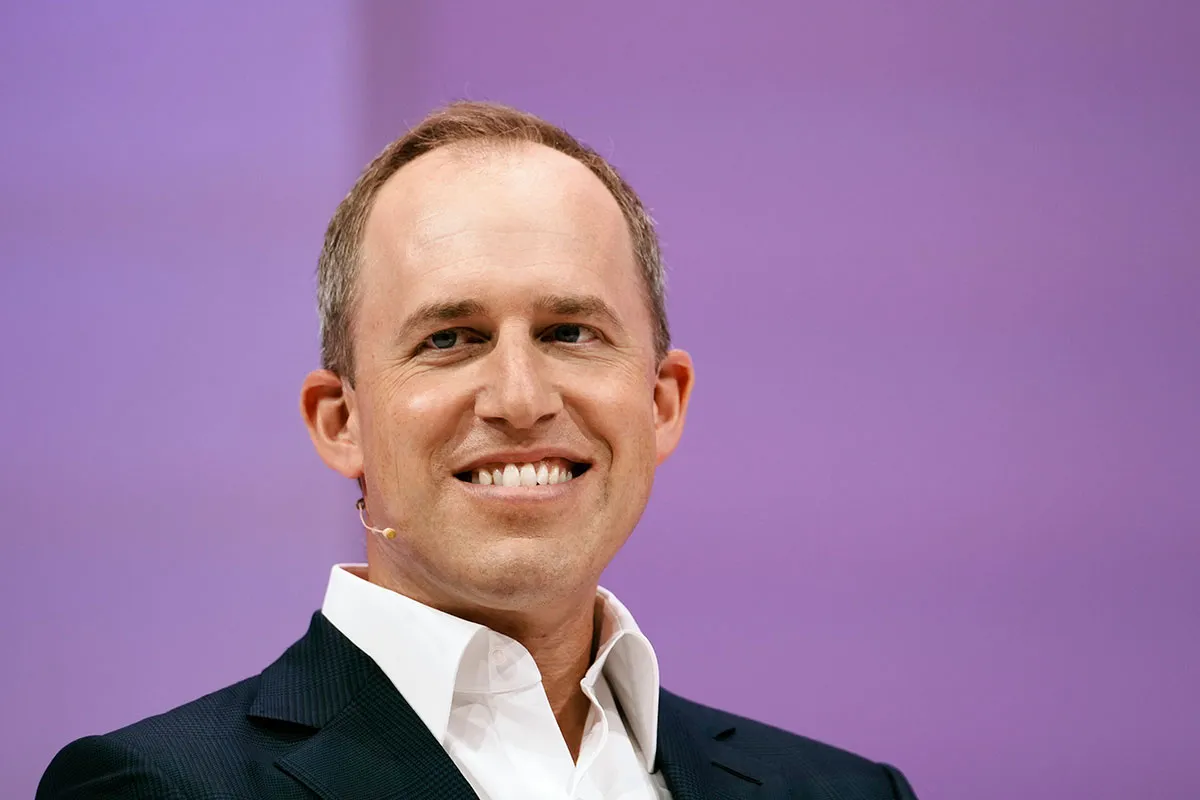
For large companies, the pitch is straightforward: use AI agents to handle support, routing and other service tasks, then redeploy staff to work that requires more judgment or more complex human interaction. Sierra co-founder Clay Bavor said in September at the HumanX conference in Amsterdam that “a majority of its customers are reassigning roles to existing employees.”
That framing matters because it suggests the company is not selling a pure headcount-cutting story. Instead, it is positioning AI as an operating tool for service teams, which may make adoption easier inside heavily regulated or customer-facing industries. The distinction could also help explain why so many blue-chip firms are willing to test and expand these systems.
How Sierra got here
Sierra’s business focuses on AI tools for customer experience and enterprise automation. In practical terms, that means software designed to act as a service agent, answer questions, route requests and manage interactions that would otherwise go through a call center or support desk.
The company has also been building an agent platform and working with model developers so enterprise customers can choose among models rather than being locked into one provider. TechCrunch reported that Sierra is working on agent protocol definitions with Meta, Stripe and Walmart, a sign that the company wants to help set the rules and plumbing for how AI agents talk to systems and to one another.
That strategy helps Sierra look less like a single-purpose app and more like an enterprise layer sitting between model providers and customer workflows. In a crowded market, that can be a powerful position: the customer gets flexibility, while Sierra gets embedded more deeply into operations.
By the numbers
| Metric | Figure | What it means |
|---|---|---|
| Series F size | $1.75 billion | One of the largest late-stage rounds in enterprise AI this year |
| Post-money valuation | $30 billion | Value assigned to Sierra after the new funding |
| Prior valuation | $15 billion | The company’s valuation in its previous round in May |
| Revenue update | $400 million run-rate | TechCrunch reported this was doubled in five months after an outcome-based pricing shift |
| Fortune 50 penetration | Nearly 50% | Share of Fortune 50 firms Sierra says it serves |
| Time between rounds | Six months | How quickly the company’s valuation doubled |
What Sierra says about growth
Late in October, Sierra said its run-rate revenue had doubled to $400 million in just five months. TechCrunch attributed the jump in part to outcome-based pricing, a model that aligns pricing with results rather than simply usage volume.
That is a noteworthy detail because it suggests enterprise buyers are not only experimenting with Sierra’s products; they may be paying in ways that reflect measurable business outcomes. For AI vendors, that kind of pricing can be a sign of product-market fit, but it can also introduce more pressure to prove value continuously.
The company’s rapid growth also helps explain why investors were willing to keep writing large checks. In a private market where many AI startups are still trying to prove durable demand, revenue momentum matters almost as much as technical ambition.
Who invested in the round?
Greenoaks and Lightspeed Venture Partners led the Series F, with several existing backers joining again. Benchmark, Sequoia, Greenoaks, GV and Tiger Global all participated, a roster that signals both continuity and conviction from firms already familiar with Sierra’s trajectory.
Backer repeat participation is often read as a vote of confidence in a company’s execution, particularly when the valuation jumps sharply. It also suggests investors who got in earlier were not deterred by the higher price tag, a sign that they still see room for Sierra to scale further across large enterprise accounts.
Why enterprises are buying
Sierra’s appeal lies in the combination of a clear use case and a broad addressable market. Customer experience work is one of the most immediate places for AI automation because the tasks are repetitive, high-volume and measured by clear operational metrics such as response speed, containment and resolution.
For buyers, that can make the return on investment easier to evaluate than in some other enterprise AI categories. A support organization can compare wait times, staffing needs and customer satisfaction before and after deployment, which gives purchasing teams more evidence to take to finance and leadership.
At the same time, the company’s customer list suggests that these systems must meet the standards of large institutions. The presence of banks such as BNY, HSBC, Wells Fargo and JPMorganChase points to a market where reliability, security and compliance likely matter as much as raw capability.
How does Sierra fit into the broader AI market?
Sierra fits into a fast-moving slice of the AI economy where enterprise software companies are racing to sell “agents” rather than just chat interfaces. That market has become crowded, and investors are now separating companies that can demonstrate real deployment from those that only have demos and promises.
TechCrunch noted that peers in AI customer experience are also attracting substantial capital and high valuations. Examples cited included ElevenLabs at $22 billion, Decagon at $4.5 billion, Wonderful at $5 billion and Parloa at $3 billion. The list shows that the market is not rewarding one winner alone; it is backing a cluster of companies that all want a piece of enterprise service automation.
Background and context
Customer experience software has long been a major enterprise category. The difference now is that AI agents can do more than search a knowledge base or route a ticket. They can handle service tasks directly, respond in natural language and, in some systems, take actions across connected tools.
That broader capability is why enterprise AI vendors are competing not just on model quality, but on integrations, controls and workflow design. A company buying these systems does not want a clever demo; it wants something that can sit inside real customer operations and survive the demands of scale.
Series F financing is also a sign that Sierra is past the earliest venture stage and is now being funded for scale. Late-stage rounds often support sales expansion, product development and international growth, which aligns with the company’s stated plan to expand its tech stack for service agents and hire more sales staff.
The broader market backdrop helps explain the enthusiasm. Investors have shown a willingness to back enterprise AI companies with very large checks if they can point to customer adoption, revenue acceleration and a believable route into major organizations. Sierra appears to have all three.
What the new capital is likely for
Sierra said the money will be used to expand its technology stack for service agents and hire more sales staff. That points to two priorities: deepening the product and widening distribution.
- Product expansion: improving the systems that power service agents and enterprise automation.
- Sales hiring: building out the team needed to win larger contracts and maintain growth in the enterprise market.
- Platform development: advancing the agent platform and associated protocol work with outside partners.
- Market expansion: supporting broader adoption across large customers and potentially new industries or geographies.
Those priorities are consistent with a company that is still in a land-grab phase. The goal is not only to land marquee accounts, but to become embedded enough that customers keep expanding usage once they are inside the system.
What happens next
The most immediate question is how Sierra uses the new capital beyond hiring and infrastructure. Investors will want to see whether the money translates into faster product rollout, deeper enterprise integrations and more contracts of the kind that can sustain the company’s valuation.
Another key question is whether the $30 billion valuation can be justified by continued growth in revenue and customer adoption. The company has said its run-rate revenue doubled to $400 million in five months, but market watchers will be looking for signs that the pace can continue once the easiest deals are done.
There is also unfinished business around the company’s partnership work. Sierra is collaborating on agent protocol definitions with Meta, Stripe and Walmart, but TechCrunch’s reporting leaves open when those efforts will produce concrete products or standards that customers can use.
Finally, it remains to be seen how much of Sierra’s revenue growth comes from new customers versus expanded spending at existing ones. That distinction matters because the latter can be a stronger sign of product stickiness, while the former can indicate broad market demand.
Timeline
| Date | Event | Why it matters |
|---|---|---|
| May 2026 | Prior round valued Sierra at $15 billion | Baseline for the company’s valuation jump |
| September 2026 | Clay Bavor speaks at HumanX in Amsterdam | He says many customers are reassigning staff rather than cutting jobs outright |
| October 2026 | Sierra says run-rate revenue doubled to $400 million in five months | Signals accelerated commercial traction |
| Nov. 23, 2026 | Sierra announces $1.75 billion Series F at a $30 billion valuation | Confirms investor demand and a major step up in private-market value |
What to watch
The next phase will show whether Sierra can turn a fast-rising valuation into a durable enterprise franchise. Investors will be watching for evidence that its service agents can spread beyond early adopters and become a standard layer in large customer operations.
They will also be watching the competitive field. Other AI customer-experience startups are drawing major financing too, which means Sierra will have to keep differentiating itself on product quality, integration depth and commercial execution.
For now, the headline is simple: Sierra has become one of the most highly valued enterprise AI companies in the market. The larger question is whether that valuation will be matched by long-term operating performance.
“a majority of its customers are reassigning roles to existing employees”
Frequently asked questions
What is Sierra and what does it do?
Sierra is an enterprise AI company focused on customer experience and automation. It builds AI tools and agent platforms designed to handle service tasks such as support, routing and customer interactions for large businesses.
How much did Sierra raise in its Series F?
Sierra raised $1.75 billion in its Series F, according to TechCrunch. The financing was led by Greenoaks and Lightspeed Venture Partners, with existing investors also taking part.
What is Sierra’s valuation after the new round?
Sierra’s post-money valuation reached $30 billion after the Series F. That was double the $15 billion valuation the company received in its prior round six months earlier.
Why are investors excited about Sierra?
Investors appear drawn to Sierra’s rapid revenue growth, large enterprise customer base and position in a fast-growing AI market. TechCrunch reported that the company says it serves nearly half of Fortune 50 firms and that run-rate revenue doubled to $400 million in five months.