In short
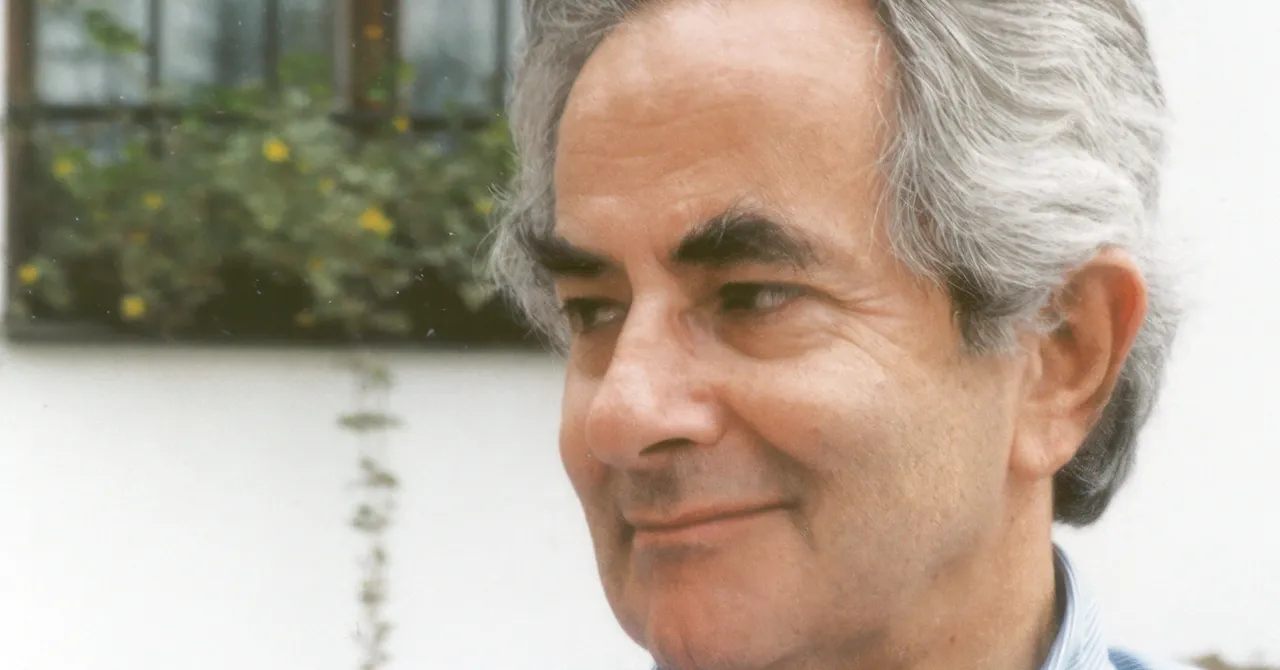
Thomas Nagel says AI chatbots are not conscious and warns against treating them as if they were. WIRED says he made the comments this week as he received the $1 million Berggruen Prize for Philosophy & Culture.
- Nagel says language alone is not proof of consciousness.
- He argues current AI systems are machines with no mental life in the ordinary sense.
- He warns that treating chatbots as conscious could create bad social and ethical outcomes.
- WIRED says he received the $1 million Berggruen Prize for Philosophy & Culture this week.
Thomas Nagel says today’s AI chatbots are not conscious, and he argues that treating them as if they were can lead to bad science, bad ethics and bad public judgment. WIRED reported that the 89-year-old philosopher made the case this week as he received the $1 million Berggruen Prize for Philosophy & Culture.
What Nagel is saying about AI consciousness
Nagel’s basic claim is straightforward: language alone is not evidence of consciousness. According to WIRED, he rejects the idea that large language models are or soon will be conscious, and he sees current systems as machines rather than minds in the ordinary sense.
That position puts him squarely against a growing habit in the public conversation around AI: reading personality, inner life or self-awareness into fluent text. Nagel’s response is that this is a category mistake. A chatbot can produce convincing prose, but that does not mean there is anyone home.
WIRED says Nagel ties consciousness to physical processes, likely those associated with nervous-system-like organisms. In other words, he does not think the output of language models by itself tells us much about subjective experience. A system may mirror human speech patterns without possessing the internal reality that gives speech meaning for humans.
“All they produce is language, and language by itself is not a natural manifestation of consciousness.”
Why it matters
Nagel’s criticism matters because the debate over AI consciousness is no longer a philosophical side issue. It shapes how people talk about chatbot rights, model welfare, product safety and what users believe these systems are capable of. If users start assuming a model has feelings, intentions or suffering, they may give machines a moral status they do not have.
That concern is especially pointed in Nagel’s warning about “anthropic-style model welfare efforts,” which WIRED says he calls misguided. He also argues that encouraging models to think for themselves is dangerous. His view is that mistaken beliefs about machine consciousness could create a bad social outcome: people may act as though chatbots are aware, while the systems remain only sophisticated text generators.
There is also a broader scientific point. If the public and industry begin using human-like language as proof of inner life, the standard for making claims about consciousness gets weaker. Nagel’s position pushes back on that shortcut and re-centers the harder question: what kind of physical and biological process, if any, actually produces consciousness?
Why this is an unusual moment for the argument
The timing matters because Nagel made the remarks while being recognized for lifetime achievement, not in a niche academic journal or a debate on social media. WIRED says he received the Berggruen Prize for Philosophy & Culture this week, placing a long-running philosophical dispute directly into a current fight over generative AI.
That makes the message harder for the industry to dismiss as abstract. Nagel is not arguing from the perspective of an engineer optimizing a product feature. He is a major philosopher of mind and ethics whose earlier work helped define modern discussion of consciousness. His stance therefore lands as a high-level challenge to the most human-like claims made around chatbots.
Background: how Nagel became central to the consciousness debate
Nagel is best known for his 1974 essay, What Is It Like to Be a Bat?, which has become one of the most cited references in discussions of subjective experience. WIRED notes that his latest remarks come 52 years after that work, underscoring how long he has been pressing the question of what consciousness actually is.
His philosophical reputation rests on the insistence that subjective experience cannot be reduced too easily to outward behavior. That idea is highly relevant to today’s AI systems, which are built to produce convincing responses from training on large datasets. They can imitate human conversation well enough to confuse people, but imitation is not the same thing as inner awareness.
WIRED describes Nagel as professor emeritus at New York University. It also notes that he is 89 years old, a detail that highlights how a thinker from a much earlier era of philosophy is now weighing in on one of the most fast-moving technology debates of the moment.
How does Nagel separate simulation from consciousness?
Nagel separates them by asking what the system is actually doing underneath the surface. A chatbot can simulate a thoughtful exchange, summarize articles, draft critiques and generate plausible philosophical commentary, but, in his view, those capacities still amount to language production rather than evidence of a mental life.
That distinction runs through his comments to WIRED. He says AI can simulate morality but not real moral beliefs. He also says models can generate plausible philosophy work, including citations, summaries and draft critiques, which means they can be useful without being conscious. The machine may imitate the form of thought without possessing thought itself.
One of the sharper lines in his argument is that there is a difference between pretending a model is conscious and genuinely believing it is conscious. Both may look similar from the outside, but they are not the same. For Nagel, the second step is the dangerous one, because it risks handing moral status to something that does not have it.
What Nagel says about morality and the “moral universe”
For Nagel, the stakes change if an entity really were conscious. WIRED reports that he says such a being would enter the moral universe, and its interests would matter. That is the dividing line he draws between real minds and very good simulations.
He uses that line to explain why he is wary of loose talk about AI feelings. If a system is conscious, then questions of treatment, obligation and harm follow. If it is not, then those moral claims do not attach to it in the same way. Nagel’s view is not that consciousness is irrelevant; it is that we should not presume it on the basis of fluent output.
That framing also helps explain why he thinks the current debate can become distorted. Human beings are often quick to project agency onto expressive systems. In the case of chatbots, that projection can be amplified by the natural rhythm of dialogue, where a machine answer feels less like output and more like participation.
“If it’s conscious, it becomes part of the moral universe. If it’s not, it isn’t.”
What he says about Anthropic-style model welfare
WIRED says Nagel specifically criticizes efforts aimed at treating models as though they deserve welfare concerns. Anthropic and its Claude chatbot are named in the fact sheet as part of the broader background to this discussion, along with co-founder Mustafa Suleyman, whose views are often associated with current debates over AI behavior and safety.
In Nagel’s telling, such efforts are misguided because they start from an assumption he rejects: that the model has an inner life requiring ethical protection. He says encouraging models to think for themselves is dangerous. That warning is aimed not only at the systems themselves, but at the social habits that may grow around them.
His concern is not limited to one company. It is about a wider tendency in the AI industry and the public sphere to speak about chatbots in personal terms. Once people begin speaking that way, they may become more willing to treat machine output as evidence of belief, preference or suffering. Nagel wants to slow that leap.
By the numbers
| Figure | Meaning in the story | Source |
|---|---|---|
| 89 years old | Nagel’s age | WIRED |
| $1 million | Berggruen Prize for Philosophy & Culture award amount | WIRED |
| 52 years | Time since he published What Is It Like to Be a Bat? | WIRED |
| 1974 | Publication year of the essay that made him central to consciousness debates | Background/context |
| This week | When the prize was awarded | WIRED |
Background: the long argument over mind, matter and machine
Nagel’s views sit within a much older philosophical argument about whether mental life can be explained entirely by physical processes. The fact sheet notes that functionalism treats mental states as defined by function rather than physical substrate. Nagel’s position cuts against any easy version of that idea, because he insists that the appearance of function does not settle the question of subjective experience.
That disagreement has become newly relevant because large language models are designed to imitate the structure of human communication. They are trained on massive datasets and can produce language that sounds reasoned, reflective and even self-aware. But those outputs may be generated by pattern recognition and statistical prediction rather than by an experiencing subject.
That is the crux of Nagel’s warning. A machine that can speak as if it understands is not necessarily proof that it understands. The public may be tempted to treat the polish of the output as a sign of consciousness, while philosophers would still ask the older question: what is the thing actually like from the inside, if anything at all?
How AI changes the philosophical problem
AI does not invent the mind-body problem, but it makes the problem harder to ignore. Traditional philosophy could debate bats, brains and animals in the abstract. Now people interact daily with systems that answer back in complete sentences, reference previous prompts and imitate empathy. The illusion of presence is much stronger.
Nagel’s point is that stronger illusion does not mean deeper reality. His remarks suggest that the more human-like a chatbot becomes on the page, the more carefully we should distinguish style from substance. A system may sound reflective because it has been optimized to produce reflective text, not because it possesses a point of view.
What happens next
There are no immediate policy proposals or company announcements in the fact sheet, but the debate is likely to continue in three directions. First, philosophers and AI researchers may respond publicly to Nagel’s critique. Second, Anthropic or Mustafa Suleyman may be asked to address his comments about model welfare and deception. Third, the broader policy discussion around AI consciousness may take cues from arguments like his, especially if regulators or public institutions begin considering how AI should be described to users.
What to watch next is less a single date than a developing argument. Nagel’s remarks will likely travel through AI ethics circles, philosophy departments and industry discussions about chatbot behavior. If his views resonate, they could reinforce a more cautious vocabulary around machine intelligence. If they are rejected, the debate will sharpen around what counts as evidence for consciousness in systems built to sound human.
For now, Nagel’s message is clear and uncompromising: AI can be impressively lifelike without being alive in the sense that matters ethically or scientifically. That distinction, he argues, should stay visible even as chatbots become more convincing.
Key points from Nagel’s view
- He says large language models are not conscious and are unlikely to become so just because they produce fluent speech.
- He argues that language output is not, by itself, a natural sign of consciousness.
- He believes consciousness is tied to physical processes associated with nervous-system-like organisms.
- He warns that treating chatbots as conscious could produce bad social and ethical outcomes.
- He says AI can simulate morality and philosophy, but not real belief or mental life.
Timeline
| Year / timing | Event | Why it matters |
|---|---|---|
| 1974 | Nagel publishes What Is It Like to Be a Bat? | Becomes a landmark text in consciousness debates |
| This week | Nagel receives the Berggruen Prize for Philosophy & Culture | Gives his comments unusual visibility |
| 2026-11-18 | WIRED publishes the interview | Brings the anti-anthropomorphism argument into the current AI cycle |
What readers should take away
Nagel is not merely saying that AI chatbots are imperfect. He is saying they are the wrong kind of thing to be called conscious at all, at least on the evidence now available. That is a stronger claim, and one with consequences for how people talk about AI safety, AI ethics and AI personhood.
His intervention lands at a time when the language around AI is getting more personal and more charged. As systems like Claude become more persuasive, the temptation to attribute inner life grows with them. Nagel’s answer is to resist that temptation until there is much better reason to believe a machine has crossed the line from simulation to experience.
For now, he says, the line has not been crossed.
Frequently asked questions
Does Thomas Nagel think AI chatbots are conscious?
No. Nagel says current AI systems are not conscious and that language output alone is not a natural sign of consciousness. In his view, chatbots can sound lifelike without having the inner experience that would make them minds.
Why does Nagel say treating chatbots as conscious is dangerous?
He says it can create bad social outcomes by encouraging people to believe machines have mental lives they do not actually have. That, he argues, could distort public judgment and lead to misguided ethical claims about AI systems.
What is Nagel’s argument about AI and morality?
Nagel says an entity would enter the moral universe if it were truly conscious, and its interests would matter. But he argues AI can only simulate morality, not hold real moral beliefs, so the ethical case for treating chatbots like conscious beings is weak.
What prize did Thomas Nagel receive this week?
He received the $1 million Berggruen Prize for Philosophy & Culture, according to WIRED. The prize appearance gave his remarks on AI consciousness a prominent public platform.