In short
Sam Altman publicly praised Jensen Huang and said the AI industry can endure without him, while Nvidia's leadership shake-up continues to unsettle investors and OpenAI's ecosystem. The comments land against a backdrop of a large petition, a reported interim CEO move and major OpenAI-linked financial commitments.
- Altman praised Huang but stopped short of backing his return to Nvidia.
- TechCrunch said nearly 200,000 people signed a petition to reinstate Huang.
- Mashable India reported Nvidia named Colette Kress interim CEO.
- Yahoo Finance said Nvidia's market value closed at $3.77 trillion after a 4.12% drop.
- The OpenAI-Nvidia relationship includes a reported $30 billion investment and major data-center commitments.
Sam Altman has publicly defended Jensen Huang and said the AI industry can get by without him at Nvidia, even as Huang’s departure continues to unsettle a sector that depends heavily on the chipmaker’s hardware and investment clout. The comments, reported by TechCrunch, Mashable India and Yahoo Finance, come amid a petition campaign urging Huang’s reinstatement and fresh questions about how Nvidia’s leadership change could ripple through OpenAI’s expansion plans.
What Altman said
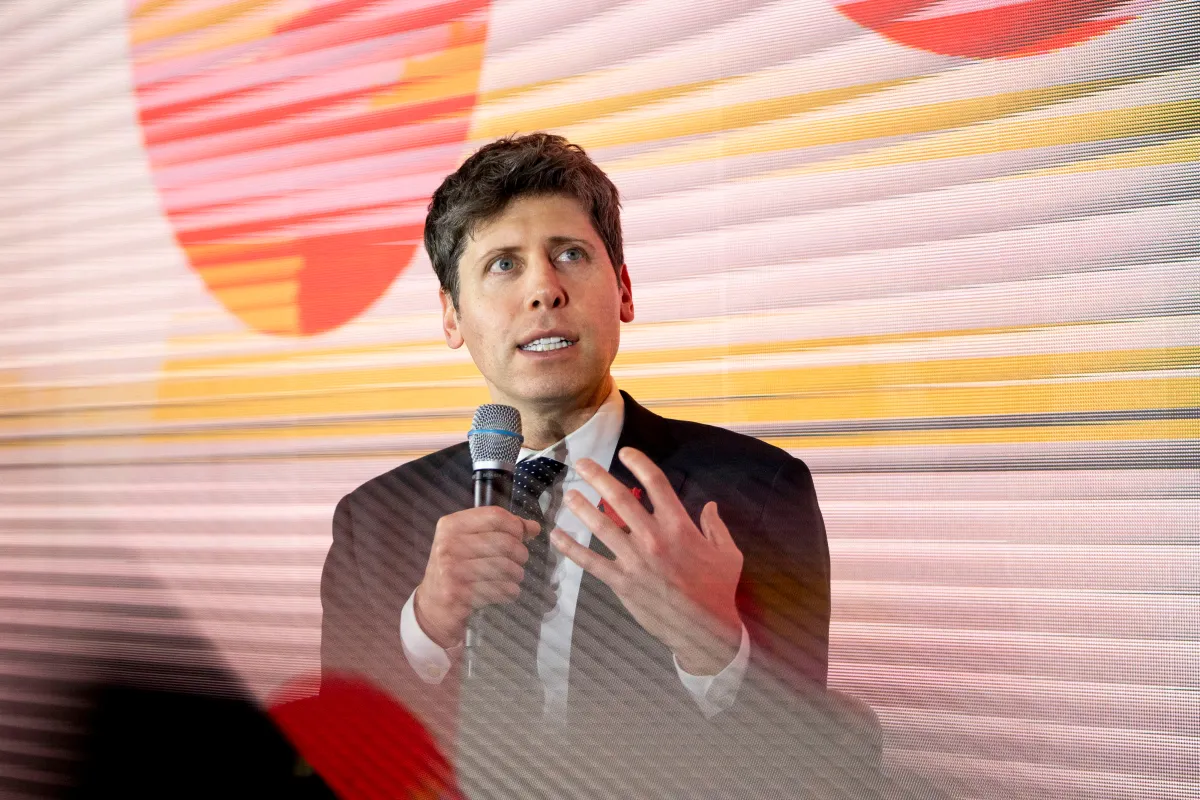
Altman used a public appearance this week to praise Huang while stopping short of calling for a return to Nvidia’s top job. According to TechCrunch, Altman said he is “hard-pressed to imagine the AI industry without Huang,” and Mashable India reported a closely related version of the same point: that he could not imagine the AI revolution without Huang and that the industry would be fine if Huang did not lead Nvidia.
He also declined to speculate on whether Huang should come back. TechCrunch said Altman would not answer that question directly, while Mashable India reported that he said he did not know enough to say whether Huang should be reinstated.
In other words, Altman drew a line between admiration and intervention. He praised Huang’s contribution to the rise of modern AI, but he did not endorse a campaign to reverse Nvidia’s leadership decision.
“It2019s hard to imagine the AI industry without Jensen.”
Sam Altman, OpenAI CEO, according to TechCrunch
Why it matters
This is not just a personality story about a high-profile CEO. Huang’s exit lands at the intersection of AI chips, model training, cloud capacity and corporate financing, which makes Nvidia more than a vendor to companies like OpenAI. It is part of the infrastructure behind the current AI boom.
That is why Altman’s comments matter to investors and developers alike. OpenAI has worked closely with Nvidia for years, Nvidia’s chips power OpenAI’s technology, and TechCrunch reported that Nvidia invested $30 billion in OpenAI earlier in 2026. If leadership instability at Nvidia changes the pace or tone of that relationship, it could affect both the hardware supply chain and the financing behind OpenAI’s future buildout.
The stock market has already registered the strain. Yahoo Finance reported that Nvidia shares closed at $156.14, down 4.12% on the day and 27.08% over the past month, leaving the company with a market value of $3.77 trillion at the close. Even for a company of Nvidia’s size, leadership turmoil can quickly become a balance-sheet issue when customers, suppliers and investors are all watching the same signal.
How the controversy escalated
Huang resigned last week, according to the reports cited by TechCrunch and Mashable India, but the details circulating around his exit have varied. TechCrunch said the resignation followed scandals involving affairs and an alleged Chinese spy. Mashable India described the trigger more narrowly as reports of an alleged extramarital affair.
That difference matters because it shows how quickly a single corporate exit can become a wider narrative, with each outlet emphasizing different parts of the story. What is consistent across the coverage is the scale of the reaction. TechCrunch said nearly 200,000 people signed a petition to reinstate Huang. Mashable India reported that the “Stand with Jensen” campaign was nearing 180,000 signatures.
Nvidia, however, appears to be standing firm. TechCrunch reported that executives do not plan to reappoint Huang. Mashable India added that the company named CFO Colette Kress interim CEO while searching for a permanent chief.
By the numbers
| Metric | Figure | What it refers to | Source |
|---|---|---|---|
| Nvidia investment in OpenAI | $30 billion | Investment disclosed earlier in 2026 | TechCrunch |
| Petition signatures | Nearly 200,000 | Calls to reinstate Huang | TechCrunch |
| “Stand with Jensen” signatures | About 180,000 | Support campaign for Huang | Mashable India |
| OpenAI Ohio project guarantee | $105 billion | Cap tied to lease and power payments | Yahoo Finance |
| Planned campus size | Up to 8 gigawatts | Ohio data-center campus | Yahoo Finance |
| First phase online | 800 megawatts | Expected in 2028 | Yahoo Finance |
OpenAI’s stake in Nvidia’s stability
Altman’s remarks carry extra weight because OpenAI is not a distant customer. It depends on Nvidia hardware for training and deploying its models, and the companies have been linked by a deep commercial relationship that goes well beyond ordinary supplier terms.
Greg Brockman, OpenAI’s president, also weighed in privately before the public comments, according to TechCrunch. He said he and his wife reached out to Huang’s family personally, underscoring that the relationship between the companies is also personal and long-running, not merely transactional.
TechCrunch reported that Altman and Brockman discussed Huang privately before speaking publicly. Brockman’s public line was notably warm: “what Jensen has built there, it clearly is built to last”. That sentiment captures the logic behind much of the industry reaction. Even if Huang is out, Nvidia’s position inside the AI ecosystem is not easy to replace.
What do the reports say about Nvidia’s leadership plan?
The answer is that Nvidia appears to be moving ahead without Huang, at least for now. TechCrunch said executives do not plan to put him back in the role, while Mashable India reported that Colette Kress has been named interim CEO as the company searches for a permanent replacement.
That leaves several unanswered questions. Is the board treating Huang’s exit as final, or is it preserving optionality while the backlash plays out? Would a petition with nearly 200,000 names, or a support campaign nearing 180,000 signatures, make any difference to the board’s calculation? So far, the reporting suggests no public reversal.
Altman also declined to turn public sentiment into corporate advice. TechCrunch reported that he said, “I don2019t think the world needs another set of random opinions on what2019s going to happen here.” That line reflects a broader instinct in Silicon Valley leadership disputes: praise the founder, avoid pretending you know the boardroom dynamics better than the board.
Background: how we got here
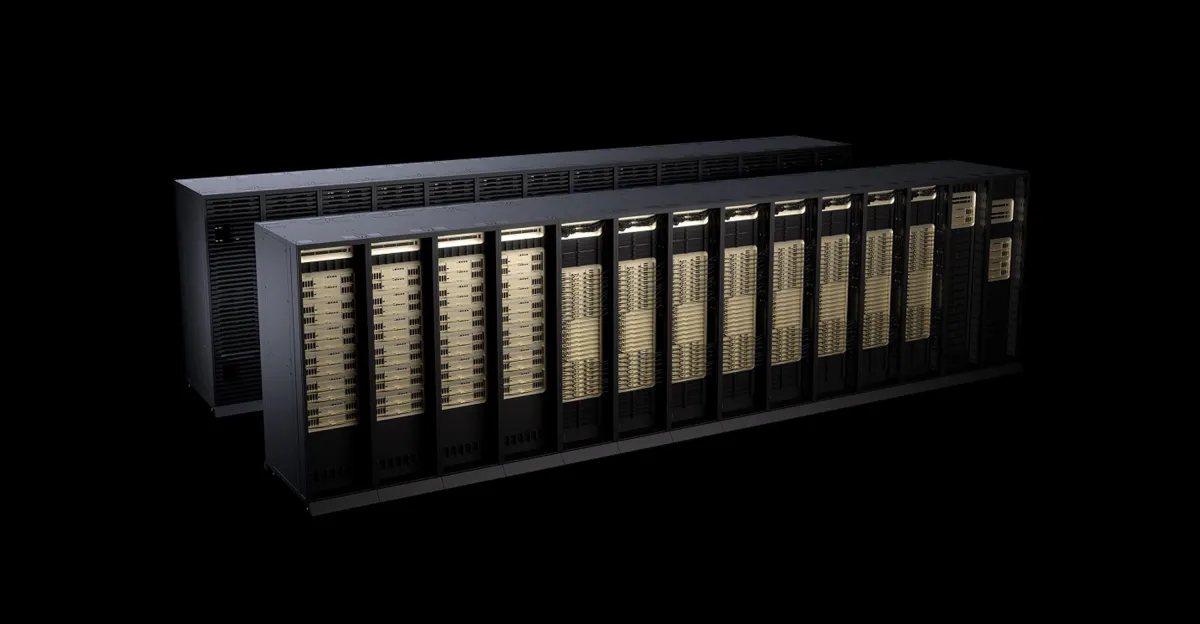
Nvidia sits at the center of the AI hardware market. Its chips are the core inputs for many leading AI systems, and that makes its leadership especially consequential for companies building large models and data-center capacity. OpenAI is one of the clearest examples of that dependence.
According to the fact sheet, Nvidia invested $30 billion in OpenAI earlier in 2026, and Nvidia’s chips power OpenAI’s technology. That combination of capital and compute makes the two companies unusually intertwined. In practical terms, a leadership shock at Nvidia is not just a corporate-governance issue; it can also become a supply-chain question.
Yahoo Finance’s reporting on the OpenAI-linked Ohio project adds another layer. The outlet said Nvidia has a $105 billion guarantee supporting the site’s lease and power payments, with the campus planned to reach up to 8 gigawatts and the first 800 megawatts expected online in 2028. Those figures suggest a long-horizon industrial commitment, not a short-term purchasing arrangement.
Against that backdrop, the uproar around Huang’s departure is easier to understand. When one executive is closely associated with a company that underwrites both the physical and financial architecture of AI expansion, any leadership change becomes a sector-wide event.
Timeline of key events
| Date | Event | Why it matters |
|---|---|---|
| Last week | Huang resigned from Nvidia | Triggered the current backlash and support campaign |
| 2026-11-16 | Altman spoke at a tech event and commented on Huang | Public endorsement without calling for reinstatement |
| 2026-11-17 | Mashable India published its report | Added details on the petition, interim CEO and Altman’s phrasing |
| 2026-11-18 | TechCrunch published its report from the New York Times DealBook Summit | Expanded the account with private discussions and company context |
Where the outlets agree and differ
The three reports line up on the core facts: Altman praised Huang, declined to push for his return, and framed Nvidia as central to the AI industry. They also agree that Huang’s exit has sparked an unusually large public response and that Nvidia is not signaling a reversal.
Where they differ is in emphasis and detail. TechCrunch focused on the private discussion between Altman and Brockman, the scale of the petition, and the reported scandal backdrop for Huang’s resignation. Mashable India highlighted the “Stand with Jensen” campaign, the interim CEO appointment and the slightly different wording of Altman’s comments. Yahoo Finance widened the frame by showing how much Nvidia’s business exposure to OpenAI extends beyond rhetoric and into huge infrastructure commitments.
Those differences matter because they show the same story from three angles: personality, public reaction and financial exposure. Together, they suggest Nvidia’s leadership shake-up is not just a boardroom matter but a stress test for the AI economy’s most important supplier.
What happens next
The immediate question is whether Huang will try to return to Nvidia. The fact sheet does not say he has announced any such move, and TechCrunch reported that Altman declined to speculate on that possibility. The next question is whether Nvidia’s board will reconsider its decision in response to the petition and public pressure. So far, the answer appears to be no, with executives said to be sticking to the transition plan.
Investors will also watch whether the leadership change affects Nvidia’s OpenAI-linked commitments. The $30 billion investment, the $105 billion Ohio guarantee, and the long timeline for the data-center buildout all suggest that the commercial relationship is large enough to outlast one executive. But large commitments do not erase uncertainty; they can magnify it when the people behind them are in flux.
For now, Altman’s stance appears designed to calm rather than inflame. He praised Huang, recognized his importance to the AI industry, and stopped short of telling Nvidia how to run itself. That may not settle the debate, but it does reflect the reality of the moment: one of the AI sector’s most influential leaders is gone from Nvidia, and the rest of the industry is still deciding how much that should matter.
Why the market is watching so closely
The market is paying attention because Nvidia sits at the center of multiple AI dependencies at once: chips, financing, and strategic trust. When one firm has this many touchpoints, leadership changes are never purely internal. They can move sentiment across suppliers, customers and investors at the same time.
That is especially true when the company in question is tied to the buildout of giant new data-center capacity. Yahoo Finance’s reporting on the Ohio site shows the scale involved: a planned campus up to 8 gigawatts, an 800-megawatt first phase, and a $105 billion guarantee tied to lease and power obligations. Those are infrastructure numbers, not just software-company numbers.
Altman’s comments suggest a pragmatic line from OpenAI’s side: admire Huang, but do not try to manage Nvidia’s internal politics in public. Whether that restraint helps stabilize the situation, or simply postpones a larger reckoning, will become clearer in the weeks ahead.
What to watch next
- Whether Huang makes any public move to challenge or reverse his resignation.
- Whether Nvidia confirms Colette Kress as permanent CEO or names a different successor.
- Whether the petition campaign continues to grow beyond the reported 180,000 to nearly 200,000 signatures.
- Whether Nvidia or OpenAI comments on any impact to their investment and hardware relationship.
- Whether the Ohio data-center project timeline changes as financing and power commitments are reviewed.
For now, the clearest signal is that the AI industry’s most important hardware supplier has entered a period of uncertainty, and even its biggest customers are being careful not to make things worse.
Frequently asked questions
Why is Sam Altman commenting on Jensen Huang's Nvidia exit?
Altman is commenting because OpenAI depends heavily on Nvidia hardware and has a close business relationship with the company. His remarks signal respect for Huang while avoiding any direct push on Nvidia's boardroom decision.
Did Sam Altman say Nvidia needs Jensen Huang back?
No. Altman praised Huang's importance to the AI industry but did not call for his reinstatement. TechCrunch reported that he declined to speculate on whether Huang should return.
How much has Nvidia invested in OpenAI?
Nvidia invested $30 billion in OpenAI earlier in 2026, according to TechCrunch. The two companies are also linked by OpenAI's reliance on Nvidia chips for training and deployment.
What is happening with the petition to bring Huang back?
The petition has drawn massive attention. TechCrunch said nearly 200,000 people signed it, while Mashable India reported the 'Stand with Jensen' campaign was nearing 180,000 signatures.
Who is running Nvidia now?
Mashable India reported that CFO Colette Kress is serving as interim CEO while Nvidia searches for a permanent chief. TechCrunch said executives do not plan to reappoint Huang.