In short
Visa has added its payment network to ChatGPT so AI agents can help shop and complete purchases, starting with a limited U.S. rollout. The companies say the system uses tokenization, fraud monitoring and human approval to keep AI shopping secure.
- Visa and OpenAI are linking ChatGPT to card payments for AI-assisted checkout.
- The launch starts with a limited group of U.S. ChatGPT Pro users aged 18 and older.
- Users still review the order and must confirm payment with Face ID or fingerprint.
- Visa says the system uses fraud monitoring and approval controls; OpenAI says tokenization hides card details.
- Open questions include merchant coverage, fees and how much autonomy users will allow.
Visa has embedded its payment network into ChatGPT, a move that could let AI agents shop and complete purchases for users while keeping human controls in place. The rollout, announced alongside OpenAI’s Wallet feature, is limited at first to a small group of U.S. ChatGPT Pro users and is designed to test whether agentic shopping can move beyond novelty without loosening fraud and authorization safeguards.
What Visa and OpenAI just launched
According to The Hindu and TechCrunch, ChatGPT can now help users shop and finish transactions through a Visa-linked payment flow. OpenAI’s Wallet feature is built to let ChatGPT agents pick items and prepare checkout, while Visa supplies the payment authorization and fraud monitoring behind the scenes.
The launch is narrow. TechCrunch reported that only a limited number of U.S. ChatGPT Pro users who are 18 or older and hold U.S.-issued Visa, Mastercard or American Express cards can use the feature at the start. The two companies have not disclosed how wide the rollout will be after this initial phase.
OpenAI and Visa are presenting the integration as broader than earlier merchant-limited shopping experiments. The Hindu reported that Visa said the ChatGPT integration could work at any merchant accepting Visa, a significant shift from systems tied to a specific set of stores or checkout partners.
How does ChatGPT checkout work?
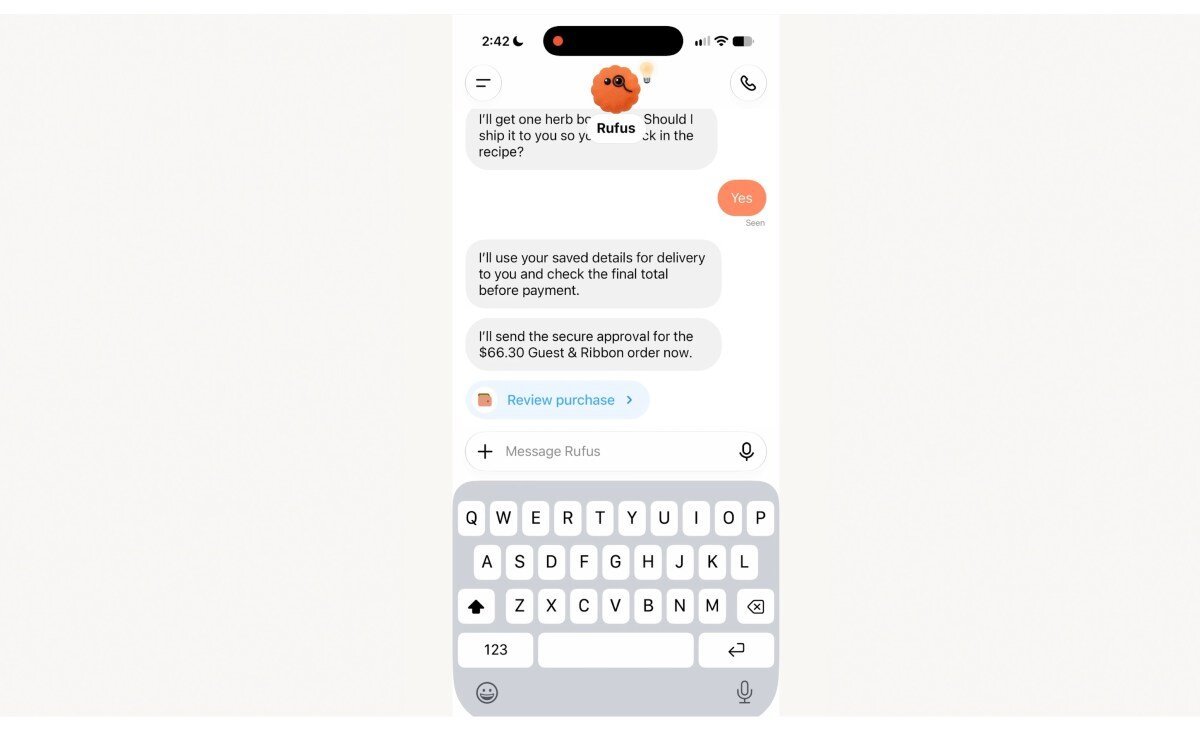
It works as a layered process rather than a fully autonomous purchase. OpenAI says users review the items, total and payment card before checkout, and the final approval still requires Face ID or fingerprint confirmation, according to TechCrunch.
That human checkpoint matters. Visa said early transactions will still mostly require human approval through notifications, which suggests the companies are trying to frame the product as agent-assisted commerce rather than a truly hands-off shopping bot.
OpenAI also says tokenized payments keep card details from being shared with the agent or the merchant. Merchants receive only the shipping address and contact details needed to fulfill the order, TechCrunch reported. Users keep normal card rewards and dispute protections, OpenAI said.
What Visa is providing
Visa’s role is not simply branding. The company said it will provide payment authorization and fraud monitoring, while OpenAI provides the agent interaction and the purchase-initiation technology, The Hindu reported. That division of labor underscores where the biggest trust problems sit: not just in product discovery, but in who is allowed to initiate a payment and under what conditions.
Visa also described guardrails including spending limits, required approvals and approved merchants. OpenAI, for its part, said it plans future controls such as spending caps and category- or time-based rules. Those additions would matter if AI shopping moves from a controlled pilot into everyday use, where people may want tight controls over what an assistant can buy and when.
Why it matters
This is more than a convenience feature. It is a test of whether card networks, merchants and AI platforms can build a trustworthy version of “agentic commerce” before consumers or regulators reject the idea as too risky.
For readers, the main promise is obvious: less friction between seeing a product and buying it. For merchants, the question is whether an AI-driven checkout assistant increases orders or introduces new friction through added verification, unclear responsibility or fraud concerns. For Visa, the prize is even larger: if AI agents become a standard front end for shopping, card networks want to remain embedded in the payment step rather than watching new intermediaries take control.
There is also a competitive dimension. The Hindu noted that Mastercard has been rolling out smaller-scale AI-shopping features, while TechCrunch said Amazon blocks AI agents from shopping on its site and pushes users toward Alexa instead. That split shows that the industry is not united on how much autonomy to give software agents, especially when those agents are making real purchases with real payment credentials.
In practical terms, this launch is a stress test for trust. A shopping bot is easy to market; a shopping bot that can safely handle payment authorization, fraud checks and merchant acceptance is much harder to deliver at scale.
Background: how the industry got here
AI shopping assistants have been moving from recommendation engines toward actual transaction tools. The background here is not a single breakthrough but a series of incremental steps: first product suggestions, then add-to-cart functions, and now checkout initiation.
OpenAI has already experimented with commerce inside ChatGPT. The Hindu reported that the company previously ran Instant Checkout, but retired it in March after errors and weak merchant uptake. That history helps explain why the new Visa-linked rollout places so much emphasis on guardrails, card-network infrastructure and human confirmation.
OpenAI’s earlier effort also carried a merchant fee, with The Hindu and BusinessLine reporting that Instant Checkout charged merchants 4% of transaction value. Visa and OpenAI did not disclose any financial terms or merchant/customer fees for the new integration, leaving open a key commercial question: who pays for the convenience, and how much?
The technology underpinning these systems is tokenization, which replaces card details with a payment token so the actual card number is not shared broadly. That approach is central to making agentic commerce workable because it reduces exposure if an AI system is handling the transaction flow. Still, technical security alone does not solve policy questions about merchant acceptance, user consent or fraud liability.
The broader market context is also changing. TechCrunch cited Meta’s Muse user base of more than 10 million users as one benchmark for AI-assisted shopping. That number does not describe Visa’s rollout, but it shows why the space is getting attention: AI shopping is no longer a niche demo, even if the path from discovery to purchase remains uneven.
What the companies are saying
Visa’s chief product and strategy officer, Jack Forestell, framed the launch as part of a larger shift in commerce. He said:
“As AI agents become active participants in the economy, Visa’s focus is to ensure transactions are trusted, secure and seamless,”
according to The Hindu.
Forestell also pushed back on the idea that the hardest part is the shopping recommendation itself. He said:
“I think we’re generally at a place where most people are very comfortable with the shopping aspects of it”
and added that payment handling “
just requires a whole different level of trust
.”
Those remarks capture the real dividing line in agentic commerce. Recommending a shirt or a pair of headphones is one thing. Letting software decide when, where and how to spend money is another. Visa is betting the industry is ready to move into the second phase, provided the approval and fraud systems stay visible enough to reassure users.
By the numbers
| Metric | Figure | What it refers to |
|---|---|---|
| Launch audience | Limited number | Initial U.S. ChatGPT Pro users eligible for Wallet access |
| Minimum age | 18+ | Age requirement for initial access |
| Eligible cards | Visa, Mastercard, or American Express | Payment cards supported at launch |
| Historical merchant fee | 4% | Instant Checkout fee reported by The Hindu and BusinessLine |
| Benchmark user base | 10 million+ | Meta’s Muse user base cited by TechCrunch |
How are merchants and cards protected?
The companies are leaning heavily on familiar payment-industry controls. Visa will handle authorization and monitor for fraud, while OpenAI manages the chat-based interaction and purchase initiation. The goal is to keep the card details hidden from the AI agent and the merchant, even as the agent helps finish the order.
TechCrunch reported that users still have to review the item list, the total and the card selected before checkout, and that the final step requires biometric approval. That design suggests the companies are trying to preserve a standard cardholder consent model inside a new interface.
Still, several operational details remain unresolved. It is unclear how many merchants will support the feature at launch, how much of the checkout flow will still require manual approval in practice, or whether spending limits and category-based controls will be available immediately or only later. Those open questions matter because they determine whether the product feels like a convenience layer or a tightly controlled pilot.
Why it matters for consumers, retailers and the payments industry
For consumers, the upside is speed. An AI agent can narrow choices, fill in details and prepare a purchase without forcing the user to jump between apps and websites. That may sound modest, but small reductions in checkout friction can change how often people finish buying something they already intended to purchase.
For retailers, the stakes are more complicated. If agent-driven shopping becomes common, merchants may need to optimize not only for search and ads but also for how products are surfaced inside AI systems. They will also need confidence that a purchase initiated by a bot is valid, traceable and supported by the same dispute systems that underpin ordinary card payments.
For Visa and other card networks, the issue is strategic. If the next wave of commerce moves into AI assistants, the companies that sit at the payment layer can keep their central role. If they misjudge the balance between convenience and control, platform companies or merchant ecosystems could try to capture that relationship instead.
There is also a reputational risk. A single failed purchase, unauthorized charge or poorly explained approval flow could slow adoption. That is why the companies are emphasizing tokenization, cardholder review and biometric confirmation from the outset rather than waiting for a problem to force the issue.
What happens next
The first thing to watch is the size of the rollout. The current launch is deliberately small, and neither company has said how quickly it will expand beyond a limited number of U.S. Pro users. If the pilot performs well, broader access would likely be the next step.
The second question is merchant coverage. Visa said the system could work at any merchant accepting Visa, but the practical test is whether checkout, fulfillment and fraud workflows hold up across real merchants and not just in controlled demonstrations.
The third issue is control. OpenAI has said it plans spending caps and category- or time-based rules, but it is not clear when those controls will arrive or how granular they will be. Users will likely want the ability to say what an assistant can buy, how much it can spend and when it can act on its own.
Also unresolved are the economics and the governance. Visa and OpenAI have not disclosed fees, and the historical 4% Instant Checkout charge shows that commerce products can carry meaningful costs for merchants. Whether this new system follows the same model, a different one, or none at all will shape uptake.
Finally, the broader market will keep moving. Mastercard is pushing its own smaller-scale AI-shopping features, while Amazon’s resistance to AI agents on its site suggests that not every platform wants third-party bots in the checkout funnel. That disagreement may decide how quickly AI shopping becomes mainstream — or whether it remains confined to carefully supervised experiments.
Timeline of the rollout
| Date | Event | Why it matters |
|---|---|---|
| Late last year | OpenAI announced Instant Checkout | Set the first commerce path inside ChatGPT |
| March 2026 | OpenAI retired Instant Checkout | Highlighted errors and weak merchant uptake |
| 2026-06-11 | Visa announced ChatGPT payment-network integration | Marked Visa’s formal entry into agentic checkout |
| 2026-11-13 | TechCrunch reported the OpenAI Wallet launch | Added details on access limits and checkout controls |
Bottom line
Visa and OpenAI are trying to make AI shopping more than a demo by wiring ChatGPT into the payments system that underwrites everyday commerce. The launch is small, the safeguards are strong, and the unanswered questions are still large — which is exactly what you would expect from an industry trying to turn a convenience feature into a trusted purchasing channel.
Frequently asked questions
What is Visa’s new ChatGPT payment integration?
Visa’s new integration lets ChatGPT help users shop and complete purchases through a payment flow that uses Visa’s authorization and fraud monitoring. OpenAI handles the agent interaction, while users still review the order and confirm payment before checkout is completed.
Who can use ChatGPT Wallet at launch?
At launch, only a limited number of U.S. ChatGPT Pro users can access it, according to TechCrunch. The initial group must be 18 or older and have a U.S.-issued Visa, Mastercard or American Express card.
Is ChatGPT making purchases on its own?
Not fully. The system is designed to help with shopping and prepare transactions, but users still review the items, total and card before checkout, and the final approval requires Face ID or fingerprint confirmation.
How is this different from OpenAI’s earlier commerce test?
This rollout is broader in concept because Visa and OpenAI say it can work at any merchant accepting Visa, rather than a merchant-limited test. OpenAI’s earlier Instant Checkout was retired in March after errors and weak merchant uptake.
Will merchants or consumers pay fees for the new feature?
Visa and OpenAI have not disclosed financial terms or any merchant or customer fees for the new integration. That remains one of the biggest unanswered questions around the rollout.