In short
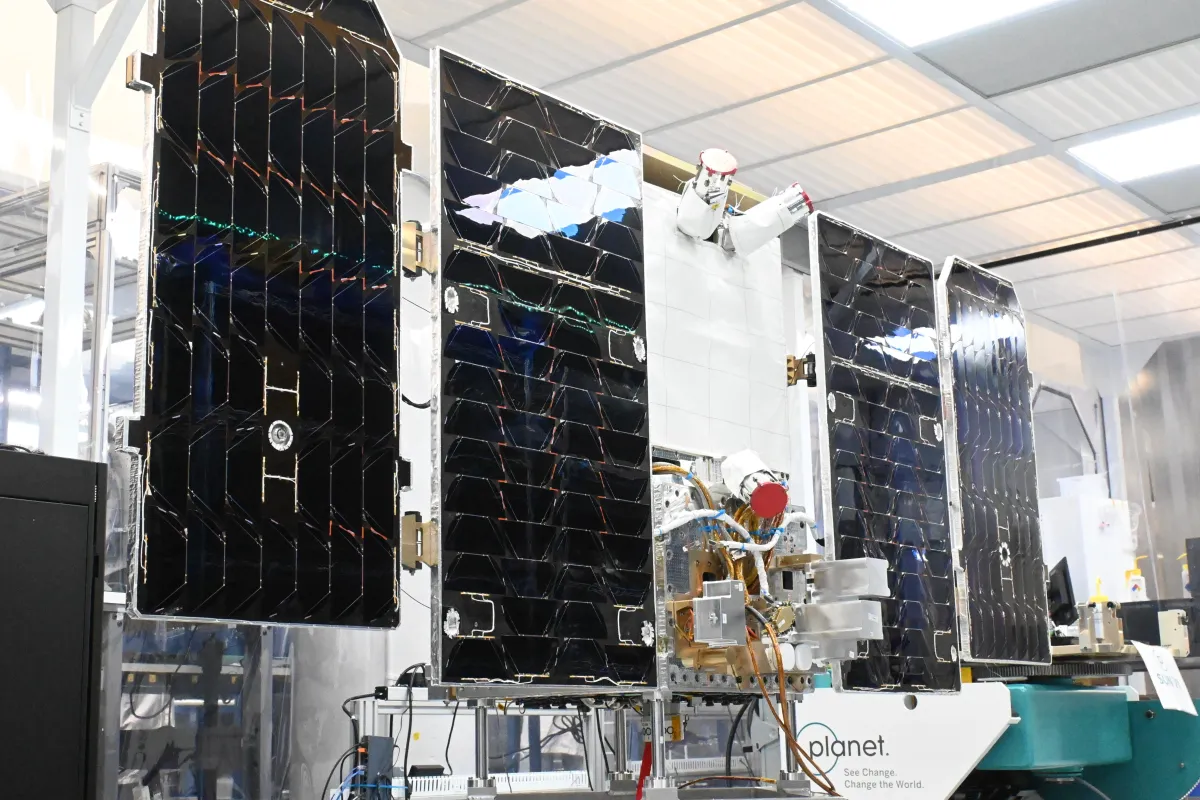
Google says its first Suncatcher prototype satellite is online and generating test output after launch earlier this month. The mission is an early test of whether a space data center concept can work economically and reliably in orbit.
- Google’s first Suncatcher satellite is online and communicating with Earth.
- The prototype carries one TPU and is being used to test AI compute in orbit.
- Power limits currently restrict TPU runtime to about 20 minutes at a time.
- Google plans two more chip-equipped satellites in 2027.
- The bigger challenge is economics, not just whether the hardware can function.
Google says its first Suncatcher prototype satellite is online, talking to Earth and already producing test output after launching earlier this month. The mission is a small but important step in the company’s attempt to find out whether parts of future AI infrastructure can be moved into orbit, where solar power and the space environment could eventually support large-scale computing.
The satellite launched on SpaceX’s Falcon 9 alongside more than 100 other spacecraft. It carries one Google Tensor Processing Unit, is generating up to 1 kW of solar and electric power, and completed roughly three weeks of commissioning before its first operational use. This week, Google sent the first prompt from the ground: asking Gemma 4 to write a haiku about space and to report local orbital conditions.
What Google has put in orbit
The Suncatcher prototype is not a full data center, and Google is not presenting it that way. Instead, the company appears to be using the satellite as a live test bench for a single TPU, with a focus on whether the chip can keep functioning under the thermal swings and radiation exposure of space.
According to TechCrunch, Google says the spacecraft is operating nominally. The early readout matters because it suggests the system is alive enough to run controlled tests, receive prompts from Earth and return results, even if the work so far is limited and carefully staged.
Why a single TPU matters
Google’s TPU is the core hardware being tested here. TPUs are the company’s custom accelerators for AI workloads, and this mission is designed to see how one performs outside a terrestrial data center, where cooling, shielding and stable power are all easier to provide.
The big engineering question is not whether a chip can switch on in orbit. It is whether it can keep producing reliable output when the environment tries to break it. TechCrunch reports that radiation can cause bit flips and silently corrupt memory without the standard alerts engineers rely on on Earth.
How the first orbital test worked
The first interaction with the spacecraft was deliberately modest. Google’s ground team asked the onboard system to generate a haiku about space through Gemma 4, then asked it to report local orbital conditions. That is a far cry from a production AI workload, but it shows the satellite can receive instructions, process them and send something back.
The company’s current TPU runtime is limited to about 20 minutes at a time because of power demand. That constraint is a reminder that the satellite is still an early prototype, not a finished computing node. Even so, the test gives Google real-world data on how long the chip can stay usable before power limits force a shutdown.
Why the timing matters
The commissioning period lasted about three weeks before the satellite was put to operational use. In the world of space hardware, that short stretch is a meaningful checkpoint: the system had to survive launch, wake up, establish communication and then clear enough checks to run a first test.
The launch itself also placed Suncatcher in a crowded environment. It rode to orbit on a Falcon 9 flight carrying more than 100 spacecraft, which is typical of modern rideshare missions but still underscores how small this experiment is compared with the scale of the ambition behind it.
Why it matters
This story matters because it is less about a novelty demo than about whether orbital AI infrastructure can become practical. Google is not just testing a single piece of hardware; it is exploring a possible future in which some inference workloads run in space, powered by sunlight and supported by satellite networks flying close together.
If the concept works, it could change how companies think about compute constraints. Space offers abundant solar energy and, in theory, different cooling advantages. But those benefits only matter if the hardware survives radiation, temperature swings and the cost of putting enough mass in orbit to make the system worthwhile.
That is why the economics are central to the story. Google’s research points to a future in the 2030s when orbital infrastructure might become economical. Until then, the project is a moonshot in the plainest sense: a high-risk test of whether the physics and the finances can line up.
What readers should watch
- Whether the satellite keeps producing usable output beyond short runtime windows.
- Whether radiation or thermal stress causes reliability problems in the TPU.
- Whether Google follows through with the planned 2027 launches.
- Whether the cost equation improves enough to justify a larger orbital network.
- Whether launch availability, especially from Starship, affects the project’s timeline.
How Google’s idea differs from rivals
Google’s approach is not the only one being imagined for space-based computing, but TechCrunch says it differs from rivals that envision inference on individual satellites rather than distributed processing. Google’s version is closer to a close-flying network in which satellites work together, allowing larger inference workloads to be handled in orbit.
That distinction matters because it shapes nearly every design choice that follows. A single satellite can be a proof of concept. A distributed orbital network requires links, coordination, power management and launch economics that are far harder to solve at scale.
Inter-satellite links are part of the plan
Google expects future satellites to have higher power generation and inter-satellite optical links. Those links would help the spacecraft communicate with one another and support more ambitious distributed processing, rather than leaving each vehicle to stand alone.
For now, the first craft is doing the less glamorous but necessary work of establishing whether the hardware survives long enough to justify the next step.
Background: how Google got here
Space-based data centers have long been proposed as a way to place compute in orbit, where solar power is plentiful and the operating environment changes the usual constraints on cooling and electricity. The idea is attractive on paper because it shifts at least part of the infrastructure away from crowded, power-hungry ground sites.
Google is bringing its own silicon to that problem. TPUs are the company’s custom AI accelerators, used for inference and training workloads. Putting one into space turns a theoretical debate into a hardware test: can Google’s AI chip, designed for terrestrial data centers, operate reliably in orbit?
The answer depends on details that are easy to underestimate from the ground. Space radiation can flip bits in memory. Heat and cold can put stress on components. And even if the chip works, the system must still fit within the satellite’s power budget, which currently limits runtime to about 20 minutes at a stretch.
By the numbers
| Metric | Figure | What it means |
|---|---|---|
| Launch | Earlier this month | Suncatcher lifted off on a SpaceX Falcon 9 rideshare mission. |
| Commissioning time | About 3 weeks | The satellite was checked out before first operational use. |
| Onboard compute | 1 TPU | Google is testing one Tensor Processing Unit in orbit. |
| Power generation | Up to 1 kW | The prototype’s available electricity is limited. |
| Runtime | About 20 minutes | The TPU can run only in short bursts because of power demand. |
| Next planned launch | 2027 | Google wants to send up two more chip-equipped satellites. |
| Long-range target | 2030s | That is when Google imagines economical orbital infrastructure. |
What happens next
The next major milestone is not a headline-friendly consumer product but a set of engineering questions. Google needs to learn how much useful inference a single orbital TPU can sustain, how well it tolerates radiation and thermal stress, and whether the satellite can keep operating without reliability issues becoming the dominant story.
The company’s planned follow-up is two more chip-equipped satellites in 2027. If that schedule holds, those launches could move the effort from a single prototype to a more meaningful test of how close-flying satellites might share work in orbit.
Even then, the bigger hurdles remain outside the lab. Google will have to prove the economics, not just the physics. It will also need a launch path that can support the project at scale, which brings SpaceX’s Starship development into the picture. TechCrunch notes that Google’s research estimates SpaceX would need 1,800 Starship flights to match prior learning-driven cost reductions, a reminder of how much launch volume the concept may require.
That estimate helps explain why this is being described as a moonshot. The company is not simply trying to run an AI chip in space. It is trying to determine whether a whole category of infrastructure can be made affordable enough to matter in the 2030s.
The market backdrop
The timing is notable because Alphabet’s stock fell this week after a separate report that AI features in search are hurting ad revenue growth. That weakness sits in the background of the Suncatcher story, even if the satellite project is a long-horizon bet rather than a response to any single quarter.
In that sense, the orbital experiment shows both the ambition and the pressure facing major AI companies. They are pushing into new technical territory while also trying to defend the economics of their existing businesses. For Google, the space project is not a distraction from the AI race; it is another way to look for compute capacity, efficiency and strategic flexibility.
Bottom line
Google’s first Suncatcher satellite is working, talking to Earth and returning test results, but the experiment is still at the beginning. The real question is whether the company can turn a successful prototype into a credible system for orbital AI infrastructure — one that can survive space, scale through launch economics and make sense on cost by the 2030s.
For now, the satellite’s most important achievement may be the simplest one: it is still there, still online and still giving Google data.
“the satellite was operating nominally”
Frequently asked questions
What is Google’s Suncatcher satellite project?
Google’s Suncatcher is an early space-computing test program built around a prototype satellite carrying a Tensor Processing Unit. The company is using it to study whether AI hardware can work reliably in orbit and eventually support a distributed space-based compute network.
Why is Google testing AI chips in space?
Google is testing AI chips in space to see whether orbital infrastructure could offer practical advantages in power and cooling. The main question is whether those benefits can outweigh the technical problems of radiation, thermal stress and launch cost.
How long can the TPU run on the satellite?
The current TPU runtime is limited to about 20 minutes at a time. Google says that limit is driven by power demand, which shows the prototype is still in an early testing phase rather than a full-scale system.
What happens next for the Suncatcher program?
Google’s next planned step is to launch two more chip-equipped satellites in 2027. Those missions would help test whether a close-flying satellite network can support larger inference workloads in orbit.
Could space data centers actually become economical?
Google hopes so, but that remains unproven. The company’s research frames the project as a moonshot aimed at economical infrastructure in the 2030s, with launch economics and hardware reliability still major open questions.