In short
Runware says it plans a Romania factory to mass-produce modular AI data center pods, aiming for 30 MW of capacity per day by 2028. The company is betting factory-built infrastructure can shorten deployment times and ease AI power and GPU bottlenecks.
- Runware says its Romania factory could reach 30 MW/day by 2028.
- The company says pods can be installed and online within 48 hours of delivery.
- Runware says it has more than $60 million raised and $1 billion in committed interest for Sonic pods.
- The plan is a test of whether AI infrastructure can be industrialized like manufacturing.
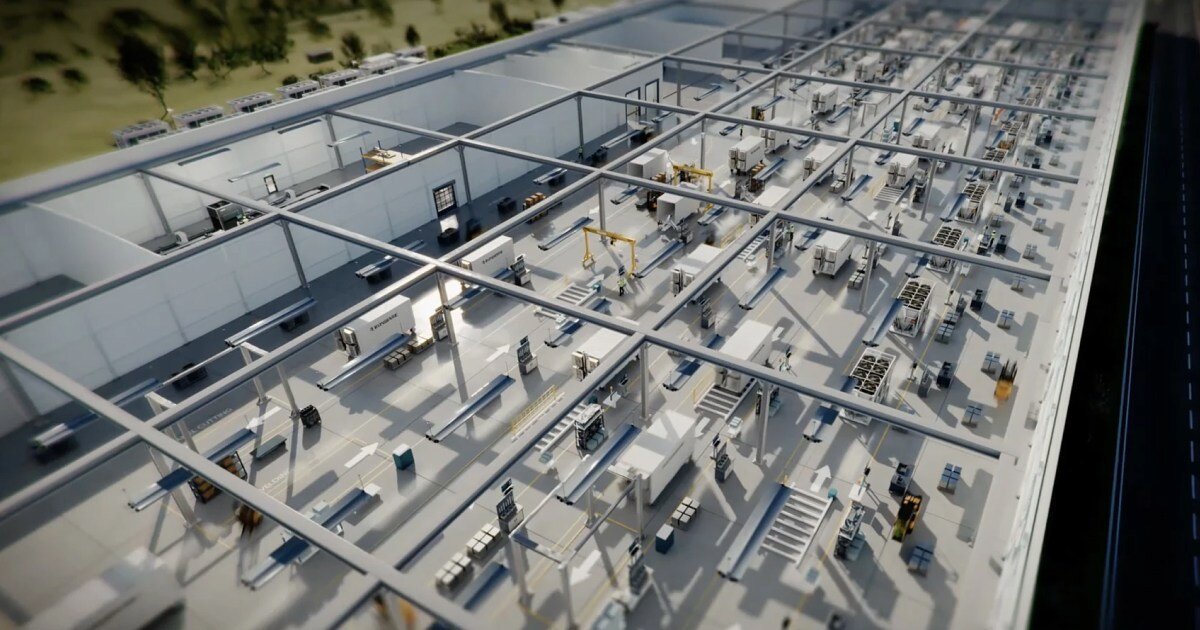
Runware says it plans to build a factory in Romania that will mass-produce modular AI data center pods, with a target of reaching 30 MW of capacity per day by 2028. If it gets there, the company says that pace would amount to nearly 1 GW a month, a scale that would put factory-built AI infrastructure in a very different category from today’s slower, site-by-site buildouts.
What Runware says it is building
The company is describing a production-line approach to AI infrastructure, not just another data center project. Runware says the Romanian plant will make modular pods that can be shipped, installed and brought online in 48 hours after delivery, including setup.
That promise is central to the pitch. Rather than waiting on a custom build that can take months or longer, customers would be able to order a pod and accelerate deployment dramatically. Runware says the production process itself has already changed: the build time for a pod has fallen from three weeks to one day as manufacturing scales.
Co-founder and chief executive Flaviu Radulescu said the company is trying to compress the time it takes to stand up AI infrastructure. “Customers should be able to plan a hyperscale data center around factory-built pods from the beginning and have it working in months instead of years.”
Why it matters
This matters because the bottleneck in AI is no longer just software. AI data centers need power, chips, cooling and real estate, and those constraints are now shaping how fast companies can deploy new systems. Runware’s plan is a test of whether that infrastructure can be industrialized in the same way that cars or appliances are manufactured.
If factory-built pods can reliably shorten deployment, that could help buyers facing long GPU lead times and difficult power interconnection queues. It could also change how developers think about location: instead of building everything on-site from scratch, they could treat data center capacity more like a product that can be ordered, shipped and assembled.
There is also a broader market implication. AI infrastructure demand has become large enough that suppliers are looking for ways to standardize construction. The article’s comparison points to roughly 10 GW of additional U.S. data center power expected this year, which shows the scale of the market Runware is trying to enter.
How the pod model works
Runware says the pods use a standard design, but can be customized for customer needs and for new GPU chips. That flexibility matters in AI, where hardware generations move quickly and buyers do not want to be locked into a fixed layout.
The company says customers can either use their own site or have Runware source one. It also says customers can choose between different commercial arrangements: Runware can rent compute, or customers can supply GPUs and pay monthly for the pods and operations. Power and internet are billed separately.
Another part of the pitch is the cooling setup. Runware says its pods use closed-loop liquid cooling with air-cooled radiators, so they do not need a water connection. The company also says the pods run silently up to 86 F and that it uses renewable energy whenever possible.
By the numbers
| Metric | Runware’s claim | Why it stands out |
|---|---|---|
| Daily output target | 30 MW/day by 2028 | Equivalent to nearly 1 GW a month |
| Pod deployment time | 48 hours after delivery | Includes install and setup |
| Build time improvement | From 3 weeks to 1 day | Shows the speed-up from scaling production |
| Committed interest | $1 billion | Tied to Sonic pods covering over 20 MW |
| Current fundraising | More than $60 million raised | Includes a $50 million Series A from last December |
| Site pipeline | 397 MW, expandable to 1.2 GW | Shows the scale Runware says it is lining up |
What Runware says it already has
Radulescu says the company already has two factories: one that has been operating for years and a second that began earlier this year. The second factory is expected to be finished within months and go online early next year.
That gives Runware a staged manufacturing base before the Romanian plant reaches full scale. The company says it plans to begin gradually increasing production next year, with U.S. and global expansion to follow after the new factory comes online.
Runware is also pointing to demand. It says it has $1 billion in committed interest for its Sonic pods, covering more than 20 MW. The company began offering Sonic pods to outside customers one month ago, which means the sales push is still very early.
Background: why modular data centers are gaining attention
The push toward modular data center infrastructure did not emerge in a vacuum. AI data centers are being built to support rapidly growing demand for model training and inference, and conventional construction can struggle to keep pace. That has made prefab and modular approaches more attractive to companies that want faster deployment and more standardized rollouts.
Nvidia has been promoting reference designs and systems intended to make AI infrastructure deployment easier and faster, which reflects a wider industry effort to reduce friction in building out AI capacity. Runware’s pitch sits in that same current, but with a manufacturing-heavy twist: instead of only simplifying design, it wants to industrialize production.
That distinction is important. A reference design can make a project easier to plan, but it still leaves much of the work to be done on site. A factory-built pod model tries to move more of the complexity offsite and into repeatable manufacturing.
How much is at stake financially?
Runware says it has raised more than $60 million to date, and it plans a Series B later. For now, though, the company says the Romanian factory launch is being funded with the $50 million Series A it raised last December.
That financing structure suggests the company is trying to prove the model before raising more capital for scale. Manufacturing infrastructure is expensive, and the jump from pilot production to industrial output usually requires not just demand, but reliable access to parts, labor, power sites and financing.
The company’s own numbers show the scale of the ambition. A 30 MW-a-day production line by 2028 would imply a manufacturing operation that moves far beyond a boutique deployment business. It would mean Runware is trying to become a supplier of large-scale AI capacity, not just a builder of individual pods.
Why the Romania plan is notable
Romania is the location named by the company for the new factory, but the more important point is what the location represents: a manufacturing base meant to support both European production and, eventually, U.S. and global expansion. Runware has not said exactly how the U.S. expansion will be structured or when it will begin.
Radulescu said the company is working with power providers on a site pipeline of 397 MW, expandable to 1.2 GW. That pipeline suggests Runware is thinking at industrial scale already, not just one project at a time.
The company’s focus on renewable energy and closed-loop cooling also suggests it is trying to position the pods as easier to site in places where water access or local grid conditions can complicate traditional data center builds. Runware says it will use renewable energy whenever possible, and it says its cooling design avoids the need for a water connection.
What makes the Sonic pod different?
Runware says Sonic pods are standardized but configurable. That matters because AI infrastructure buyers often want a repeatable system that can still adapt to changing chips, workloads and power requirements.
The company also says it can offer the pods under different commercial models. Customers may supply their own GPUs, or they can have Runware provide compute. Either way, the customer pays monthly for the pods and operations, while power and internet are billed separately.
That structure suggests Runware is trying to serve buyers who want the speed of an outsourced infrastructure model but still need control over hardware decisions. It also gives the company multiple ways to monetize the same physical platform.
How credible are the targets?
The targets are ambitious, and the article’s open questions point to the real test ahead. Runware will have to prove that it can hit manufacturing and deployment milestones on schedule, convert committed interest into signed orders, and secure the supply chain needed for scale.
That includes enough GPUs, enough labor, enough sites and enough financing to support a faster factory rhythm. It also includes the practical question of whether customers will be comfortable adopting a new infrastructure model at this scale.
“Our pod delivery times are also shorter than current GPU lead times”
That line from Radulescu captures the company’s thesis: if the hardware market itself is slow, then infrastructure has to move faster to matter. The larger question is whether factory production can really outrun the rest of the AI buildout.
What happens next
The near-term milestones are clear. Runware expects its second factory to go online early next year, and it says it will begin gradually increasing production next year. The Romanian plant is the longer-term piece, with 2028 set as the target for 30 MW per day.
Investors and customers will be watching for several signs:
- Whether the second factory opens on time and starts contributing meaningful output.
- Whether the company turns $1 billion in committed interest into actual orders and delivered capacity.
- Whether the Romania site can be financed, staffed and supplied at the pace Runware is projecting.
- Whether the company can move beyond early customer interest to a repeatable commercial rollout.
One more issue will matter: how quickly Runware can expand outside its current base. The company says U.S. and global expansion will follow after the new factory comes online, but it has not laid out the sequence publicly. That leaves the next stage of the story dependent on execution, not just aspiration.
The bigger picture
Runware’s plan lands at a moment when AI infrastructure is becoming a manufacturing problem as much as a software one. The company is betting that standardized pods, shipped and installed quickly, can help solve the twin constraints of power and compute. If that bet works, it could change how data centers are built.
If it does not, the project will still say something important about the market: that the race to industrialize AI infrastructure is intense enough to justify factory-sized ambition. Either way, the Romania factory plan is a sign that the next phase of AI competition may be fought not only in code, but in concrete, steel, cooling systems and supply chains.
Frequently asked questions
What is Runware planning in Romania?
Runware says it plans to build a factory in Romania to mass-produce modular AI data center pods. The company says the plant could reach 30 MW of data center capacity per day by 2028, which it says would amount to nearly 1 GW per month.
How fast can Runware’s pods be deployed?
Runware says its pods can be brought online within 48 hours after delivery, including installation and setup. The company also says pod build time has dropped from three weeks to one day as production scales.
How is Runware funding the factory?
Runware says the factory launch is being funded with its $50 million Series A from last December. The company says it has raised more than $60 million to date and plans a Series B later.
Why does Runware think this model will work?
Runware says factory-built pods can help customers plan and deploy hyperscale AI infrastructure faster, especially when GPU lead times and power constraints slow traditional builds. The company says standardized pods can still be customized for customer needs and new GPU chips.