In short
Blackstone executive Jas Khaira said fears about AI infrastructure debt are overstated, arguing the loans are backed by strong customers and hard assets. The firm is expanding aggressively into compute financing, neoclouds and AI deployment services through its Blackstone N1 unit.
- Blackstone says the AI debt market is backed by strong customers, not shaky credits.
- The firm has made major bets on neoclouds, data centers, chips and AI adoption services.
- Rising interest rates and wider credit spreads are increasing the cost of financing AI infrastructure.
- Market pressure is already visible in CoreWeave’s stock decline and Firmus’s canceled IPO.
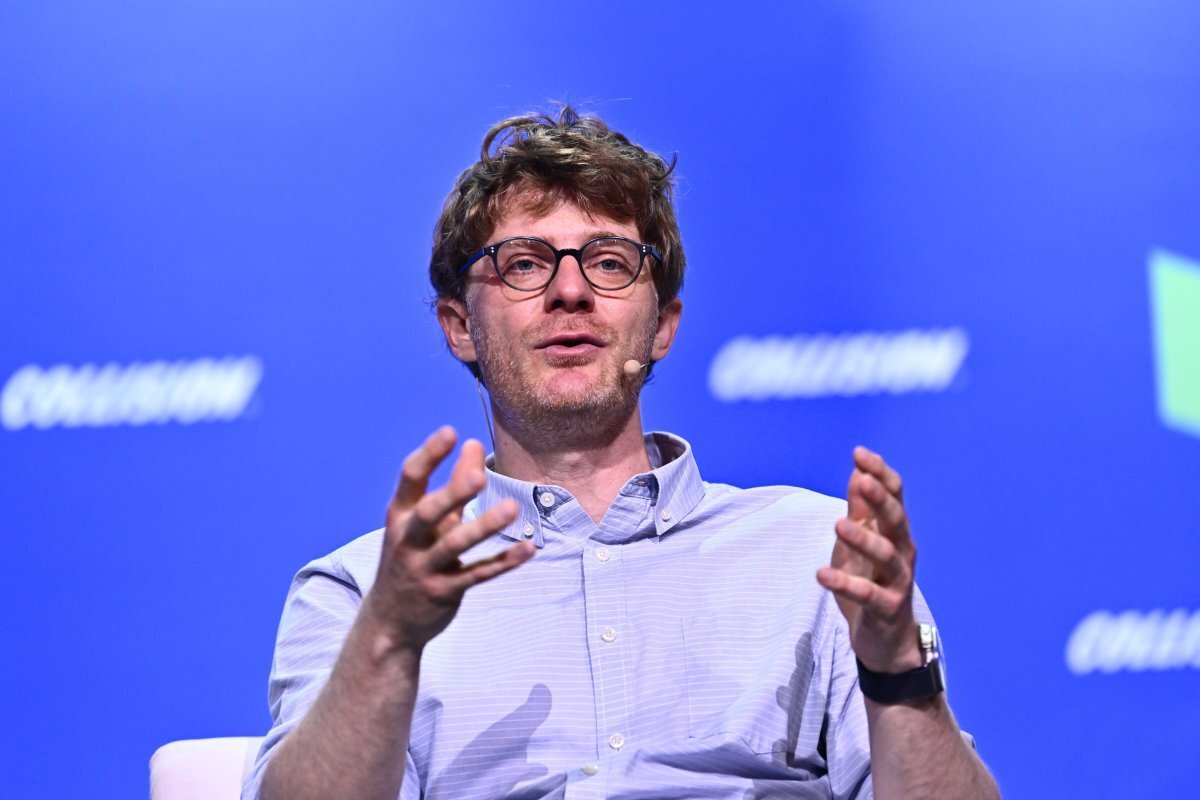
Blackstone executive Jas Khaira said the market’s worries about debt tied to the AI buildout are being exaggerated, arguing that most of the financing is still backed by highly creditworthy customers and durable contracts. His comments, delivered at TechCrunch Disrupt on Oct. 21, came as investors debate whether the AI infrastructure boom is creating a dangerous pileup of leverage or simply funding the next phase of computing.
The private equity giant has become one of the most aggressive financiers in artificial intelligence, pouring capital into data centers, neoclouds, chip-adjacent startups and AI deployment services. Through its AI-focused unit Blackstone N1, launched earlier this year in San Francisco, the firm is positioning itself not just as an investor but as a key source of capital for the entire AI stack.
Why Blackstone is leaning into AI now
Blackstone believes the AI era is different from previous technology cycles because the winning companies need far more capital to scale. In mobile and software-as-a-service, startups could often grow quickly with relatively modest spending. AI, by contrast, demands enormous upfront investments in chips, data centers, power, networking and specialized infrastructure.
That capital intensity is exactly where Blackstone sees an opportunity. With roughly $1.3 trillion in assets under management, the firm has the balance sheet, lending capacity and structuring flexibility to step in where traditional venture capital cannot.
Khaira, who moved from New York to San Francisco to lead the AI effort, said Blackstone’s advantage lies in its ability to provide multiple forms of financing rather than a single venture-style equity check. That includes debt, equity and hybrid structures tailored to the needs of infrastructure-heavy AI businesses.
How Blackstone defines its edge
Khaira said Blackstone is not competing with venture capital on the same terms. Instead, it is focusing on compute financing and large-scale capital solutions that match the economics of AI infrastructure.
Blackstone, Khaira said, sees itself as the biggest owner of compute outside the hyperscalers because of its exposure to data centers, neoclouds and other infrastructure assets that can be deployed strategically.
That framing helps explain why the firm has moved so quickly to back the companies supplying the raw computing power behind foundation models and AI applications. It is also why Blackstone has been willing to support deals that may appear unusually large for businesses that are still relatively early in their growth cycles.
What is Blackstone N1?
Blackstone N1 is the firm’s central AI hub, created to coordinate investments across infrastructure, models and applications. Based in San Francisco, it is designed to place Blackstone closer to the companies, engineers and partners driving the AI market.
The unit reflects a broader shift in how major financial institutions are approaching AI. Rather than only backing software companies, they are increasingly financing the physical systems that make AI possible. That means data centers, chips, power supply, network capacity and the specialized cloud providers known as neoclouds.
For Blackstone, N1 is also a way to organize a growing portfolio of AI-related deals under one strategy. The firm says that allows it to think about AI not as a single investment theme but as a full ecosystem of capital needs.
How did Blackstone become a major AI lender?
Blackstone’s rise as a lender to AI infrastructure companies began with a landmark deal in 2023 involving CoreWeave, one of the best-known neocloud providers. After the release of ChatGPT helped trigger explosive demand for AI computing, CoreWeave needed funding quickly and approached Blackstone for a $2.3 billion loan.
At the time, CoreWeave was still a relatively young company with limited revenue and little profit. But it owned valuable Nvidia GPUs and had signed contracts with high-quality customers, including Microsoft. Those factors gave Blackstone enough confidence to structure the transaction.
The deal helped establish a new financing model in the market. Lenders began to view GPUs, customer contracts and committed demand as collateral-like protections for massive loans to neocloud operators.
Khaira said the firm places a great deal of weight on who is buying the compute. If the customers are large, investment-grade companies, the risk profile changes materially. That logic has shaped how Blackstone and others have financed follow-on debt for AI infrastructure providers.
| Deal / Event | Year | What Happened | Why It Matters |
|---|---|---|---|
| CoreWeave loan | 2023 | Blackstone provided a $2.3 billion financing package | Helped define the debt model for neoclouds |
| Blackstone N1 launch | 2026 | Firm created a San Francisco AI hub | Centralized Blackstone’s AI investment strategy |
| Crux AI backing | 2026 | Blackstone committed $5 billion to a Google-linked neocloud | Expanded its role in compute commercialization |
| Firmus credit facility | 2026 | Blackstone and Coatue co-led a $10 billion facility | Showed the scale of demand for AI infrastructure financing |
Which AI deals has Blackstone backed?
Blackstone has moved well beyond a single headline loan. Its AI-related investments now span neoclouds, data centers, frontier model infrastructure and application-layer adoption tools.
Among the most notable transactions cited by Khaira are:
- A $5 billion commitment to Crux AI, a neocloud launched with Google to commercialize custom TPUs.
- Support for Etched, a chip startup that has drawn interest for its rapid development cycle.
- A $10 billion credit facility for Australian GPU provider Firmus, co-led with Coatue.
- A $1.5 billion joint venture called Ode with Anthropic and Hellman & Friedman.
These deals show that Blackstone is not simply betting on one company or one part of the AI stack. It is placing capital across the layers of the market, from infrastructure to implementation.
What makes neocloud financing different?
Neoclouds are specialized cloud providers built to rent out AI GPU capacity. Their economics differ from those of traditional cloud businesses because they often require enormous capital outlays long before revenue catches up.
That makes financing structure crucial. Blackstone helped pioneer a lending approach that weighs customer contracts alongside pledged GPUs when underwriting large loans. In practice, that means a company with strong enterprise clients can raise much more debt than a conventional startup with similar revenue but weaker demand visibility.
It also means the market is increasingly treating compute like a financeable asset class, not just a technology input.
Why are investors suddenly worried about AI debt?
Investor anxiety has risen as borrowing costs climb and the amount of debt tied to AI infrastructure swells. Interest rates moved higher in September, and hotter inflation readings have increased the odds that capital will stay expensive longer than many borrowers expected.
At the same time, lenders are demanding greater compensation for risk. Khaira said credit spreads have widened, meaning companies must pay a larger premium over benchmark rates to secure financing. That is true not only for smaller operators but even for tech giants with strong cash flows, such as Meta and Microsoft.
The concern is not just that AI companies are borrowing more. It is that they are borrowing in a more expensive environment while continuing to commit billions of dollars to chips, power and data centers.
That tension has started to show up in public markets and deal activity. CoreWeave’s shares have fallen sharply in recent days, and Firmus withdrew its planned Australian listing after failing to secure the valuation it wanted.
Khaira said the aborted Firmus IPO reflected a broader question in the market: what is the right price for neocloud businesses when rates are rising and investors are rethinking their assumptions about growth?
How serious is the risk of an AI credit crisis?
Khaira pushed back against comparisons with the financial crisis of 2008, saying the AI debt market does not resemble the fragile banking system that helped trigger that downturn. His view is that most of the financing supports assets and customers tied to the strongest companies in the technology sector.
The key difference, in his telling, is credit quality. Much of the data-center and compute financing ultimately serves hyperscalers or enterprise customers with strong balance sheets and recurring demand. That makes the credit profile sturdier than it may appear from the size of the loans alone.
He acknowledged, however, that the market is changing. Investors are becoming more selective, funding is more expensive and some infrastructure providers are facing valuation pressure. The result is not a collapse, but a more cautious lending environment.
Blackstone’s thesis is that fear can coexist with fundamental demand. AI companies still want more compute than the market can readily provide, and that appetite continues to drive construction of new data centers and funding for GPU-rich operators.
What role does Anthropic play in Blackstone’s AI strategy?
Anthropic is part of Blackstone’s effort to move beyond pure infrastructure and into deployment. Through the $1.5 billion Ode joint venture, Blackstone, Anthropic and Hellman & Friedman are supplying forward-deployed engineers who help companies implement AI in real business settings.
The initiative began with Blackstone’s own portfolio, which includes 280 companies. The idea is simple: many firms want AI capabilities, but they lack the in-house technical staff to integrate them effectively. Ode is designed to bridge that gap by embedding technical expertise closer to the customer.
This matters because one of the biggest debates around the AI boom is whether infrastructure spending is running ahead of practical adoption. Blackstone’s answer is to accelerate deployment, not just build capacity.
Does AI adoption at Blackstone’s portfolio companies pay off?
Khaira said the returns are real but inconsistent. Some companies are seeing meaningful productivity gains, while others are still in the experimental phase.
He described adoption as moving in a “sawtooth” pattern, with periods of rapid progress followed by slower integration. To skeptics, that uneven pace can look like overbuild. To supporters, it looks like a natural transition period before usage catches up with capacity.
That unevenness is central to the current debate over whether the industry is overestimating near-term demand. If AI adoption lags too far behind infrastructure expansion, financing assumptions could come under strain. If adoption accelerates, the market may still be early in the cycle.
What the current market signals suggest
The latest market signals point to a more complicated picture than either the bulls or bears want to admit. On one hand, demand for AI compute remains intense, and the largest tech buyers continue to sign major contracts. On the other hand, higher rates and widening spreads are making the financing of that demand more expensive.
That combination is already forcing repricing. Public investors have become less forgiving toward the most leveraged AI infrastructure names. Private lenders are scrutinizing customer quality, contract length and asset value much more closely than they were when the AI funding wave first accelerated.
Blackstone’s message is that this is a normal recalibration, not a systemic warning sign. The firm believes the market is still rewarding the strongest assets and that the debt is being written against real, income-producing infrastructure rather than speculative promises.
What comes next for AI infrastructure financing?
The next phase of the AI boom is likely to be defined less by hype and more by underwriting discipline. Investors will keep funding the buildout, but they may demand stronger customers, better collateral and more conservative structures.
That shift could slow some projects and pressure weaker operators. It may also favor firms like Blackstone, which have the scale and flexibility to structure large transactions across equity and debt markets.
For now, Blackstone appears committed to the idea that AI infrastructure is one of the biggest investment opportunities of the decade. Khaira’s core argument is that the market should separate noisy valuation fears from the underlying economics of compute demand.
Whether that view proves right will depend on two things: how quickly AI usage spreads across industries, and whether the companies building the infrastructure can keep financing it without overstretching.
Timeline of Blackstone’s AI push
Blackstone’s strategy has developed quickly over the past few years as it moved from early lending to a broader platform spanning infrastructure, capital markets and AI adoption.
| Period | Development | Significance |
|---|---|---|
| 2023 | Financed CoreWeave with a $2.3 billion loan | Established Blackstone as a major AI infrastructure lender |
| 2024-2025 | Expanded relationships with compute providers and data-center builders | Deepened exposure to the hardware layer of AI |
| 2026 | Launched Blackstone N1 in San Francisco | Created a dedicated AI investment hub |
| 2026 | Backed Crux AI, Etched, Firmus and Ode with Anthropic | Extended its strategy across compute, chips and deployment |
Bottom line
Blackstone is betting that the AI economy will require far more capital than previous technology waves and that its financing muscle will make it indispensable to the companies building it. Khaira’s message to skeptics is that today’s debt boom is supported by real demand, strong customers and hard assets, not the kind of fragile balance sheets that fueled the 2008 crisis.
Still, the recent pullback in shares, the rise in borrowing costs and the cancellation of at least one major IPO show that the market is becoming less generous. The AI buildout is not slowing, but the price of funding it is clearly changing.
Frequently asked questions
Why does Blackstone think AI infrastructure debt is manageable?
Blackstone says the debt is generally supported by valuable GPUs, long-term contracts and customers such as Microsoft and Meta. Khaira argued that many of the projects are ultimately tied to the strongest names in tech, which makes them less risky than a broad credit bubble.
What is Blackstone N1?
Blackstone N1 is the firm’s San Francisco-based AI hub created to centralize investments across compute, data centers, models and AI applications. It is intended to help Blackstone coordinate lending, equity investments and strategic partnerships in the rapidly growing AI ecosystem.
How did Blackstone get involved with CoreWeave?
Blackstone entered the market in 2023 when CoreWeave sought a $2.3 billion loan after AI demand surged. The financing was supported by CoreWeave’s Nvidia GPU holdings and contracts with major customers, helping define a new model for lending to neocloud providers.
What are neoclouds in the AI market?
Neoclouds are specialized cloud providers that rent out AI compute, usually built around large fleets of GPUs or similar accelerators. They are capital-intensive businesses that often rely on debt financing because they must buy hardware first and earn revenue later.
Are AI companies still able to raise funding despite higher rates?
Yes, but the terms are less generous than before. Blackstone says the market is still financing AI buildout, but wider credit spreads and higher benchmark rates have raised the cost of capital and forced investors to be more selective about valuations and collateral.