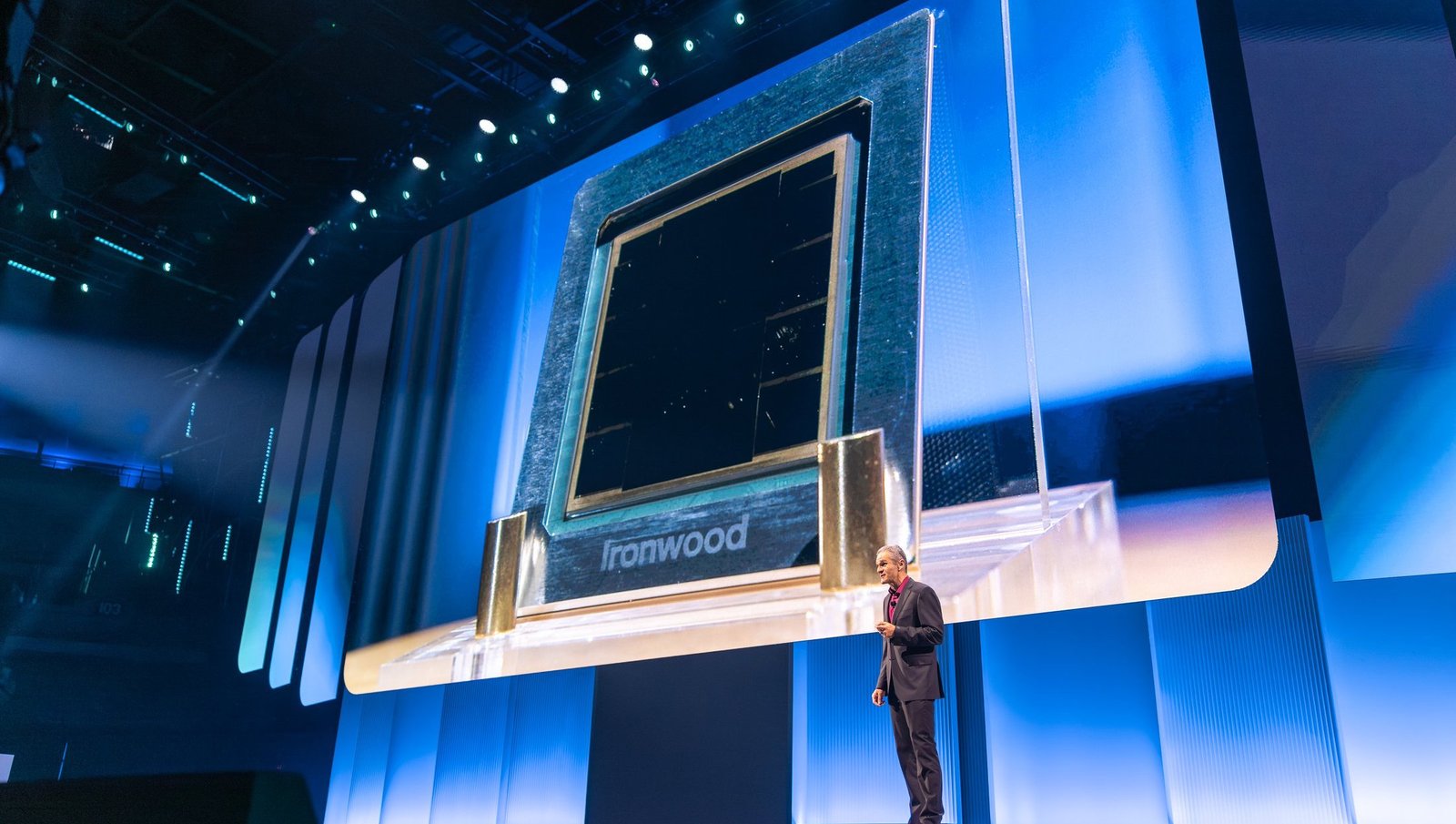
In a bold escalation of the AI infrastructure race, Google Cloud has officially launched its seventh-generation Tensor Processing Unit (TPU), codenamed Ironwood, engineered to meet the surging global demand for scalable, low-latency inference across AI workloads. Positioned as the centerpiece of Google’s “AI Hypercomputer” initiative, Ironwood marks a significant shift in AI chip design—prioritizing inference performance and energy efficiency, rather than just model training horsepower.
With this launch, Google is aiming directly at NVIDIA’s dominance in the AI accelerator market, offering enterprise and cloud customers an alternative with unparalleled inference throughput, better power efficiency, and deep integration into Google’s expanding AI stack.
Engineering a Leap Forward: Inside Ironwood’s Architecture
Ironwood TPUs are purpose-built ASICs (application-specific integrated circuits) optimized for both training and large-scale inference tasks. Each Ironwood chip delivers up to 4,614 teraflops (FP8) of compute and is equipped with 192 GB of high-bandwidth memory (HBM3E)—supporting bandwidths of up to 7.3 terabytes per second, depending on workload characteristics.
The hardware is offered in two primary configurations:
- 256-chip pod: Ideal for medium-scale model deployment and fine-tuning workloads.
- 9,216-chip superpod: Capable of achieving 42.5 exaFLOPS in aggregate FP8 compute, tailored for hyperscale inference and model serving.
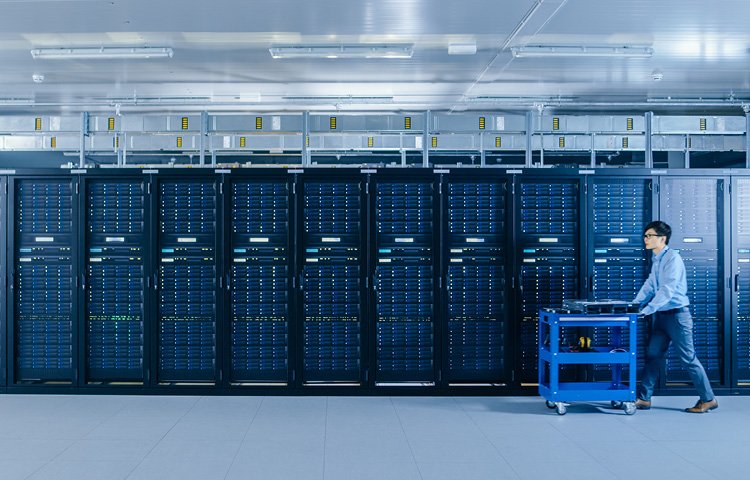
This superpod configuration is particularly noteworthy—it positions Google’s TPU clusters as one of the most powerful shared-memory compute systems ever deployed in commercial cloud environments. The compute infrastructure is cooled using advanced liquid-cooling systems and relies on ultra-low-latency interconnects to minimize data movement across chips, dramatically improving energy efficiency and reducing bottlenecks in multi-chip inference workloads.
A Paradigm Shift: From Model Training to AI Inference Dominance
What sets Ironwood apart from previous TPU generations is its strategic focus on inference performance. While earlier TPUs like v3 and v4 were primarily designed to accelerate the training of massive transformer models, Ironwood is built for the age of AI agents, real-time copilots, and LLM-based applications that require ultra-fast, large-scale inference.
According to Google Cloud’s AI chief Amin Vahdat, Ironwood was “purpose-built for inference,” reflecting a major shift in compute demand across the AI ecosystem. In practical terms, this means:
- Lower latency for real-time applications (e.g., chatbots, AI agents).
- Higher throughput per watt, improving cost-performance for AI startups and enterprises alike.
- Support for sparse compute models, such as mixture-of-experts (MoE), where not all parts of the network activate simultaneously—crucial for models like GPT-4 Mixture of Experts or Claude 4.5.
Google has emphasized that Ironwood is optimized to host models with massive context lengths and dynamic tool usage—features increasingly common in cutting-edge LLMs and autonomous agents.
Ironwood in Action: Industry Adoption and Real-World Applications
As part of its rollout, Google confirmed that Anthropic, the company behind Claude, has signed a multi-year agreement to use Ironwood TPUs to support future model development and serving. Anthropic expects to access more than 1 gigawatt of TPU compute capacity by 2026, signifying a major commitment to Google’s custom silicon roadmap.
Other early adopters include AI research labs, enterprise software firms, and SaaS providers exploring new inference use cases such as:
- AI copilots for enterprise workflows
- Autonomous agents with long-horizon planning
- Search and recommendation systems powered by real-time LLMs
- Conversational analytics tools requiring millisecond response times
With inference becoming a bottleneck in many real-world deployments—especially for large models requiring hundreds of billions of parameters—Ironwood addresses a growing need for efficient model serving at scale.
Competitive Positioning: Challenging NVIDIA’s GPU Dominance
Google’s launch of Ironwood also escalates its ongoing battle with NVIDIA, which continues to lead the market with its H100 and upcoming Blackwell GPU series. While NVIDIA’s chips remain the default for many AI workloads, Ironwood presents a compelling alternative by delivering:
- Tighter integration with Google Cloud AI services
- Better energy efficiency on a per-inference basis
- A unified platform for both training and serving
- Lower cost of ownership for massive inference pipelines
Furthermore, by designing its own silicon, Google reduces dependency on external chip vendors and gains full control over the optimization of its AI software stack—from TensorFlow and JAX to custom LLM runtimes tuned specifically for TPU architecture.
This vertically integrated approach echoes similar strategies from Amazon (with its Trainium/Inferentia chips) and Microsoft (which recently revealed the Maia AI accelerator). The race for cloud AI leadership is now as much about infrastructure differentiation as it is about model quality.
Challenges and Watchpoints
While Ironwood’s capabilities are impressive on paper, several practical and strategic considerations remain:
- Rollout and availability: General availability of Ironwood TPUs will be staggered across regions. Full deployment timelines are yet to be disclosed.
- Model compatibility: Though TensorFlow and JAX are fully optimized for TPUs, PyTorch users may face additional integration steps or require third-party tooling to fully exploit Ironwood.
- Cost and pricing transparency: Google has not yet disclosed detailed pricing for Ironwood-backed instances, though early users report a favorable performance-to-cost ratio compared to GPU-based equivalents.
- Ecosystem lock-in: Leveraging Ironwood’s full capabilities may require deeper entrenchment in Google’s cloud services, which could increase switching costs for some enterprises.
Additionally, while Ironwood promises training capabilities, its primary focus on inference means that developers building entirely new foundation models may still need to rely on other infrastructure (e.g., NVIDIA or AWS chips) for pretraining.
Looking Ahead: A New Era for AI Infrastructure
With Ironwood, Google is not just releasing another TPU—it is signaling a strategic pivot toward dominating the AI inference layer of cloud computing. This is where the majority of LLM usage will occur in the coming years: not in labs training models, but in billions of user interactions, daily queries, and autonomous agent decisions running on cloud hardware.
If Ironwood lives up to its performance claims in large-scale production environments, it could reshape how developers and businesses think about AI deployment. By combining high throughput, low latency, and energy efficiency with the reliability of Google Cloud’s infrastructure, Ironwood has the potential to become a core pillar of enterprise AI strategy.
And for the AI industry at large, it signals that the future will be as much about inference optimization as it is about model size and architecture.
Google is betting big on this future—and with Ironwood, it may just have the hardware to power it.
Would you like a comparison chart between Ironwood TPUs and NVIDIA H100/Blackwell for enterprise inference?