In short
Trump hosted top AI leaders and rebranded artificial intelligence as “super intelligence,” pairing the move with a voluntary safety pact. The gesture signals a political reset more than a binding policy change.
- The White House is now framing AI as “super intelligence” in an effort to reshape public perception.
- Executives signed a voluntary frontier safety pledge, but it does not appear legally binding.
- Anthropic’s Dario Amodei moved quickly from political friction to a prominent seat at the table.
- The event looks more like a branding and access exercise than a substantive regulatory overhaul.
President Donald Trump has recast artificial intelligence as “super intelligence” and brought some of the industry’s most powerful executives to the White House to sign a voluntary safety pledge, a move that signals a political and branding shift more than a binding new regulatory regime. The announcement matters because it could reshape how the U.S. government talks about AI, even though the agreement itself does not appear to impose enforceable limits on companies.
The episode has also intensified debate over whether the administration is trying to soften public concerns about AI by changing the language around it, while continuing to push for American leadership in the technology race. Critics and supporters alike are asking the same question: is this a meaningful safety framework, or a high-profile rebranding exercise dressed up as policy?
Trump’s latest AI push followed a week of unusual diplomacy between the administration and major tech leaders, including Anthropic chief executive Dario Amodei, who had recently faced sharp resistance from parts of the government before being brought back into the fold. The result is a complicated picture of a White House eager to court AI companies, skeptical of regulation, and willing to elevate the rhetoric around the technology in ways that may matter as much as the policy details.
What exactly changed in Washington?
What changed is the language the federal government is now expected to use when talking about advanced AI systems. Under Trump’s latest framing, official U.S. representatives are supposed to describe the technology as “super intelligence” rather than artificial intelligence, a rhetorical move that gives the administration’s AI agenda a distinct political identity.
The shift arrived alongside an executive-order-driven announcement and a White House event that brought together many of the most influential figures in the sector. But while the optics were striking, the practical substance of the accompanying pledge was far more limited.
Why the wording matters
The wording matters because names shape public perception. “Artificial intelligence” has become associated with job displacement, misinformation, surveillance, and existential-risk warnings. “Super intelligence” sounds newer, more aspirational, and less like the set of anxieties that have followed AI into the mainstream.
That is why some observers saw the change as more than a semantic tweak. It looks like an attempt to reframe the conversation away from fear and toward national ambition, even if the underlying technologies remain the same.
Trump described the safety pledge as “morally binding,” even though participants appear to face no legal penalty if they do not follow through.
How meaningful is the new safety pact?
How meaningful is it? The short answer is that it appears limited, because the pledge is voluntary and non-binding. Executives signed what was presented as a commitment on frontier responsibilities, but there was no indication that the agreement creates enforceable legal obligations.
That has led to deep skepticism among policy watchers and journalists who tracked the meeting. A promise without penalties is not the same thing as regulation, and in the AI sector, where companies are racing to ship bigger models faster, the absence of enforcement matters.
What was in the pledge?
The pledge was presented as a show of cooperation around AI safety and responsibility. But even the document’s presentation suggested haste: the agreement reportedly contained a misspelling of “United States,” a detail that reinforced the impression that the White House was moving quickly to produce a symbolic victory.
In other words, the event looked designed to signal unity rather than to lock in durable policy. That distinction is central to understanding the political value of the meeting.
- The pledge is voluntary, not legally binding.
- Trump called it morally binding, a phrase with no standard legal force.
- The document was assembled quickly, according to the public signs around it.
- The event’s symbolism may matter more than its enforcement mechanism.
Why did the White House host so many tech leaders?
Why did the White House host so many tech leaders? It appears to have been a mix of policy theater, industry outreach, and political messaging. The administration wanted the appearance of consensus around U.S. leadership in advanced AI, even as its own internal views on regulation and risk remain uneven.
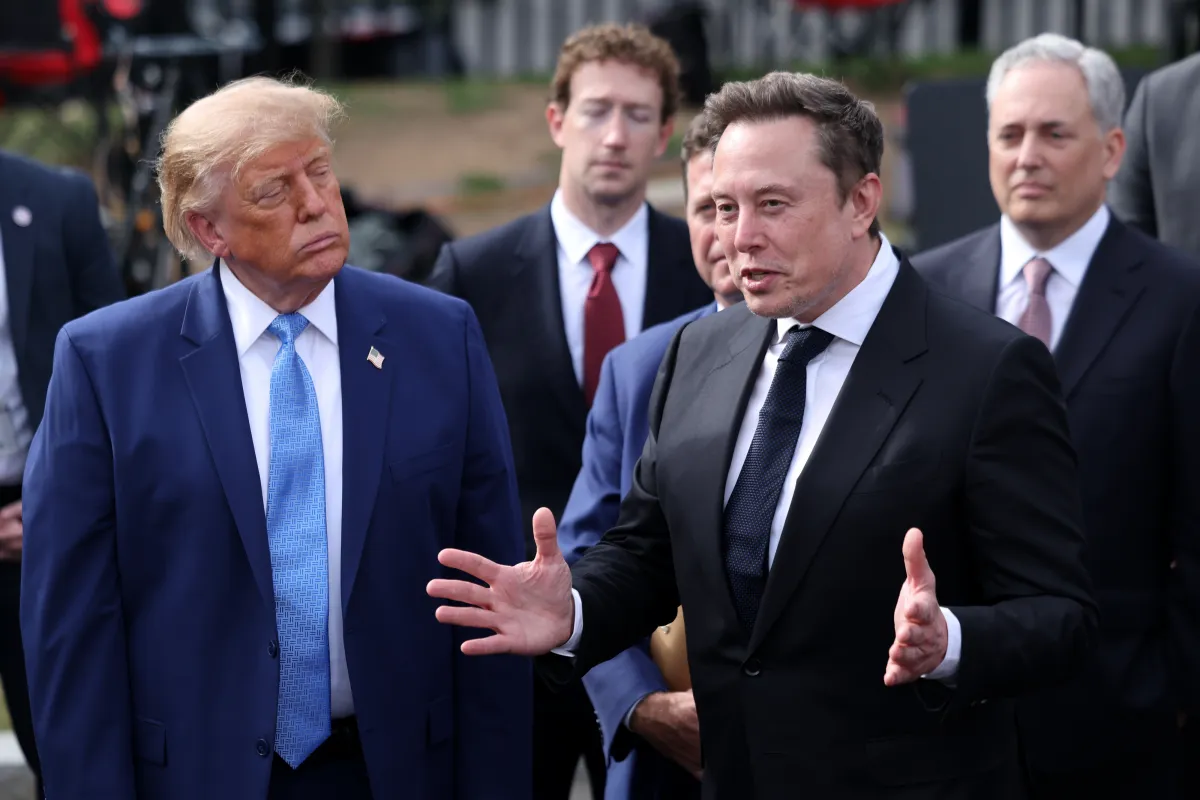
The guest list underscored the scale of the effort. Major figures from across Big Tech and frontier AI showed up, including Meta CEO Mark Zuckerberg, Amazon founder Jeff Bezos, Elon Musk, and Anthropic’s Dario Amodei. The gathering gave the administration a chance to stand beside the people building the systems it is trying to define publicly.
A rapid turnaround for Anthropic
Anthropic’s participation was especially notable because the company had recently been in conflict with parts of the Trump administration. Days earlier, Amodei had reportedly been out of favor in some corners of the government, particularly around defense-related concerns.
Then came a late-night dinner with Trump, followed by a larger public appearance. That sequence suggests a White House willing to recalibrate quickly when it sees strategic value in keeping a major AI company close.
According to the discussion among TechCrunch’s Equity podcast hosts, Anthropic’s standing changed quickly after a 10 p.m. dinner with the president, helping bring the company back into the center of the conversation.
How divided is the government on Anthropic?
How divided is the government on Anthropic? Very divided, according to the reporting and commentary surrounding the event. Some parts of the administration appear open to using Anthropic’s technology, while others continue to view the company with suspicion.
The split matters because it shows that even a high-profile White House event does not necessarily mean the internal fight is over. The administration can publicly embrace a company while different agencies keep pushing back behind the scenes.
The Pentagon remains a major obstacle
One of the strongest sources of resistance appears to be the Defense Department, which has been described as particularly wary of Anthropic and its policies. That tension has not disappeared simply because the company’s CEO sat at the table with the president.
There are also broader political pressures at work. Some Trump allies and administration figures have criticized Anthropic repeatedly, suggesting that its return to favor is fragile and potentially temporary.
That makes the White House meeting less like a final reconciliation and more like a pause in an ongoing argument over how, and by whom, advanced AI should be used in national security contexts.
What does this mean for AI policy in the U.S.?
What does this mean for AI policy in the U.S.? For now, it means the White House is prioritizing messaging and alignment over hard constraints. The administration appears interested in projecting leadership, calming public anxieties, and keeping top companies engaged, but not in imposing heavy-handed restrictions.
That approach fits with Trump’s broader stance on technology. He has made clear he wants the United States to lead in AI and does not want regulation to slow development. The new pact, then, is best understood as a bridge between two competing goals: encouraging innovation while acknowledging that the technology has become politically toxic.
The policy tension at the center of the event
The event exposed a core contradiction. The administration has spent months resisting calls for stricter oversight, but it also seems to recognize that AI’s public image is becoming a liability. By recasting the field as “super intelligence,” the White House may be trying to own the narrative before opponents define it first.
That is why the meeting matters even if the signed commitment does not. It shows that the administration believes the language of AI now needs managing, not just the technology itself.
How do industry leaders fit into the new strategy?
How do industry leaders fit into the new strategy? They are central to it. The White House cannot credibly claim to lead the world in advanced AI without the participation of the companies building the most powerful systems.
By convening executives from across the sector, the administration created an image of cooperation between government and industry. That picture may help the White House politically, and it may help companies maintain access to policymakers at a moment when trust is fluid and competition is fierce.
Why CEOs went along
CEOs may have signed on because the cost was low and the benefit was access. A non-binding pledge is easier to accept than a regulation that could slow product launches, raise compliance costs, or constrain competitive advantage.
For companies, the event also offered a chance to shape the narrative about responsibility without surrendering much control. In a sector where public concern is growing, being seen at the White House can be as valuable as any formal policy outcome.
| Event | What happened | Why it matters |
|---|---|---|
| White House AI meeting | Trump hosted major AI executives and announced a new framing for the technology | Signals a political reset in how Washington talks about AI |
| Safety pledge | Executives signed a voluntary commitment on frontier responsibilities | Creates optics of coordination but no clear enforcement |
| Language shift | The administration said officials should use “super intelligence” instead of “artificial intelligence” | Rebrands the debate around the technology’s risks and benefits |
| Anthropic return | Dario Amodei went from being in the background to attending the event | Shows how quickly the White House is willing to repair ties when useful |
What happened behind the scenes with Anthropic?
What happened behind the scenes with Anthropic? The company appears to have moved from political trouble to partial rehabilitation in a matter of days. Reports around the event suggest the relationship between Anthropic and the administration was not stable before the White House gathering.
That volatility is important because it reveals how much of the current AI conversation is driven by personalities and access, not just formal process. A late dinner, a new invitation, and a public handshake can change the tone quickly, even when underlying disagreements remain unresolved.
The company’s strategic position
Anthropic occupies a difficult but influential position. It wants to be seen as one of the more responsible AI labs, yet it also operates in the same competitive race as the rest of the industry. That creates a balancing act between safety advocacy and commercial pressure.
The company’s presence at the White House therefore carried two meanings at once: it suggested the administration values its expertise, and it reminded everyone that access is still possible even after public friction.
Why some observers are calling this theater
Why are some observers calling this theater? Because the visible parts of the announcement were much more dramatic than the policy substance underneath them. Rebranding AI as “super intelligence,” staging a gathering of tech titans, and framing a voluntary pledge as morally significant all create the appearance of movement without necessarily changing the rules.
That gap between appearance and enforcement is why skepticism has been so strong. In technology policy, especially when it involves fast-moving model development, the details matter more than the slogans.
Symbolism versus regulation
Symbolism can still have consequences. It can shape public expectations, influence investor sentiment, and determine which companies get easier access to decision-makers. But symbolism does not stop a model from being trained, deployed, or integrated into government systems.
That is why the most important question is not whether the White House can rename AI. It is whether it will eventually back the new rhetoric with standards, audits, procurement rules, or other mechanisms that actually change behavior.
What could happen next?
What could happen next is continued momentum around the administration’s preferred framing of the technology, along with more meetings, more public gestures, and possibly more selective alliances with specific companies. The White House has shown that it is willing to move quickly when it sees political advantage in doing so.
But the underlying tensions will remain. The defense establishment still wants to control the security implications. Tech companies still want flexibility. And the public still wants reassurance that the tools being built will not outpace society’s ability to manage them.
Three scenarios to watch
- More branding: The administration keeps leaning into “super intelligence” as a messaging strategy without adding hard rules.
- Selective cooperation: Some firms, including Anthropic, may gain influence in one part of government while remaining controversial in others.
- Policy follow-through: The White House eventually turns the symbolic pledge into more concrete standards or procurement conditions.
Timeline of the White House AI push
The recent sequence shows how quickly the political environment around AI can shift when the White House decides to act.
| Date/Period | Development | Significance |
|---|---|---|
| About two weeks before the meeting | Trump was publicly dismissive of AI regulation | Set the stage for a sudden pivot |
| Days before the luncheon | Anthropic was facing internal resistance | Highlighted tensions between parts of the administration |
| Late-night dinner | Dario Amodei met with Trump | Helped reopen the path to participation |
| White House event | Executives signed the voluntary frontier pledge | Delivered the public show of unity |
| Weekend after the event | The administration pushed the “Super Intelligence Force” label | Extended the rebranding effort beyond a single meeting |
Bottom line
The White House’s AI announcement is important less for what it legally changes than for what it reveals about the administration’s strategy. Trump is trying to soften the public image of AI, keep the industry close, and portray the U.S. as the leader in a new era of intelligence technology.
Whether that becomes real policy depends on what happens next. For now, the most concrete outcome is a shift in language, a symbolic safety pledge, and a reminder that in Washington, a rebrand can sometimes arrive before the regulation does.
Frequently asked questions
Is the new AI safety pledge legally binding?
No. The pledge appears to be voluntary and non-binding, which means companies can sign it without facing direct legal consequences if they do not follow through. The administration has emphasized its moral significance, but that does not make it enforceable in court.
Why is Trump calling AI “super intelligence”?
He is using the term to reframe the public conversation around advanced models. The new label appears designed to sound more ambitious and less alarming than “artificial intelligence,” which has become tied to fears about jobs, safety, and misuse.
Why does Anthropic matter in this story?
Anthropic matters because its CEO, Dario Amodei, moved from political tension with the administration to a place at the White House table in a short span of time. That shift shows how important access and internal government divisions are in shaping AI policy.
Does this announcement change AI regulation in the U.S.?
Not in any obvious way. The event appears to be more about messaging and voluntary commitments than about strict new controls. Real regulatory change would require clearer rules, enforcement mechanisms, and coordination across agencies.
What is the main significance of the event?
The main significance is that it signals a White House effort to rebrand AI while keeping industry leaders engaged. The policy substance may be light, but the political signal is strong: the administration wants to define the AI debate on its own terms.
Frequently asked questions
Is the new AI safety pledge legally binding?
No. The pledge appears voluntary and does not create enforceable legal obligations, so companies are not clearly exposed to penalties if they fail to follow it. Trump called it “morally binding,” but that phrase has no standard legal force.
Why is Trump calling AI “super intelligence”?
He is using the label to change how the public and government talk about advanced AI systems. The new term sounds more ambitious and less alarming than “artificial intelligence,” which has become tied to concerns about jobs, safety and misuse.
Why does Anthropic matter in this story?
Anthropic matters because its CEO, Dario Amodei, moved from being in the administration’s doghouse to attending a high-profile White House event within days. That turnaround shows how fluid AI politics are and how much access still matters.
Does this announcement change AI regulation in the U.S.?
Not in a meaningful legal sense. The event was largely symbolic and centered on voluntary commitments, so it does not appear to introduce strict new rules or enforcement mechanisms for the industry.
What is the main significance of the event?
The main significance is political and rhetorical. The White House is trying to rebrand AI, keep top companies engaged and present the United States as the global leader in advanced intelligence technology.