In short
Humyn Labs raised $47 million to expand its business supplying real-world robotics training data to AI companies. The deal highlights rising U.S. demand, India’s growing role in AI data work and new privacy questions around home-based recording.
- Humyn Labs raised $47M in a Series A split between $26M equity and $21M debt.
- The company supplies real-world training data for robotics and physical-AI models.
- TechCrunch says 12 paying customers drive the business, with about 90% of revenue from the U.S.
- The startup has collected data across 20+ countries, with hubs in Brazil, India and South Korea.
- Privacy and consent concerns are emerging around home recordings used for AI training.
Humyn Labs has raised $47 million in a Series A to expand its supply of real-world training data for robotics and physical-AI companies, a financing mix that includes $26 million in equity led by Accel and $21 million in venture debt led by Lighthouse Canton Growth Debt Fund II. The deal highlights how demand for data collected outside the lab is becoming a core business in the push to build machines that can operate in the physical world.
The Bengaluru-based startup told TechCrunch it already has 12 paying customers, with roughly 90% of revenue coming from U.S. buyers, and that it generated $10 million in revenue from April through October. The round also underscores the growing role of India and other parts of Asia in the supply chain behind frontier AI and robotics development.
What Humyn Labs does
Humyn Labs is trying to solve a problem that has become more urgent as robotics and physical-AI models improve: these systems need large volumes of real human activity, not just synthetic demos or tightly controlled lab footage, to learn how the physical world works. The company supplies that material by collecting real-world training data and then turning it into machine-ready inputs through a software labeling pipeline.
According to TechCrunch, the startup uses proprietary two-camera hardware alongside its software stack. The setup is designed to capture everyday movement and tasks that can be used to train models for robotics and other physical-AI applications.
How the data is collected
Humyn says its collection footprint now spans more than 20 countries across Latin America and Asia, with its main hubs in Brazil, India and South Korea. The company’s founders also said they have used the contributor network behind KGeN to source some home-based data collection work.
That geographic spread matters because data diversity is not just a slogan in this market. For physical-AI systems, the difference between useful and useless data can come down to the range of homes, tools, routines and environments represented in the training set.
“Scale, diversity, and quality are important aspects, and they need to work in tandem.”
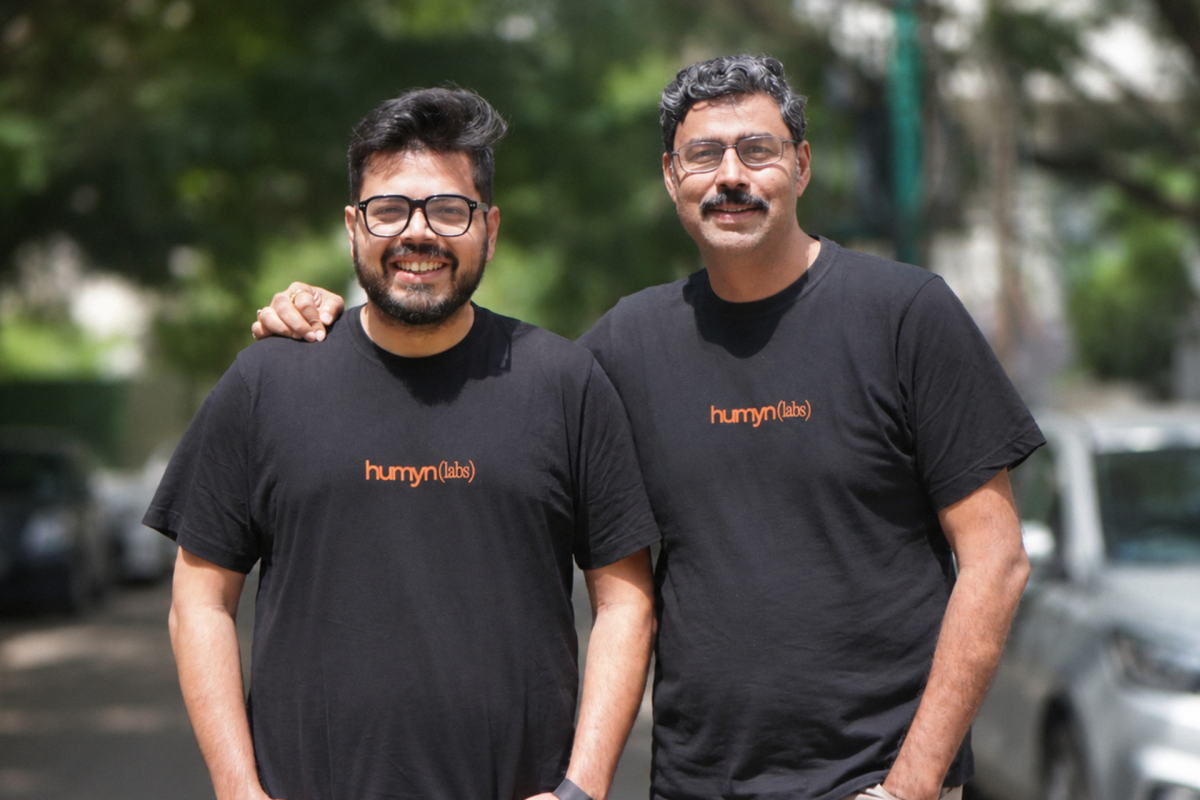
That was Manish Agarwal, Humyn Labs’ co-founder, explaining the company’s approach to TechCrunch. He and co-founder Ishank Gupta founded the startup in February, and the company has since built a 51-person full-time team, mostly based in Bengaluru.
Why it matters
This financing is more than a startup milestone. It is a sign that the market for robotics training data is becoming large enough to attract both equity and debt capital, and that investors see persistent demand from U.S. AI companies for high-quality physical-world datasets.
For readers, the broader implication is that the AI boom is moving further downstream. The first wave of generative AI focused on text and images, but the next wave of investment is increasingly tied to machines that must interpret motion, objects, and human behavior in messy, real-life settings. That kind of work needs people on the ground, cameras in homes and workplaces, and a constant process of annotation and quality control.
For India, the story points to a growing role in AI infrastructure beyond software engineering. The country is increasingly being used as a source of physical-AI training data, and that raises both opportunity and scrutiny. The opportunity is clear: jobs, revenue, and a place in a new AI supply chain. The scrutiny is just as obvious: privacy, consent and the conditions under which people agree to be recorded.
For robotics companies, the appeal is practical. Building systems that can work in the physical world requires data that reflects the physical world. A model trained on staged tasks or narrow environments may look impressive in demos and still fail once it meets a cluttered kitchen, a crowded room or a different set of household routines.
How is the financing structured?
The answer is that the company split the round into equity and debt, using both to support growth and working-capital needs. TechCrunch reported that Humyn Labs closed a $47 million Series A made up of $26 million in equity and $21 million in venture debt.
Accel led the equity portion, while Lighthouse Canton Growth Debt Fund II led the debt. The financing also included Prosus Ventures, BeeGlobal, Bajaj Finance units, Dallas Venture Capital, Lighthouse Canton, Jump Trading and Trifecta Capital.
| Funding component | Amount | Lead investor | Purpose implied by the company |
|---|---|---|---|
| Equity | $26M | Accel | Expansion of robotics training-data operations |
| Venture debt | $21M | Lighthouse Canton Growth Debt Fund II | Bridging customer payment lags and worker payouts |
| Total Series A | $47M | Combined round | Scaling a global data-collection and labeling business |
How much business does Humyn Labs already have?
The company says it has 12 paying customers, including frontier AI labs, robotics companies and world-model developers. Roughly 90% of revenue comes from U.S. customers, which suggests the core demand is coming from American buyers even though much of the collection happens elsewhere.
Humyn says it generated $10 million in revenue from April through October and has $20 million in signed contracts, plus another $20 million in deals that are not yet finalized. Those figures indicate meaningful demand, but they also leave open the question of how quickly contracts will convert into booked revenue.
The company’s debt financing appears designed in part to address that mismatch. TechCrunch reported that the venture debt will help bridge a 30- to 60-day gap between customer payments and the daily or weekly payouts owed to workers collecting data.
Background and context
Robotics and physical-AI systems are different from chatbots and large language models in a crucial way: they must understand and act in the physical world. That means the training data has to capture not only what people say, but what they do — how they move, reach, sort, clean, carry and interact with objects in ordinary settings.
That has created a new niche for companies that combine field collection, annotation and labeling software. Instead of merely scraping the web or licensing digital text, they are building pipelines for real-world behavior. Humyn Labs is one of the startups trying to turn that need into a repeatable business.
India has already become an important source of labor for AI training work, and Humyn’s model fits that broader trend. What is newer here is the specific focus on physical-AI data and the geographic spread across Latin America and Asia. The company’s collection network is not confined to one city or one country; it is built to capture variation.
TechCrunch reported that the founders previously built Kratos Studios, now KGeN. That earlier network has given Humyn access to a contributor base it can use for home-based collection, which may help it scale faster than a startup starting from zero.
Who founded the company?
Manish Agarwal and Ishank Gupta founded Humyn Labs in February. Agarwal previously led Nazara Technologies, while Gupta worked at AB InBev before the two co-founded their new venture. Their prior work also includes building Kratos Studios, which later became KGeN.
That background suggests a team with experience in building consumer-facing or network-driven businesses, now applied to a more industrial AI problem. In this market, operational execution can matter as much as model sophistication.
Privacy, consent and the human side of data work
The company’s pitch also lands in a sensitive area. TechCrunch reported that privacy and consent questions have surfaced around home recordings, especially as more of this work moves outside conventional office or studio environments.
Humyn says it records people doing ordinary work and chores rather than staged tasks. That distinction may be central to the business case, because natural behavior is likely to be more useful for training than artificial setups. But it also means the company must rely on clear consent, careful supervision and strong safeguards if it wants to avoid the impression that it is simply turning private homes into data sources.
“The worker is a worker who is incentivized, but he needs to be monitored and supervised for the right input.”
That comment from Agarwal reflects the company’s insistence that quality control is not optional. For AI developers, monitored data collection can improve consistency. For participants, however, it raises obvious questions about how much oversight is appropriate and how consent is maintained in practice.
By the numbers
Here is a quick view of the business, according to TechCrunch:
| Metric | Figure | What it shows |
|---|---|---|
| Total financing | $47M | Investor confidence in robotics data infrastructure |
| Equity | $26M | Primary growth capital |
| Venture debt | $21M | Working-capital support |
| Paying customers | 12 | Early but real traction |
| Revenue, April to October | $10M | Rapid ramp in a short window |
| Employee count | 51 | Still a relatively lean operation |
What happens next
The immediate question is whether Humyn Labs can turn its signed contracts into recurring revenue without sacrificing quality as it expands. That will depend on how fast it can add capacity, keep collection standards consistent across regions and preserve trust with customers that need dependable data.
Another watchpoint is privacy. As home-based and field-based data collection becomes more common, regulators and participants are likely to ask how consent is documented, how recordings are stored and who has access to them. Those issues may become more visible as companies in this space scale beyond their first hubs.
Investors will also be watching whether the company can extend its footprint beyond Brazil, India and South Korea while maintaining the diversity and quality it says are essential. If Humyn can do that, it could become a meaningful supplier in the physical-AI stack. If it cannot, the market may reward a narrower but more controlled model.
For now, the funding round is a signal that robotics training data is moving from a niche need to a venture-backable category. And with U.S. demand driving most of the revenue, the business case for companies like Humyn Labs appears to be tied closely to where the next generation of AI is trying to go: into warehouses, homes, factories and other places where models cannot be trained from text alone.
Timeline
| Date | Milestone |
|---|---|
| February 2026 | Humyn Labs founded by Manish Agarwal and Ishank Gupta |
| April 2026 | Revenue period cited by the company begins |
| April to October 2026 | Humyn Labs says it generated $10 million in revenue |
| November 18, 2026 | TechCrunch reports the $47 million Series A and debt financing |
Seen in full, the round is less about one startup’s balance sheet than about the economics of the next AI phase. As models leave the screen and enter the physical world, the companies that can collect trustworthy human data at scale may become just as important as the companies building the models themselves.
Frequently asked questions
What does Humyn Labs do?
Humyn Labs supplies real-world training data for robotics and physical-AI models. The startup combines proprietary two-camera hardware with a software labeling pipeline to capture and prepare data from everyday human activity for machine learning use.
How much funding did Humyn Labs raise?
Humyn Labs raised $47 million in total. TechCrunch reported that the round included $26 million in equity led by Accel and $21 million in venture debt led by Lighthouse Canton Growth Debt Fund II.
Why is physical-AI data important?
Physical-AI systems need examples of how people move and interact in real environments, not just digital text or staged demonstrations. That makes high-quality, diverse recordings essential for training robots and other systems that must function in the physical world.
What privacy concerns surround Humyn Labs?
Privacy and consent questions have surfaced around home recordings used for AI training. The concern is that collecting ordinary chores and work behavior in private spaces requires clear consent, careful supervision and safeguards over how the footage is stored and used.
Where does Humyn Labs collect data?
Humyn Labs says its collection spans more than 20 countries across Latin America and Asia, with major hubs in Brazil, India and South Korea. The company also says its contributor network helps source some home-based data collection work.