In short
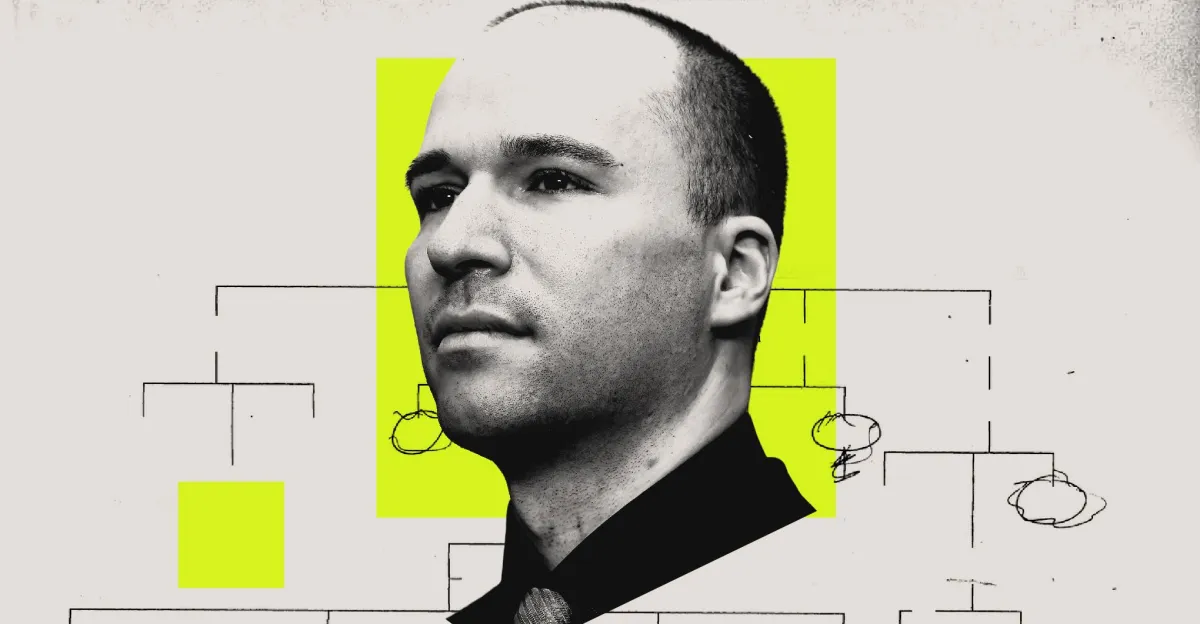
Greg Brockman has become OpenAI’s de facto day-to-day operator as executive departures and role changes concentrate power under the cofounder. The shift comes as Sam Altman focuses on strategy, OpenAI prepares for an IPO, and competition with Anthropic intensifies.
- Greg Brockman is increasingly running OpenAI’s daily operations.
- A wave of executive exits has pushed more responsibilities into Brockman’s hands.
- Sam Altman remains CEO but is focusing more on strategy and fundraising.
- OpenAI is shifting toward enterprise, coding, and infrastructure as core revenue drivers.
- The leadership change comes as OpenAI prepares for an IPO and faces stronger competition from Anthropic.
OpenAI cofounder Greg Brockman has become the company’s most important operator, taking control of consumer, enterprise, product, and infrastructure work as CEO Sam Altman shifts toward long-term strategy, fundraising, and the coming IPO. The change matters because it places day-to-day command of OpenAI in the hands of the executive most closely associated with execution at a moment when the company is under pressure to grow revenue, keep talent, and fend off rivals such as Anthropic.
That is the central takeaway from a new round of reporting and interviews on OpenAI’s rapidly changing leadership structure: while Altman remains the public face and ultimate strategist, Brockman has quietly emerged as the person most responsible for making the company run.
The timing is significant. OpenAI is still trying to balance product expansion, enterprise sales, consumer ambitions, infrastructure spending, and the difficult math of profitability. At the same time, it is preparing for a historic public market debut and trying to convince investors it can translate its influence into durable business results.
What was once a diffuse leadership model has become more concentrated. And in a company famous for turbulence, internal reorganizations, and headline-making executive exits, that concentration may be the most important shift yet.
How did Greg Brockman become OpenAI’s operational center?
Greg Brockman became OpenAI’s operational center by absorbing responsibility every time a senior leader left or changed roles, until he ended up overseeing the company’s core execution engine.
Brockman has been one of the company’s defining figures since the beginning. A former Stripe executive who dropped out of MIT, he helped build Stripe’s early technical foundation before leaving in 2015 to cofound OpenAI. From the start, he was known internally as an engineer who could turn ambition into systems, not simply as a spokesperson or strategist.
For years, OpenAI’s leadership story revolved around a small circle: Brockman, Sam Altman, Ilya Sutskever, and later Mira Murati. That arrangement began to change dramatically during the 2023 board crisis, when Altman was abruptly removed and Brockman quickly resigned in protest. In that moment, he showed complete loyalty to Altman, and that decision appears to have reshaped their relationship for good.
Since Altman’s dramatic return, Brockman’s influence has grown steadily. The recent acceleration has been driven less by one formal appointment than by a series of departures and reorganizations that moved major responsibilities into his orbit. The result is a company where Altman focuses on the broad strategic map while Brockman increasingly runs the machinery that turns that strategy into product.
According to reporting discussed on Decoder, Brockman is now effectively handling the company’s day-to-day operations, even though Altman remains OpenAI’s CEO and public face.
Why are so many OpenAI departures reshaping the org chart?
The departures matter because each senior exit has created a vacuum that Brockman has been able to fill, often without a clear successor stepping in.
OpenAI has seen a remarkable amount of leadership churn since spring. The list includes executives who ran major product lines, revenue functions, marketing, and specialized business units. Some left outright. Others moved into new roles and then departed soon after. Each change forced another internal reshuffle.
That churn has had a cumulative effect. Brockman did not need a master plan to gain power; he benefited from the absence of stable counterparts elsewhere in the company. As more executives left, the range of responsibilities left unclaimed narrowed, and Brockman became the obvious person to take them on.
This is especially visible in the overlap between product, business, and infrastructure. As OpenAI has become more commercial, the company has needed a leader who can keep consumer products moving, support enterprise expansion, and coordinate the massive infrastructure spending needed to scale models and services. Brockman, with his engineering background and long ties to the founders, has fit that role better than a traditional business executive might.
Which departures mattered most?
Several exits had outsized consequences because they touched the exact areas Brockman now oversees.
- Bill Peebles, who led Sora, leaving a gap in video product leadership
- Kevin Weil, a major product executive, exiting after holding broad responsibilities
- Fidji Simo, whose role was tied to consumer product ambitions
- Kate Rouch, the company’s chief marketing officer
- Srinivas Narayanan, the CTO for business-to-business operations
- Brad Lightcap, whose move created a vacuum in operating leadership
- Denise Dresser, OpenAI’s chief revenue officer, leaving just as IPO pressure intensified
Not every departure had the same impact, but together they created a structural opening. The more OpenAI shifted responsibilities around, the more Brockman became the person who could absorb them.
What exactly does Brockman oversee now?
Brockman now oversees a broad set of OpenAI’s most important functions, including consumer product, enterprise product, infrastructure, and major platform work.
That umbrella includes some of the company’s best-known and most commercially sensitive businesses. It covers ChatGPT, Codex, scaling systems, and the product and platform layers that support consumer features and enterprise deployments. It also reaches into growth, data science, ads-adjacent thinking, and the engineering work required to keep the whole stack reliable.
In practical terms, that means Brockman sits at the center of the company’s most important execution decisions. If OpenAI wants to improve the consumer experience, build for business customers, strengthen its technical infrastructure, or accelerate monetization, Brockman is now deeply involved in the path from idea to launch.
This is a major change from the company’s earlier structure, when responsibility was spread more evenly across a larger set of senior leaders. It also changes how outside observers should understand OpenAI’s strategy. The company is no longer just a research lab with a few products attached. It is now a complex commercial organization that requires a daily operator.
Who is Sam Altman now, and why is his role changing?
Sam Altman is still OpenAI’s chief executive, but his role is becoming more focused on strategy, external positioning, and long-horizon company goals rather than line-by-line management.
That shift is not entirely new. Altman has long shown interest in broad direction-setting, fundraising, partnerships, and the bigger philosophical questions around artificial intelligence. Over time, he appears to have moved further away from direct operational control and closer to the role of architect-in-chief.
That division of labor can be useful in a company as large and visible as OpenAI. It allows Altman to concentrate on the company’s future narrative, IPO readiness, and macro positioning while a trusted lieutenant manages internal execution. At a company with immense capital needs and a sprawling product roadmap, that may be the only practical arrangement.
It also helps explain why Brockman’s rise is being welcomed rather than resisted in some circles. He is not seen as an outside power broker. He is a founder, an engineer, and one of Altman’s oldest allies. In a company where trust has often been hard-earned, that matters.
Altman’s supporters appear to view Brockman as an extension of the CEO’s judgment, not a rival power center.
How did the 2023 board coup change the balance of trust?
The 2023 board coup changed the balance of trust because it made loyalty one of the most valuable currencies inside OpenAI.
When Altman was suddenly removed, the company entered a crisis that threatened its leadership structure and its future. Brockman’s immediate response — resigning in solidarity with Altman — sent a strong signal. It told Altman, employees, and investors alike that Brockman would not side with the board against the founders.
That choice mattered because the episode revealed how fragile internal alliances could be. Several people who had seemed close to Altman were suddenly on the other side of a defining conflict. Brockman’s decision, by contrast, was unambiguous. He bet on Altman when the outcome was uncertain.
The board ultimately reversed course after intense employee pushback and pressure from the broader OpenAI ecosystem. Altman returned, and Brockman’s position within the company became more secure. In hindsight, that crisis appears to have elevated him from trusted cofounder to indispensable partner.
In the years since, the relationship has only deepened. The result is a leadership setup in which Altman can trust Brockman with enormous responsibility, and Brockman can execute without being treated as a temporary stand-in.
Why does Fidji Simo matter to OpenAI’s strategy?
Fidji Simo matters because her appointment signaled OpenAI’s ambition to become a mainstream consumer business, and her departure shows how much that ambition has been deprioritized.
Simo brought a powerful background from Meta and Instacart, with direct experience in consumer products, monetization, and large-scale user engagement. Her presence suggested that OpenAI was serious about turning ChatGPT into a platform that could rival the most successful consumer experiences on the internet.
That idea fit with broader signals from Altman, who has publicly acknowledged the appeal of competing with Google’s search business model and the value of a simple text box that can handle nearly any request. The consumer opportunity seemed huge, and Simo was hired into a role that could help OpenAI capture it.
But the company’s focus has shifted. With Simo gone and enterprise priorities rising, the consumer strategy looks less like a broad platform war and more like one strand in a wider commercial portfolio. That does not mean consumer is dead. It means the company appears to be emphasizing execution in areas that can produce clearer revenue and stronger enterprise relationships sooner.
What changed after Simo’s exit?
OpenAI’s emphasis moved toward products that can be monetized more directly and predictably.
That includes coding tools, business software, infrastructure services, and the enterprise relationships needed to compete with other model providers. It also reflects the pressure of public market expectations. A company preparing for an IPO cannot afford endless experimental side projects if they do not contribute to the financial story investors want to hear.
The consumer “super app” idea is still part of OpenAI’s long-range vision, but it no longer appears to be the center of gravity in the same way. Instead, OpenAI seems to be trimming distractions and consolidating around core revenue engines.
What does OpenAI’s product strategy look like now?
OpenAI’s product strategy now looks like a narrower, more revenue-focused version of the moonshot company it once projected itself to be.
The company remains ambitious. It still wants to build a dominant consumer interface, expand enterprise offerings, and keep pushing the frontier of AI capabilities. But the internal order of priorities appears to have changed.
At least for now, the biggest bets are:
- Enterprise software and business deployments
- Coding tools and developer workflows
- ChatGPT as a consumer platform
- Infrastructure and scaling improvements
- Long-term monetization and IPO preparation
That list reflects a company under commercial pressure. It also reflects the reality that OpenAI’s most obvious near-term competition is not just Google or Meta, but Anthropic, which has gained ground in enterprise use cases and is increasingly seen as a serious rival for business customers.
OpenAI’s challenge is to keep its consumer aura while proving that it can win in the markets that matter most for revenue. Brockman’s expanded remit suggests the company believes engineering execution is the key to doing both.
How is Anthropic influencing OpenAI’s leadership decisions?
Anthropic is influencing OpenAI because it has become the company’s clearest competitive benchmark in the enterprise market.
As OpenAI has moved deeper into business sales, the comparison with Anthropic has become unavoidable. Anthropic has built a strong reputation for enterprise-facing AI, and OpenAI appears to be calibrating its structure and product priorities in response.
That competitive pressure is one reason Brockman’s ascent matters. A more centralized operator can move faster when product priorities are clear. If enterprise growth and coding remain the most important revenue paths, OpenAI needs someone who can keep those lanes aligned across teams, infrastructure, and commercialization.
For investors, the question is whether OpenAI can convert its consumer popularity into enterprise scale quickly enough. For employees, the question is whether the company can stop reshuffling long enough to execute. For competitors, the question is whether OpenAI’s internal consolidation makes it more dangerous, not less.
What does Brockman’s rise mean for OpenAI’s IPO?
Brockman’s rise means OpenAI is trying to present a more disciplined and operationally coherent face ahead of a potentially historic IPO.
Public investors typically reward clarity: who runs what, where the revenue comes from, and how the company plans to turn scale into profit. OpenAI has often looked more like a movement than a conventional business. That can be a strength in product adoption, but it becomes a liability when preparing for public scrutiny.
Bringing more responsibility under Brockman could help simplify the story. A founder-engineer who knows the product, understands the infrastructure, and has the trust of the CEO is easier to explain than a constantly changing web of senior roles.
There is also a cost-cutting dimension. Reorganizing around a smaller number of powerful leaders can reduce duplication and make the company’s financial profile easier to defend. As OpenAI works to improve its balance sheet, the message to investors is clear: this is a company that intends to operate more efficiently while still scaling aggressively.
| Leadership area | Earlier structure | Current direction | Why it matters |
|---|---|---|---|
| Consumer product | Shared across multiple executives | Consolidated under Brockman | Defines ChatGPT’s direction and growth |
| Enterprise/B2B | Separate leadership track | More tightly tied to Brockman | Central to revenue expansion |
| Infrastructure | Distributed across technical teams | Under Brockman’s broader control | Supports model scaling and reliability |
| Strategy | Shared between founders and execs | Altman-led, long-term focus | Shapes IPO and company narrative |
| Commercial execution | Multiple leaders with distinct remits | Fewer, larger spans of control | Signals a leaner, more investor-friendly structure |
Why Brockman’s engineering background is so valuable now
Brockman’s engineering background is valuable because OpenAI’s hardest problems are now operational, not just conceptual.
The company is no longer trying only to prove that frontier AI can work. It has already done that. The harder challenge is making the technology reliable, scalable, profitable, and useful across different customer segments.
That requires someone who understands systems architecture, training pipelines, deployment constraints, and the practical tradeoffs involved in shipping software at enormous scale. Brockman’s reputation as a technical executor gives him credibility with engineers and product teams alike.
It also reduces the risk that OpenAI becomes disconnected from the realities of building and maintaining its own infrastructure. In a business where model performance, uptime, latency, and cost all shape the customer experience, technical leadership is not optional. It is strategic.
Why investors may like this shift
Investors may like this shift because it creates a clearer management chain and a more credible operating model.
Founder-led companies often trade at a premium when the founders are seen as competent and aligned. In OpenAI’s case, Brockman’s rise may reassure investors that the company is not being run by committee. It also suggests Altman is staying above the operational weeds, where his biggest value may be in vision and dealmaking.
That combination can be appealing: Altman as strategist, Brockman as operator. It is a familiar model in high-growth technology companies, and one that could help OpenAI tell a more coherent story as it enters its next phase.
What happens next for OpenAI?
OpenAI’s next phase will likely be defined by whether Brockman’s consolidation of power produces stability, speed, and stronger revenue growth.
The company has to do several difficult things at once. It must keep product quality high, win more enterprise customers, preserve consumer momentum, manage infrastructure costs, and prepare for public investors who will scrutinize every part of the business. At the same time, it must do all of this while continuing to compete with well-funded rivals and avoiding another destabilizing leadership crisis.
If Brockman can succeed in that role, OpenAI may become more coherent than it has ever been. If he cannot, the company could find itself trapped between its research origins and its commercial ambitions.
For now, though, the clearest answer to the question of who really runs OpenAI is that the company’s future increasingly depends on Greg Brockman. Altman may still define the brand, but Brockman now appears to define the work.
Key leadership timeline
| Year | Event | Impact on OpenAI |
|---|---|---|
| 2015 | Brockman cofounds OpenAI | Begins as a key technical founder |
| 2023 | Altman is removed by the board; Brockman quits in solidarity | Loyalty dynamic between the founders hardens |
| Late 2023 | Altman returns after employee and industry pressure | Leadership structure is reset |
| Spring–Summer 2026 | Multiple senior executives depart or change roles | Brockman absorbs more operational control |
| 2026 and beyond | OpenAI prepares for IPO | Pressure mounts to show profitable, disciplined growth |
Bottom line
OpenAI is entering a new phase in which Greg Brockman has become the company’s key operator and Sam Altman is increasingly positioned as the strategist and public leader. That shift reflects executive turnover, investor pressure, competition from Anthropic, and the realities of preparing for an IPO.
For all the drama around OpenAI’s org chart, the underlying story is simple: the company is concentrating power to execute faster. Whether that makes OpenAI stronger or more brittle will become one of the defining questions in the next stage of the AI race.
Either way, the balance of power inside the company has changed. And Brockman, long seen as the quieter founder, is now at the center of the action.
Frequently asked questions
Who really runs OpenAI now?
Greg Brockman increasingly runs OpenAI’s day-to-day operations. Sam Altman remains CEO and public face, but Brockman now appears to oversee much of the company’s consumer, enterprise, product, and infrastructure execution.
Why is Greg Brockman gaining more power at OpenAI?
Greg Brockman is gaining more power because senior leaders have left or shifted roles, creating gaps he has filled. His engineering background, founder status, and close relationship with Sam Altman make him the obvious person to absorb those responsibilities.
What does this mean for Sam Altman’s role?
It means Sam Altman is moving further toward a strategic, external-facing role. He is still leading OpenAI overall, but the company appears to be giving Brockman more control over operational details and product execution.
How does this affect OpenAI’s business strategy?
It points to a tighter focus on enterprise sales, coding tools, infrastructure, and other revenue-driving products. The leadership shift suggests OpenAI is trimming distractions and preparing for IPO-level scrutiny.
Why does OpenAI’s leadership change matter to the AI industry?
It matters because OpenAI remains one of the most influential AI companies in the world. A shift in who makes decisions can affect product priorities, competitive strategy, and how quickly the company responds to rivals such as Anthropic.