In short
Nvidia has agreed to buy Hugging Face for $12.93 billion, giving the chipmaker control of one of the most important open-source AI platforms. The deal could deepen Nvidia’s influence over the AI developer ecosystem as competition intensifies.
- Nvidia agreed to acquire Hugging Face for $12.93 billion.
- Hugging Face is a major open-source AI platform often compared to GitHub.
- The deal could help Nvidia defend its dominance as AI rivals build their own chips.
- Nvidia says Hugging Face will remain open to developers using different tools and infrastructure.
Nvidia has agreed to acquire Hugging Face for $12.93 billion, a deal that would place one of the internet’s most important open-source AI hubs under the control of the world’s most valuable chipmaker. The move matters because it links the company that powers much of today’s AI boom with the platform many developers use to build, share and test the models driving it.
The deal, announced publicly by Nvidia, would fold the developer community platform into a broader strategy aimed at keeping Nvidia at the center of AI infrastructure as rivals race to build their own chips, models and cloud ecosystems.
What the deal means for the AI industry
Nvidia’s planned purchase of Hugging Face is more than a routine tech acquisition. It is a direct bet on the ecosystem that surrounds AI, not just the silicon that runs it. Hugging Face has become one of the best-known destinations for open-source models, datasets and tools, serving as a kind of community library for machine learning builders around the world.
By buying the platform, Nvidia would gain a stronger foothold in the daily workflows of developers and enterprises experimenting with open AI systems. That could deepen its influence across the full stack of AI development, from training and deployment to the hardware underneath.
The company also appears to be positioning itself against a shifting market. Large AI players such as OpenAI, Anthropic and Google are increasingly working on their own chips and infrastructure strategies. In that environment, owning a central distribution point for models and tools could help Nvidia defend its dominant role in AI compute.
Why Hugging Face matters
Hugging Face was founded in 2016 and built a reputation as a collaborative platform where developers can host and discover models, datasets and applications. Its growth has made it one of the most recognizable names in open-source AI, especially among researchers, startups and teams building custom machine learning systems.
It is often compared to GitHub because both platforms are built around public collaboration and easy sharing of code-related work. In Hugging Face’s case, the object being shared is often a model, a dataset or a tool that others can adapt, test or build upon.
That open approach has made the company especially valuable in a period when many AI developers are looking for alternatives to closed, proprietary systems. As the industry has matured, the platform has become a central clearinghouse for open models and community-driven experimentation.
How the platform fits into Nvidia’s business
Nvidia’s core business is still its chips, but the company has increasingly built software, services and partnerships around the hardware layer. Hugging Face gives Nvidia access to a large developer audience that relies on AI compute, model hosting and inference tools.
The strategic logic is straightforward: if more developers build on Hugging Face, and if more of those workloads are accelerated by Nvidia hardware, the company can reinforce demand for its products while broadening the services attached to them.
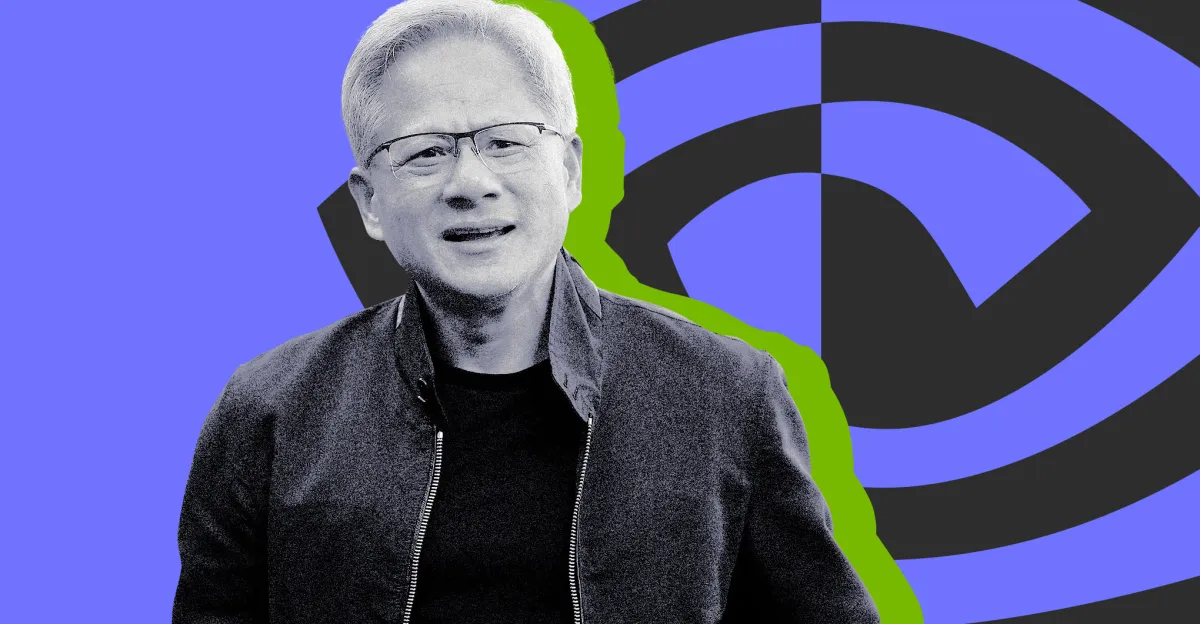
In announcing the agreement, Nvidia chief executive Jensen Huang described the combination as a way to expand access to AI for developers and institutions worldwide. He also said Hugging Face would remain an open platform and that users would still be free to choose their preferred models, frameworks, cloud providers and inference services.
Huang framed the acquisition as an effort to scale Hugging Face’s platform while preserving its openness, saying developers would continue to decide which models, clouds and computing platforms they use, and that Nvidia hardware would not be required to build or deploy on the service.
How did the deal come together?
The acquisition follows several weeks of public speculation. Reports in late August suggested Hugging Face was exploring a potential sale after working with a bank, and later reporting indicated Nvidia had entered acquisition discussions with the startup. Before Nvidia’s announcement, however, those reports had not been independently confirmed.
Nvidia’s public confirmation now appears to settle the question. The company has made clear that it wants Hugging Face as part of its broader AI strategy, and the price tag underscores how important the platform has become in the race for AI infrastructure dominance.
| Key detail | Information |
|---|---|
| Buyer | Nvidia |
| Target | Hugging Face |
| Deal value | $12.93 billion |
| Hugging Face founded | 2016 |
| Last reported valuation | $4.5 billion in 2023 |
| Approximate annualized revenue | $150 million |
Why the price raised eyebrows
The headline number is striking not only because of the size of the acquisition, but also because of how it compares with Hugging Face’s last official valuation. In 2023, the company was valued at $4.5 billion in a funding round that included Nvidia as an investor.
That means Nvidia is now proposing to pay almost three times that valuation. The jump reflects both the rapid rise of the AI sector and the premium being placed on strategic assets that can shape how developers access and deploy models.
It also highlights a major divide between market value and current business performance. According to reporting cited in the source material, Hugging Face has recently been generating about $150 million in annualized revenue, a figure far below the purchase price.
Still, the sale price may make sense in the context of Nvidia’s own balance sheet and ambitions. As the most valuable public company in the world, Nvidia has the resources to spend heavily on assets it believes are strategically critical, even if the direct revenue return is not immediate.
What happened to the earlier investment talks?
Reports suggest Nvidia previously explored a smaller investment in Hugging Face, including an offer that would have valued the company at roughly $7 billion. According to earlier reporting, Hugging Face rejected that proposal because it wanted to avoid becoming too dependent on a single powerful investor.
That context makes the acquisition especially notable. Rather than remaining a minority backer, Nvidia is now seeking full ownership, which would give it far greater control over the platform’s strategic direction.
Why open source is central to the story
The acquisition lands at a time when open-source AI is under intense pressure to keep pace with major proprietary systems. Developers, researchers and companies are still relying on open communities to distribute models, improve tools and reduce barriers to experimentation.
Hugging Face sits at the heart of that movement. It has become a place where builders can browse models, compare approaches and collaborate across organizations. For Nvidia, that makes the company both a technical asset and a channel into the broader open AI world.
There is also a competitive angle. If closed AI providers continue to build their own hardware stacks, Nvidia may need more than chip sales to maintain its leverage. A major open platform can help it stay embedded in the workflow even as the rest of the market evolves.
What changes for developers?
In the short term, Nvidia says little should change in how developers use the platform. The company has pledged that Hugging Face will remain open and that users will keep their freedom to choose the tools and infrastructure they prefer.
That promise is likely aimed at easing concerns within the developer community, many of whom value Hugging Face precisely because it is not tied to a single hardware or cloud vendor. Preserving that neutrality will be important if Nvidia wants to avoid alienating the users who made the platform influential in the first place.
If the acquisition closes, the real test will be whether Hugging Face can maintain its broad appeal while benefiting from Nvidia’s scale, capital and infrastructure. The company will need to convince users that deeper integration does not translate into narrower choices.
Timeline of the acquisition story
The sale story unfolded quickly in late August before Nvidia formally confirmed the agreement. The sequence below shows how the speculation developed into a publicly announced deal.
| Date | Development | Why it mattered |
|---|---|---|
| 2023 | Hugging Face last reported valuation of $4.5 billion | Set the benchmark for assessing the new deal price |
| August 23 | Reports emerged that Hugging Face was exploring a possible sale | Started acquisition speculation |
| August 27 | Reports said Nvidia had been in acquisition talks | Linked the chipmaker to the platform |
| September 3 | Nvidia publicly announced agreement to buy Hugging Face | Confirmed the deal and its strategic significance |
How this could reshape Nvidia’s AI strategy
Nvidia has already become the backbone of much of the AI industry by supplying the processors that power training and inference at scale. But hardware dominance can be vulnerable if the software and model ecosystem shifts elsewhere.
Buying Hugging Face could help Nvidia secure a more durable role by embedding itself deeper into the tools people use every day. Instead of being just the company behind the compute, it would also own a major gateway for discovery, sharing and deployment.
That matters because AI competition is no longer only about model quality. It is also about distribution, developer loyalty and the platforms that make experimentation practical. Hugging Face gives Nvidia a way to influence all three.
The deal may also serve another purpose: defending Nvidia’s lead as AI companies pursue vertical integration. If major labs develop custom chips or larger cloud dependencies, Nvidia may need ecosystem control as much as raw performance advantages.
Who stands to gain the most?
Nvidia stands to gain the most immediately, because the company would gain access to a large and highly engaged AI developer base. It would also strengthen its position in a market where strategic access matters almost as much as technical capability.
Hugging Face could gain from the deal as well if Nvidia invests in infrastructure, scaling and developer tools. Bigger backing could improve performance, reliability and reach, especially if the platform’s usage continues to grow.
Developers may benefit if the acquisition brings more resources without restricting access. But much depends on execution, governance and how seriously Nvidia honors its promise to preserve openness.
What to watch next
The most important unanswered question is how regulators, customers and the open-source community will respond once the transaction moves toward completion. Any large-scale tech acquisition involving a critical AI platform is likely to attract scrutiny.
It will also be important to watch whether Nvidia keeps Hugging Face’s brand and operational independence intact. In many technology deals, the real story is not the announcement but what happens after the acquisition closes.
For now, though, the headline is clear: Nvidia is making a major move to extend its reach beyond chips and into the heart of the open AI developer ecosystem. That makes this one of the most consequential AI business deals yet announced.
- Nvidia has agreed to buy Hugging Face for $12.93 billion.
- The deal would put a leading open-source AI platform under the world’s biggest AI chipmaker.
- Nvidia says Hugging Face will remain open and accessible to developers using different models and clouds.
- The acquisition signals a broader push by Nvidia to protect its AI dominance as rivals build their own infrastructure.
Background: why the market cared so much
Hugging Face’s importance comes from its position in the middle of an increasingly crowded AI ecosystem. The company is not the flashiest consumer brand in artificial intelligence, but it plays a foundational role for researchers, startups and enterprises that need a reliable way to share models and data.
That makes it a strategic asset in an industry where the control points are still being negotiated. If a platform becomes the default place where developers find open models and tools, it can shape which technologies gain traction. Nvidia clearly sees value in owning that influence rather than competing for it from the outside.
The fact that the company was already an investor makes the move even more telling. Nvidia did not simply stumble into the relationship; it has been watching the platform’s growth for years and has now decided that partnership alone is no longer enough.
Whether the acquisition ends up being remembered as a smart ecosystem play or an expensive bid for control will depend on how well Nvidia balances commercial interests with the open ethos that made Hugging Face successful in the first place.
For the AI industry, the deal is a reminder that the race is expanding beyond model launches and chip announcements. The platforms that organize the builders may matter just as much as the technology they host.
Frequently asked questions
What is Nvidia buying with Hugging Face?
Nvidia is buying one of the most widely used open-source AI platforms, which hosts models, datasets and tools for developers. The acquisition would give Nvidia a stronger position in the AI ecosystem beyond its chip business.
How much is the Hugging Face acquisition worth?
The Hugging Face acquisition is worth $12.93 billion. That figure is far above the company’s last reported valuation of $4.5 billion in 2023 and reflects the premium placed on strategic AI infrastructure assets.
Will Hugging Face stay open after the deal?
Nvidia says Hugging Face will remain an open platform for the wider AI community. The company says developers will still be able to choose their preferred models, frameworks, clouds and deployment tools.
Why is Nvidia buying Hugging Face now?
Nvidia appears to be buying Hugging Face to strengthen its position in the AI supply chain as rivals build their own chips and platforms. Controlling a major developer hub could help Nvidia preserve influence over how AI systems are built and deployed.
How much revenue does Hugging Face make?
Hugging Face has reportedly been generating around $150 million in annualized revenue recently. That is a small fraction of the acquisition price, showing that Nvidia is paying for strategic value rather than current earnings.